
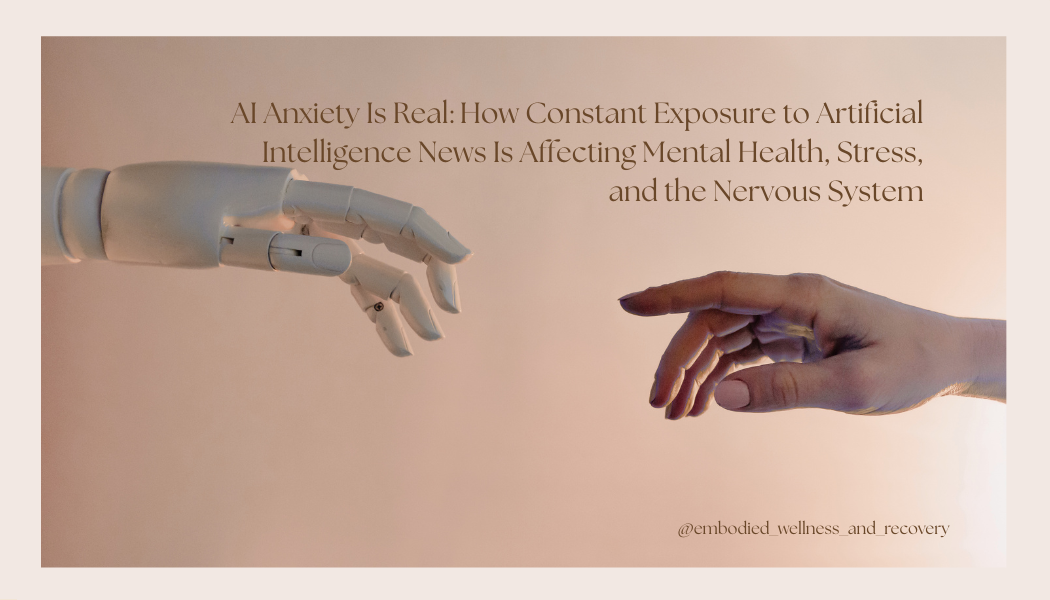
AI Anxiety Is Real: How Constant Exposure to Artificial Intelligence News Is Affecting Mental Health, Stress, and the Nervous System
AI Anxiety Is Real: How Constant Exposure to Artificial Intelligence News Is Affecting Mental Health, Stress, and the Nervous System
Constant exposure to AI news can increase anxiety, overwhelm, uncertainty, and nervous system dysregulation. Learn the neuroscience behind AI anxiety, information overload, and practical strategies for protecting mental health in an age of rapid technological change.
Why Does AI News Feel So Emotionally Overwhelming?
Artificial intelligence is everywhere.
Every day, headlines warn that AI may replace jobs, transform relationships, disrupt education, reshape healthcare, alter creativity, and fundamentally change the future of humanity. Social media feeds are saturated with predictions ranging from extraordinary optimism to existential catastrophe. For many people, keeping up with AI developments feels less like staying informed and more like riding an emotional roller coaster.
Have you found yourself asking:
— Am I going to lose my job because of AI?
— Will my skills become obsolete?
— Why do I feel anxious every time I read AI news?
— Why can't I stop checking for updates about artificial intelligence?
— Why do I feel overwhelmed by how quickly technology is changing?
— Why do I feel exhausted, distracted, or hopeless after scrolling through AI content?
If so, you are experiencing something increasingly recognized by psychologists and mental health professionals: the emotional impact of chronic exposure to uncertainty, technological disruption, and information overload.
The issue is not simply artificial intelligence itself. The issue is how our brains and nervous systems respond to constant exposure to rapid, unpredictable change.
The Human Brain Was Not Designed for Infinite Information
One of the defining characteristics of modern life is the unprecedented volume of information available at every moment. Research has consistently demonstrated that excessive information consumption can contribute to stress, anxiety, cognitive fatigue, and emotional overwhelm (Bawden & Robinson, 2020). The human brain evolved to process manageable amounts of information within relatively stable environments. Today's reality is dramatically different.
Every hour brings new headlines:
— AI replacing workers
— AI transforming healthcare
— AI-generated misinformation
— AI companions and relationships
— AI breakthroughs
— AI safety concerns
— AI regulations
— AI existential risk
The nervous system struggles to distinguish between information that requires immediate action and information that is merely interesting. As a result, many people remain in a chronic state of vigilance.
The Neuroscience of AI Anxiety
From a neuroscience perspective, uncertainty is one of the most powerful triggers of stress. The brain's threat detection system, particularly the amygdala, is constantly scanning for potential danger. When future outcomes feel unpredictable, the brain often responds by increasing attention, vigilance, and worry.
Researchers have found that uncertainty can activate neural circuits associated with fear and anxiety (Grupe & Nitschke, 2013). In some cases, uncertainty may be experienced as more stressful than known negative outcomes because the brain continues searching for answers that do not yet exist.
AI news creates a perfect storm of uncertainty because:
— The technology is evolving rapidly.
— Experts often disagree about future outcomes.
— Predictions range from utopian to catastrophic.
— Individuals feel they have limited control over the changes.
When uncertainty becomes chronic, the nervous system may remain activated long after the news article has been read.
Doomscrolling Meets Artificial Intelligence
Many people report compulsively checking AI news despite feeling worse afterward.
Why?
The answer involves dopamine and the brain's reward system. Novel information activates reward pathways that encourage learning and exploration. Each new AI announcement promises potentially important information about the future. The brain begins seeking updates in the hope of gaining certainty. Ironically, each new update often introduces additional uncertainty.
This creates a cycle:
Anxiety about AI.
Search for information.
Temporary relief.
Exposure to more uncertainty.
Increased anxiety.
Return to information seeking.
Over time, this pattern can resemble other forms of compulsive digital consumption.
How AI News Can Affect Mental Health
Increased Anxiety
Many individuals experience heightened anxiety about employment, financial security, education, and societal change.
Information Overload
The sheer volume of AI content can create cognitive fatigue, making concentration and decision-making more difficult.
Existential Worry
Questions about human identity, purpose, creativity, and meaning often emerge when discussing artificial intelligence.
Sleep Disturbance
Consuming stimulating or anxiety-provoking information before bedtime can interfere with sleep quality and nervous system recovery.
Feelings of Helplessness
Constant exposure to large-scale societal issues can create a sense that personal actions no longer matter.
Why Trauma Survivors May Be Especially Vulnerable
At Embodied Wellness and Recovery, we often see how trauma influences responses to uncertainty.
Individuals with histories of:
— Emotional neglect
— Chronic stress
— Attachment trauma
— Family instability
may experience technological uncertainty differently.
Trauma can sensitize the nervous system to unpredictability. When AI headlines repeatedly signal that the future is uncertain, the body may respond as though a threat is imminent. What appears to be an overreaction may actually reflect a nervous system attempting to protect itself in light of prior experiences.
The Relationship Between AI Anxiety and Nervous System Dysregulation
Many people focus exclusively on their thoughts. However, anxiety is not solely a cognitive experience. It is also physiological.
You may notice:
— Muscle tension
— Digestive issues
— Fatigue
— Irritability
— Sleep disruption
These symptoms reflect nervous system activation. When the body remains in prolonged states of sympathetic arousal, stress becomes harder to regulate. This is why simply telling yourself to "stop worrying" rarely works The nervous system must also experience safety.
How AI News Is Affecting Relationships
An often overlooked consequence of AI anxiety is its impact on relationships.
When individuals become preoccupied with fear, uncertainty, or excessive information consumption, emotional availability may decrease.
Couples may argue about:
— Technology use
— Career decisions
— Financial planning
— Future security
Some individuals withdraw emotionally, while others become consumed with researching future threats. The result can be increased disconnection at the very moment human connection is most needed. Healthy relationships remain one of the strongest protective factors against chronic stress.
Five Ways to Protect Your Mental Health in the Age of AI
1. Limit AI News Consumption
Being informed does not require constant exposure. Consider establishing designated times for consuming technology news.
2. Notice What Happens in Your Body
Pay attention to physical signs of activation. Awareness is often the first step toward regulation.
3. Strengthen Real Human Connection
The antidote to technological overwhelm is often meaningful human connection. Prioritize conversations, relationships, and experiences that reinforce a sense of belonging.
4. Focus on What You Can Control
The brain feels safer when attention shifts toward actionable steps rather than hypothetical futures.
5. Support Nervous System Regulation
Activities such as exercise, mindfulness, somatic therapy, breathwork, yoga, exposure to nature, and adequate sleep can help restore physiological balance.
A More Balanced Relationship With AI
Artificial intelligence will likely continue influencing every aspect of modern life, but constant fear and hypervigilance are not requirements for adaptation. The healthiest approach often involves remaining informed without becoming consumed. Curious without becoming obsessive. Prepared without becoming paralyzed. Technology will continue evolving. The question is whether our nervous systems will be given opportunities to adapt alongside it.
Finding Stability in an Uncertain Future
At Embodied Wellness and Recovery, we help individuals understand how trauma, anxiety, chronic stress, attachment patterns, and nervous system dysregulation influence their responses to uncertainty and change.
Whether the source of distress is AI, career concerns, relationship challenges, or broader societal shifts, lasting well-being often requires more than changing thoughts. It involves supporting the brain, the body, and the nervous system simultaneously.
When individuals learn to regulate stress, cultivate emotional resilience, strengthen relationships, and reconnect with a sense of agency, they become better equipped to navigate uncertainty without being overwhelmed by it. The future may remain uncertain, but your relationship with uncertainty does not have to.
Reach out to schedule a complimentary 20-minute consultation with our team of therapists, trauma specialists, somatic practitioners, or relationship experts, and start working towards integrative, embodied healing today.
📞 Call us at (310) 651-8458
📱 Text us at (310) 210-7934
📩 Email us at admin@embodiedwellnessandrecovery.com
🔗 Visit us at www.embodiedwellnessandrecovery.com
👉 Check us out on Instagram @embodied_wellness_and_recovery
🌍 Explore our offerings at Linktr.ee: https://linktr.ee/laurendummit
References
Bawden, D., & Robinson, L. (2020). Information overload: An overview.
Brosschot, J. F., Gerin, W., & Thayer, J. F. (2006). The perseverative cognition hypothesis: A review of worry, prolonged stress-related physiological activation, and health. Journal of Psychosomatic Research, 60(2), 113-124.
Grupe, D. W., & Nitschke, J. B. (2013). Uncertainty and anticipation in anxiety: an integrated neurobiological and psychological perspective. Nature Reviews Neuroscience, 14(7), 488-501.
Hirsh, J. B., Mar, R. A., & Peterson, J. B. (2012). Psychological entropy: A framework for understanding uncertainty-related anxiety. Psychological Review, 119(2), 304-320.
LeDoux, J. E. (2000). Emotion circuits in the brain. Annual Review of Neuroscience, 23, 155-184.
Rosen, L. D., Lim, A. F., Carrier, L. M., & Cheever, N. A. (2011). An empirical examination of the educational impact of text message-induced task switching in the classroom. Educational Psychology, 31(6), 793-807.
Sapolsky, R. M. (2004). Why zebras don't get ulcers (3rd ed.). Henry Holt and Company.
Why Does Socializing Feel So Exhausting? The Neuroscience of Depression, Emotional Fatigue, and the Hidden Cost of Connection
Why Does Socializing Feel So Exhausting? The Neuroscience of Depression, Emotional Fatigue, and the Hidden Cost of Connection
Why does depression make socializing feel exhausting? Discover the neuroscience behind depression, emotional fatigue, low energy, and social withdrawal, and learn how trauma-informed therapy, nervous system regulation, and meaningful connection can support recovery.
You used to enjoy spending time with friends. Now, even answering a text message feels overwhelming. You cancel plans at the last minute, not because you do not care, but because you simply cannot imagine finding the energy to engage. The thought of making conversation, smiling politely, or deciding what to wear feels surprisingly draining. Then the guilt sets in.
You wonder:
“Why am I avoiding people I love?”
“Am I becoming antisocial?”
“Why does everyone else seem to have energy for this except me?”
“Is something wrong with me?”
If you struggle with depression, trauma, chronic stress, or nervous system dysregulation, social exhaustion is not uncommon. In fact, what may look like isolation from the outside is often the result of a brain and body working incredibly hard simply to make it through the day.
Depression Does Not Just Affect Mood
One of the biggest misconceptions about depression is that it is simply prolonged sadness. Depression often affects motivation, concentration, memory, decision making, physical energy, sleep, appetite, and the ability to experience pleasure. Many individuals describe it less as feeling sad and more as feeling emotionally and physically depleted. Research has shown that major depressive disorder is associated with alterations in motivation, reward processing, cognitive function, and psychomotor activity, all of which can make even ordinary tasks feel effortful (Cléry-Melin et al., 2019).
Why Being Around People Can Feel So Draining
Social interaction requires remarkable neurological coordination.
Your brain is constantly:
— Reading facial expressions
— Interpreting tone of voice
— Monitoring social cues
— Regulating emotions
— Generating responses
— Suppressing distractions
— Tracking conversations
— Managing self-awareness
When depression is present, these processes may require significantly more effort. What once felt natural can begin to feel like running a marathon.
The Brain Conserves Energy
From a neuroscience perspective, depression may involve changes in brain networks responsible for motivation, reward, attention, and executive functioning. When these systems are affected, the brain often shifts into energy conservation. This is one reason everyday activities such as showering, grocery shopping, returning messages, or attending social gatherings may feel disproportionately exhausting. The issue is rarely laziness. It is often reduced access to cognitive and emotional resources.
Social Withdrawal Can Become a Painful Cycle
Ironically, while depression often leads people to withdraw, meaningful social connection is one of the factors associated with psychological resilience and emotional well-being.
The cycle frequently looks like this:
Depression leads to low energy. Low energy leads to canceled plans. Canceled plans increase isolation. Isolation intensifies loneliness. Loneliness deepens depressive symptoms. Over time, individuals may begin to believe they no longer belong or that others would be better off without them, despite evidence to the contrary.
Trauma Can Intensify Social Fatigue
For individuals with unresolved trauma or attachment wounds, social interaction may involve additional hidden labor. You may unconsciously monitor whether others are judging you. You may scan for rejection or conflict. You may overthink every conversationafterward. You may work hard to appear “fine” even while struggling internally. This constant vigilance consumes mental and physiological resources. What appears to others as introversion may actually reflect nervous system activation.
Masking Is Exhausting
Many people living with depression become experts at masking. They smile. They make jokes. They appear successful. Then they return home completely depleted. Masking requires suppressing internal experiences while presenting a socially acceptable version of oneself. Over time, this disconnect between internal reality and external presentation can increase emotional fatigue.
The Nervous System and Social Engagement
According to Polyvagal Theory, feelings of safety play an important role in social engagement. When the nervous system perceives safety, individuals are more likely to connect, communicate, and remain emotionally present. When the body detects threat, even subtle interpersonal stressors can trigger withdrawal, shutdown, or avoidance. For some people, depression is accompanied by a physiological state that makes connection feel effortful rather than restorative.
Why You Might Want Connection but Avoid It Anyway
Many people with depression experience a confusing contradiction. They desperately want closeness. They simply lack the energy to pursue it. This discrepancy often creates shame. Friends may interpret canceled plans as disinterest. Family members may assume avoidance reflects indifference. In reality, the individual may care deeply while struggling with profound emotional fatigue.
The Difference Between Solitude and Isolation
Choosing occasional solitude can be healthy. Isolation driven by hopelessness, fear, or depletion is different. Healthy solitude restores. Depression-driven withdrawal often leaves people feeling even more disconnected from themselves and others. Recognizing this distinction can help reduce self-criticism and encourage intentional choices about connection.
What Actually Helps?
Well-meaning advice such as "just get out more" rarely addresses the underlying problem. Instead, recovery often involves gradually increasing experiences of manageable, meaningful connection while simultaneously addressing the biological, emotional, and relational factors contributing to depression.
Helpful interventions may include:
—Trauma-informed psychotherapy
— EMDR
— Nervous system regulation
— Behavioral activation
— Sleep optimization
— Movement appropriate to one's capacity
— Compassionate social support
Importantly, quality of connection often matters more than quantity. One emotionally safe conversation may be more restorative than attending a crowded event.
Give Yourself Permission to Start Small
If socializing feels overwhelming, consider lowering the threshold.
Perhaps connection today looks like:
— Sending one text message
— Meeting a trusted friend for coffee
— Taking a brief walk with someone you love
— Having a ten-minute phone call
— Sitting quietly with another person without pressure to entertain
These moments still count.
How Embodied Wellness and Recovery Can Help
At Embodied Wellness and Recovery, we recognize that depression is not simply a disorder of mood. It often reflects complex interactions among trauma, attachment experiences, nervous system dysregulation, relationships, and the body itself.
Our clinicians integrate somatic therapy, EMDR, neuroscience-informed psychotherapy, attachment-focused care, and evidence-based interventions to help clients better understand the roots of emotional exhaustion while strengthening resilience, connection, and self-compassion. We also specialize in relationship challenges, sexuality, intimacy, and trauma recovery, recognizing that meaningful healing often occurs within safe and attuned relationships.
Because forcing yourself to be more social is rarely the answer. Understanding why connection feels so difficult and helping your nervous system experience safety again can create space for relationships to become nourishing rather than depleting. And sometimes, the most courageous social step is simply allowing another person to sit beside you exactly as you are.
Reach out to schedule a complimentary 20-minute consultation with our team of therapists, trauma specialists, somatic practitioners, or relationship experts, and start working towards integrative, embodied healing today.
📞 Call us at (310) 651-8458
📱 Text us at (310) 210-7934
📩 Email us at admin@embodiedwellnessandrecovery.com
🔗 Visit us at www.embodiedwellnessandrecovery.com
👉 Check us out on Instagram @embodied_wellness_and_recovery
🌍 Explore our offerings at Linktr.ee: https://linktr.ee/laurendummit
American Psychiatric Association. (2022). Diagnostic and statistical manual of mental disorders (5th ed., text rev.).
Cacioppo, J. T., & Cacioppo, S. (2018). Loneliness: Human nature and the need for social connection. W. W. Norton & Company.
Cléry-Melin, M. L., Jollant, F., & Gorwood, P. (2019). Reward systems and cognitions in Major Depressive Disorder. CNS spectrums, 24(1), 64-77
Disner, S. G., Beevers, C. G., Haigh, E. A. P., & Beck, A. T. (2011). Neural mechanisms of the cognitive model of depression. Nature Reviews Neuroscience, 12(8), 467-477. https://doi.org/10.1038/nrn3027
Porges, S. W. (2011). The polyvagal theory: Neurophysiological foundations of emotions, attachment, communication, and self-regulation. W. W. Norton & Company.
van der Kolk, B. A. (2014). The body keeps the score: Brain, mind, and body in the healing of trauma. Viking.
How Gazing at Nature Changes Your Brain: The Neuroscience of Stress Relief, Spiritual Connection, and Nervous System Healing
How Gazing at Nature Changes Your Brain: The Neuroscience of Stress Relief, Spiritual Connection, and Nervous System Healing
Discover how looking at nature changes the brain, reduces stress, supports nervous system regulation, improves mental health, enhances emotional well-being, and fosters deeper connection to yourself, others, and the world around you.
Why Does Looking at Nature Feel So Good?
Have you ever noticed that your shoulders soften when you look out at a forest?
Does your breathing slow as you watch waves roll onto a beach?
That something inside you shifts when you sit quietly beneath a tree, gaze at a mountain range, or watch sunlight dance through leaves?
Perhaps you have wondered:
— Why do I feel calmer in nature?
— Why does stress seem to lessen outdoors?
— Why do I feel more connected to myself when I spend time outside?
— Why does nature feel spiritual, even when I am not actively practicing spirituality?
— Why do I think more clearly after a walk in the woods?
— Why do I feel less overwhelmed after simply looking at a natural landscape?
These experiences are not merely poetic observations. Modern neuroscience suggests that gazing at nature creates measurable changes in the brain, nervous system, stress response, attention systems, emotional regulation, and overall psychological well-being.
At Embodied Wellness and Recovery, we often help clients reconnect with practices that support nervous system regulation, trauma recovery, emotional resilience, relationships, and mental health. One of the most powerful and accessible interventions available to nearly everyone is remarkably simple: Looking at nature.
Your Brain Was Designed for Natural Environments
For nearly all of human history, our ancestors lived in close relationship with the natural world.
The human brain evolved while surrounded by:
— Forests
— Rivers
— Oceans
— Grasslands
— Mountains
— Changing seasons
— Sunlight
— Wildlife
By comparison, smartphones, traffic, social media, fluorescent lighting, crowded cities, and constant digital stimulation are extremely recent additions to human experience. Our nervous systems developed in environments that provided rhythm, predictability, sensory diversity, and connection to living systems. Many modern environments provide the opposite.
They often expose us to:
— Information overload
— Constant notifications
— Chronic stimulation
— Noise pollution
— Visual clutter
— Social comparison
— Perpetual productivity demands
The result is often chronic stress and nervous system dysregulation.
Nature Reduces Stress at the Neurological Level
One of the most compelling findings in neuroscience research is that exposure to nature appears to reduce activity in brain regions associated with stress and rumination.
Rumination refers to repetitive negative thinking patterns commonly associated with:
— Anxiety
— Depression
— Overwhelm
— Chronic stress
A study by Bratman and colleagues (2015) found that individuals who walked in natural settings demonstrated reduced activity in the subgenual prefrontal cortex, a brain region associated with rumination and depression. This suggests that nature does not merely help us feel better emotionally. It may actually influence the neural circuits involved in distress. For individuals struggling with chronic overwhelm, this can be profound.
Nature Helps Regulate the Nervous System
From a Polyvagal perspective, the nervous system is constantly scanning the environment for cues of safety or danger. Stephen Porges refers to this process as neuroception.
Natural environments often provide powerful signals of safety:
— Flowing water
— Birdsong
— Gentle wind
— Natural light
— Open landscapes
— Rhythmic sensory experiences
These cues can help shift the body away from chronic states of:
— Fight
— Flight
— Anxiety
and toward greater regulation and restoration.
Many clients describe feeling calmer after spending time in nature without fully understanding why. Often, their nervous systems are responding to an environment that feels inherently less threatening than the overstimulating conditions of modern life.
Nature Improves Attention and Mental Clarity
Have you ever noticed that your mind feels clearer after spending time outdoors?
Researchers have proposed the Attention Restoration Theory, which suggests that natural environments allow overworked attentional systems to recover. Unlike digital environments that demand constant focus, nature gently engages our attention through what researchers call “soft fascination.”
Examples include:
— Clouds moving across the sky
— Leaves rustling in the wind
— Flowing water
— Birds in flight
These experiences allow the brain’s directed attention systems to rest and replenish.
Research suggests that nature exposure can improve:
— Concentration
— Cognitive functioning
— Creativity
— Memory
— Problem solving
(Berman et al., 2008).
This may help explain why solutions often emerge during a walk rather than while staring at a computer screen.
Nature and the Experience of Awe
One of the most fascinating areas of modern psychological research involves awe. Awe occurs when we encounter something vast that expands our perspective beyond ourselves.
Nature provides countless opportunities for awe:
— Sunsets
— Mountains
— Oceans
— Star-filled skies
— Giant redwoods
— Wildlife encounters
Research suggests that awe can increase:
— Humility
— Gratitude
— Connection
— Well-being
— Prosocial behavior
(Keltner & Haidt, 2003).
For individuals who feel disconnected from spirituality, nature often becomes a pathway back to experiences of wonder and meaning. Many people describe feeling closer to something larger than themselves when immersed in natural beauty.
Nature Helps Reconnect Us to Ourselves
When life becomes overwhelming, many people lose touch with their internal experience.
They become disconnected from:
— Emotions
— Intuition
— Creativity
— Values
Nature invites a different pace.
It encourages:
— Observation
— Presence
— Reflection
Without constant digital stimulation, individuals often begin noticing:
— Their breath
— Their emotions
— Their thoughts
— Their physical sensations
This increased self-awareness can support emotional regulation and psychological healing.
Nature Strengthens Relationships
The benefits of nature extend beyond individual well-being. Research suggests that spending time in nature together can strengthen social bonds and relationship satisfaction.
Natural environments often encourage:
— Deeper conversations
— Reduced distractions
— Emotional presence
— Shared experiences
Many couples report feeling more connected while:
— Hiking
— Walking
— Sitting by water
— Camping
— Exploring natural spaces
The nervous system’s increased regulation often creates greater capacity for empathy, curiosity, patience, and emotional availability. In this way, nature can indirectly support intimacy and relational health.
Nature and Trauma Recovery
For individuals healing from trauma, nature can provide a uniquely supportive environment.
Trauma often leaves people feeling:
— Disconnected from their bodies
— Hypervigilant
— Emotionally overwhelmed
— Isolated
— Unsafe
Natural environments frequently offer experiences of:
— Predictability
Many trauma-informed therapies incorporate nature-based practices because they help individuals reconnect with the present moment and cultivate a greater sense of safety. Nature is not a replacement for therapy. However, it can be a powerful complement to therapeutic work.
Simple Ways to Use Nature as a Nervous System Intervention
You do not need to spend a week in the mountains to experience benefits. Research suggests even brief exposure can help.
Consider:
— Taking a 10-minute walk outdoors
— Sitting beneath a tree during lunch
— Watching a sunrise or sunset
— Gardening
— Hiking local trails
— Spending time near water
— Looking out a window at natural scenery
— Visiting a local park
Even viewing photographs of nature has been shown to provide measurable psychological benefits. Small moments matter.
From Over-stimulation to Restoration
The modern world often asks our nervous systems to process more stimulation than they were designed to handle.
Many people move through life feeling:
— Overwhelmed
— Disconnected
— Anxious
— Emotionally exhausted
Nature offers a remarkably accessible antidote.
The simple act of gazing at a natural landscape can influence brain function, reduce stress, support emotional regulation, improve attention, deepen self-awareness, and foster a sense of connection to something larger than ourselves. Sometimes the nervous system is not asking for more information, productivity, or stimulation. Sometimes it is asking for a tree, a trail, a river, a sunset, or a quiet moment beneath an open sky.
Reach out to schedule a complimentary 20-minute consultation with our team of therapists, trauma specialists, somatic practitioners, or relationship experts, and start working towards integrative, embodied healing today.
📞 Call us at (310) 651-8458
📱 Text us at (310) 210-7934
📩 Email us at admin@embodiedwellnessandrecovery.com
🔗 Visit us at www.embodiedwellnessandrecovery.com
👉 Check us out on Instagram @embodied_wellness_and_recovery
🌍 Explore our offerings at Linktr.ee: https://linktr.ee/laurendummit
References
1) Berman, M. G., Jonides, J., & Kaplan, S. (2008). The cognitive benefits of interacting with nature. Psychological Science, 19(12), 1207-1212.
2) Bratman, G. N., Hamilton, J. P., Hahn, K. S., Daily, G. C., & Gross, J. J. (2015). Nature experience reduces rumination and subgenual prefrontal cortex activation. Proceedings of the National Academy of Sciences, 112(28), 8567-8572.
3) Dadvand, P., Nieuwenhuijsen, M. J., Esnaola, M., Forns, J., Basagaña, X., Álvarez-Pedrerol, M., … & Sunyer, J. (2015). Green spaces and cognitive development in primary schoolchildren. Proceedings of the National Academy of Sciences, 112(26), 7937-7942.
4) Keltner, D., & Haidt, J. (2003). Approaching awe, a moral, spiritual, and aesthetic emotion. Cognition and Emotion, 17(2), 297-314.
5) Porges, S. W. (2011). The polyvagal theory: Neurophysiological foundations of emotions, attachment, communication, and self-regulation. Norton.
Why Do I Get Sick After Stress Ends? The Neuroscience of Post-Stress Illness, Nervous System Exhaustion, and Immune System Recovery
Why Do I Get Sick After Stress Ends? The Neuroscience of Post-Stress Illness, Nervous System Exhaustion, and Immune System Recovery
Why do you get sick after stress finally ends? Discover the neuroscience behind post-stress illness, nervous system dysregulation, immune function, and the body's response to chronic stress. Learn why colds, flu, fatigue, and inflammation often appear after high-pressure periods and what you can do to support recovery.
Have you ever noticed that you power through weeks or months of intense stress only to get sick the moment things finally calm down?
Perhaps you made it through a major work project, final exams, a wedding, a move, a family crisis, caregiving responsibilities, divorce proceedings, holiday obligations, or a demanding season of parenting.
You held it together. You pushed through. You stayed focused. Then, almost immediately after the pressure lifted, you developed a cold, flu-like symptoms, a migraine, digestive problems, fatigue, body aches, or another illness.
If this pattern sounds familiar, you are not imagining it. Many people experience what researchers sometimes refer to as the "let-down effect," a phenomenon in which physical illness appears shortly after a period of prolonged stress comes to an end. The experience can feel confusing.
Why would the body wait until after the stressful event is over to become sick? Why not during the crisis itself? The answer lies in the remarkable relationship between the nervous system, the immune system, stress hormones, and the brain.
The Body Was Never Designed for Chronic Stress
The human nervous system evolved to help us survive short-term threats. When the brain perceives danger, the sympathetic nervous system activates the body's stress response.
Adrenaline and cortisol are released. Heart rate increases. Blood pressure rises. Attention narrows. Energy is redirected toward immediate survival. This response can be lifesaving when facing an actual threat. The problem is that modern stressors often last weeks, months, or even years.
Instead of escaping a predator, we may be navigating:
— Work deadlines
— Financial stress
— Infertility struggles
— Pregnancy complications
— Chronic illness
— Major life transitions
The nervous system often responds to these stressors as though survival is at stake.
Why You Often Do Not Get Sick During the Crisis
One of the most fascinating aspects of stress physiology is that the body often prioritizes performance over recovery. During periods of prolonged stress, cortisol levels frequently remain elevated.
Cortisol serves several important functions:
— Increases available energy
— Improves short-term focus
— Helps regulate inflammation
— Temporarily suppresses certain immune responses
In many cases, stress hormones help the body maintain functionality despite enormous demands. From a biological perspective, this makes sense. If your brain believes survival is the priority, it is not an ideal time to pause for rest and recovery. Instead, the body mobilizes resources to keep going.
You may feel exhausted, but you continue functioning. You may ignore symptoms. You may postpone rest. You may rely on willpower, caffeine, perfectionism, people-pleasing, or hypervigilance to keep moving forward. Eventually, however, the stressful event ends. And that is when the body often begins collecting its debt.
The "Let-Down Effect" and Post-Stress Illness
Researchers have documented an increased likelihood of illness following periods of intense stress (Salleh, 2008).
Some individuals report becoming sick immediately after:
— Completing a major project
— Returning from a stressful trip
— Finishing exams
— Going on vacation
— Completing a wedding
— Resolving a family crisis
— Finalizing a divorce
— Finishing caregiving responsibilities
During this transition, cortisol levels may decline rapidly. The immune system begins recalibrating. Inflammatory processes that were previously suppressed may become more noticeable. Viruses that were already present may gain an opportunity to emerge.
The result can be:
— Colds
— Influenza
— Respiratory infections
— Migraines
— Digestive distress
— Chronic fatigue
— Autoimmune flare-ups
— Increased pain
— Fibromyalgia symptoms
— Skin flare-ups
Many people mistakenly believe the illness appeared suddenly. In reality, the physiological groundwork may have been building for weeks.
The Neuroscience of Nervous System Exhaustion
Stress is not only psychological. It is neurobiological. The amygdala, often referred to as the brain's threat detection center, becomes increasingly active during periods of chronic stress.
Meanwhile, prolonged cortisol exposure can affect regions such as:
— The hippocampus
— The prefrontal cortex
— The autonomic nervous system
— The hypothalamic-pituitary-adrenal (HPA) axis
Over time, the nervous system becomes less efficient at shifting between activation and recovery. Instead of smoothly moving between effort and rest, many individuals become stuck in a state of chronic sympathetic arousal.
Common symptoms include:
— Difficulty relaxing
— Sleep disruption
— Anxiety
— Irritability
— Muscle tension
— Digestive issues
When the stressor finally ends, the nervous system may abruptly move toward exhaustion. Many people describe feeling as though they "crash."
Trauma Can Amplify the Cycle
For individuals with unresolved trauma, the relationship between stress and illness can become even more pronounced. Trauma teaches the nervous system to remain alert for danger. Even when external threats are absent, the body may continue operating as though protection is necessary.
This can lead to:
— Chronic sympathetic activation
— Elevated inflammation
— Increased sensitivity to stress
— Greater vulnerability to illness
— Difficulty recovering after demanding experiences
Research suggests that adverse childhood experiences and unresolved trauma are associated with increased risk for numerous physical health conditions, including autoimmune disorders, cardiovascular disease, chronic pain, and immune dysfunction (Molden, 2021). The body remembers what the mind may no longer consciously recognize.
Why High Achievers Often Experience This Pattern
Many high-functioning individuals become experts at overriding their body's signals. They pride themselves on resilience. They push through fatigue. They ignore discomfort. They stay productive despite emotional distress. From the outside, they appear successful. Internally, however, the nervous system may be operating under significant strain.
Many clients at Embodied Wellness and Recovery describe feeling blindsided when illness arrives after they have finally "made it through" a stressful season. In reality, the illness may represent the body's attempt to reclaim recovery that was postponed.
The Connection Between Stress, Relationships, and Intimacy
Chronic stress not only affects physical health. It also impacts relationships, sexuality, and emotional connection.
When the nervous system remains focused on survival, it often becomes more difficult to access:
— Playfulness
— Curiosity
— Patience
— Compassion
— Presence
Many couples notice increased conflict during prolonged periods of stress. Others experience decreased libido, emotional withdrawal, or communication difficulties. This is not simply a relationship issue. It is often a nervous system issue. The body prioritizes survival before connection.
How to Support Your Nervous System Before the Crash
The goal is not to eliminate stress. The goal is to increase recovery. Research consistently demonstrates that the nervous system requires intentional periods of restoration (Chen, Cohen, & Hallett, 2002).
Helpful practices may include:
Prioritizing Sleep
Sleep remains one of the most powerful tools for immune function and nervous system repair.
Somatic Regulation
Breathwork, yoga, walking, stretching, and body-based therapies help complete stress cycles.
Mindfulness Practices
Mindfulness has been shown to reduce stress reactivity and improve emotional regulation.
Healthy Boundaries
Reducing chronic over commitment decreases cumulative physiological stress.
Trauma-Informed Therapy
EMDR, somatic therapy, and attachment-focused therapy can help resolve patterns that keep the nervous system chronically activated.
The Body Is Not Betraying You
When illness appears after stress ends, many people become frustrated with their bodies. But from a neuroscience perspective, your body is not failing. It is communicating. It is signaling that recovery is needed. It is asking for restoration after sustained effort.
At Embodied Wellness and Recovery, we help individuals understand the relationship between trauma, chronic stress, nervous system dysregulation, physical health, relationships, sexuality, and emotional well-being. Through EMDR, somatic therapy, attachment-focused treatment, and nervous system-informed care, clients learn how to create greater resilience, flexibility, and recovery capacity in both mind and body.
Sometimes getting sick after stress ends is not evidence of weakness. It may be evidence of a nervous system that has been carrying more than anyone realized.
Reach out to schedule a complimentary 20-minute consultation with our team of therapists, trauma specialists, somatic practitioners, or relationship experts, and start working towards integrative, embodied healing today.
📞 Call us at (310) 651-8458
📱 Text us at (310) 210-7934
📩 Email us at admin@embodiedwellnessandrecovery.com
🔗 Visit us at www.embodiedwellnessandrecovery.com
👉 Check us out on Instagram @embodied_wellness_and_recovery
🌍 Explore our offerings at Linktr.ee: https://linktr.ee/laurendummit
References
1) Chen, R., Cohen, L. G., & Hallett, M. (2002). Nervous system reorganization following injury. Neuroscience, 111(4), 761-773.
2) Cohen, S., Janicki-Deverts, D., & Miller, G. E. (2007). Psychological stress and disease. JAMA, 298(14), 1685-1687.
3) McEwen, B. S. (2004). Protection and damage from acute and chronic stress: Allostasis, allostatic load, and overload. Neuroimmunomodulation, 11(1), 2-4.
4) Molden, E. J. (2021). Adverse childhood experiences and their connection to autoimmune disease in adulthood.
Financial Anxiety and the Nervous System: How Financial Uncertainty Fuels Everyday Stress, Fear, and Emotional Exhaustion
Financial Anxiety and the Nervous System: How Financial Uncertainty Fuels Everyday Stress, Fear, and Emotional Exhaustion
Struggling with financial anxiety, money stress, or fear of financial uncertainty? Learn how trauma, scarcity, chronic stress, and nervous system dysregulation shape financial fear through a neuroscience-informed lens.
Why Does Financial Uncertainty Feel So Emotionally Overwhelming?
Do you constantly worry about money even when things are technically “okay”?
Do you find yourself:
— Checking your bank account repeatedly?
— Feeling panicked after spending money?
— Struggling to relax because you fear something bad financially could happen?
— Catastrophizing about the future?
— Feeling ashamed of financial stress?
— Becoming emotionally exhausted by the pressure of keeping everything afloat?
For many people, financial anxiety is not simply about numbers.
It is about:
— Safety
— Survival
— Control
— Identity
At Embodied Wellness and Recovery, we frequently help individuals explore how trauma, chronic stress, attachment wounds, and nervous system dysregulation contribute to overwhelming financial fear, emotional exhaustion, relationship conflict, and chronic anxiety.
Financial stress can impact:
— Sleep
— Intimacy
— Physical health
— Emotional regulation
— Decision-making
For some individuals, the fear is rooted in present financial realities. For others, the fear may be amplified by unresolved experiences of scarcity, instability, unpredictability, or trauma. Often, it is both.
Why Financial Uncertainty Activates the Nervous System
From a neuroscience perspective, the brain is constantly scanning for cues related to:
— Safety
— Danger
— Predictability
— Uncertainty
— Survival
Money is deeply tied to survival needs such as:
— Housing
— Food
— Healthcare
— Stability
— Security
— Access to resources
When financial uncertainty increases, the nervous system may interpret that uncertainty as a potential threat to survival.
This can activate:
— Racing thoughts
— Panic
— Irritability
— Insomnia
— Emotional exhaustion
— Compulsive overworking
— Emotional shutdown
Research suggests that chronic financial stress can significantly impact both mental and physical health, contributing to elevated cortisol levels, anxiety disorders, depression symptoms, and nervous system dysregulation (McEwen & Gianaros, 2010).
Financial Anxiety Is Often About More Than Money
For many people, financial fear is connected to earlier emotional experiences.
Some individuals grew up with:
— Financial instability
— Scarcity
— Housing insecurity
— Emotionally stressed parents
— Family conflict around money
— Shame related to finances
Children are highly sensitive to the emotional atmosphere surrounding money.
Even when parents attempted to hide financial stress, children often absorbed:
— Tension
— Fear
— Unpredictability
— Emotional dysregulation
— Instability
Over time, the nervous system may begin associating money with:
— Danger
— Panic
— Shame
— Helplessness
— Emotional insecurity
As adults, even relatively minor financial stressors can unconsciously reactivate those earlier survival states.
The Scarcity Mindset and Chronic Hypervigilance
Scarcity-based thinking often creates a nervous system state of chronic anticipation.
People may constantly feel:
— “There will never be enough.”
— “Something bad is coming.”
— “I cannot relax.”
— “I need to prepare for disaster.”
— “I could lose everything.”
This can lead to:
Compulsive saving
— Compulsive spending
— Overworking
— Difficulty enjoying success
— Fear of rest
— Difficulty trusting stability
— Chronic emotional tension
Some individuals become highly achievement-oriented because success feels psychologically tied to safety and survival. Even moments of financial stability may not feel emotionally safe if the nervous system remains trapped in chronic anticipation of threat.
Financial Anxiety and the Brain
Chronic stress affects several important brain regions involved in emotional regulation and decision-making.
The Amygdala
The amygdala helps detect danger and threat.
Under chronic financial stress, the amygdala may become increasingly reactive, contributing to:
— Heightened anxiety
— Catastrophizing
— Panic responses
The Prefrontal Cortex
The prefrontal cortex supports:
— Planning
— Decision-making
— Emotional regulation
— Impulse control
When the nervous system becomes overwhelmed by chronic stress, prefrontal functioning can become impaired.
This helps explain why financial stress sometimes contributes to:
— Emotional reactivity
— Impulsive spending
— Avoidance
— Shutdown
— Overwhelm
The Nervous System and Survival States
According to Polyvagal Theory, chronic stress can keep the nervous system stuck in states of:
— Anxiety
— Emotional overwhelm
or eventually:
— Emotional numbness
— Hopelessness
— Shutdown
— Exhaustion
Financial uncertainty can become not only a practical concern, but a physiological one.
Financial Anxiety Often Impacts Relationships
Money is one of the most common sources of conflict in intimate relationships.
Financial stress can contribute to:
— Resentment
— Control struggles
— Shame
— Secrecy
— Emotional withdrawal
— Fear of dependence
— Power imbalances
Couples often carry very different emotional histories related to money.
For example:
— One partner may overspend to self-soothe anxiety
— Another may become rigidly controlling due to scarcity fears
— One may avoid discussing finances entirely
— Another may obsessively monitor spending
Without awareness, financial conversations can quickly become emotionally charged because they activate deeper fears related to:
— Safety
— Control
— Survival
— Abandonment
— Power
Why High Achievers Often Struggle Quietly With Financial Fear
Many successful individuals experience chronic financial anxiety despite external stability. This can feel deeply confusing and shame-inducing.
People may think:
— “Why am I still anxious?”
— “Why can’t I relax?”
— “Why does financial fear still control me?”
For trauma survivors, especially, the nervous system often struggles to fully trust stability.
The body may remain conditioned to expect:
— Collapse
— Loss
— Instability
— Rejection
— Scarcity
Success does not automatically resolve nervous system conditioning.
The Emotional Cost of Chronic Financial Stress
Long-term financial anxiety can contribute to:
— Sleep disruption
— Chronic muscle tension
— Digestive issues
— Burnout
— Emotional exhaustion
— Depression symptoms
— Irritability
— Emotional disconnection
— Nervous system dysregulation
Research also suggests chronic uncertainty itself increases stress responses, particularly when situations feel unpredictable or uncontrollable (Grupe & Nitschke, 2013). The nervous system often tolerates difficulty better than prolonged uncertainty.
How Therapy Can Help Financial Anxiety
At Embodied Wellness and Recovery, we help individuals explore the intersection between:
— Trauma
— Attachment wounds
— Anxiety
— Financial stress
Treatment may include:
— EMDR
— Nervous system regulation work
— Mindfulness
— Emotional regulation skills
Healing financial anxiety is not about pretending money does not matter.
It is about helping the nervous system differentiate between:
— Present reality and
— Unresolved survival fear
Developing a Healthier Relationship With Money
A healthier relationship with money often includes:
— Emotional awareness
— Practical financial planning
— Healthier boundaries
— Self-compassion
— Reducing shame
— Increasing tolerance for uncertainty
It may also involve learning:
— Rest does not equal danger
— Worth is not defined solely by productivity
— Vulnerability around finances can strengthen connection
— Emotional safety matters as much as financial stability
Final Thoughts
Financial uncertainty can deeply affect the nervous system because money is psychologically tied to safety, survival, predictability, and emotional security. For many individuals, financial anxiety is not simply about budgeting or numbers. It is about what the nervous system fears could happen emotionally, relationally, or physically if stability disappears.
Understanding the neuroscience of financial stress can help individuals approach themselves with greater compassion rather than shame. Sometimes the goal is not eliminating all uncertainty. Sometimes it helps the nervous system learn that uncertainty does not always equal catastrophe.
Reach out to schedule a complimentary 20-minute consultation with our team of therapists, trauma specialists, somatic practitioners, or relationship experts, and start working towards integrative, embodied healing today.
📞 Call us at (310) 651-8458
📱 Text us at (310) 210-7934
📩 Email us at admin@embodiedwellnessandrecovery.com
🔗 Visit us at www.embodiedwellnessandrecovery.com
👉 Check us out on Instagram @embodied_wellness_and_recovery
🌍 Explore our offerings at Linktr.ee: https://linktr.ee/laurendummit
References
1) Grupe, D. W., & Nitschke, J. B. (2013). Uncertainty and anticipation in anxiety: An integrated neurobiological and psychological perspective. Nature Reviews Neuroscience, 14(7), 488-501.
2) McEwen, B. S., & Gianaros, P. J. (2010). Central role of the brain in stress and adaptation: Links to socioeconomic status, health, and disease. Annals of the New York Academy of Sciences, 1186(1), 190-222.
3) Porges, S. W. (2011). The polyvagal theory: Neurophysiological foundations of emotions, attachment, communication, and self-regulation. Norton.
4) Siegel, D. J. (2012). The developing mind: How relationships and the brain interact to shape who we are. Guilford Press.
Anxiety After Graduation: The Neuroscience of the “Now What?” Phase, Fear of Failure, and Finding Direction After College
Anxiety After Graduation: The Neuroscience of the “Now What?” Phase, Fear of Failure, and Finding Direction After College
Struggling with anxiety after graduation? Learn why the transition from school to adulthood can trigger overwhelm, self-doubt, fear of failure, nervous system dysregulation, and uncertainty about the future. Discover neuroscience-informed strategies to navigate post-graduation anxiety with greater clarity, emotional resilience, and self-trust.
Why Does Graduation Feel So Emotionally Overwhelming?
Graduation is often portrayed as exciting, empowering, and hopeful. And sometimes it is.
But for many people, graduation also triggers:
— Anxiety
— Panic
— Emotional overwhelm
— Fear of failure
— Loneliness
— Uncertainty
— Exhaustion
— Identity confusion
You may find yourself wondering:
— What am I supposed to do with my life now?
— What if I choose the wrong path?
— Why does everyone else seem more confident than me?
— Why do I feel behind already?
— What if I disappoint myself or my family?
— Why do I suddenly feel so emotionally lost after reaching a goal I worked so hard for?
The transition after graduation can activate profound emotional and nervous system stress, especially in a culture that pressures people to immediately “have it all figured out.”
At Embodied Wellness and Recovery, we frequently work with young adults navigating anxiety, identity struggles, trauma, perfectionism, burnout, relationship stress and nervous system dysregulation during major life transitions.
The “Now What?” Phase Can Feel Terrifying
For years, many students live within relatively structured systems:
— Classes
— Schedules
— Deadlines
— Grades
— Academic goals
— Predictable milestones
Graduation often removes that structure abruptly.
Suddenly, people may feel pressure to:
— Find the right career
— Become financially independent
— Define their identity
— Make major life decisions
— Succeed professionally
— Maintain relationships
— Build a meaningful life
All while simultaneously trying to figure out who they actually are outside of academic achievement. This transition can feel emotionally destabilizing.
Why Anxiety Often Increases After Graduation
From a neuroscience perspective, uncertainty activates the brain’s threat detection systems. The human nervous system generally prefers predictability and perceived safety.
Graduation often introduces:
— Uncertainty
— Loss of identity structure
— Financial stress
— Fear of rejection
— Fear of failure
— Pressure to succeed
Research suggests uncertainty and unpredictability increase anxiety and stress responses in the brain, particularly involving the amygdala and stress hormone systems (Grupe & Nitschke, 2013).
For many young adults, this leads to chronic nervous system activation.
The body may respond with:
— Racing thoughts
— Insomnia
— Emotional overwhelm
— Panic
— Irritability
— Procrastination
— Emotional numbness
— Low motivation
The Pressure to “Figure Everything Out”
Modern culture often communicates the message that people should:
— Know their purpose early
— Build successful careers quickly
— Be financially stable immediately
— Appear confident and productive
— Achieve milestones rapidly
Social media intensifies this pressure.
After graduation, many individuals begin comparing themselves constantly:
— “Everyone else already has a job.”
— “Everyone seems more successful.”
— “Everyone looks happier and more certain.”
— “I feel like I am falling behind.”
This comparison can significantly affect self-esteem and emotional well-being. Research suggests social comparison processes are associated with increased anxiety, depression, and lower self-worth (Vogel et al., 2014).
Graduation Anxiety and Identity Loss
Many students unknowingly organize much of their identity around achievement.
Academic success may become tied to:
— Self-worth
— Belonging
— Validation
— Approval
— Security
— Identity
When school ends, some individuals feel emotionally untethered.
They may no longer know:
— Who they are
— What they truly want
— What matters to them
— How to trust themselves without external structure
This can create an existential type of anxiety.
Some people experience:
— Grief
— Loneliness
— Emotional confusion
— Loss of direction
— Burnout
— Perfectionistic paralysis
The Nervous System and Fear of Failure
For many individuals, post-graduation anxiety is not just about career uncertainty. It is about what failure emotionally represents.
People with trauma histories, perfectionism, attachment wounds, or emotionally critical family systems may unconsciously associate failure with:
— Shame
— Rejection
— Loss of love or approval
As a result, the nervous system may experience uncertainty as deeply threatening.
This can create patterns such as:
— Procrastination
— Panic about decision-making
— Inability to take risks
Sometimes people are not incapable. Sometimes they are terrified.
Why Some Graduates Feel Exhausted Instead of Excited
Many students graduate already emotionally depleted.
Years of:
— Academic pressure
— Sleep deprivation
— Financial stress
— Performance anxiety
— Social pressure
can leave the nervous system exhausted.
The body may enter states of:
— Burnout
— Emotional numbness
— Low dopamine
— Depression symptoms
This is why some people feel surprisingly flat after graduation rather than joyful. Their nervous system may simply need restoration.
The Importance of Nervous System Regulation During Life Transitions
Major transitions place significant demands on the nervous system.
From a Polyvagal perspective, emotional regulation improves when individuals experience:
— Safety
— Connection
— Support
— Embodiment
— Predictability
— Emotional validation
Yet many graduates isolate themselves while silently struggling.
They may believe:
— “I should be handling this better.”
— “I should already know what I’m doing.”
— “Everyone else has it figured out.”
But emerging adulthood is often inherently uncertain. The nervous system may need compassion and support rather than more pressure.
How Therapy Can Help During the Post Graduation Transition
Therapy can help individuals navigate:
— Anxiety
— Identity confusion
— Career stress
— Emotional overwhelm
— Nervous system dysregulation
At Embodied Wellness and Recovery, we approach life transitions through a trauma-informed, neuroscience based lens that recognizes how emotional health, relationships, identity, and nervous system functioning intersect.
Treatment may include:
Somatic Therapy
Somatic therapy helps individuals reconnect with their bodies, emotions, instincts, and nervous system regulation.
EMDR Therapy
EMDR may help process fear of failure, perfectionism, shame, criticism, or unresolved experiences contributing to anxiety and low self-confidence.
Attachment-Focused Therapy
Attachment work can help individuals explore how earlier relational experiences shaped beliefs about worth, achievement, success, and self-trust.
Nervous System Regulation
Helping the body feel safer can improve:
— Decision-making
— Emotional regulation
— Motivation
— Creativity
— Resilience
You Do Not Have to Have Your Entire Life Figured Out Right Now
One of the most damaging cultural myths is that adulthood arrives fully formed immediately after graduation. In reality, identity develops gradually. Careers evolve. Relationships evolve. People evolve. Very few individuals truly have everything figured out in their twenties, regardless of how it may appear externally. Life is often less linear than people expect.
Reconnecting With Yourself Instead of Performing Certainty
Sometimes the healthiest next step is not forcing yourself to know the entire future.
Sometimes it is learning to:
— Tolerate uncertainty
— Regulate your nervous system
— Reconnect with your values
— Strengthen self trust
— Explore curiosity
— Allow gradual growth
— Release perfectionistic timelines
Healing often involves shifting from: “I must prove myself immediately.” to “I am allowed to grow gradually.”
The Emotional and Nervous System Impact
Anxiety after graduation is incredibly common, particularly in a culture that glorifies achievement, comparison, productivity, and certainty. What many people experience during the “now what?” phase is not failure. It is the emotional and nervous system impact of transition, uncertainty, pressure, and identity change. The nervous system often needs support during periods of transformation.
At Embodied Wellness and Recovery, we help individuals navigate anxiety, trauma, identity struggles, perfectionism, emotional overwhelm, and life transitions through compassionate, neuroscience-informed therapy that supports both emotional and physiological healing.
Reach out to schedule a complimentary 20-minute consultation with our team of therapists, trauma specialists, somatic practitioners, or relationship experts, and start working towards integrative, embodied healing today.
📞 Call us at (310) 651-8458
📱 Text us at (310) 210-7934
📩 Email us at admin@embodiedwellnessandrecovery.com
🔗 Visit us at www.embodiedwellnessandrecovery.com
👉 Check us out on Instagram @embodied_wellness_and_recovery
🌍 Explore our offerings at Linktr.ee: https://linktr.ee/laurendummit
References
Grupe, D. W., & Nitschke, J. B. (2013). Uncertainty and anticipation in anxiety: An integrated neurobiological and psychological perspective. Nature Reviews Neuroscience, 14(7), 488-501.
Porges, S. W. (2011). The polyvagal theory: Neurophysiological foundations of emotions, attachment, communication, and self regulation. Norton.
Vogel, E. A., Rose, J. P., Roberts, L. R., & Eckles, K. (2014). Social comparison, social media, and self esteem. Psychology of Popular Media Culture, 3(4), 206-222.
Van der Kolk, B. A. (2014). The body keeps the score: Brain, mind, and body in the healing of trauma. Viking.
Stress: The Spice of Life? Understanding Eustress, Distress, and Neustress Through a Neuroscience Lens
Stress: The Spice of Life? Understanding Eustress, Distress, and Neustress Through a Neuroscience Lens
Stress is often viewed as harmful, but not all stress is bad. Learn how eustress, distress, and neustress shape your brain, body, and relationships and discover practical tools for balance from experts in trauma, nervous system repair, and holistic therapy.
Rethinking Stress
When you hear the word stress, what comes to mind? Perhaps racing thoughts, tense shoulders, or sleepless nights. It might surprise you to learn that the word itself originates from the Latin term stringere, meaning “to draw tight” or “distress.” Yet in modern neuroscience and psychology, stress is far more complex than a single negative state.
Without stress, life would not just be boring; it would be unlivable. Stress is the engine of human physiology, shaping how we wake up, learn, connect, and respond to danger. It drives motivation, fuels growth, and even protects us. At the same time, unmanaged or overwhelming stress can wreak havoc on our nervous system, relationships, and long-term health.
So how do we make sense of this paradox? The key lies in recognizing the three primary types of stress: eustress, distress, and neustress.
Why Does Stress Feel So Overwhelming?
If you’ve ever wondered:
— Why does some pressure motivate me, while other stress leaves me paralyzed?
— Why do I feel exhausted by constant small stressors that “shouldn’t matter”?
— How does stress affect not just my body, but my emotions and relationships?
You are asking the right questions. The nervous system interprets stress through multiple pathways: cognitive, hormonal, and somatic. Whether stress becomes supportive or harmful depends on intensity, duration, and your ability to regulate your body’s response.
At Embodied Wellness and Recovery, we help individuals explore these nuances through trauma-informed therapy, somatic work, and relational healing. Understanding these stress types is the first step toward regaining balance.
The Three Types of Stress
1. Eustress: The Helpful Stress That Fuels Growth
Eustress is often called “positive stress.” It’s the energy you feel before a big presentation, the nervous excitement before a first date, or the adrenaline that pushes you to complete a challenging project.
From a neuroscience perspective, eustress activates the sympathetic nervous system in a manageable way. Stress hormones like cortisol and adrenaline increase alertness and sharpen focus, but they don’t overwhelm your system. Instead, they prime your brain for neuroplasticity, the process of learning and growth.
— Examples of Eustress: Preparing for a job interview, training for a marathon, or learning a new skill.
— Benefits: Enhances motivation, builds resilience, and fosters adaptability.
When harnessed well, eustress strengthens both the body and mind. The key is that it feels challenging but manageable, a balance between effort and reward.
2. Distress: When Stress Turns Toxic
Distress is the type of stress most of us are familiar with, the overwhelming, exhausting kind that erodes our well-being.
Distress occurs when the demands placed on you exceed your perceived resources to cope. Neuroscience shows that chronic distress keeps the hypothalamic-pituitary-adrenal (HPA) axis in overdrive, flooding the body with stress hormones. Over time, this leads to nervous system dysregulation, emotional reactivity, inflammation, and even long-term conditions such as anxiety, depression, and cardiovascular disease.
— Examples of Distress: Financial strain, relationship conflict, workplace burnout, or unresolved trauma.
— Consequences: Impaired memory and concentration, weakened immune function, and increased vulnerability to mental health disorders.
Distress doesn’t just affect the body; it impacts relationships, intimacy, and our ability to feel safe with others. At Embodied Wellness and Recovery, we see how unresolved distress often shows up as trauma symptoms, intimacy struggles, and compulsive behaviors.
3. Neustress: The Neutral Stress We Don’t Notice
The third category, neustress, often flies under the radar. Neustress refers to stressors that have a neutral effect, neither clearly positive nor overtly harmful.
For example, hearing about an earthquake on the news may register as stress in your nervous system even if it doesn’t directly affect you. Engaging in activities like reading emails, scrolling social media, or encountering constant minor interruptions can all create low-level neustress.
While neustress might seem harmless, it adds up. Constant low-intensity stressors keep the nervous system on alert, leading to allostatic load, the wear and tear on the body from chronic stress exposure.
— Examples of Neustress: Ambient noise, information overload, or updates about distant events.
— Impact: Cumulative strain, reduced focus, subtle fatigue, and emotional irritability.
This explains why many people feel drained without a clear cause. Our modern environment bombards us with constant micro-stressors that never give the nervous system a chance to reset.
How Stress Shapes the Brain and Body
Neuroscientific research highlights that stress isn’t simply “in your head.” It reshapes the nervous system at every level:
— Amygdala: Heightened reactivity during distress makes the brain more sensitive to perceived threats.
— Prefrontal Cortex: Chronic stress weakens executive functioning, making it harder to plan, regulate emotions, and make thoughtful choices.
— Hippocampus: Prolonged stress impairs memory and learning, reducing resilience to future stressors.
— Autonomic Nervous System: Unresolved stress locks the body in fight-flight or freeze, limiting access to safety, rest, and intimacy.
Understanding these mechanisms can help you move from feeling powerless to recognizing stress as something you can regulate and reshape.
Practical Tools for Managing Stress
1. Somatic Practices for Regulation
Techniques like breathwork, grounding, yoga, or Somatic Experiencing help discharge stress energy from the body, restoring balance to the nervous system.
2. Mindful Awareness
Slowing down to notice whether stress is eustress, distress, or neustress gives you a choice. Ask: Is this pressure motivating me, overwhelming me, or subtly draining me?
3. Healthy Relationships and Boundaries
Connection with supportive people regulates the nervous system. Conversely, toxic or boundaryless relationships amplify distress.
4. Therapeutic Support
Working with trauma-informed therapists can help you unpack unresolved distress, build tools for emotional regulation, and transform your relationship to stress.
Stress, Relationships, and Intimacy
Stress doesn’t just live in the body; it impacts how we love and connect. Distress often leads to withdrawal, irritability, or conflict. Neustress can create disconnection through constant distraction. But eustress, like working together toward shared goals, can actually deepen intimacy.
At Embodied Wellness and Recovery, we specialize in helping clients repair nervous system dysregulation that undermines connection. Through EMDR, somatic therapy, and relational counseling, couples and individuals learn to turn stress from a wedge into an opportunity for growth.
Hope for a Balanced Relationship with Stress
If you feel consumed by stress, ask yourself: Am I facing distress, eustress, or neustress? By naming the type of stress, you reclaim power. With the proper support, stress can become less of a threat and more of a signal, a guide toward what needs attention, release, or resilience.
Stress truly is the spice of life. But like any spice, the key lies in balance, integration, and mindful use.
Transforming Your Relationship to Stress
Stress will always be a part of life. But how it shapes your health, relationships, and sense of safety depends on how you relate to it. At Embodied Wellness and Recovery, we guide clients through neuroscience-informed therapy to transform their stress responses, helping them live not only with less distress, but with more vitality, connection, and ease.
Reach out to schedule a free 20-minute consultation with our team of trauma specialists, somatic practitioners, and relationship experts, and learn to manage your stress today.
📞 Call us at (310) 651-8458
📱 Text us at (310) 210-7934
📩 Email us at admin@embodiedwellnessandrecovery.com
🔗 Visit us at www.embodiedwellnessandrecovery.com
👉 Check us out on Instagram @embodied_wellness_and_recovery
🌍 Explore our offerings at Linktr.ee: https://linktr.ee/laurendummit
References
American Psychological Association. (2023). Stress effects on the body.
McEwen, B. S. (2007). Physiology and neurobiology of stress and adaptation: Central role of the brain. Physiological Reviews, 87(3), 873–904.
Sapolsky, R. M. (2004). Why zebras don’t get ulcers: The acclaimed guide to stress, stress-related diseases, and coping. Holt Paperbacks.