

Healing the Hidden Wounds: Why Trauma-Informed Therapy for LGBTQIA+ Lives Matters
Healing the Hidden Wounds: Why Trauma-Informed Therapy for LGBTQIA+ Lives Matters
Discover how trauma-informed therapy designed for LGBTQIA+ individuals fosters nervous system regulation, relational safety, and long-term resilience. Learn how integrating neuroscience, somatic healing, and sexuality-affirming approaches at Embodied Wellness and Recovery supports deeper identity, connection, and intimacy.
Encoded in the Nervous System
Have you ever asked yourself: Why does my sexual orientation or gender identity feel like a secret I carry? Why do the memories of rejection, fear, or shame still echo in my body?
For many LGBTQIA+ individuals, the journey of identity and self-acceptance can be complicated by trauma, whether it’s explicit (physical violence, rejection, conversion efforts) or subtle (microaggressions, minority stress, internalized stigma). These experiences don’t just fade; they often get encoded in the nervous system, affecting relationships, intimacy, identity, and overall health.
At Embodied Wellness and Recovery, we specialize in trauma-informed therapy, nervous system repair, and relational work for individuals navigating the intersection of gender, sexuality, trauma, and embodiment. Below, we explore why trauma-informed therapy for LGBTQIA+ populations matters, what it offers, and how it supports long-term wellbeing.
Why LGBTQIA+ People Face Unique Trauma Landscapes
Being LGBTQIA+ often means living with both personal and systemic forms of trauma. According to research, people who identify as queer or gender diverse face elevated rates of victimization, social rejection, and healthcare inequities (Lund & Burgess, 2021). For instance, a pivotal article found that LGBTQ+ individuals were more likely to experience trauma and encounter healthcare barriers rooted in discrimination (Livingston, Berke, Ruben, Matza, & Shipherd, 2019).
Another study focusing on transgender and gender-diverse adults reported that minority stress, microaggressions, and cumulative trauma significantly impact health outcomes and access to care (Kimber, Oxlad, & Twyford, 2024).
When combined with neuroscience, trauma affects brain areas such as the amygdala, hippocampus, and prefrontal cortex, altering emotional regulation, memory consolidation, and nervous system thresholds. The importance of specialized care becomes clear.
Ask yourself:
— Do you still feel hyper-alert or unsafe in relationships because of past rejection?
— Does intimacy or vulnerability trigger somatic responses like tightness in your chest, racing thoughts, or dissociation?
— Have you been seeking “fixes” through achievement, validation, or performance rather than belonging or connection?
These are signs that the nervous system is still functioning in a defensive mode rather than a safe one, and the trauma has not been fully addressed.
What Trauma-Informed Therapy for LGBTQIA+ Individuals Offers
This approach isn’t simply “affirming your identity.” It’s deeper; it addresses trauma through an LGBTQIA+ lens, understands nervous system responses, and supports lasting change across body, brain, relationships, and sexuality.
1. Affirmation With Safety
Traditional therapy may affirm identity but still miss the trauma imprint of living as a sexual or gender minority. Trauma-informed therapy integrates cultural and identity awareness and creates a therapeutic environment where your nervous system can shift out of fight-flight-freeze and into relational regulation.
2. Neuroscience-Based Healing
We know trauma leaves neural traces and alters the brain’s wiring. Integrative therapy harnesses neuroplasticity, enabling you to establish new pathways of safety, embodiment, and presence. Your core nervous system needs to feel safe in your body and your relationships, not just intellectually “okay.”
3. Somatic and Relational Integration
The body remembers what the mind forgot. Somatic therapy helps you track sensations, regulate physiology, and reclaim embodiment. Relational work helps you repair attachment wounds, align intimacy with identity, and cultivate relationships where you can safely express your full self.
4. Sexuality, Pleasure, and Intimacy Healing
For many LGBTQIA+ clients, trauma shows up in the realm of sex, desire, partner choice, and sexuality scripts. Trauma-informed approaches help you explore sexuality with authenticity, consent, curiosity, and nervous system safety rather than shame, disconnection, or performance.
How Long-Term Benefits Emerge
When trauma-informed therapy is conducted effectively, the benefits persist over time in measurable ways. Consider these transformative outcomes:
— Reduced nervous system reactivity: With sustained somatic regulation, you’ll experience fewer triggers, less hypervigilance, and greater internal freedom.
— Improved relationships and intimacy: As safety increases, you can engage relationally, not from a state of survival, but from a place of presence, authenticity, and mutual trust.
— Authentic identity embodiment: Your sexual and gender identity becomes integrated into your nervous system, no longer compartmentalized or defended, but celebrated.
— Resilience and self-authorship: Rather than repeating scripts of shame or urgency, you start living from choice, meaning, and connection.
— Holistic health improvement: Trauma that remains unaddressed often shows up as chronic pain, digestive issues, insomnia, or mood disturbances. Comprehensive trauma-informed care has a profound impact on overall physical well-being.
Pathways Forward at Embodied Wellness and Recovery
If you’re ready to engage deeply and authentically, here are the pathways we recommend:
1. Begin With Nervous System Support
You will learn tools, like breathwork, grounding practices, safe embodied presence, and interoceptive awareness so your body begins to feel less defended and more present.
2. Identity and Relational Repair
Together, we map the wound of marginalization, shame, or invisibility. We explore how you learned your worth, how your body defended you, and how relationships mirrored your internal alignment. Then we build toward relational safety and intimacy.
3. Integrate Sexuality, Pleasure, and Authentic Intimacy
We create space to explore what pleasure, desire, connection, and autonomy look like for you, not what you read or were told, but what your nervous system, your brain, and your body truly want.
4. Build Coherence Across Mind, Body, Relationship
Trauma work is not just “talk therapy.” It spans nervous system regulation, neurobiology, identity integration, relational dynamics and life systems. This is what leads to long-term transformation.
A Message of Hope to LGBTQIA+ Survivors
Maybe you have held trauma that is unspoken, encoded in your body, your relationships, your everyday sense of self. Maybe you have lived in hyper-vigilance, shame, or disconnected from pleasure, intimacy, or safety.
Trauma-informed therapy offers a different possibility: one where your sexuality and gender identity are assets, where your nervous system learns to rest instead of constantly defending, where your relationships are healing rather than triggering, and where your life moves from just surviving to thriving.
At Embodied Wellness and Recovery, we honor your experience. We bring together neuroscience, somatic therapy, relational repair, sexuality-affirming work, and nervous system regulation to support your authenticity, connection, and embodied self.
Contact us today to discover more about our programs and start your journey toward comprehensive healing. Schedule a complimentary 20-minute consultation with our team of top-rated relationship experts, sex(uality) therapists, trauma specialists, or somatic practitioners to explore whether Embodied Wellness and Recovery is a good fit for your mental health needs.
📞 Call us at (310) 651-8458
📱 Text us at (310) 210-7934
📩 Email us at admin@embodiedwellnessandrecovery.com
🔗 Visit us at www.embodiedwellnessandrecovery.com
👉 Check us out on Instagram @embodied_wellness_and_recovery
🌍 Explore our offerings at Linktr.ee: https://linktr.ee/laurendummit
References
Barr, S. M. (2023). Trauma-Informed Mental Health Care With Gender Diverse Clients. In Handbook of Trauma and Diversity-Affirming Practice (pp. 145-168). American Psychiatric Association Publishing.
Kimber, B., Oxlad, M., & Twyford, L. (2024). The impact of microaggressions on the mental health of trans and gender-diverse people: A scoping review. International Journal of Transgender Health, 1-21.
Levenson, J. S., Craig, S. L., & Austin, A. (2021, April 15). Trauma-Informed and Affirmative Mental Health Practices With LGBTQ+ Clients. Psychological Services. Advance online publication.
Livingston, N. A., Berke, D. S., Ruben, M. A., Matza, A. R., & Shipherd, J. C. (2019). Experiences of trauma, discrimination, microaggressions, and minority stress among trauma-exposed LGBT veterans: Unexpected findings and unresolved service gaps. Psychological Trauma: Theory, Research, Practice, and Policy, 11(7), 695.
Lund, E. M., & Burgess, C. M. (2021). Sexual and gender minority health care disparities: barriers to care and strategies to bridge the gap. Primary Care: Clinics in Office Practice, 48(2), 179-189.
Scheer, J. R., & Poteat, V. P. (2018). Trauma-Informed Care and Health Among LGBTQ Intimate Partner Violence Survivors. Journal of Interpersonal Violence.

From Climbing to Becoming: Why Authenticity Beats the Ladder of Success
From Climbing to Becoming: Why Authenticity Beats the Ladder of Success
Discover how unlearning the traditional ladder of success and embracing your most authentic self can help heal trauma, rewire your nervous system, and transform your relationships. Learn from insights in neuroscience and somatic therapy to shift from comparison to embodied agency.
Have you ever found yourself asking: “Am I living my life or someone else’s script?”
What if your sense of worth hasn’t come from discovering who you are but from how far you’ve climbed? According to Ruchika T. Malhotra, the author of Uncompete: Rejecting Competition to Unlock Success, the real cost of chasing a programmed version of success isn’t just burnout or emptiness; it’s a loss of self. She writes:
“I’ve learned tremendously from people who define their lives by finding the most authentic version of themselves rather than climbing a ladder of success—financial or otherwise—that was programmed for them. Unfortunately, it often takes an amount of privilege to live life in this way. But I also find many of us who do have some financial privilege, like me, are still too stuck in fear to veer off script.”
This quote invites a deeper question: What if our internal programming has told us that success equals climbing a ladder, yet our nervous systems are wired for something entirely different?
The Pain of Living Someone Else’s Script
Let’s pause and ask a few questions:
— Have you ever checked a box on someone else’s version of success, income, title, or social status, yet still felt hollow or “not enough”?
— Do you find yourself constantly comparing, measuring yourself, wondering if you should have done more or be more?
— Do you sense a deep somatic rumble, tension in your chest, a constant urge to prove yourself, subtle shame when you rest?
f you answered yes, you’re not alone, and it’s not simply about motivation or ambition. From a neuroscience and somatic perspective, what’s happening is far more layered.
When the brain perceives that worth is tied to external achievement, the limbic system and the brain’s reward circuits begin to anchor value to status, not to being. Research shows that repetitive thought patterns of comparison activate brain regions associated with stress, shame, and dysregulation. Meanwhile, the body’s nervous system can mirror this state, persistently in sympathetic arousal (fight-flight) or moving into subtle freeze states, which undermine authenticity, relational safety, and genuine self-expression.
In effect, you get locked into a cycle: chase → succeed → feel empty → chase again. Your nervous system interprets the message: 'I must prove my worth to feel safe.' The body remembers, the brain wires, and you live as though you’re still trying to make the grade.
Why Authentic Self Isn’t a Luxury; It’s a Nervous System Necessity
Malhotra points out that the freedom to veer off script often requires privilege, but the nervous system cost of staying on script applies even when you have representation, status, or financial security. The privilege is making the choice; the trauma is staying tethered to the conditioned path.
Embodied Wellness and Recovery approaches this as a trauma and nervous system issue. Authenticity isn’t just “being yourself.” It’s reclaiming the parts of self that got muted when you prioritized approval, reward, or external metrics. Key neuroscience principles underline this:
— Neuroplasticity: The brain can rewire based on new experiences and internal narratives, so you can shift from worth-as-achievement to worth-as-being.
— Polyvagal Theory: The nervous system is designed for safety, connection, and authenticity, not constant competition. When you align your nervous system with authenticity, you transition from a state of survival to one of presence.
— Somatic Memory: The body holds the record of living someone else’s script through muscle tension, chronic stress, or dissociation. Healing happens when you bring awareness to those held patterns and integrate them into relational and embodied awareness.
Practical Pathways to Authenticity & Nervous System Repair
Here are concrete steps to shift from climbing to becoming:
Step 1: Map Your Ladder
Write down the success script you’ve been following: income goal, career path, social markers, identity cues. Then ask, 'Whose ladder is this?' What did I believe success was based on as a child?
The goal isn’t to erase it; it’s to observe it.
Step 2: Track What It Feels Like in the Body
The next time you push for the next achievement, pause and ask, “Where am I in my body right now?” Notice the breathing, muscle tone, and inner dialogue. Document this in a journal. Over time, you’ll recognize when you’re leading from external validation rather than inner alignment.
Step 3: Shift Into Somatic and Relational Awareness
Practice brief embodied regulation:
— Sit quietly, breathe into your belly for three minutes, inviting the nervous system to land in safety.
— Notice the thought “I have to …” and instead place your hand on your heart and say, “What do I actually want?”
— Bring relational inquiry. In a conversation with someone you trust, ask, “What do I want that I feel I cannot ask for?
This is not surface self-help. It’s nervous system repair. It’s reclaiming the voice that got overshadowed by climbing.
Step 4: Choose Authentic Metrics
Work with your therapist, coach, or journal to define what metrics feel aligned to you. They may be relational (deeper friendships), somatic (rest without guilt), creative (time for flow), or psychological (less inner critic). Return to them when you feel the pull of the ladder.
Step 5: Relational Healing & Boundaries
Often, the fear of veering off script is tied to relational dynamics, including family expectations, cultural narratives, and unconscious attachments to approval. In therapy or relational workshops, engage in:
— Parts work (which sub-parts of you want to climb vs. which want rest?)
— Attachment repair (what internal messages about worth did you inherit?)
— Somatic regulation (what happens in your body when you envision not climbing?)
At Embodied Wellness and Recovery, we help integrate this through trauma-informed somatic therapy, nervous system regulation, and intimacy work, so you can reclaim yourself outside of competition, measurement, and the exhausting reverse treadmill of needing to prove your worth.
A New Story, A Regulated Nervous System, A Connected Life
You might feel like you’re on a treadmill, sprinting toward more money, more status, more recognition, only to feel perpetually drained or unfulfilled. The essence of Malhotra’s message is that you don’t have to stay on that treadmill.
When you open to authenticity, you may discover:
— Your nervous system begins to drop out of constant alertness and into safety.
— Your self-worth transitions from “what I do” to “who I am.”
— Your relationships deepen because you show up from presence, not performance.
— Your body remembers. You breathe easier. Sleep comes. Shame softens.
— Your life expands with new kinds of abundance not predicated on competition but on connection, contribution, and alignment.
This is not about giving up ambition. It’s about redirecting it from a script you inherited to a life you choose. Embodied Wellness and Recovery is here to guide you along that pathway through nervous system healing, trauma work, relational repair, and authentic embodiment.
Contact us today to learn more about our somatic therapy programs and begin your journey toward full-body healing. Reach out to schedule a free 20-minute consultation with our team of top-rated trauma specialists or somatic coaches to discuss whether Embodied Wellness and Recovery could be an ideal fit for your mental health needs.
📞 Call us at (310) 651-8458
📱 Text us at (310) 210-7934
📩 Email us at admin@embodiedwellnessandrecovery.com
🔗 Visit us at www.embodiedwellnessandrecovery.com
👉 Check us out on Instagram @embodied_wellness_and_recovery
🌍 Explore our offerings at Linktr.ee: https://linktr.ee/laurendummit
References
Malhotra, R. T. (2025). Uncompete: Rejecting Competition to Unlock Success. Viking.
Wilding, M., & Malhotra, R. T. (2025, October 18). Want to be successful? Stop competing. Inc. Retrieved from https://www.inc.com/ruchika-malhotra/opinion-want-to-be-successful-stop-competing/91252081 Inc.com
Lindsay, S. (2025, October 18). The joy and success found in choosing to “uncompete”. Sunday Paper. Retrieved from https://www.mariashriversundaypaper.com/choosing-to-uncompete/ Sunday Paper PLUS

When Hormones Meet Heart: The Neuroscience of Menopause and Relationship Shift
When Hormones Meet Heart: The Neuroscience of Menopause and Relationship Shift
Discover how hormone shifts during perimenopause and menopause affect the brain and intimate relationships. Learn from neuroscience-grounded insights and somatic approaches at Embodied Wellness and Recovery.
Are physical changes during perimenopause silently impacting your connection with your partner?
Perhaps you’re noticing increased irritability, persistent brain fog, or a drop in sexual desire, and you’re asking: Is this just “normal aging,” or could it be affecting my marriage or intimate relationship in more profound ways?
At the heart of this transition lies a complex interplay of body, brain, and hormones. Understanding this can empower you to reclaim connection, calm, and authenticity.
The Hormonal Landscape of Midlife
Perimenopause and menopause bring dramatic shifts in estrogen, progesterone, and testosterone. These hormones do far more than regulate reproduction. They influence neurotransmitters, brain connectivity, emotion regulation, and sexual desire.
— Estrogen supports synaptic plasticity and glucose metabolism in the brain; when it falls, many women experience brain fog, forgetfulness, or mood swings (Ramli et al., 2023).
— Progesterone influences GABA activity (our “calm‐down” system), so its decline can manifest as anxiety, nervous system over-arousal, or hyper-vigilance.
— Changes in testosterone may reduce libido, but also impact energy, motivation, and relational engagement.
When your body changes, your sleep is disrupted, hot flashes intrude, and fatigue sets in. These physiological shifts affect your nervous system and quiet relational life. Over time, your brain and nervous system respond to ongoing internal stress, which can alter how you relate to your partner, communicate your desires, and reclaim your erotic self.
The Brain Under Menopausal Stress
Recent neuroscience shows that menopause is not just a reproductive milestone; it is a neurological transition. One key study found that menopause significantly reshapes brain structure, connectivity, and metabolic function (Mosconi, 2021).
Here’s what that means for you:
— Memory & focus: Decreases in gray matter volume in regions like the hippocampus and frontal cortex have been linked to hormone decline (Morrison, 2006).
— Emotional regulation: Changes in estrogen receptor density in brain regions tied to emotion (amygdala, cingulate) are associated with mood swings and anxiety (Mosconi, 2021).
— Relational nervous system: If your brain is recalibrating, your nervous system may default to protective states (fight, flight, or freeze) rather than safety, connection, and intimacy.
Translated into everyday life: you may feel disconnected from your partner, less patient during conflict, more easily triggered by intimacy or emotional disclosure, or less able to access your sexual self, not because you want to pull away, but because your body and brain are adapting to a new hormonal terrain.
How This Affects Relationships
1. Intimacy and Desire
As hormone levels shift, libido may ebb, vaginal dryness may appear, and sensitivity to touch may change. These are physical realities. But the relational message can feel like: “I’m no longer desired,” or “I’m less connected to my body and partner.”
2. Emotional Attunement
Your partner doesn’t see the internal recalibration your brain and body are undergoing. They may interpret your irritability, withdrawal, or need for solitude as a sign of rejection. Meanwhile, you may feel misunderstood, unseen, or alone, even when you’re in the same room.
3. Communication Breakdown
When hormone-driven moods sweep in, the parts of your brain dedicated to sound reasoning and perspective‐taking may feel hazy. You may default to old patterns of avoidance, resentment, or over-control because your nervous system is over-activated rather than co-regulated.
4. Identity & Self-Witnessing
Many women reflect on their life purpose, body changes, and relational roles during this stage of life. When the familiar “wife,” “caretaker,” or “partner” identity feels shifted, a silent grief may arise. This grief can get projected into the relationship as blame, distancing, or crisis, not always apparent at first.
A Pathway into Regulation and Connection
At Embodied Wellness and Recovery, we specialize in supporting the integration of body, brain, and relationship. Here are four interwoven pathways to navigate this profound transition:
1. Nervous System Regulation
Start with the body:
— Anchor your nervous system using slow diaphragmatic breath, sensory tracking (what you hear, feel, smell), and brief movement breaks.
— Practice co-regulation with your partner: share a minute of mutual breathwork, gentle touch, or synchronized walking to rebuild relational nervous system presence.
2. Hormone-Informed Awareness
Understand your biology so the brain makes sense of the narrative, not just the body.
— Track your cycle, symptoms, and mood over a month. Note patterns of irritability, desire shift, or emotional distancing.
— Use psycho-education: when your partner knows: “Yes, I’m tired and irritable because of my hormone shift, not because of something you’ve done,” you pave relational repair.
3. Somatic Relational Dialogue
Move from reactive loops into mindful relating.
— Use “body to body” check-ins: “What’s happening in my body when you say X?” rather than “you did X.”
— Employ parts-work language: “This part of me feels vulnerable, this part of me wants connection, this part of me just needs rest.”
— Cultivate erotic presence: short sessions of playful touch without a goal, just discovery of body and brain together.
4. Neuroplastic Re-Connection
Remember: your brain is still plastic. You can build new pathways.
— Use exposure to pleasure: Create small, safe moments of novelty. Dance together, laugh, and explore sensations. These help update the brain’s default from threat to surprise and joy.
— Use therapy that integrates trauma, nervous system repair, and intimacy work. When you address earlier attachment injuries or nervous system dysregulation, you free more cognitive-emotional bandwidth for connection now.
Hope for the Relationship in Transition
It may feel like the hormones and the brain are conspiring against your project of intimacy. Yet these shifts aren’t simply roadblocks; they can be a transformational doorway. The very discomfort you’re experiencing can become the catalyst for deeper authenticity, more embodied sex, richer emotional attunement, and a partnership that is built on neural safety rather than old patterns of survival.
Together, hormone changes, brain structure changes, and relational rewiring create an invitation: not only “Can my marriage survive menopause?” but “How can my marriage evolve into something new with more presence, more repair, more pleasure?”
With support from Embodied Wellness and Recovery, you don’t have to navigate this alone. We bring expertise in trauma, nervous system repair, relationships, sexuality, and intimacy so that your transition becomes less about loss and more about re-emergence.
Contact us to schedule a complimentary 20-minute consultation with our team of somatic practitioners, trauma specialists, and relationship experts. Start your journey toward embodied connection and repair today.
📞 Call us at (310) 651-8458
📱 Text us at (310) 210-7934
📩 Email us at admin@embodiedwellnessandrecovery.com
🔗 Visit us at www.embodiedwellnessandrecovery.com
👉 Check us out on Instagram @embodied_wellness_and_recovery
References
1) Morrison, J. H. (2006). Estrogen, menopause, and the aging brain: How basic neuroscience can inform hormone therapy in women. Frontiers in Neuroendocrinology.
2) Mosconi, L. (2021). Menopause impacts human brain structure, connectivity, and metabolic profile during midlife endocrine aging. Scientific Reports.
3) Ramli, N. Z. (2023). Brain volumetric changes in menopausal women and their neuropsychological implications: A structured review. Frontiers in Neurology (Ramli et al., 2023).

The Future of Medicine Lives in Thought, Not Just Tablets: Integrative Healing for Root Cause Wellness
The Future of Medicine Lives in Thought, Not Just Tablets: Integrative Healing for Root Cause Wellness
Explore how the future of integrative medicine lies in combining neuroscience, psychology, and holistic therapies to address the root causes of chronic symptoms. Learn why pill-popping culture often fails and how embodied approaches restore nervous system regulation, trauma processing, relationships, sexuality, and intimacy.
Are you exhausted by a cycle of prescriptions, side effects, and temporary “fixes” that never address the deeper pain or invisible wound? In today’s pill-popping culture, you may endure endless medications for headaches, anxiety, gut inflammation, or chronic pain, only to feel frustrated, disconnected, and desperate for something that actually works. What if the future of medicine isn’t just what we take but how we think, feel, sense, and connect?
At Embodied Wellness and Recovery, we believe the next frontier of healing lies in integrative medicine: a model that fuses neuroscience, psychology, and holistic therapies to address root cause healing.
Why Symptom-Control Alone Falls Short
Traditional medicine excels in acute care and symptom management, but when it comes to chronic, complex conditions, the model often leaves a gap. Researchers note that integrative medicine “uses an evidence-based approach to treat the whole person,” including mind, body, and spirit (Trkulja & Barić, 2024).
When you take a pill for anxiety but don’t address underlying nervous system dysregulation, trauma, relational ruptures, or lifestyle stressors, the following symptom arises: fatigue, brain fog, digestive distress, and relationship struggles. The body keeps score, and the mind narrates a story of something “wrong with me,” but often what’s wrong is the system into which the symptom is immersed.
Integrative Medicine: What It Looks Like in Practice
— Mind-body connection emphasis – Neuroscience shows that psychological states shape neural networks and physiology. Mind-body medicine has been shown to “significantly influence neural networks … reducing stress, anxiety, and physical health risks” (Schulz, 2025).
— Root-cause focus – Not just suppressing symptoms but exploring lifestyle, trauma history, nervous system patterns, diet, movement, and relational health.
— Blended therapies – Conventional treatments plus therapies like Somatic Experiencing, polyvagal-informed care, nutrition, relational psychology, and mindful movement.
— Patient‐as-partner mindset – You are invited into a collaborative process where your narrative, your body sense, and your insight become integral to the care.
Neuroscience Meets Psychology: Why Thinking Matters
Brain research indicates that thoughts, beliefs, trauma, and relational experiences can reshape neural pathways, synaptic connections, and even gene expression. When you consistently live in a state of threat, with an anxious brain and a wound-activated nervous system, the body stays primed for defense, inflammation rises, and healing stalls.
A review of integrative medicine highlights how the “human body is a complex ecosystem influenced by emotions, thoughts, lifestyle, and spiritual beliefs” (Lázár, 2011). In other words, what you think, how you feel, and how you relate become medicine.
Symptoms Without Relief
Have you asked yourself:
— Why do I keep trying new medications, but I still feel disconnected, fatigued, or trapped in pain?
— Why does my body keep warning me (headache, gut pain, insomnia) yet every new prescription comes with more side effects?
— Why is my therapy focusing on talk without engaging my body or nervous system, and my symptoms are still dancing?
These are red flags saying: your treatment is symptom-centric, not system-centric. The medicine your nervous system needs isn’t just chemical; it’s relational, somatic, psychological, neurobiological, and holistic.
Root-Cause Healing
Here’s how we integrate neuroscience, psychology, and holistic therapies to create transformative care:
1. Nervous System Repair & Somatic Regulation
We use body-based tools (breathwork, polyvagal-informed practices, Somatic Experiencing) to recalibrate the autonomic nervous system from chronic fight/flight/freeze into relational safety, repair, and resilience.
2. Trauma-Informed Approach
Symptoms often hide trauma (big T or little t). We specialize in mapping relational wounds, attachment ruptures, nervous system dysregulation, and integrating therapeutic somatic work so that your brain, body, and emotions align into a coherent system.
3. Embodied Relational Psychology
Relationships, sexuality, and intimacy matter. We explore how your nervous system, brain, and hormone shifts impact connection. Healing becomes not just about you but about how you relate, connect, and repair with others.
4. Neuro-Informed Mindset Re-Training
We bring in neuroscience-grounded psycho-education: your brain is plastic, your nervous system can learn new patterns, and your mind can become medicine. When you shift thought, habit, and body sense, symptoms change.
5. Lifestyle & Integrative Support
Nutrition, movement, relational repair, and mindset training all become part of your medicine cabinet. Integrative medicine research shows that combining these with conventional care yields more sustainable outcomes (Rawal & Acharya, 2024).
Hope through Integrated Transformation
You may feel like your medicine cabinet is full, and your list of symptoms continues to grow. However, integrative medicine offers an alternative approach: one where your thoughts, feelings, nervous system, and relationships become integral to the healing process, not by discarding conventional medicine but by situating it within a system that honors you as a whole being.
At Embodied Wellness and Recovery, we believe the future of medicine is you, your nervous system, your relational system, your brain, and your biology. When these systems are aligned and integrated, medicine becomes not just what you take, but how you live, think, and connect.
Reach out to schedule a complimentary 20-minute consultation with our team of therapists, trauma specialists, somatic practitioners, or relationship experts, and start working towards integrative, embodied healing today.
📞 Call us at (310) 651-8458
📱 Text us at (310) 210-7934
📩 Email us at admin@embodiedwellnessandrecovery.com
🔗 Visit us at www.embodiedwellnessandrecovery.com
👉 Check us out on Instagram @embodied_wellness_and_recovery
🌍 Explore our offerings at Linktr.ee: https://linktr.ee/laurendummit
References
Lázár, I. (2011). Spirituality and human ecosystems. In Spirituality and Ethics in Management (pp. 95-105). Dordrecht: Springer Netherlands.
Rawal, K., & Acharya, M. A. (2024). TOWARDS SUSTAINABLE HEALTHCARE: NAVIGATING INNOVATIVE PRACTICES FOR ADAPTATION AND IMPACT. Interdisciplinary Perspectives on Sustainable Development from Vision to Action.
Schulz, S. (2025). Editorial: Mind-body medicine and its impacts on neural networks. Frontiers in Integrative Neuroscience.
Trkulja, V., & Barić, H. (2024). Combining Complementary and Alternative Medicine (CAM) with Conventional Treatments for Major Depressive Disorder. Recent Advances and Challenges in the Treatment of Major Depressive Disorder, 93-126.
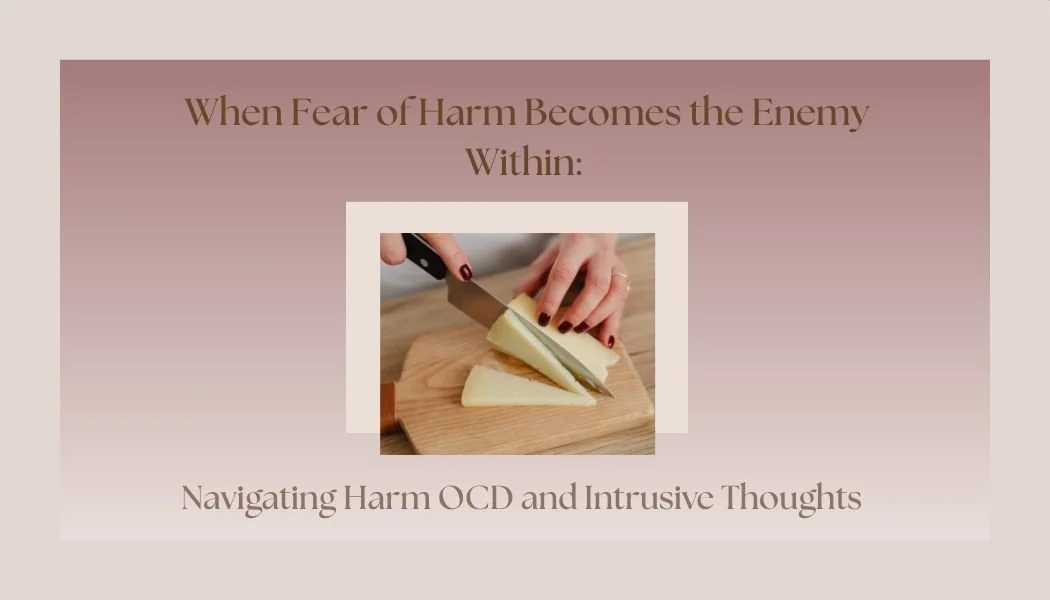
When Fear of Harm Becomes the Enemy Within: Navigating Harm OCD and Intrusive Thoughts
When Fear of Harm Becomes the Enemy Within: Navigating Harm OCD and Intrusive Thoughts
Living with harm OCD and intrusive thoughts can feel profoundly isolating and punishing—but there is a path through. In this article, we explore the neuroscience behind intrusive harm thoughts, clarify what “harm OCD” really means, examine how the nervous system and trauma shape this experience, and offer concrete strategies curated by Embodied Wellness and Recovery for restoring safety, agency, and relational connection.
What Is Harm OCD?
Imagine this: You’re sitting quietly, and suddenly the image of harming someone you love flashes into your mind. Or perhaps it’s self-harm: a vivid thought, or the fear of losing control, or an urge to hurt yourself that isn’t rooted in wanting to die but feels terrifying nonetheless. These are not signs of hidden aggression or unconscious wishes to act. They are symptoms of a subtype of obsessive-compulsive disorder called harm OCD, where unwanted intrusive thoughts of harm become the battleground.
Setting the Scene
It’s estimated that general intrusive thoughts, unwanted images, or ideas that pop into awareness, are experienced by most people (Berry & Laskey, 2012). But in harm OCD, the pattern becomes relentless, ego-dystonic (i.e., the thoughts clash with the person’s values), and the person spends vast mental energy trying to neutralize or avoid those thoughts (Wright, 2010).
In clinical terms, the research defines OCD as “intrusive thoughts, urges, or images that are repetitive and unwanted (obsessions) and/or repetitive behaviors or mental acts (compulsions) in response to those obsessions” (Björgvinsson & Hart, 2007). In the case of harm OCD, the content of obsessions centers around harming oneself or others, losing control, or being responsible for catastrophic harm despite intact moral values (Weiss, Schwarz, & Endrass, 2024).
Why Those Thoughts Feel So Excruciating
1. Misinterpretation and Inflated Responsibility
People with harm OCD often interpret an intrusive thought as a sign that they could act on it, that the thought means something about their character or capacity. This is known as “thought-action fusion” (Siwiec, 2015). When that happens, the brain’s alarm circuits jump in.
2. Neural Circuitry Stuck in “What If” Loops
Brain imaging studies show that in OCD, there are abnormalities in frontal-striatal circuits and the “error-monitoring” systems of the brain, the neural loops that help us sense “this is wrong” or “shouldn’t happen” (Doron, Sar-El, Mikulincer, & Kyrios, 2011). Research on “thought-context decoupling” shows that obsessive thoughts become less tied to actual environment or intention and more free‐floating and alarming (De Haan, Rietveld, & Denys, 2015).
3. Nervous System Dysregulation and Trauma
From the approach of Embodied Wellness and Recovery, we view these intrusive thoughts not just as cognitive anomalies but as signals of a nervous system primed for threat, perhaps by trauma, high anxiety, or relational stress. When the sympathetic nervous system is overactivated, these intrusive thoughts are more likely. Science supports the notion that repetitive, harmful thinking (perseverative cognition) triggers physiological stress responses, which keep the brain locked in a state of threat vigilance (Brosschot, Gerin, & Thayer, 2006).
4. The Pain of Moral Dissonance
Because the person with harm OCD usually does not want to hurt anyone or themselves, the presence of these thoughts creates shame, paralysis, isolation, and consistent checking or mental rituals. The thoughts feel like they define you. The truth, and this requires gentle acknowledgment, is that the presence of the thought does not equate to intent. Research shows that intrusive harm thoughts are not generally associated with subsequent harmful behavior in OCD populations (Berry & Laskey, 2012).
Signs You Might Be Navigating Harm OCD
— Recurrent unwanted images or urges of harming yourself or someone else, accompanied by intense fear of those thoughts (Ferris, Mills, & Hanstock, 2012).
— The content of the thought is opposite to your values (“I would never hurt someone,” yet the thought terrifies you).
— Time-consuming mental checking, reassurance seeking, avoidance of people/situations, or internal neutralising rituals to prevent harm (Guzick, Schneider, & Storch, 2022).
— Full awareness that the thought is unreasonable, but inability to stop it, and distress about what the thought means about you.
— Exhaustion from mental looping, anxiety, shame, and often avoidance of relationships or intimacy due to fear of “what if I lose control?”
A Trauma-Informed, Nervous-System-Sensitive Approach
At Embodied Wellness and Recovery, we draw on trauma, somatic regulation, and attachment-informed frameworks to work with harm OCD in an integrated way.
1. Stabilise the nervous system
Begin with body-based regulation: practice slow diaphragmatic breathing, orient to your senses, engage in grounding exercises, take small movement breaks, and track the felt sense of your body. These create neurological safety, allowing the brain to shift out of threat mode.
2. Name the anatomy of the loop
Understanding that the intrusive thought is an obsession, not necessarily a choice or a marker of who you are, helps deactivate the shame loop. Cognitive-behavioural therapy (CBT), exposure and response prevention (ERP), and Acceptance and Commitment Therapy (ACT) are evidence‐based (Nielsen et al., 2025).
For example:
— Recognize: “Here is an intrusive harm thought.”
— Pause: Notice the bodily sensations, the fear, the urge to neutralize.
— Allow: Let the thought surface without immediate compulsion.
— Respond: Choose a planned response rather than a reactive one.
3. Address Trauma and Attachment Wounds
Often, these harmful intrusive thoughts are not only about fear of acting but also fear of being abandoned, fear of being seen as unsafe, fear of not being loved if I’m “bad.” Working with relational templates and body memories helps shift the core identity from “I am dangerous” to “I live with a brain that misfires, and I’m learning to respond differently.”
4. Build Secure Relationships and Relational Safety
Intrusive harm thoughts can isolate you from intimacy and trust. As therapists skilled in nervous system repair and relational healing, we help clients reconnect with a safe attachment, learn to communicate about this hidden fear, and practice vulnerability with trusted others.
5. Create a Hierarchy of Exposure and Ritual Resistance
Actual change happens through doing: gradual exposure to triggers (for example, being near something you’ve avoided) while resisting the mental ritual or compulsion. Over time, the brain’s threat response recalibrates. New research is exploring novel treatments, but standard therapies remain foundational (Anguyo, Drasiku, Akia, & Naisanga, 2025).
Practical Strategies You Can Start Today
— Interrupt the loop – When an intrusive harm thought arises, pause and label it: “Intrusive thought: fear of harm.” Bring curiosity rather than judgment.
— Body check-in – Notice your breath rate, muscle tension, and posture. Breathe into your ribs and belly for two minutes.
— Exposure in micro-steps – If avoidance is part of the pattern (e.g., not wanting to be around children, or avoiding knives, or avoiding driving), work with a clinician to build a gradual exposure plan.
— Challenge meaning-making – Ask: “What is the evidence this thought means I will act? What is the evidence that it does not?” This disrupts the fusion of thought and action.
— Relational sharing – When safe, share with a trusted person (therapist, coach, partner) that you are experiencing harmful thoughts. This removes secrecy, shame, and isolation.
— Somatic maintenance – Daily 5-10 minutes of grounding, body awareness, orientation to safety.
— Follow through with specialized therapy – Seek an OCD/trauma specialist who can guide ERP, trauma-informed care, and nervous system regulation.
Why Hope Remains
Your thoughts do not define you. Research shows that, despite how terrifying they feel, intrusive harm thoughts in OCD are not an indicator of imminent harm to others or yourself (Cochrane & Heaton, 2017). The neural circuitry can change. The body’s threat response can recalibrate. The relationship to the thoughts can shift from “I’m dangerous” to “I live in a brain that misinterprets threat and I am building what matters: connection, regulation, meaning.”
At Embodied Wellness and Recovery, we honor the courage it takes to bring these invisible battles into light. We specialise in trauma, nervous system repair, relationships, sexuality, and intimacy. We know that harm OCD is not just a brain circuit; it is part neurobiology, part wound, part relational story, and we are here to walk that path with you.
Reach out to schedule a complimentary 20-minute consultation with our team of therapists, trauma specialists, somatic practitioners, or relationship experts, and start creating a sense of safety that feels right for you today.
📞 Call us at (310) 651-8458
📱 Text us at (310) 210-7934
📩 Email us at admin@embodiedwellnessandrecovery.com
🔗 Visit us at www.embodiedwellnessandrecovery.com
👉 Check us out on Instagram @embodied_wellness_and_recovery
🌍 Explore our offerings at Linktr.ee: https://linktr.ee/laurendummit
References
1) American Psychiatric Association. (2023). Obsessive-Compulsive Disorder (OCD): When unwanted thoughts or repetitive behaviors take over. Retrieved from https://www.nimh.nih.gov/health/publications/obsessive-compulsive-disorder-when-unwanted-thoughts-or-repetitive-behaviors-take-over National Institute of Mental Health
2) Anguyo, M., Drasiku, H., Akia, M., & Naisanga, M. (2025). Advancements in Obsessive Compulsive Disorder: Novel Approaches for Diagnosis and Treatment. In Mental Health-Innovations in Therapy and Treatment. IntechOpen.
3) Berry, L. M., & Laskey, B. (2012). A review of obsessive intrusive thoughts in the general population. Journal of Obsessive-Compulsive and Related Disorders, 1(2), 125-132.
4) Björgvinsson, T., & Hart, J. O. H. N. (2007). Obsessive-compulsive disorder. Handbook of assessment, conceptualization, and treatment, 1.
5) Brosschot, J. F., Gerin, W., & Thayer, J. F. (2006). The perseverative cognition hypothesis: A review of worry, prolonged stress-related physiological activation, and health. Journal of psychosomatic research, 60(2), 113-124.
6) Cochrane, T., & Heaton, K. (2017). Intrusive uncertainty in obsessive-compulsive disorder. Mind & Language, 32(2), 182-208.
7) De Haan, S., Rietveld, E., & Denys, D. (2015). Being free by losing control: what obsessive-compulsive disorder can tell us about free will.
8) Ferris, T. S., Mills, J. P., & Hanstock, T. L. (2012). Exposure and response prevention in the treatment of distressing and repugnant thoughts and images. Clinical Case Studies, 11(2), 140-151.
9) Guzick, A. G., Schneider, S. C., & Storch, E. A. (2022). Childhood Obsessive-Compulsive and Related Disorders. EA Storch, JS Abramowitz & D. McKay D. Complexities in Obsessive-Compulsive and Related Disorders, 285-310.
10) Nielsen, S. K. K., Stuart, A. C., Winding, C., Øllgaard, M., Wolitzky-Taylor, K., Daniel, S. I., ... & Jørgensen, M. B. (2025). Group Acceptance and Commitment Therapy versus Cognitive Behavioral Therapy/Exposure Response Prevention for Obsessive Compulsive Disorder: A Block Randomized Controlled Trial. Psychotherapy and Psychosomatics, 94(3), 135-146.
11) Siwiec, S. (2015). Developing interpretation training for modifying thought-action-fusion associated with obsessive-compulsive symptoms (Master's thesis, The University of Wisconsin-Milwaukee).
12) Weiss, F., Schwarz, K., & Endrass, T. (2024). Exploring the relationship between context and obsessions in individuals with obsessive-compulsive disorder symptoms: a narrative review. Frontiers in Psychiatry, 15, 1353962.
13) Wright, E. C. (2010). A cognitive dissonance approach to understanding and treating obsessive-compulsive disorder (Doctoral dissertation, George Mason University).

When the Body Remembers: Understanding the Link Between Trauma and Chronic Pain and How Somatic Therapy Heals from Within
When the Body Remembers: Understanding the Link Between Trauma and Chronic Pain and How Somatic Therapy Heals from Within
Discover the neuroscience behind the connection between trauma and chronic pain. Learn how somatic therapy helps regulate the nervous system, release stored tension, and restore mind-body balance. Written by trauma and somatic therapy specialists at Embodied Wellness and Recovery.
The Hidden Connection Between Trauma and Chronic Pain
Have you ever wondered why your body continues to ache even when medical tests show nothing is wrong? Why do old injuries flare during times of stress, or why does tension seem to live in your neck, jaw, or stomach? For many people, chronic pain isn’t just a physical condition; it’s the body’s way of communicating unresolved emotional wounds.
Modern neuroscience and somatic psychology suggest that chronic pain and trauma are deeply intertwined. The body remembers what the mind tries to forget. When trauma is left unresolved, it doesn’t simply vanish; it embeds itself in the nervous system, shaping posture, muscle tension, and pain perception for years to come.
At Embodied Wellness and Recovery, we specialize in helping clients understand and heal the relationship between trauma, chronic pain, and the nervous system. Through somatic therapy, EMDR, and other body-based approaches, clients learn to listen to their bodies’ wisdom and release the stored patterns that perpetuate suffering.
How Trauma Gets Trapped in the Body
When you experience something overwhelming, such as emotional neglect, abuse, an accident, or even ongoing stress, your body activates the fight, flight, or freeze response. This survival mechanism floods the system with adrenaline and cortisol, preparing you to act or escape. But if the threat feels inescapable, the nervous system can become stuck in that state of hyperarousal or shutdown.
In other words, the trauma response doesn’t end when the event ends. The body remains in a constant state of hypervigilance or collapse. This dysregulation may manifest as:
— Chronic muscle tension or migraines
— Stomach pain or gastrointestinal issues
— Lower back pain without a structural cause
— Autoimmune flare-ups
— Fatigue or insomnia
Research shows that trauma changes the way the brain processes pain. The amygdala (fear center) stays overactive, while the prefrontal cortex (rational brain) becomes less able to regulate emotions or sensations. The insula, which helps you perceive internal body states, can also misfire, amplifying the sensation of pain even when there’s no new injury.
The result? A body that keeps sounding the alarm long after the danger has passed.
Chronic Pain as a Nervous System Issue
Many people with chronic pain feel dismissed by traditional medical approaches. They’re told their pain is “all in their head” or simply handed medication to manage symptoms. But chronic pain isn’t imagined; it’s embodied. It’s the language of a nervous system that never got the message that it’s safe again.
From a polyvagal perspective, chronic pain reflects a dysregulated autonomic nervous system. The vagus nerve, which connects the brain to major organs, plays a crucial role in regulating stress responses. When trauma disrupts this system, the body may oscillate between sympathetic overactivation (anxiety, tension, inflammation) and dorsal vagal shutdown (numbness, exhaustion, despair).
Somatic therapy aims to restore flexibility to this system, helping the body return to a state of regulation where healing can occur.
What Is Somatic Therapy?
Somatic therapy is a body-centered approach that helps clients reconnect with their physical sensations, emotions, and inner resources. Instead of focusing solely on cognitive processing, it emphasizes the felt experience, or how emotions manifest in the body.
At Embodied Wellness and Recovery, somatic therapy sessions may include:
— Body awareness and tracking: Learning to notice tension, breath, and internal cues without judgment.
— Grounding and orienting: Reconnecting with safety through present-moment awareness.
— Pendulation: Gently moving between states of discomfort and calm to expand the nervous system’s capacity for regulation.
— Resourcing: Identifying internal and external supports to stabilize the body during emotional processing.
— Gentle movement or breathwork: Releasing stored activation and restoring flow through the musculature and fascia.
Over time, this work helps the body discharge old survival energy, completing what the trauma response was unable to finish. Clients often notice not only emotional relief but also reduced physical pain, improved sleep, and greater resilience.
The Neuroscience of Somatic Healing
Neuroscience confirms what many somatic therapists have long observed: the body and brain heal together. When clients tune into physical sensations with curiosity and compassion, the insula and anterior cingulate cortex, regions involved in emotional regulation and interoception, become more active.
This mindful awareness fosters neuroplasticity, enabling the formation of new neural pathways. The prefrontal cortex can once again modulate the amygdala, calming hyperarousal and reducing pain perception. Over time, the nervous system learns that it is safe to relax.
Somatic therapy doesn’t simply manage pain; it helps the body relearn safety, releasing the chronic muscle contractions and inflammatory responses that maintain suffering.
Why Trauma-Informed Care Matters
For individuals with trauma histories, traditional physical treatments like massage or chiropractic care can sometimes feel invasive or even re-traumatizing if the body isn’t ready. Somatic therapy offers a gentle, non-invasive alternative that honors the client’s pace.
At Embodied Wellness and Recovery, our trauma-informed approach ensures that every session centers on consent, empowerment, and safety. Clients are guided to develop internal resources before exploring distressing sensations or memories. This helps prevent overwhelm while supporting integration at both the emotional and physiological levels.
A Holistic Approach to Chronic Pain
Healing chronic pain isn’t just about addressing the physical body; it’s about repairing the relationship between body, mind, and emotion. That’s why we integrate EMDR, mindfulness, and relational therapy into somatic work.
This integrative model supports:
— Nervous system repair through Somatic Experiencing and EMDR resourcing
— Emotional release through safe exploration of stored sensations
— Relationship repair by addressing attachment wounds that perpetuate tension and fear
— Sexual and emotional intimacy restoration, when pain or trauma has disrupted connection
When trauma healing and body awareness come together, clients rediscover a sense of ease, vitality, and wholeness.
Asking the Right Questions
If you’re struggling with chronic pain, it can help to pause and ask yourself:
— When did my pain first begin? Was it around a time of loss, conflict, or emotional stress?
— Do I notice my symptoms worsen when I feel anxious or triggered?
— Have I spent more time treating the symptoms of my pain than exploring its emotional roots?
Sometimes, the body holds answers that words cannot reach.
Hope Through Somatic Awareness
Chronic pain can make life feel small, restricting movement, joy, and connection. But within your body lies the map to healing. Through somatic therapy, you can learn to listen to what your body is communicating rather than trying to silence it.
At Embodied Wellness and Recovery, we guide clients through a process of reconnection and regulation, helping them feel safe in their bodies again. As the nervous system stabilizes, both pain and emotional distress tend to soften. The goal isn’t just the absence of pain; it’s the presence of vitality, agency, and inner peace.
Pain as a Messenger
Chronic pain is more than a medical condition; it’s often a messenger of unhealed experience. Somatic therapy offers a compassionate and scientifically grounded path toward understanding those messages and transforming them into wisdom.
Your body isn’t betraying you; it’s asking to be heard. And with the right guidance, it can finally exhale.
Contact us to schedule a complimentary 20-minute consultation with our team of somatic practitioners, trauma specialists, and relationship experts. Start your journey toward embodied connection and freedom from pain today.
📞 Call us at (310) 651-8458
📱 Text us at (310) 210-7934
📩 Email us at admin@embodiedwellnessandrecovery.com
🔗 Visit us at www.embodiedwellnessandrecovery.com
👉 Check us out on Instagram @embodied_wellness_and_recovery
🌍 Explore our offerings at Linktr. ee: https://linktr.ee/laurendummit
References
Levine, P. A. (2010). In an unspoken voice: How the body releases trauma and restores goodness. North Atlantic Books.
Porges, S. W. (2011). The polyvagal theory: Neurophysiological foundations of emotions, attachment, communication, and self-regulation. W. W. Norton & Company.
Van der Kolk, B. A. (2014). The Body Keeps the Score: Brain, Mind, and Body in the Healing of Trauma. Penguin Books.

Setting Boundaries with Emotionally Draining People: How to Honor Your Limits Without Guilt or Resentment
When the Body Remembers: Understanding the Link Between Trauma and Chronic Pain and How Somatic Therapy Heals from Within
Feeling emotionally drained after spending time with certain people? Learn how to set healthy boundaries with emotionally exhausting individuals using neuroscience-backed strategies. Discover how honoring your limits without guilt can help restore your energy, nervous system balance, and emotional well-being.
Have you ever left a conversation feeling inexplicably tired, anxious, or even resentful, like the life force was quietly pulled out of you? Maybe it’s a friend who constantly vents but never listens, a family member who thrives on drama, or a colleague who always needs emotional reassurance. These are what psychologists often call emotionally draining relationships, and over time, they can leave your nervous system in a constant state of depletion.
Many people who struggle to set boundaries know the problem all too well:
— “I feel guilty saying no.”
— “I don’t want to hurt their feelings.”
— “I’m afraid they’ll think I’m selfish or cold.”
At Embodied Wellness and Recovery, we often work with clients who carry the emotional weight of others without realizing the toll it takes on them. Understanding the neuroscience of boundaries and learning how to protect your emotional energy can help you honor your limits without shame and cultivate healthier, more reciprocal relationships.
Why Emotionally Draining People Affect You So Deeply
Our brains are wired for connection. Through mirror neurons and co-regulation, we naturally attune to the emotional states of others. When someone around us is anxious, angry, or dysregulated, our nervous system can unconsciously mirror their state in an attempt to help or soothe.
Suppose this happens frequently, especially in relationships where the other person consistently takes more emotional energy than they give. In that case, you may find yourself stuck in sympathetic arousal (fight-or-flight response) or dorsal shutdown (freeze response). These are the physiological underpinnings of emotional exhaustion.
You might notice:
— Feeling tense, drained, or overstimulated after interacting with certain people
— Difficulty focusing or sleeping after an encounter
— Persistent feelings of guilt or resentment
— A growing urge to withdraw, but fear of confrontation or abandonment
Neuroscientifically speaking, your autonomic nervous system is signaling that your boundaries have been breached.
The Guilt Behind Boundaries: Why It Feels So Hard
Setting boundaries is not just a behavioral skill; it’s a nervous system skill. If you grew up in an environment where love and belonging depended on meeting others’ needs, your brain likely associates boundaries with danger, rejection, or loss.
From a psychological perspective, guilt and anxiety often arise not because boundaries are wrong, but because they activate old survival patterns. Your inner child might still believe:
— “If I say no, I’ll lose connection.”
— “If I assert myself, I’ll be punished.”
— “If I take space, I’ll be alone.”
The good news? These responses can be retrained. By using somatic awareness, mindfulness, and relational healing, you can teach your body that safety and self-respect can coexist with love and empathy.
Understanding the Neuroscience of Boundaries
Boundaries are not walls; they’re filters. They regulate what comes in and what goes out, emotionally, energetically, and physically. Think of them as your nervous system’s immune system. When your boundaries are intact, your body and mind can stay regulated even in the presence of others’ distress.
Here’s how the brain and body collaborate to maintain boundaries:
1. The Prefrontal Cortex: Your Wise Adult
This part of the brain is involved in reasoning, planning, and emotional regulation. When you pause before reacting, take a deep breath, and respond intentionally, your prefrontal cortex is online, guiding you toward conscious choice rather than emotional reactivity.
2. The Amygdala: Your Emotional Alarm
The amygdala alerts you to potential threats. When it’s overactive (as it often is in trauma survivors), it can misinterpret healthy boundaries as rejection or danger. Learning to calm this response through breathwork, grounding, and therapy helps you reclaim balance.
3. The Vagus Nerve: Your Safety Switch
Your vagus nerve helps regulate your social engagement system, the part of your physiology that governs connection, empathy, and calm presence. When you feel safe, you can connect authentically without absorbing others’ emotions.
Five Somatic and Psychological Strategies for Setting Healthy Boundaries
1. Listen to Your Body’s Signals
Before you can set an external boundary, you must recognize your internal ones. Notice:
— Tightness in your chest or jaw when someone oversteps
— A sinking feeling when you agree to something you don’t want
— Fatigue or irritability after a particular interaction
These are your body’s way of saying, “Something isn’t safe or sustainable.”
When you learn to trust these cues, your body becomes your compass for boundary-setting.
2. Practice Regulated Nos
A “no” doesn’t have to be harsh; it can be calm, grounded, and kind.
Try saying:
— “I wish I could, but I don’t have the capacity right now.”
— “I care about you, but I need to take some time for myself.”
— “Let’s talk about this when I have more energy to be present.”
When you say no from a regulated state, your tone, breath, and posture communicate safety, even if your words express a limit.
3. Shift from Guilt to Gratitude
When guilt arises, reframe it as a sign of growth. Guilt often appears when you’re stepping out of a conditioned pattern of self-sacrifice.
Try saying to yourself:
“This guilt means I’m learning to take care of myself.”
Over time, this helps your brain associate boundaries with self-respect instead of selfishness.
4. Create Recovery Rituals After Draining Interactions
Even with good boundaries, certain situations may still leave you emotionally taxed. Use rituals to restore your nervous system after challenging interactions:
— Step outside for a few deep breaths or a short walk
— Use coherent breathing (inhale 5, exhale 5) to reset your vagal tone
— Take a brief sensory break: feel your feet on the ground, notice temperature, texture, sound
These simple practices help your body discharge residual stress, allowing you to return to equilibrium.
5. Work with a Trauma-Informed Therapist
If boundaries consistently trigger panic, guilt, or freeze responses, it’s often rooted in attachment trauma or chronic people-pleasing patterns. Working with a trauma-informed or somatic therapist can help you rewire those early relational imprints and create new experiences of safety in connection.
At Embodied Wellness and Recovery, our clinicians integrate EMDR, Somatic Experiencing, and attachment-focused therapy to help clients:
— Repair the nervous system’s stress response
— Identify and communicate emotional boundaries
— Heal relational trauma that makes boundaries feel unsafe
— Build internal resilience for authentic connection
From Drained to Grounded: Reclaiming Your Emotional Energy
Imagine walking away from an interaction feeling centered, not depleted. You’ve listened, shown empathy, and remained connected, but your energy is still your own. That’s what it feels like to live with healthy boundaries.
As you develop this skill, certain relationships shift. Some people will adapt to your new limits; others may resist. This is part of the growth process. Holding your boundaries with compassion and consistency communicates both self-respect and emotional maturity.
Boundaries are an act of love: love for yourself, and love for the relationships that thrive when built on respect rather than enmeshment.
Integrating Neuroscience, Compassion, and Practice
Healthy boundaries don’t disconnect you from others; they help you stay connected without losing yourself. They’re not rejection; they’re protection of your nervous system and preservation of your authentic self.
The next time guilt arises when you set a boundary, remind yourself:
“My energy is valuable. When I care for it, I can offer my presence more fully.”
Through consistent practice, your brain and body begin to understand that you can say no without losing love and care for yourself without abandoning others.
If You Feel Constantly Drained, There’s Hope
At Embodied Wellness and Recovery, we specialize in helping individuals heal from trauma, chronic stress, codependency, and relational burnout.
Our integrative approach combines neuroscience, somatic therapy, and attachment work to help you reclaim your energy, establish healthy boundaries, and restore balance in both your body and relationships.
Visit www.embodiedwellnessandrecovery.com to learn more about trauma-informed therapy, nervous system regulation, and relational healing.
Reach out to schedule a complimentary 20-minute consultation with our team of therapists, trauma specialists, somatic practitioners, or relationship experts, and start creating a felt sense of safety in your relationships today.
📞 Call us at (310) 651-8458
📱 Text us at (310) 210-7934
📩 Email us at admin@embodiedwellnessandrecovery.com
🔗 Visit us at www.embodiedwellnessandrecovery.com
👉 Check us out on Instagram @embodied_wellness_and_recovery
🌍 Explore our offerings at Linktr.ee: https://linktr.ee/laurendummit
References
1) Cozolino, L. (2017). The Neuroscience of Psychotherapy: Healing the Social Brain (3rd ed.). W. W. Norton & Company.
2) Porges, S. W. (2011). The Polyvagal Theory: Neurophysiological Foundations of Emotions, Attachment, Communication, and Self-regulation. W. W. Norton & Company.
3) Siegel, D. J. (2020). The developing mind: How relationships and the brain interact to shape who we are (3rd ed.). Guilford Press.

The Science of Selflessness: How Being of Service Heals the Brain and Expands the Heart
The Science of Selflessness: How Being of Service Heals the Brain and Expands the Heart
Discover the neuroscience and psychology behind being of service. Discover how shifting from self-focus to compassionate action can regulate the nervous system, strengthen connections, and support trauma recovery.
Healing through Connection, Purpose, and Giving
Have you ever noticed that when you’re lost in your own worries, fears, or self-criticism, the world feels smaller? When we’re caught in cycles of anxiety, depression, or trauma, it’s easy to become trapped in self-centered fear, ruminating over what’s wrong, what’s missing, or what might go wrong next. Ironically, the very thing that helps quiet this distress isn’t more self-analysis but turning outward in service to others.
At Embodied Wellness and Recovery, we often remind clients that healing happens not only through self-awareness but also through connection, purpose, and giving. Neuroscience is now confirming what ancient traditions have taught for centuries: being of service changes the brain, regulates the nervous system, and cultivates resilience and well-being.
When the Mind Turns Inward Against Itself
When we feel anxious, ashamed, or preoccupied with our own pain, the brain’s default mode network (DMN), responsible for self-referential thinking, becomes overactive. This network is associated with self-criticism, worry, and obsessive rumination.
You might ask yourself:
— Why do I feel so stuck inside my own head?
— Why can’t I stop overthinking or comparing myself to others?
— Why does focusing on my problems seem to make them worse?
From a trauma and nervous system perspective, self-focus often intensifies distress because it keeps us cycling in sympathetic activation (fight or flight) or dorsal vagal shutdown (freeze and withdrawal). Our nervous system was never designed to heal in isolation; it’s wired for connection.
The Neuroscience of Service and Connection
1. Service Regulates the Nervous System
When you engage in acts of service, whether volunteering, helping a friend, or offering genuine kindness, your brain releases oxytocin, the bonding hormone that fosters trust and safety. Oxytocin activates the ventral vagal complex, part of the parasympathetic nervous system that restores calm and connection (Porges, 2011).
This state of social engagement helps shift your physiology out of survival mode. The heart rate slows, breathing deepens, and the body’s stress response decreases. Serving others is, in essence, a somatic intervention for chronic stress.
2. Helping Others Reduces Rumination
Research shows that altruistic behavior quiets the default mode network, the brain system associated with self-referential worry and depression (Brewer et al., 2011). In other words, when we focus on helping someone else, our brain literally turns down the volume on our internal critic.
Acts of service can reorient neural activity toward empathy, problem-solving, and relational awareness, stimulating the prefrontal cortex, which helps us feel grounded and clear.
3. Service Boosts Mood Through Dopamine and Serotonin
Engaging in meaningful service activates the brain's reward circuitry, releasing dopamine and serotonin, chemicals that contribute to motivation, satisfaction, and overall well-being. Neuroscientists sometimes refer to this as the “helper’s high.”
Even small acts, like writing a kind note, donating time, or showing compassion to a stranger, can trigger this neurochemical shift. Over time, consistent service rewires the brain to associate giving with pleasure and a sense of belonging.
The Paradox of Self-Focus vs. Service
When we’re overwhelmed by trauma, loss, or stress, focusing on others can feel impossible. Yet the paradox is this: the very act of extending beyond ourselves begins to heal the self.
Being of service doesn’t mean self-neglect or over-functioning. It means grounding in our own nervous system first, through breath, regulation, and awareness so that we can connect authentically and contribute meaningfully.
A helpful reflection might be:
“What small action could I take today that benefits someone else, without depleting me?”
This might look like:
— Checking in on a friend who’s struggling
— Helping a neighbor carry groceries
— Mentoring someone in recovery
— Offering a listening ear without advice
— Volunteering time or skill toward a cause aligned with your values
Each of these acts engages prosocial neural pathways, shifting your brain from a state of fear to one of connection.
Service as an Antidote to Self-Centered Fear
In trauma recovery and in programs like the 12 Steps, the concept of self-centered fear describes the looping focus on self that fuels anxiety and isolation. It’s not about arrogance; it’s about being consumed by survival.
When fear contracts the nervous system, service expands it. Helping others broadens our window of tolerance, allowing us to hold more emotional complexity without shutting down. We begin to sense that life is not only happening to us, but through us and with others.
From a therapeutic perspective, this is where transformation begins:
— Moving from fear to purpose
— From isolation to connection
— From self-preoccupation to embodied compassion
How Service Supports Trauma Recovery
At Embodied Wellness and Recovery, we see the benefits of service as both neurobiological and spiritual.
Here’s how it supports the healing process:
1. Rebuilding Trust and Attachment
Trauma often disrupts one’s sense of safety and trust in relationships. Acts of service provide low-risk opportunities to practice safe connection, the foundation for secure attachment.
When we give without expectation, our nervous system experiences a sense of relational reciprocity, teaching the body that connection can be safe again.
2. Strengthening Purpose and Identity
After trauma, it’s common to feel disconnected from meaning or direction. Service helps restore a sense of identity anchored not in pain but in purpose. Neuroscience suggests that meaning-making activates the brain’s reward pathways, reinforcing positive motivation and resilience (Frankl, 2006).
3. Enhancing Emotional Regulation
Helping others requires empathy, patience, and emotional presence, all skills that develop prefrontal cortex strength and autonomic regulation. Over time, this practice helps stabilize mood and reduce impulsivity and reactivity.
Practical Ways to Practice Being of Service
You don’t have to volunteer at a large organization to reap the benefits. Service begins in small, embodied actions:
— Start local. Offer support to someone in your community or recovery circle.
— Pair service with mindfulness. Notice how your body feels before, during, and after helping someone. Do you sense more calm, expansion, or connection?
— Reflect and integrate. After serving, take a moment to journal about what you felt. This helps encode new neural patterns associated with joy and a sense of purpose.
— Include self-compassion. Serving others doesn’t mean ignoring yourself. True service arises from overflow, not depletion.
The Relational Ripple Effect
When one person begins to live from a place of service and empathy, the nervous system coherence that develops can have a positive influence on others. This is the science of co-regulation, when one regulated nervous system helps calm another.
Couples and families who practice small acts of mutual care create a relational safety that transforms their dynamics. Communities that prioritize collective service often experience lower stress and higher resilience overall.
Service is not simply altruism; it’s biology, psychology, and spirituality converging in action.
A Closing Reflection
When we reach beyond self-concern, we discover a larger rhythm of belonging. Service reminds us that our pain, while real, is not the whole story. Our nervous system settles when it knows it’s part of something greater—a community, a purpose, a shared heartbeat of humanity.
At Embodied Wellness and Recovery, we integrate trauma-informed therapy, somatic regulation, and relational healing to help individuals move from self-centered fear to compassionate action. Service isn’t only a moral virtue; it’s a neuroscientific pathway to healing, one that connects the brain, body, and heart in profound alignment.
Reach out to schedule a free 20-minute consultation with our team of therapists, trauma specialists, somatic practitioners, or relationship experts, and begin shifting your focus from being focused on self to becoming more other-centered today.
📞 Call us at (310) 651-8458
📱 Text us at (310) 210-7934
📩 Email us at admin@embodiedwellnessandrecovery.com
🔗 Visit us at www.embodiedwellnessandrecovery.com
👉 Check us out on Instagram @embodied_wellness_and_recovery
🌍 Explore our offerings at Linktr.ee: https://linktr.ee/laurendummit
References:
1) Brewer, J. A., Worhunsky, P. D., Gray, J. R., Tang, Y. Y., Weber, J., & Kober, H. (2011). Meditation experience is associated with differences in default mode network activity and connectivity. Proceedings of the National Academy of Sciences, 108(50), 20254–20259.
2) Frankl, V. E. (2006). Man’s Search for Meaning. Beacon Press.
3) Porges, S. W. (2011). The Polyvagal Theory: Neurophysiological Foundations of Emotions, Attachment, Communication, and Self-Regulation. W. W. Norton & Company.

When Two Hearts Are Wired Differently: The Window of Tolerance and Nervous System Regulation in Couples and Relationships
When Two Hearts Are Wired Differently: The Window of Tolerance and Nervous System Regulation in Couples and Relationships
Discover how the window of tolerance affects nervous system regulation in relationships and how couples can navigate triggers, trauma responses, and intimacy with somatic awareness and neuroscience-informed tools.
Attuning to Each Other’s Nervous Systems in the Context of Relationships
Do you find yourself in an argument with your partner and suddenly your mind feels clouded, your chest tightens, and all you want to do is either fight back or freeze? Does love sometimes feel like walking on eggshells because your nervous system seems to have its own agenda? If so, you may be experiencing what happens when the window of tolerance gets activated in intimate relationships.
The concept of the window of tolerance comes from trauma therapy, but its relevance to couples and relational intimacy is profound. It appears every time one partner triggers the other’s nervous system, and a shared moment of vulnerability gets hijacked by the survival instinct. At Embodied Wellness and Recovery, we specialize in trauma, nervous system repair, sexuality, and relational healing. In this article, we explore how couples can become attuned to their nervous systems, widen their windows of tolerance together, and foster connection rather than chaos.
What Is the Window of Tolerance?
The window of tolerance is a concept originally coined by Dr. Dan Siegel and later developed by Dr. Pat Ogden in the context of trauma. It refers to the zone of optimal arousal where we feel safe, present, and able to respond adaptively to life’s challenges. When we are within our window of tolerance, our nervous system is regulated, our prefrontal cortex (the thinking brain) is online, and our limbic system (emotions, survival instincts) is in balance.
When we move outside that window, we may enter:
— Hyperarousal: fight/flight—racing heart, irritability, anxiety, overwhelm
— Hypoarousal: freeze/shut-down—numbness, disconnection, dissociation
In relationships, these states are not just internal experiences; they are relational events. When one partner triggers the other into hyper or hypo arousal, the relational dance becomes about nervous system regulation rather than connection.
Why Nervous System Regulation Matters in Relationships
Trauma and Relational Triggers
Have you ever asked yourself, 'Why does this small comment from my partner send me into a tailspin?' Why do I feel triggered in this relationship when I thought I was safe? Often, the answer is rooted in nervous system patterns shaped by early trauma, attachment disruption, or relational neglect. Your nervous system learned to protect you by going into survival mode; now it’s getting activated by relational cues.
For example:
— A partner’s tone of voice may replicate a caregiver’s anger, triggering hyperarousal.
— An emotional withdrawal by a loved one may replicate childhood abandonment, triggering hypoarousal.
When these reactions occur, your capacity for attuned connection, emotional safety, and sexual or relational presence shrinks.
The Neurobiology of Relational Safety
Neuroscience shows that the ventral vagal complex of the parasympathetic system supports social engagement, calming, connection, and intimacy (Porges, 2011). When you feel safe, you’re in that ‘green zone’. When threatened, you switch to sympathetic or dorsal vagal (survival) mode.
In couples’ work:
— If one partner’s nervous system is dysregulated, it can be like an alarm going off in the relational field.
— The other partner may respond by shutting down, mirroring, or reacting, none of which supports genuine intimacy.
— Real relational change occurs when both partners learn to co-regulate, widen their windows together, and return to safe relational presence after dysregulation.
Recognizing the Signs: How You Know the Window is Narrow
Ask yourself:
— Do I feel like I lose myself when I’m upset with my partner?
— Does little conflict feel overwhelming?
— Does one of us tend to go silent, shut down, or completely withdraw?
— Do we end up repeating the same fight because we never calm down enough to talk clearly?
— Does my body tell me it's unsafe long before my mind realizes I’m triggered?
When your window of tolerance is narrow, the dance of intimacy becomes about survival rather than thriving.
Practical Strategies for Widening Your Window of Tolerance Together
Here are relational and somatic tools to help you regulate your nervous systems and deepen connection:
1. Build Somatic Awareness as a Couple
— Check-in: Pause and ask each other, “Where am I in my body right now?”
— Name the nervous system state: Hyper or hypo arousal?
— Breath together: Try slow diaphragmatic breath for 2-3 minutes until your nervous system downshifts.
2. Use Relational Rituals that Support Safety
— Establish a signal for when one partner is triggered (e.g., a soft touch or code word) instead of escalation.
— Agree on a time-out plan: one partner asks for a break; both remain connected rather than disconnected.
— Practice co-regulation afterwards: sit together, ground together, reconnect.
3. Rewrite Internal Narratives
— Shift from “My partner makes me feel…” to “When I feel X in my body, it tells me I am triggered.”
— Use internal language that reclaims agency: “My nervous system is reacting. I can pause and return.”
— In therapy or reflection: identify distortions, body sensations, triggers, and rewiring opportunities.
4. Engage in Trauma-informed Couples Therapy
At Embodied Wellness and Recovery, we integrate somatic, nervous system, and trauma-informed modalities in couples therapy:
— Explore individual trauma histories that narrow the window of tolerance
— Teach nervous system regulation tools for couples
— Support healing around trauma, sexuality, intimacy, and relationship patterns
— Track progress via both internal (body/mind) and relational (communication, connection) markers
5. Practice Nervous System Hygiene Every Day
— Nightly body scan or breathwork together
— Regular check-ins: “What state did I bring into dinner?”
— Recognize that growth is not a straight line; relapse into old patterns is not failure, it’s information.
Why Embodied Wellness and Recovery is Your Relational Partner
Relationships are not isolated individual experiences; they are nervous systems in contact with one another. At Embodied Wellness and Recovery, we bring:
— Deep expertise in trauma, nervous system repair, intimacy, and sexuality
— A relational-neuroscience lens that recognizes how your body, mind, and partner’s system interact
— A warm, compassionate professional approach, guided by research, informed by somatics, and rooted in repair rather than blame
You can learn to widen your relational window of tolerance so that your bond becomes a place of safety, resilience, and embodied connection.
Bringing It All Together
The window of tolerance is not just an individual concept; it’s a relational roadmap. When triggers arise in couples, they are invitations to pause, regulate, name, and reconnect. Navigating confusion, shame, or conflict isn’t about perfection; it’s about presence. When both partners engage in somatic regulation, relational safety, and nervous system repair, your relationship can move from survival turbulence to authentic intimacy.
You don’t have to figure this out alone or struggle with relational disconnection. With awareness, nervous system support, relational practices, and professional guidance, you can expand your relational window of tolerance and cultivate a partnership founded on safety, mind-body integration, and mutual growth.
When you're ready to reconnect with that more profound sense of meaning, we're here to walk alongside you. Contact us today to schedule a free 20-minute consultation and begin your journey toward embodied connection, clarity, and confidence.
📞 Call us at (310) 651-8458
📱 Text us at (310) 210-7934
📩 Email us at admin@embodiedwellnessandrecovery.com
🔗 Visit us at www.embodiedwellnessandrecovery.com
👉 Check us out on Instagram @embodied_wellness_and_recovery
🌍 Explore our offerings at Linktr. ee: https://linktr.ee/laurendummit
References
Ogden, P., Minton, K., & Pain, C. (2006). Trauma and the body: A sensorimotor approach to psychotherapy. W.W. Norton.
Porges, S.W. (2011). The polyvagal theory: Neurophysiological foundations of emotions, attachment, communication, and self-regulation. W.W. Norton.
Siegel, D.J. (1999). The developing mind: How relationships and the brain interact to shape who we are. Guilford Press.
When Thoughts Become Traps: Understanding Cognitive Distortions That Warp Your Reality
When Thoughts Become Traps: Understanding Cognitive Distortions That Warp Your Reality
Learn how cognitive distortions distort our reality and fuel anxiety, depression, and self-criticism. Discover neuroscience-informed strategies to identify and change distorted thinking patterns with guidance from Embodied Wellness and Recovery.
The Human Mind is a Powerful Force
Have you ever caught yourself thinking, “I always fail,” “This will never work,” or “If they really knew me, they would leave”? Do you find your mind zeroing in on the worst-case scenario, magnifying the negative and rejecting the good? If so, you may be experiencing one of those subtle but powerful mind habits known as cognitive distortions.
The human mind is a powerful force. It shapes how we experience the world, interpret situations, and connect with, or disconnect from, ourselves and others. But sometimes that power works against us. Through distorted thinking, we bend reality until it looks much scarier, harsher, or more hopeless than it truly is.
In this article, we’ll explore:
— What cognitive distortions are and how they impact mental health, nervous system regulation, relationships, and even sexuality.
— Critical questions that speak to the pain of recurring negative thoughts.
— Hope and solution: how you can begin shifting those habits and reclaiming clarity, connection, and resilience.
— Why Embodied Wellness and Recovery is uniquely positioned to guide you from distortion toward embodied freedom in trauma, nervous system repair, intimacy, and relationships.
What Are Cognitive Distortions?
Cognitive distortions are habitual, inaccurate thought patterns, mental “filters” that skew perception, interpretation, and meaning Roberts, 2015). They were first described in the cognitive-behavioral therapy work of Aaron T. Beck, who found that patients with depression often had automatic negative thoughts about themselves, the world, and the future (Beck, 1997).
Neuroscience helps us understand how this happens:
— The prefrontal cortex (our reasoning center) may under-engage, while the amygdala (our threat detector) over-reacts, resulting in a brain wired for danger rather than nuance (Roberts, 2015).
— Repeated distorted thoughts create neural pathways that make those patterns stronger and more automatic (Roberts, 2015).
— Distorted thinking is not just a “bad habit” but part of the way our nervous system learned to protect us, often in childhood or trauma.
So when your mind whispers “I’m worthless,” or “Nothing good ever lasts,” those thoughts are not random; they are wired in.
Why Does This Matter So Much?
If you live with frequent and persistent patterns of pessimistic or self-critical thoughts, you are not simply dealing with “thinking errors.” You are experiencing cognitive distortions that influence mood, behavior, relationships, and even your nervous system. Here’s how:
Emotional and Mental Health Impact
— These distortions fuel anxiety, depression, self-doubt, and relational conflict because they shape meaning in destructive ways. In a study of cognitive distortions, higher levels correlated with increased depressive symptoms (McGrath & Repetti, 2002).
— For folks in therapy, distortions undermine progress; the thoughts you carry inside pull your nervous system into survival mode rather than healing.
Nervous System and Trauma Implications
— When your brain continually interprets events through distortion, your nervous system stays in a state of alert, freeze, or avoidance instead of regulation and connection.
— Especially for clients with trauma or attachment injury, distorted thinking often maps directly onto bodily responses, heart racing, dissociation, muscle tension. The mind-body loop keeps you stuck.
Relational and Intimate Life Consequences
— Distorted beliefs affect how you interpret your partner’s behavior (“They must not love me”) or your own sexual desires (“I should always feel this way”).
— This becomes a barrier to intimacy, authenticity, and embodied connection, themes central to our work at Embodied Wellness and Recovery.
Questions Worth Asking Yourself
— Do I find myself automatically thinking the worst about a situation or about myself, without evidence or perspective?
— Are these thoughts so familiar that they feel normal? When I try to stop them, does my body feel tense, exhausted, or “on guard”?
— Does the voice inside sound like a critic, a predictor of doom, or a judge?
— How does this thinking pattern impact my relationships, my emotional life, or my capacity for pleasure, connection, and intimacy?
— Would I like to feel freer in my thinking, calmer in my body, and more aligned in my mind-body self?
If your answer to any of these is yes, know that the path ahead is not one of fixing something wrong, but of deeply retraining what your nervous system and mind learned to protect you and learning new patterns that support safety, regulation, and connection.
Hope and Practical Solutions
At Embodied Wellness and Recovery, we specialize in integrative work around trauma, nervous system repair, relationships, sexuality, and intimacy. Here’s how our team addresses cognitive distortions with both depth and compassion:
1. Naming the Distortions (cognitive awareness)
We help you identify patterns such as all-or-nothing thinking, overgeneralization, mental filtering, catastrophizing, and personalization (Amjad, 2025). Bringing awareness is the first step toward choice, not being subject to your mind’s filters.
2. Somatic Regulation and Nervous System Support
Because distorted thoughts reside in the nervous system, we utilize tools such as grounding, breathwork, body scanning, and mindfulness to calm the activation and create space for new thinking.
Neuroscience shows that when the prefrontal cortex can engage (rather than being flooded by the amygdala), thought patterns become more flexible (Salzman & Fusi, 2010).
3. Cognitive Restructuring (thought work)
Using adapted CBT and trauma-responsive models, we help you challenge distorted thoughts, replace them with balanced, realistic thoughts, and test them in life (Brisset, 2025).
For example:
— Thought: “If I try and fail, then I am worthless.”
— Reframe: “Trying and learning make me human. My worth is inherent, not dependent on perfection.”
4. Relational and Intimacy Integration
We explore how distorted thinking impacts relationships and sexuality, how your internal voice influences your connection, desire, safety, and pleasure. Then we support you in creating new relational scripts anchored in safety, communication, and embodied presence.
5. Trauma- and Nervous System-Informed Continuity
We recognize that for many adults, cognitive distortions are not simply “bad thinking” but survival strategies from early trauma, neglect, or dysfunctional family systems. We help rebuild neural capacity for regulation, rewiring the mind-body loop over time.
Bringing It All Together
Your mind is powerful, but what’s even more powerful is your capacity to change how you relate to it. Cognitive distortions are not character flaws; they are wired responses that once served you. The journey we support at Embodied Wellness and Recovery is one of curiosity over judgment, presence over avoidance, and integration over fragmentation.
When your body is regulated, your mind becomes flexible. When your thoughts are observed instead of believed, you create space for connection, authenticity, and embodied intimacy.
You don’t have to live at the mercy of your thinking patterns. With compassionate awareness, neuroscience-informed interventions, and relational support, you can move toward a life where your mind works for you, rather than against you.
Reach out to schedule a free 20-minute consultation with our team of therapists, relationship experts, trauma specialists, and somatic practitioners, and gain freedom from distorted thoughts today.
📞 Call us at (310) 651-8458
📱 Text us at (310) 210-7934
📩 Email us at admin@embodiedwellnessandrecovery.com
🔗 Visit us at www.embodiedwellnessandrecovery.com
👉 Check us out on Instagram @embodied_wellness_and_recovery
🌍 Explore our offerings at Linktr.ee: https://linktr.ee/laurendummit
References
1) Amjad, M. (2025). Rewiring the Mind: A Cognitive Psychology Approach to Changing Negative Thinking.
2) Brisset, J. (2025). Trauma-Responsive Integrative Art and DBT (TRIAD) as an Art Therapy Treatment Model for Adolescents with Complex Posttraumatic Stress Disorder (CPTSD): A Theoretical Intervention Research.
3) Gilbert, P. (1998). The Evolved Basis and Adaptive Functions of Cognitive Distortions. British Journal of Medical Psychology, 71(4), 447-463.
4) Hendrix, H., & Hunt, H. L., authors of Getting the Love You Want: A Guide for Couples and Making Marriage Simple.
5) McGrath, E. P., & Repetti, R. L. (2002). A longitudinal study of children's depressive symptoms, self-perceptions, and cognitive distortions about the self. Journal of Abnormal Psychology, 111(1), 77.
6) Roberts, M. B. (2015). Inventory of cognitive distortions: Validation of a measure of cognitive distortions using a community sample.
7) Salzman, C. D., & Fusi, S. (2010). Emotion, cognition, and mental state representation in the amygdala and prefrontal cortex. Annual review of neuroscience, 33(1), 173-202.

When Sleep Fails the Brain: How Sleep Problems Impact Depression Therapy Outcomes
When Sleep Fails the Brain: How Sleep Problems Impact Depression Therapy Outcomes
Discover how sleep problems can undermine depression therapy outcomes, and how neuroscience-informed, trauma-sensitive approaches at Embodied Wellness and Recovery support nervous system repair, emotional resilience, and improved treatment response.
Do you struggle with persistent sadness, a heavy mood, or lack of motivation, and at the same time find you just cannot sleep? Does therapy feel like it helps sometimes, yet you still remain stuck in a cycle of low mood, minimal energy, and fragmented nights? You are navigating a common but often under-recognized problem: the connection between sleep disturbances and depression therapy outcomes.
In this article, we’ll explore the impact of insomnia, poor sleep continuity, and circadian disruption on the effectiveness of therapy for depression. We’ll look at what neuroscience tells us about how sleep underpins emotional regulation, healing, and nervous system repair. And we’ll offer hope along with a guided solution from the practitioners at Embodied Wellness and Recovery, trauma experts, nervous system repair, relationships, sexuality, and intimacy.
Why Sleep Really Matters for Depression Treatment
When you’re depressed, your sleep often suffers. You might lie awake at night, toss and turn, wake early, or drift into daytime sleepiness. Research shows that this is not just a side-effect of depression; it’s a feeding loop that undermines therapy outcomes (Franzen & Buysse, 2008).
Studies have found that people with major depressive disorder who also have insomnia or fragmented sleep are less likely to respond fully to therapy or medication (Manber et al., 2008). For example, Jensen et al. (2022) found that “more sleep problems predicted higher depression by the end of treatment.” Manber and colleagues (2008) pointed out that insomnia impacts “the course of major depressive disorder … hinders response to treatment, and increases risk for depressive relapse.” And Yasugaki (2025) explores the bidirectional link: depression contributes to sleep disturbances, and those disturbances in turn worsen depression.
From a neuroscience perspective, our sleep architecture, including deep sleep and REM phases, plays a critical role in emotional memory processing, brain plasticity, and regulation of the autonomic nervous system. Without good sleep, the prefrontal cortex shows reduced activation, and the amygdala hyper-reactivity increases. In other words, your brain is less able to regulate mood, control anxious or ruminative thinking, and integrate the relational work you’re doing in therapy.
What Happens When Therapy Gets Undermined by Poor Sleep?
1. Reduced Capacity for Emotional Regulation
Therapy often asks you to feel feelings, tolerate discomfort, explore patterns, and make new connections. But if sleep is insufficient, your nervous system remains in a state of heightened arousal or exhaustion. You may feel more reactive, more dissociated, or simply unable to engage with your material.
2. Impaired Learning and Neuroplasticity
Therapy isn’t just talking. It’s rewiring. When you sleep poorly, the learning circuits that support the formation of new neural pathways are diminished. Your brain cannot consolidate what you process in session into lasting change.
3. Increased Ruminative Thinking and Negative Bias
Sleep problems lead to cognitive rigidity, negative attention biases, and difficulty shifting out of unhelpful thought loops. That means what you explore in therapy may keep replaying in your mind without resolution.
4. Higher Relapse Risk
As the literature shows, untreated sleep disturbance increases relapse rates in depression. When your sleep remains compromised, therapy may help, but the gains are fragile (Franzen & Buysse, 2008).
Ask yourself:
— Are you tired of falling asleep stressed, waking up anxious, and feeling stuck despite doing therapy?
— Do you try to engage in therapy, but afterwards feel like you are still on the same emotional ground?
— Is your mood swing, irritability, or low motivation tied to nights of restless sleep or too many wake-ups?
If you answered yes, your sleep is likely undermining your ability to benefit fully from therapy.
A Hopeful Path Forward: What You Can Do
At Embodied Wellness and Recovery, our approach weaves together nervous system repair, somatic awareness, relational safety, and trauma-informed modalities. Improving sleep is a foundational step for enhancing your depression therapy outcomes. Here are actionable strategies:
Reset your sleep first-aid
— Sleep hygiene: Consistent bedtime, dark room, limited screens before bed, and avoiding stimulants late in the day.
— Stimulus control: Only use your bed for sleep and intimacy. Leave the bed if you cannot fall asleep within 20 minutes.
— Regularity: Go to bed and wake at the same time, even on weekends. This supports your circadian rhythm.
These practices lay the groundwork for your nervous system to regulate.
Integrate Somatic Regulation
Because depression + sleep problems often reflect a dysregulated nervous system, we include body-based work:
— Gentle body scans, progressive muscle relaxation to ease pre-sleep tension.
— Breathwork to stimulate the ventral vagal pathway and support calm.
— Evening movement-rituals (yoga, walking) rather than high-arousal activity.
These practices help shift your nervous system into the “rest and digest” state, where sleep is restorative and therapy becomes effective.
Bring Therapy and Sleep Together
— Inform your therapist about your sleep difficulties so you can integrate sleep as part of your therapeutic roadmap.
— Explore sleep-specific therapy: For many clients, we co-design a treatment that combines depression-focused therapy with CBT, which has been shown to improve depression outcomes when insomnia is addressed (Cunningham & Shapiro, 2018).
— Track sleep + mood: Use a simple journal or app to record hours slept, wake-ups, mood next day, and therapy session reflections. Patterns emerge and guide change.
Use Neuroscience-Informed Interventions
— Understand that sleep spindles, deep-sleep slow waves, and REM architecture all bear on mood regulation circuits (Clear & Juginović, n.d.).
— When sleep improves, your prefrontal cortex re-engages, amygdala reactivity decreases, and treatment-driven neural plasticity becomes stronger.
— Therapy that reconnects body, mind, and relational context becomes more integrative and transformative when the sleep foundation is solid.
Why Embodied Wellness and Recovery Is Your Partner
We specialize in complex and overlapping domains: trauma, addictive behavior, intimacy, nervous system repair, and relational health. If sleep problems are impeding your depression therapy outcomes, our team offers:
— Integrative somatic-therapeutic assessments that include sleep, nervous system arousal patterns, relational context, and trauma history.
— Tailored treatment plans combining depression-focused therapy, sleep interventions (CBT-informed), somatic practices, and relational work.
— Compassionate expertise in working with clients whose depression and sleep issues intersect with trauma, sexuality, attachment, and system dysregulation.
When your sleep improves and your nervous system stabilizes, the gains you make in therapy become stronger, more sustainable, and open up new possibilities for connection, recovery, and intimacy.
Bringing It All Together
If you have been doing therapy for depression and yet mornings still feel heavy, sleep still fragmented, and the promise of change still out of reach, your nervous system and sleep might be the missing piece. The work you do in therapy, whether it’s cognitive, relational, somatic, or trauma-informed, needs a receptive brain and a regulated body. Sleep gives that receptivity.
By prioritizing your sleep, regulating your nervous system, and integrating somatic awareness into your therapy, you enhance your capacity to absorb therapeutic change, open to new relational possibilities, and deepen your emotional resilience. At Embodied Wellness and Recovery, we are here to guide, support, and co-create this path with you.
Sleep is not optional; it is foundational. And when it becomes strong, your therapy becomes deeper, your mood steadier, your relationships richer, and your life more aligned with the intentions you set.
Reach out to schedule a free 20-minute consultation with our team of therapists, trauma specialists, somatic practitioners, and relationship experts, and begin your healing journey today.
📞 Call us at (310) 651-8458
📱 Text us at (310) 210-7934
📩 Email us at admin@embodiedwellnessandrecovery.com
🔗 Visit us at www.embodiedwellnessandrecovery.com
👉 Check us out on Instagram @embodied_wellness_and_recovery
🌍 Explore our offerings at Linktr.ee: https://linktr.ee/laurendummit
References
1) Clear, A., & Juginović, A. Sleep Science Made Simple.
2) Cunningham, J. E., & Shapiro, C. M. (2018). Cognitive Behavioural Therapy for Insomnia (CBT-I) to treat depression: A systematic review. Journal of psychosomatic research, 106, 1-12.
3) Franzen, P. L. R., & Harvey, A. G. (2008). Sleep disturbances and depression: risk relationships for subsequent depression and therapeutic outcomes. Depression and Anxiety, 10(4), 4–10.
4) Jensen, E. S., et al. (2022). Effect of sleep disturbance symptoms on treatment outcome for depression in routine care. J Clin Psychol, 78(2), 215-225.
5) Manber, R., Edinger, J., Gress, J. L., San Pedro-Salcedo, M. G., Kuo, T. F., & Kalista, T. (2008). Cognitive behavioral therapy for insomnia enhances depression outcomes in patients with comorbid major depressive disorder and insomnia. Sleep, 31(4), 489-495.
6) Yasugaki, S. (2025). Bidirectional relationship between sleep and depression. Sleep Medicine, 100, 108635.

Transforming Fear into Forward Motion: How Therapy Turns Anxiety into Positive Action in Today’s Turbulent Times
Transforming Fear into Forward Motion: How Therapy Turns Anxiety into Positive Action in Today’s Turbulent Times
Feeling overwhelmed by global events, social unrest, or personal uncertainty? Discover how therapeutic approaches rooted in neuroscience and trauma-informed practice at Embodied Wellness & Recovery can help you transform fear into positive action, build nervous system resilience, and reconnect with meaningful purpose.
A Deeper, More Somatic Form of Fear
Have you found yourself awake at night, scrolling through news feeds, feeling a knot of dread in your chest and a tightness in your throat? Are you asking: What can I do when the world feels unstable, when fear grips my body, when my nervous system feels shaky, and my heart wants to act, but I freeze?
In this era of constant headlines, climate alarms, political unrest, economic uncertainty, and personal trauma, many of us struggle not just with worry, but with a deeper, somatic form of fear. It’s felt in the body long before it is processed by the mind. At Embodied Wellness and Recovery, we specialize in trauma, nervous-system repair, relationships, sexuality, and intimacy. We see how fear can freeze us, quiet our voice, and disconnect us from others. Yet we also know that fear can become a catalyst for positive change when processed with compassion, awareness, and therapeutic support.
This article explores how current events trigger fear responses, how neuroscience and therapy help us shift from paralysis to purpose, and what steps you can take to transform fear into meaningful action.
Why Fear From Current Events Hits Deep
When the world around us shifts, storms intensify, economies wobble, relationships strain, communities fracture, and our nervous system registers not only the external threat but echoes of past vulnerabilities. You might feel:
— A heavy pit in your chest when you watch news about war or displacement.
— A flash of heat or tension in your body when you consider the future of your children.
— A sudden collapse of motivation, with the thought: What difference can I make?
These are not just mental responses. Neuroscience shows that fear begins in the amygdala, a part of the brain designed to detect threat and mobilize action, but when threats feel overwhelming or chronic, the system can trap us in hyper-arousal or freeze states (Aigner, 2022).
In short, our bodies are responding to more than the immediate event; they are responding to layered threats and past traumas. Without support, fear can thrust us into avoidance, withdrawal, anxiety, insomnia, and even relational disconnection.
The Painful Double Bind: Wanting to Act but Feeling Stuck
Ask yourself:
— Do you feel a surge of concern or outrage about climate injustice, social inequality, and personal trauma, and yet you find yourself unable to respond?
— Do you catch yourself doing nothing because you feel powerless, and then feel worse afterwards?
— Does the fear leave you isolated or disconnected from friends, family, or community because you’re stuck in your head or your body is freezing?
These are everyday experiences. The gap between wanting to act and feeling paralyzed often becomes a source of shame, guilt, or self-judgment. Yet it doesn’t mean you are weak; it may mean your nervous system needs repair, your mind-body needs alignment, or that your therapy approach needs to include not only thinking but feeling.
Neuroscience and Therapy: Turning Fear Into Forward Motion
1. Understanding Neuroplasticity in Fear
Therapy is not simply talking out fear; it’s about rewiring how the brain and body respond to threat. Scientific reviews show that fear memories and neural circuits can be modified through exposure, safe relational experiences, and regulation of body signals (Dejean et al., 2015).
2. Therapy as Activation of New Action Pathways
When you feel fear and do not take any action, the brain may default to avoidance circuits. However, when you deliberately take small, meaningful action, no matter how tiny, the brain begins to form new pathways of agency, trust, and safety, “hijacking your brain’s fear circuit with one small action” (Hofstee, 2018).
3. Nervous system regulation as the foundation
At Embodied Wellness and Recovery, we emphasize that healing fear is not just cognitive; it is somatic. When the nervous system is dysregulated from trauma or chronic threat, any new action may feel unsafe or chaotic. Therapy that targets nervous-system repair (through breathwork, movement, interoception) creates the conditions for willing action rather than forced action.
A Therapeutic Map: From Fear to Meaningful Action
Here is a compassionate pathway to consider that may transform fear into positive, embodied engagement, regardless of whether you are in therapy.
Step 1: Notice the Somatic Alarm
When news, events, or internal memories hit you, pause. Notice your body. Where is the tension? Is your heart racing? Is your breath shallow? Are you frozen? Name it. “I feel heaviness in my chest,” “I sense my jaw clenched.”
Step 2: Breathe Into the Signal
Take three slow, gentle inhales into that area and exhale into the body. This practice communicates safety to your nervous system. You are not just thinking about fear; you are feeling and managing it.
Step 3: Ask What Wants to Be Done
Not “What should I do?” but “What wants to be done through me?” Maybe it is a small call, a letter, a donation, a conversation, or a walk with a friend. The action does not have to fix the world; it needs to engage you from your body and heart.
Step 4: Create the Action from Regulation, Not Frantic Response
Only once nervous-system regulation is present do you choose an action. A regulated body chooses differently from a triggered body. That action builds new neural pathways of agency.
Step 5: Reflect and Integrate
After action, ask: How did my body feel? What changed? Recording or discussing this creates integration, and your lived experience becomes feedback for growth.
Why This Matters for Relationships, Intimacy, and Community
When your overwhelming fear shrinks your connection to others, you withdraw, become reactive, and avoid intimacy. At Embodied Wellness and Recovery, we know that relational health, sexuality, and intimacy flourish when nervous-system regulation and embodied presence are in place. Transforming fear into action is not only self-care but relational repair. Positive action fosters trust, visible agency, and relational safety, all of which are crucial when the world around us is unstable.
You Can Begin Today
— Choose one small action today that responds to something you care about, not to escape your fear, but to act with your body and mind aligned.
— Schedule 5 minutes before bed to notice your body’s response to something you read or saw. Use the steps above.
— Consider working with a trauma-informed therapist who specializes in nervous-system repair, body-mind integration, relational and sexual health, like the team at Embodied Wellness and Recovery.
A New Pathway Forward
The challenge of today’s world can feel overwhelming, but fear need not immobilize you. When therapy meets neuroscience, body meets mind, and action rises from embodied compassion, there is a pathway forward. Your nervous system can relearn safety, your brain can rewire agency, and your relationships can deepen, not despite fear, but through it. The way you respond matters. The body you inhabit matters. The action you take, however small, creates new patterns, new rhythms, new hope.
Reach out to schedule a free 20-minute consultation with our team of therapists, trauma specialists, somatic practitioners, and relationship experts, and begin practicing self-compassion and connection today.
📞 Call us at (310) 651-8458
📱 Text us at (310) 210-7934
📩 Email us at admin@embodiedwellnessandrecovery.com
🔗 Visit us at www.embodiedwellnessandrecovery.com
👉 Check us out on Instagram @embodied_wellness_and_recovery
🌍 Explore our offerings at Linktr.ee: https://linktr.ee/laurendummit
References
1) Aigner, C. (2022). Love or fear? The please/appease survival response: interrupting the cycle of trauma.
2) Dejean, C., Courtin, J., Rozeske, R. R., Bonnet, M. C., Dousset, V., Michelet, T., & Herry, C. (2015). Neuronal circuits for fear expression and recovery: recent advances and potential therapeutic strategies. Biological psychiatry, 78(5), 298–306.
3) Hofstee, C. (2018). Renew Your Mind: How to rewire your brain for a happier, healthier life. Exisle Publishing.
4) LeDoux, J. E. (2016). Using neuroscience to help understand fear and anxiety. American Journal of Psychiatry, 173(4), 392-403.
5) Li, Y. (2023). Update on neurobiological mechanisms of fear. Frontiers in Behavioral Neuroscience, 17, 1216524. https://doi.org/10.3389/fnbeh.2023.1216524
6) Schiller, D., Levy, I., Niv, Y., LeDoux, J. E., & Phelps, E. A. (2008). From fear to safety and back: Reversal of fear in the human brain. Nature Neuroscience, 11(8), 957-959.

How Social Media Shapes Modern Relationships: From Connection to Conflict in the Digital Age
How Social Media Shapes Modern Relationships: From Connection to Conflict in the Digital Age
Explore how social media impacts intimacy, trust, and connection in modern relationships. Learn neuroscience-informed strategies from Embodied Wellness and Recovery to rebuild emotional presence and nervous system resilience.
Do you ever feel like you’re in a relationship yet somehow emotionally distant, scrolling past your partner, checking notifications, or comparing your connection to others’ highlight reels? In an era of constant digital connection, many people struggle with intimacy, trust, and meaningful relationship dynamics.
What if part of the challenge lies not in your feelings, but in how social media rewires your brain and nervous system? At Embodied Wellness and Recovery, we specialize in trauma, nervous system repair, relationships, sexuality, and intimacy, and we’ve seen how social media can amplify relational wounds. This article explores how social media affects modern relationships from a neuroscience perspective, asks the painful questions many of us avoid, and offers hope and tangible solutions for reconnecting body, brain, and partner.
The Digital Shift: When “Connected” Doesn’t Mean Intimate
Have you asked yourself:
— Why does my partner seem physically present but emotionally absent when scrolling their phone?
— Why do I feel jealous or unsure in my relationship because of social media even if nothing is “wrong”?
— Why do I compare my real-life bond to curated online versions and feel less satisfied?
These questions aren’t hypothetical. A major study by the Pew Research Center found that among partnered adults whose significant other uses social media, 23% reported feeling jealous or uncertain because of their partner’s social media activity with rates rising to 34% among 18- to 29-year-olds (Gottfried, 2024).
At the same time, neuroscience reveals that our brains and nervous systems respond to digital stimuli differently than to in-person relational interactions. The result: you may feel technically “connected” while physiologically and emotionally untouched.
What Neuroscience Reveals: Digital Relationship Burnout
Reward Loops and Brain Circuitry
Each “like,” comment, and notification triggers our brain’s reward circuitry—dopamine surges, reinforcement of checking behaviour, and a cycle of digital reassurance (Ali, Faraz, Memon, Salman, & Aziz, 2024). This constant stimulation blunts our capacity for slow, embodied relational presence.
Structural and Functional Brain Shifts
Research shows that intensive social media use can correlate with changes in brain areas tied to reward, social processing, and regulation (Morris, Moretta, & Potenza, 2023). For instance, intensive interactions with social networks have been associated with grey-matter changes in brain regions involved in addiction (He, Turel, & Bechara, 2017). While direct causation remains under investigation, the trend is clear: digital habits are reshaping relational neurobiology.
Digital Behaviour, Relationship Satisfaction, and Nervous System Stress
Social media can reduce “quality time,” increase conflict, and lower satisfaction in real-life relationships (Ali, Faraz, Memon, Salman, & Aziz, 2024). Moments of “phubbing” (phone snubbing) or unconscious comparison undermine trust, communication, and intimate attunement. These disruptions activate the nervous system’s alert states, sympathetic activation instead of relational safety, making emotional closeness harder.
Why Modern Relationships Feel Hard: The Embodied Perspective
If your relationship feels “on” yet “off,” it might be less about your heart and more about your body and nervous system. At Embodied Wellness and Recovery we often see this pattern:
— One partner is physically present, but the other is mentally scrolling, non-verbal cues of disengagement
— Comparison to online images triggers activation of the threat system: “I’m not enough,” “They have something I don’t.”
— Digital immediacy overrides embodied communication: Instant messages replace body language, eye contact, shared breath
From an embodied-trauma lens: if your nervous system has learned hyper-vigilance, dissociation, or avoidance, social media stimuli can trigger old patterns in real time. The body then signals “I’m unsafe” even when the relationship is safe, and the brain misreads it as a relational threat.
Practical Pathways: Reclaiming Presence, Connection and Trust
The good news: you don’t have to choose between digital life and deep relational connection. With awareness and practice, your body, brain, and nervous system can reclaim relational safety. Here’s how:
1. Schedule “Digital Pause” Rituals
Try setting technology-free windows together, such as 10-15 minutes at dinner, a walk without devices. Without screens, your nervous system shifts into relational rhythm: eye contact, breath syncing, body orientation.
2. Use Embodied Check-Ins
When you feel relational tension, or notice a scrolling partner, pause and ask: What do I feel in my body right now? Maybe tightness in the chest, clammy palms, or a rise in heart rate. Naming cues helps regulate the nervous system and bring your attention back into the body.
3. Create Shared Offline Micro-Experiences
Studies show shared experiences build relational resonance (Miller, 2015). Whether it’s cooking together, a nature walk, or simply reading in the same room, you engage relational neurobiology that social media cannot replicate. As one study notes, stronger social bonds are linked to significant health and longevity-related benefits (Murphy & Topel, 2006).
4. Expand Digital Literacy Together
Discuss social media habits openly: how often you scroll, what triggers comparison or jealousy, and phone use in shared spaces. Develop relational agreements (e.g., no phones during meals or bedtime) that protect embodied connection and nervous system regulation.
5. Seek Therapy for Nervous System & Relational Repair
If you experience chronic relational disconnection, recurring conflicts, or recurring digital-related jealousy or numbing, working with an expert can help. At Embodied Wellness and Recovery, we integrate trauma-informed somatic therapy, relational coaching, and nervous system repair to help rebuild emotional availability, trust, and intimate capacity.
Cultivating Hope: A New Relational Ecology
Imagine this: You sit across the table, phones silent. You look into your partner’s eyes. You feel your heart slow. You reach out your hand and they meet it. You both feel seen, not via a screen, a like or a comment but via body language, shared breath, presence. That shift is possible. Your relational brain and nervous system have the capacity to re-learn presence, trust, and deep connection, even in our hyper-digital era.
At Embodied Wellness and Recovery, we honor your desire for connection, your nervous system’s longing for safety, and your body’s memory of relational wholeness. With gentle, grounded, neuroscience-informed work, you can move from digital distraction and relational drift into embodied availability, attuned presence, and relational truth.
Relational Presence vs. Relational Default
While social media offers connection, it can also rewire the brain and nervous system in ways that undermine intimacy, trust, and emotional regulation. When scrolling becomes relational default, the body often signals it is lonely and so does your nervous system. The shift begins when you bring your body into the relational equation, regulate your physiology, and choose presence over feed. As you do, you open space for genuine intimacy, mutual trust, and embodied bonding even in our digital-first world.
Reach out to schedule a free 20-minute consultation with our team of therapists, trauma specialists, somatic practitioners, relationship experts and begin practicing embodied presence and connection today.
📞 Call us at (310) 651-8458
📱 Text us at (310) 210-7934
📩 Email us at admin@embodiedwellnessandrecovery.com
🔗 Visit us at www.embodiedwellnessandrecovery.com
👉 Check us out on Instagram @embodied_wellness_and_recovery
🌍 Explore our offerings at Linktr.ee: https://linktr.ee/laurendummit
References
Ali, U. A., Faraz, M., Memon, J. A., Salman, S. M., & Aziz, A. (2024). The influence of social media usage on quality time spent with family members: Moderating role of family cohesion. International Research Journal of Social Sciences and Humanities, 3(1), 930-955.
He, Q., Turel, O., & Bechara, A. (2017). Brain anatomy alterations associated with Social Networking Site (SNS) addiction. Scientific reports, 7(1), 45064.
Gottfried, J. (2024). Americans’ social media use. Pew Research Center, 31.
Morris III, R., Moretta, T., & Potenza, M. N. (2023). The psychobiology of problematic use of social media. Current Behavioral Neuroscience Reports, 10(4), 65-74.
Murphy, K. M., & Topel, R. H. (2006). The value of health and longevity. Journal of political Economy, 114(5), 871-904.

Widening Your Window of Tolerance: A Trauma-Informed Guide to Nervous System Regulation
Widening Your Window of Tolerance: A Trauma-Informed Guide to Nervous System Regulation
Learn how the concept of the window of tolerance, a neuroscience-informed model for nervous system regulation in trauma therapy, can help you understand and expand your emotional bandwidth, improve relational connection, and restore embodied resilience.
What Is the “Window of Tolerance”?
Have you ever felt that your emotional or physiological responses seem to spiral out of control, or that you drift into numbness or shutdown without warning? This may point to a narrowed “window of tolerance,” a key concept in trauma therapy and nervous system regulation. The term was initially coined by Dan Siegel to describe the optimal zone of arousal in which a person can effectively respond to life stressors while staying grounded, regulated, and connected.
When you are within your window of tolerance, your brain and body are in alignment; you can think clearly, feel your emotions without being overwhelmed, connect with others, and respond flexibly to what life brings.
When you step outside that zone, either into hyperarousal (fight, flight, overwhelm) or hypoarousal (freeze, dissociate, numb), you may feel stuck, reactive, disconnected, or shut down.
For many people with unresolved trauma, chronic nervous system dysregulation, or relational and intimacy wounds, the window of tolerance can feel very narrow. Even minor triggers may push you into dysregulated states.
Why Unresolved Trauma and Nervous System Dysregulation Matter
Have you ever asked yourself, “Why do I react so strongly to something that seems small?” Why do I freeze or shut down when I try to connect with someone? The answer often lies in the nervous system’s survival wiring. Trauma, whether a single incident or prolonged relational wounding, shapes how your autonomic nervous system responds (or over-responds) to perceived threats.
Research shows that chronic trauma can lead to autonomic dysregulation: a nervous system that remains hyper-reactive or chronically shut down, making the window of tolerance narrower and more fragile.
In this state, you might experience:
— Emotional volatility, anger, anxiety, panic, hypervigilance
— Emotional numbness or detachment, dissociation, feeling “flat”
— Challenges in relationships, fear of intimacy, avoidance, mistrust
— Struggles with sex, connection, boundaries, and vulnerability
Understanding the science behind this helps lift the shame that often accompanies these experiences and opens the door to more profound, embodied healing.
What happens neurologically when you’re outside your window?
When you operate within your window of tolerance, brain systems for regulation, connection, and higher-order thinking are online. Your prefrontal cortex helps you reflect, regulate, and engage.
When you’re pushed into hyperarousal, your sympathetic nervous system kicks in. Your heart rate rises, your muscles tense, and your brain’s threat detection (amygdala, etc.) dominates, and your thinking brain can go offline. You may feel flooded, reactive, or panicky.
When you’re pushed into hypoarousal, the dorsal branch of your parasympathetic system may engage, leading to shutdown, dissociation, emptiness, or collapse. Your system is trying to protect you by turning you off.
Each of these states is not a moral failure but a survival adaptation to a past or present threat. Recognizing this rewires shame into curiosity, and opens the pathway to recovery.
Why the Window of Tolerance Matters for Trauma, Relationships, Sexuality, and Intimacy
At Embodied Wellness and Recovery, we work from the intersection of nervous system–informed trauma therapy, somatic healing, relational connection, and intimacy repair. Understanding your window of tolerance is fundamental to all of these domains.
Trauma: Without nervous system regulation, trauma cannot be fully processed. A narrow window means you may avoid, dissociate, or get overwhelmed in sessions or daily life.
Relationships and Connection: Staying within your window enables you to stay present, feel safe, attune to another person, and express vulnerability. Outside it, you might withdraw, shut down, lash out, or hyper-react.
Sexuality and Intimacy: Sexual and intimate connection requires regulation, presence, receptivity, and attunement. Whether you feel hyper-activated or emotionally numbed, your window impacts your capacity to engage and enjoy intimacy.
Embodied Healing: Because our nervous system lives in the body, effective therapy needs to include somatic awareness, nervous system regulation, and relational safety, not just cognitive talk therapy.
By widening your window of tolerance, you enable yourself to move from survival to connection, from reactivity to response, from fragmentation to integration.
How to Widen and Strengthen your Window of Tolerance
Here are practical, neuroscience-informed strategies you can begin to integrate into your life and therapy process:
1. Learn to Recognize Your Arousal Aone
Ask yourself during moments of distress or disconnection:
— What am I feeling in my body right now?
— Am I speeding up (heart racing, breath shallow) or slowing down (heavy limbs, numb, shut down)?
— What triggered me? Was it an interpersonal exchange, a memory, or a somatic sensation?
Psychoeducation around the window of tolerance model helps you identify when you are moving toward the edges.
2. Use Nervous System Regulation Tools
— Grounding: Notice 5 things you can see, 4 things you can touch, 3 things you can hear, 2 things you can smell, 1 thing you can taste.
— Breathwork: Slow diaphragmatic breathing, exhale longer than inhale, re-activate the ventral vagal system.
— Movement: Gentle stretching, yoga, walking, shaking out tension — especially when you feel hyper or frozen.
— Safe relational engagement: Connection with a therapist or safe person can provide co-regulation that widens your window.
3. Practice Titrated Exposure to Discomfort
When your window is narrow, diving into heavy trauma material or intense relational work may push you outside your window. Instead, work gradually: a little distress that can be contained, integrated, and metabolized. Over time, this builds capacity.
4. Build Relational and Embodied Capacity
— Somatic interventions — body awareness, noticing sensations, tracking impulses, orienting in safety.
— Relational safety — therapeutic alliance, attuned connection, relational repair — these help widen your window by supporting safe systems.
— Regular regulation habits — sleep, nutrition, rhythm, movement because a resilient nervous system needs baseline support.
) Move toward relational and sexual healing
With a regulated system, you can explore intimacy, connection, vulnerability, and sex from a place of bodily presence rather than purely survival mode. At Embodied Wellness and Recovery, we help people repair relational and sexual connection by working with nervous system regulation first, then relational patterns, then embodied integration.
Questions worth asking yourself
— Do I experience either panic/anxiety/anger (hyperarousal) or numbness/disconnection/shutdown (hypoarousal) more often than I’d like?
— When I am triggered, do I feel like I lose control, freeze, dissociate, or disconnect from my body?
— How wide do I feel my “window” is? How much emotional or physiological fluctuation can I handle before I become dysregulated?
— What habitual patterns keep me stuck outside my window (avoidance, substance use, perfectionism, relational withdrawal)?
— What everyday practices do I have in place to regulate my nervous system and support my window of tolerance?
— In my relationships or intimate life, do I feel present, attuned, embodied, and responsive or reactive, disconnected, or shut down?
Why Working with Embodied Wellness and Recovery Matters
At Embodied Wellness and Recovery, we integrate neuroscience, somatic awareness, relational-cultural theory, trauma therapy, sexuality/intimacy work, and nervous system regulation. Our approach helps you:
— Understand how your nervous system has adapted to trauma and how that affects your window of tolerance.
— Develop embodied tools to regulate arousal and expand your capacity for connection.
— Repair relational and sexual intimacy from a secure, embodied foundation rather than survival mode.
— Build sustainable habits, such as nervous system fitness, relational resilience, and somatic intelligence.
Bringing It All Together
Your window of tolerance is not a fixed dimension; it can change, expand, and become more flexible. When your nervous system is regulated, your relational life, sexuality, and emotional resilience all deepen. When you’re frequently outside your window, life feels harder, relational connection becomes a struggle, intimacy feels risky, and trauma may feel like it is still running the show.
By turning our attention to somatic awareness, nervous system regulation, relational safety, and embodied presence, we reclaim capacity, not by denying the trauma or skipping the work, but by regulating the system. Hence, the work becomes possible and sustainable. At Embodied Wellness and Recovery, we guide you through that process with compassion, professionalism, depth, and relational attunement.
Reach out to schedule a free 20-minute consultation with our team of therapists, trauma specialists, somatic practitioners, relationship experts and begin widening your window of tolerance and strengthening your resilience today.
📞 Call us at (310) 651-8458
📱 Text us at (310) 210-7934
📩 Email us at admin@embodiedwellnessandrecovery.com
🔗 Visit us at www.embodiedwellnessandrecovery.com
👉 Check us out on Instagram @embodied_wellness_and_recovery
🌍 Explore our offerings at Linktr.ee: https://linktr.ee/laurendummit
References
Corrigan, F. M., Fisher, J. J., & Nutt, D. J. (2011). Autonomic dysregulation and the window of tolerance model of the effects of complex emotional trauma. Journal of Psychopharmacology, 25(1), 17-25.
Kerr, L. K. (2015). Live within your windows of tolerance: A quick guide to regulating emotions, calming your body & reducing anxiety. [PDF].
“Window of tolerance and PTSD.” (n.d.). PTS D.U.K. Retrieved from https://www.ptsduk.org/the-window-of-tolerance-and-ptsd/

Neural Similarity and Friendship: How Your Brain Predicts Who Becomes a True Friend
Neural Similarity and Friendship: How Your Brain Predicts Who Becomes a True Friend
Discover groundbreaking research from the University of California, Los Angeles, and Dartmouth College showing how strangers whose brains respond similarly are more likely to become friends. Learn what this means for your own relationships, and how to cultivate more profound connection and trust with embodied awareness.
How Our Brains Process the World
Have you ever wondered why you instantly felt a bond with someone, why conversation flowed, laughter came easily, and you felt seen, while with others it felt forced or guarded? What allows two strangers to click right away? Recent neuroscience suggests the answer may lie in how our brains process the world together (Lynch & Laursen, 2009).
Groundbreaking research from UCLA and Dartmouth found that neural similarity, the degree to which two people’s brains respond to the same stimuli, can predict whether they will become friends and even grow closer over time (Shen et al., 2025).
At Embodied Wellness and Recovery, our work spans trauma, nervous system repair, sexuality, intimacy, and relationships. This research offers hope for those of us who struggle to form meaningful connections in large groups or feel stuck in social cycles of distrust or frustration. This article will explore why some people connect at lightning speed, others don’t, and how you can cultivate that brain-to-brain resonance for deeper friendship and cooperation.
Why Connection Sometimes Fails: The Struggle with Compatible Friends
— Have you ever felt the pain of being in a group full of acquaintances but still feeling lonely?
— Do you worry that you don’t “fit in,” no matter how many friends you try to make?
— Do you want friendships that foster trust, cooperation, and emotional safety, but find yourself in relationships where you feel unseen, misunderstood, or disconnected?
These are more common than you might think. Many people move through life sensing they’re almost aligned with others but not quite. Conversations feel effortful, laughter feels forced, and the sense of trust never takes root. According to the first wave of this research, part of the barrier may lie not in your social skills or personality, but in your brain’s pattern of interpreting the world (Kandel & Squire, 2000).
What the Research Says: Neural Similarity as Friendship Predictor
In an extensive longitudinal study, researchers scanned the brains of strangers before they even met while they watched the same set of video clips (Quadflieg & Koldewyn, 2017). Then, eight months later, they mapped who had become friends and who had grown closer. What they found was striking: pairs of individuals whose neural responses were more similar at the outset were significantly more likely to become friends and deepen over time (Shen et al., 2025).
This phenomenon is referred to as neural homophily, the idea that similarity not just in demographics or hobbies, but in how we see and respond to the world, underlies strong social connection. In the study, even after controlling for variables such as age, gender, and background, neural similarity predicted both friendship formation and closeness (Shen et al., 2025).
In plain language: when two people unconsciously interpret, attend to, and emotionally respond to events in similar ways, the ease of connection grows exponentially. The next time you meet someone and it just clicks, your brains may have been resonating together from the first encounter.
Why Some People Don’t “Click” And What That Means for You
If you’ve ever felt like you’re trying hard to fit in or create connection, but it still feels forced, this research may provide insight: maybe your brain’s processing style isn’t aligning smoothly with those around you. This doesn’t mean you’re doing something wrong; it means your map of the world is different. And that’s okay. The challenge is navigating that difference.
When differences in attention, emotional responses, meaning-making, and neural interpretation exist, building social safety, trust, and cooperation can feel harder. You might find yourself withdrawing, feeling misunderstood, or settling for superficial connections. At the nervous-system level, this misalignment can trigger activation, fight-or-flight, or freeze responses, rather than rhythm, ease, and shared flow.
How to Cultivate Brain-to-Brain Resonance: A Practical Guide
Here’s how you can bring this research into your relational life and begin fostering deeper connection, even if friendships haven’t felt natural to you in the past.
1. Prioritise shared experience
Engage in an activity with others where attention is naturally aligned. Watch a documentary, attend a live performance, or take a class together. Shared stimuli create a context for shared neural response. Studies found that similarity in how participants processed audiovisual clips predicted friendship (Parkinson, Kleinbaum, & Wheatley, 2018).
2. Practice reflective listening and attunement
When in conversation, shift from What should I say next? to How am I experiencing this moment? And how might this other person be experiencing it? Attuned listening helps synchronise emotional and attentional rhythms.
3. Bring awareness to your body’s response
Notice when you’re with someone and your body relaxes, your breathing smooths, your focus sharpens. These are internal signals that your neural systems are aligning. At Embodied Wellness and Recovery, we believe body-based awareness rewires neural patterns for connection.
4. Engage in nervous-system regulation together
Try a simple co-regulation practice: synchronise breathing with a partner for a minute or two, or engage in light movement together (such as walking in silence side by side). A shared physiological rhythm can lead to a shared neural rhythm.
5. Interrogate—and shift—your internal story
Ask yourself: Do I believe others can genuinely connect with me? Do I fear being misunderstood or invisible? Trauma and relational wounds often leave us locked in patterns of activation that block resonant connection. At Embodied Wellness and Recovery, we integrate trauma-informed somatic methods to release these blocks.
Why This Matters for Groups, Trust, and Cooperation
The implications extend beyond single friendships. In workplaces, teams, and communities, when individuals share neural and relational attunement, trust and cooperation are amplified. This research offers a roadmap for true alignment in groups. Instead of bridging differences by force, the invitation is to foster shared meaning, attention, and emotional response.
When you feel connected, your nervous system registers safety, your brain anticipates cooperation, and your physiology fosters trust. This creates ripple effects into social bonding, intimacy, sexuality, and deep relational repair, all areas of focus at Embodied Wellness and Recovery.
What You Can Begin Doing Today
— In your next social interaction, pause: Is my brain quiet? Is my body relaxed? Am I present?
— Choose one social activity this week where you can share meaningful attention with someone, free from the expectation to be friends or perform.
— Notice patterns of nervous-system activation during social situations. If you feel tension, tightness, or alertness, body-aware methods such as grounding, breathwork, or simple movement can help you regulate and re-open to connection.
— If past trauma or relational disconnection makes it hard to trust your body’s signals, consider working with a professional to rebuild somatic safety, attentional presence, and relational capacity.
At Embodied Wellness and Recovery, we offer somatic relational therapy, nervous-system reparative techniques, and intimacy-informed coaching to help you not just understand connection, but live it. You don’t just want friends who see you; you deserve fractal resonant bonds at the brain-body level.
An Inside-Out Process
The mystery of why some people click instantly and others drift apart isn’t just social; it’s neural. When your brain waves match someone else’s, you’re far more likely to become friends, feel trust, and build something enduring. Rather than chasing connection through skills or roles, the invitation is to bring your body, your nervous system, your brain into resonance.
The good news: this is an inside-out process. It starts with your awareness, your regulation, and your openness to being seen at the level of brain, body, and meaning. The next time you meet someone and feel that spark of recognition, pay attention. It may be your neural system saying yes.
At Embodied Wellness and Recovery, we help you tune into that yes, repair the blocks, and step into relational life with nervous-system ease, emotional clarity, and embodied belonging.
Reach out to schedule a free 20-minute consultation with our team of therapists, relationship experts, somatic practitioners, and trauma specialists, and begin finding connection today.
📞 Call us at (310) 651-8458
📱 Text us at (310) 210-7934
📩 Email us at admin@embodiedwellnessandrecovery.com
🔗 Visit us at www.embodiedwellnessandrecovery.com
👉 Check us out on Instagram @embodied_wellness_and_recovery
🌍 Explore our offerings at Linktr.ee: https://linktr.ee/laurendummit
References
Kandel, E. R., & Squire, L. R. (2000). Neuroscience: Breaking down scientific barriers to the study of brain and mind. Science, 290(5494), 1113-1120.
Lynch, Z., & Laursen, B. (2009). The neuro revolution: How brain science is changing our world. St. Martin's Press.
Parkinson, C., Kleinbaum, A. M., & Wheatley, T. (2018). Similar neural responses predict friendship. Nature communications, 9(1), 332.
Quadflieg, S., & Koldewyn, K. (2017). The neuroscience of people watching: how the human brain makes sense of other people's encounters. Annals of the new York Academy of Sciences, 1396(1), 166-182.
Shen, Y. L., Hyon, R., Wheatley, T., Kleinbaum, A. M., Welker, C., & Parkinson, C. (2025). Neural similarity predicts whether strangers become friends. Nature Human Behaviour.

Body Signals of Wanting: How to Recognise the Urge in Your Body and Respond with Awareness
Body Signals of Wanting: How to Recognise the Urge in Your Body and Respond with Awareness
Discover how to tune into the physical sensations of craving and desire, rather than resisting them blindly. Learn body-based techniques to observe the pull of wanting and restore nervous-system balance with trauma-informed support from Embodied Wellness & Recovery.
The Pull of Desire
Have you ever felt an internal wave of longing—an urge you couldn’t quite name—rising in your body? Maybe your chest tightened, your stomach fluttered, or your mind spun with “just one more.” The pull of desire or craving often shows up as a body signal, yet we tend to respond only with thoughts: “I shouldn’t feel this,” “I must stop,” or “Why do I want this again?”
When we rely only on the mind, we miss what the body is trying to tell us. That creates a cycle of resistance, frustration, and often shame or self-judgment. At Embodied Wellness and Recovery, we understand that the path to proper regulation and freedom lies in tuning into the body's signals, sitting with them, and being willing to observe the pull of desire rather than push it away.
In this article, you’ll learn how the nervous system and interoception (our ability to sense internal bodily states) work together with craving and wanting. You’ll discover practical, trauma-sensitive techniques to recognise these body signals and offer a kind, wise response.
Why the Pull of Desire Feels Overwhelming
Ask yourself:
— Have you ever experienced a craving so strong that reasoning seemed useless?
— Do you feel disconnected from your body’s sensations when the urge arises, only to act later and discover the body was speaking all along?
— Does resisting feel like more struggle than the urge itself?
The science explains part of this. Research shows that craving or urge states are intricately tied to interoceptive signals, our internal sense of body states. When the body sends a signal (tightness, heat, flutter, emptiness), the brain often tries to categorise it, think about it, label it, but the urge already exists in the body’s terrain. If we ignore the signal and fight only with the mind, the nervous system remains in a state of sympathetic activation.
Moreover, when interoception is weakened, often due to trauma or chronic stress, we lose access to the body’s cues and act from the mind alone. That leads to impulsivity, disconnection, anxiety, or shame.
In short: the body is talking. The mind is trying to override. The result? A loop of wanting, resisting, acting, then wanting again.
What Exactly Are Body Signals of Wanting?
Body signals of wanting appear in many forms, some subtle, some intense. Here are common ones:
— A fluttering or hollow feeling in the belly
— Rapid heartbeat, flush of the chest
— Tingling or heat in the palms or face
— Muscle tension or a tightening sensation in the throat or jaw
— Restlessness, wanting to move, shift, reach
— A sense of emptiness or ache that something is missing
These signals are part of interoception, the brain’s monitoring of internal bodily states. (Engelen, Solcà, & Tallon-Baudry, 2023). Neuroscience tells us the brain uses interoceptive data (from the heart, gut, lungs, muscles) to generate emotional experience and guide decision-making (Dunn et al., 2010).
When you feel “I want that” or “I need this,” it’s not only a mental idea, it’s your body signalling something: reward, longing, safety, connection, relief, or even a trauma-response pattern. Understanding that helps you respond differently.
Why You Might Be Missing or Overriding These Signals
If you find that the signals feel vague, you ignore them, or they surprise you later, you’re not alone. Many people, especially those with trauma, high stress, or a history of suppression, have reduced interoceptive awareness. That means:
— The body’s signals don’t register clearly.
— The mind takes over, reasoning instead of sensing.
— Craving shows up as a sudden explosion instead of a gently rising wave.
Research shows that lower interoceptive awareness is linked with emotional dysregulation, depression, and disconnection from one’s own body. (Lee, Lee, Kim, & Huh, 2024).
That pattern may show up in your relationship with urges: you might either ignore them until they become urgent, or respond automatically without awareness, then regret, then dissociate. The shift starts when you become curious about what the body is saying, not just what the mind is thinking.
A Compassionate Technique to Observe the Pull of Desire
Here is a trauma-informed, body-based technique offered by Embodied Wellness and Recovery that you can practice when you sense an urge arising:
Step 1: Pause and Ground
When you notice the urge rising, pause what you’re doing (if safe). Place your feet on the ground. Notice the surface beneath you. Feel gravity, your breath in your belly. You are safely anchored.
Step 2: Tune In to the Body Signal
Ask: Where in my body do I feel this wanting or pull? Without judgement, scan: belly, chest, throat, limbs. Notice any subtle sensations: heat, coolness, pressure, flutter. Give it a name: “tightness in the lower belly,” “ache behind ribs,” “heat in forearms.”
Step 3: Name the Felt Emotion and the Urge
Once you identify the sensation, ask: What emotion might be associated with this? Longing? Anxiety? Emptiness? Next: What does the body want me to do or feel in response? It might be: “I want connection,” “I want relief,” “I want to move.”
Step 4: Breathe Into the Sensation
Take 3-5 slow, gentle breaths directed into the area of sensation. On the in-breath: “I’m sensing you.” On the out-breath: “I’m allowing you.” This tells your nervous system you are present and regulated, not fleeing or denying.
Step 5: Create a Response (Not a Reaction)
After you’ve sensed and named, ask: What is a wise alternative to acting on this urge immediately? It might be movement, writing, a call, a mindful pause, or reaching out to a supportive presence. Respond rather than react.
Step 6: Reflect and Integrate
After you respond, take a moment: What changed in my body? How did noticing rather than suppressing feel? Journal or note your experience. Over time, you’ll build capacity for self-regulation.
How This Practice Connects Brain-Body Repair and Trauma Recovery
At Embodied Wellness and Recovery, we know that cravings and urges are often bound up with nervous system dysregulation, often rooted in past relational, trauma, or attachment wounds. By working with the body signal, not just the mind, you interrupt old patterns and engage the physiology of repair.
Neuroscientific research supports this: improving interoceptive awareness strengthens brain-body integration, enhances emotional regulation, and reduces impulsivity. (Lazzarelli et al., 2024).
When you train to observe your body signals of wanting, you’re not just “resisting”; you’re connecting. You’re telling the body: I hear you. I’m here. I’m safe with this sensation. The nervous system begins to shift from urgency to presence.
For those healing trauma, exploring relationships, sexuality, or intimacy, these body-based practices are essential because so much of our relational life is lived through the body. The mind can tell stories, but the body feels. When you give your body a voice, you invite deeper transformation.
What You Can Expect with Regular Practice
— Stronger awareness of the message beneath the urge rather than just the craving.
— Reduced impulsivity and regret as you deepen the pause between sensation and action.
— Greater connection to your body’s intelligence, your safety, your desire, your boundaries.
— Enhanced emotional regulation, less shame, less dissociation.
— Better alignment in relationships and intimacy because your body signals become clearer guides.
Over time, you’ll shift from: “I must get rid of this urge” to “I notice this urge, I sense its body signal, I respond with awareness.” That shift matters.
Why Embodied Wellness & Recovery Can Support You
At Embodied Wellness and Recovery, we specialize in the intersection of trauma, nervous system repair, relationships, sexuality, and intimacy. Our somatic, relational, and neuro-informed approach helps you:
— Recognize and respond to body signals of wanting rather than act on them unconsciously.
— Engage nervous system regulation so urges don’t hijack you.
— Build relational and sexual integrity rooted in presence rather than avoidance.
— Recover from past trauma where body signals were ignored, shamed, or dissociated.
We know the body holds the key. The mind can understand, but the body knows. And when you honour what the body knows, you reclaim the capacity to respond, not react.
Your Body is Speaking
The next time you feel that impulse, the pull, the itch of yearning, pause. Feel your body. Ask what the sensation is. Breathe. Respond with awareness.
Your body is speaking. Will you listen? Your nervous system is offering information. Will you honor it?
When you start to attend to the body signals of wanting, you shift from resisting into presence. From mind-driven reaction to body-wise response. From craving being the boss to the body being the guide.
With kindness, curiosity, and body-based awareness, you can begin to transform that pull of desire into a doorway for healing, integration, and deeper connection.
Reach out to schedule a free 20-minute consultation with our team of therapists, trauma specialists, somatic practitioners, relationship experts and begin practicing self-compassion today.
📞 Call us at (310) 651-8458
📱 Text us at (310) 210-7934
📩 Email us at admin@embodiedwellnessandrecovery.com
🔗 Visit us at www.embodiedwellnessandrecovery.com
👉 Check us out on Instagram @embodied_wellness_and_recovery
🌍 Explore our offerings at Linktr.ee: https://linktr.ee/laurendummit
References
1) Chen, W. G., et al. (2021). The emerging science of interoception: Sensing, integrating, interpreting, and regulating signals from within. Nature Reviews Neuroscience, XX, XXX-XXX.
2) Dunn, B. D., Galton, H. C., Morgan, R., Evans, D., Oliver, C., Meyer, M., ... & Dalgleish, T. (2010). Listening to your heart: How interoception shapes emotion experience and intuitive decision making. Psychological Science, 21(12), 1835-1844.
3) Engelen, T., Solcà, M., & Tallon-Baudry, C. (2023). Interoceptive rhythms in the brain. Nature Neuroscience, 26(10), 1670-1684.
4) Lazzarelli, A., Scafuto, F., Crescentini, C., Matiz, A., Orrù, G., Ciacchini, R., ... & Conversano, C. (2024). Interoceptive ability and emotion regulation in mind–body interventions: an integrative review. Behavioral Sciences, 14(11), 1107.
5) Lee, S. J., Lee, M., Kim, H. B., & Huh, H. J. (2024). The relationship between interoceptive awareness, emotion regulation, and clinical symptoms severity of depression, anxiety, and somatization. Psychiatry Investigation, 21(3), 255.
6) Price, C. J., & Hooven, C. (2018). Interoceptive awareness skills for emotion regulation: Theory and approach of mindful awareness in body-oriented therapy. Frontiers in Psychology, 9, 798.
7) Wilson, S. J. (2022). Applying the theory of constructed emotion to urge states. Frontiers in Psychology, XX, XXX-XXX.

From Mind to Body: How to Stop Intellectualizing and Start Feeling Your Feelings
From Mind to Body: How to Stop Intellectualizing and Start Feeling Your Feelings
Discover how to shift from intellectualizing emotions to truly feeling them in your body. Learn practical body-based strategies to calm anxiety, release unresolved trauma, and rebuild connection through Embodied Wellness and Recovery.
Thinking vs. Feeling
Have you ever felt deeply cut off from your body? You might know what you’re supposed to feel, or what you think you should feel, but in reality, there is a hollow space where genuine sensation should be. You catch yourself thinking about your sadness, your longing, your wanting, and yet what you feel in your body is minimal, muted, or even absent. When that happens, depression and anxiety often quietly take root.
At Embodied Wellness and Recovery, we specialize in trauma, nervous-system repair, relationships, sexuality, and intimacy. We believe the path to genuine emotional freedom lies not simply in talking it through but in feeling it through. When we stop intellectualising and start noticing bodily signals, we engage a robust neurobiological process that allows old emotional hooks to release.
Why Intellectualizing Feels Safe, and Why It Actually Keeps You Stuck
When emotional pain or longing arises, the mind often jumps to story-mode: “I should feel better,” “Why am I stuck again?” or “There’s something wrong with me.” Intellectually, we analyse the feeling, but physiologically, we bypass it. This feels safe because the body’s sensations, heart palpitations, guttural ache, visceral tension, are raw, unknown, unpredictable.
Unfortunately, though avoiding the body may feel safer in the moment, it perpetuates disconnection. Research in embodied emotion shows that our feelings are deeply tied to bodily sensations, not just to the thoughts we tell ourselves. For example, one large-scale study mapped bodily sensations associated with different emotions and found consistent patterns of felt experience across cultures. (Volynets et al., 2020).
In other words, the body knows the feeling even when the mind is trying to make sense of it. Ignoring the body's signals means the emotion stays lodged in the system. Over time, that creates chronic nervous-system stress, and symptoms such as anxiety, restlessness, and depression rise. American Psychological Foundation -+1
The Neurobiology of Feeling vs. Thinking
To stop intellectualizing and begin feeling, it helps to understand what’s happening behind the scenes. Neuroscience shows that emotions are not purely thoughts; they emerge from dynamic interactions between brain networks and body signals. Research reveals a “bodily map” of emotions: certain feelings activate distinct regions of the body, sensed via interoception (the brain’s awareness of inner body states) (Carvalho & Damasio, 2021).
When trauma or chronic stress is present, the body’s nervous system often becomes dysregulated, stuck in states of fight, flight, or freeze, even when the mind is calm. When you’re intellectually analyzing your feelings instead of attending to body signals, you bypass the body’s natural regulatory mechanisms.
In contrast, practices that bring awareness to bodily sensation (somatic therapy, body awareness, interoception) help reconnect mind and body and facilitate healing at a deeper level (Sciandra, n.d.).
What It Feels Like When You’re Disconnected
Ask yourself:
— Do you know you’re “supposed” to feel sad, anxious, or angry, but all you feel is a vague ache or numb emptiness?
— Do your thoughts spin around what you should be doing about your feelings, rather than noticing what you are feeling?
— Does your body feel tense, restless, tight, or heavy, but you can’t identify the emotion behind it?
— Do you cope with wanting something (a relationship, a sense of belonging, more intimacy) but your body seems oblivious to the “wanting” and you end up stuck in frustration or emptiness?
If so, you’re likely intellectualizing rather than experiencing. That lack of bodily experience keeps emotion in a suspended state, which often translates into depression (“I feel nothing”) or anxiety (“Something’s wrong with me”) or numbing out altogether.
Why Feeling Your Feelings Matters
When you allow yourself to feel what’s happening in your body, something shifts. Instead of the emotion being trapped in thought and rumination, it begins to move. The body becomes the portal through which you release, assimilate, and integrate.
Here are the key benefits of shifting from thinking to feeling:
— You regulate your nervous system by allowing sensations to surface and subside rather than battle them.
— You increase your capacity for authentic intimacy and connection (in relationships and sexuality) because you’re present in your body.
— You interrupt patterns of dissociation or avoidance that perpetuate trauma responses.
— You reclaim agency: instead of being driven unconsciously by unnoticed sensations, you become responsive to your body’s signals.
How to Move from Intellectualizing to Feeling
Here is a practical roadmap you can use. Each step is designed to reconnect you with bodily awareness and help you sit with your feelings rather than avoid them.
1. Anchor Attention in the Body
Start by pausing. Close your eyes (if safe). Take three slow, deep breaths. Bring awareness to one area of sensation, such as your chest, belly, throat, or legs. Notice what’s happening in the body without labeling or judging.
2. Name Sensation, Then Emotion
Ask: What do I feel physically? Is there a tightness, a flutter, a heaviness, an ache? Stay with it for 30 seconds. Then ask: What emotion might this correlate with? Let the feeling emerge rather than force a label.
3. Allow Without Fixing
Many people jump to “How do I change this?” or “Why is this happening?” Instead, try: I’m noticing this feeling. I’ll sit with it for now until it changes naturally. Let the body’s tempo guide you.
4. Breathe Into the Sensing
Use your breath to soften the system. Inhale into the area where you sense the emotion; exhale and allow the body to expand or soften. By breathing into the feeling, you communicate safety to your nervous system.
5. End with Gentle Inquiry
When the sensation shifts (becomes less intense or changes in quality), ask quietly: What does this want from me? It might want attention, connection, movement, rest, or expression. Then respond gently.
6. Integrate with Support
Because patterns of disconnection often stem from trauma or nervous-system dysregulation, working with embodied modalities can amplify this process. At Embodied Wellness and Recovery, we combine trauma-informed somatic therapy, nervous-system repair, relational work, sexuality, and intimacy integration so that you’re supported from mind and body.
What You Can Expect with Practice
When you consistently shift from intellectualizing to feeling:
— The body becomes a source of intelligence rather than a battleground.
— You begin to catch subtle cues of emotional energy before they become overwhelming.
— The cycle of “thinking about feeling” breaks, and you start experiencing feelings, which allows them to be released.
— You gain access to deeper layers of relational connection and bodily presence, which are important in sexuality, intimacy, and trauma recovery.
At first, it might feel strange or unfamiliar. The body might register sensations louder than the mind expects. But this is precisely where transformation happens. The nervous system learns it can feel and return to baseline. Those buried emotions begin to move; they’re no longer bottled up in intellectual loops.
Why Embodied Wellness and Recovery is an Expert Guide
At Embodied Wellness and Recovery, we specialize in precisely this terrain. With decades of combined experience in trauma treatment, nervous-system repair, relational and sexual healing, we offer a framework that honours the full mind-body lived experience. We integrate:
— Somatic therapy practices that emphasise bodily signal awareness.
— Nervous system regulation work (breathwork, movement, grounding).
— Relational and intimacy work to restore a healthy body-mind-connection in relationships and sexuality.
— Evidence-based neuroscience-informed approaches that track how sensation, emotion, and neurobiology intersect.
Our compassion-rooted, professional approach is designed for those who are done with thinking about change and are ready to feel through to change.
Take the First Step Today
Begin one of the felt-experiments above. Choose a moment today to pause, anchor into your body, name your sensation, and allow it without fixing. Notice what happens. Record what you feel. No judgement. No urgency. Just presence.
Over time, you will reclaim access to the more profound wisdom of your body, end the exhausting cycle of intellectualizing, and open into a life where you feel your feelings, allow them to flow, and free yourself from their hidden hold.
Returning to the Body as an Ally
Feeling your feelings is not about emotion-dumping or relentless self-analysis. It is about returning to the body as an ally. It is about recognizing that your nervous system holds memories, your body stores sensation, and your mind often bypasses them to stay safe. But safety doesn’t come from avoidance; it comes from integration.
When you shift from mind to body, from story to sensation, you set in motion a profound transformation: old emotional charge no longer rules you; instead, you respond, you feel, you release, and you live from a place of embodied wisdom, not intellectual overload.
If you’re ready to move beyond thinking and into feeling, emotionally, physically, relationally, Embodied Wellness and Recovery is here to support your journey. Let’s talk.
Reach out to schedule a free 20-minute consultation with our team of therapists, relationship experts, trauma specialists, and somatic practitioners, and begin reconnecting with your embodied feelings today.
📞 Call us at (310) 651-8458
📱 Text us at (310) 210-7934
📩 Email us at admin@embodiedwellnessandrecovery.com
🔗 Visit us at www.embodiedwellnessandrecovery.com
👉 Check us out on Instagram @embodied_wellness_and_recovery
🌍 Explore our offerings at Linktr.ee: https://linktr.ee/laurendummit
References
Carvalho, G. B., & Damasio, A. (2021). Interoception and the origin of feelings: A new synthesis. BioEssays, 43(6), 2000261.
Nummenmaa, L., et al. (2013). Bodily maps of emotions. Proceedings of the National Academy of Sciences, 110(7), 2620-2625.
Harvard Health. (2023). What is somatic therapy? Retrieved from https://www.health.harvard.edu/blog/what-is-somatic-therapy-202307072951 Harvard Health
Sciandra, F. Embodied Wisdom: An Exploration of Interoception.
Volynets, S., Glerean, E., Hietanen, J. K., Hari, R., & Nummenmaa, L. (2020). Bodily maps of emotions are culturally universal. Emotion, 20(7), 1127.

The Power of Self-Forgiveness: Why It’s So Hard and How to Release Shame for Good
The Power of Self-Forgiveness: Why It’s So Hard and How to Release Shame for Good
Struggling with self-forgiveness and stuck in the shame spiral? Discover why it’s so difficult and explore expert-backed steps to release shame, rebuild self-worth and restore emotional resilience.
Can You Relate?
Have you ever wondered why you can forgive others so easily, yet find it in yourself to forgive your own mistakes feels nearly impossible? Why do you keep looping in that internal voice of criticism, replaying the past, and sinking deeper into shame? Self-forgiveness is one of the most elusive yet powerful acts of healing, especially when trauma, nervous-system dysregulation, or relational wounding are involved. At Embodied Wellness and Recovery, we specialize in working with these underlying dynamics, helping clients move beyond self‐condemnation and toward embodied worth, emotional freedom, and genuine connection.
Why Self-Forgiveness Feels So Difficult
The Shame Spiral and Its Toll
You may ask:
— Why do I replay that moment I hurt someone over and over when I’ve apologised already?
— Why can’t I stop feeling like I’m defined by one bad choice or one failure?
— Why does feeling “less than” have more power than feeling hopeful in me?
These aren’t simple questions; they point to how shame and self-judgment work in our brains and bodies. Shame is not just guilt (“I made a mistake”) but a painful feeling about who we are (“I am bad”). And neuroscience shows that shame activates brain regions like the anterior cingulate cortex, parahippocampal gyrus, and medial frontal gyrus, areas tied to self-evaluation, moral emotions, and social threat.
The Brain Behind the Burden
Self-forgiveness research points to another layer: people who are better at forgiving themselves show stronger self-compassion, greater resilience, and even measurable brain differences. For example, a recent MRI study found that individuals with high self-forgiveness had greater gray matter volumes in regions associated with self-compassion and moral processing. This means that self-forgiveness is not just a “soft” concept; it is linked to tangible brain and nervous system shifts.
When shame dominates, the nervous system can stay locked in threat mode: high heart rate, tight muscles, foggy attention, and craving avoidance or escape. That physiological stress makes it nearly impossible to access safety, let alone compassion for ourselves.
The Key Obstacles to Self-Forgiveness
1) Unrelenting self-judgment
If your inner critic is louder than your inner ally, you’ll likely stay trapped in shame. The more you judge yourself, the more you activate threat networks in your brain.
2) Fear that forgiving yourself means you “let yourself off the hook”
Many people resist self-forgiveness because they believe accountability means punishment. In fact, unresolved self-shame often leads to self-sabotage.
3) Lack of nervous system regulation
Trauma, chronic stress, or emotional neglect diminishes our capacity to regulate. Without regulation, self-compassion and forgiveness feel unsafe or impossible.
4) Misunderstanding the process
Self-forgiveness is rarely a one-time event; it is a layered, ongoing stance of compassion, responsibility, and integration. Research shows it is best understood as a “mixed emotional experience” rather than a single moment of letting go.
Expert Advice for Releasing Shame and Cultivating Self-Forgiveness
Step 1: Ground your body
Begin by calming your nervous system. Before you even approach the memory or the thought:
— Take slow belly breaths, activating your vagus nerve and shifting the system toward safety.
— Scan your body and notice where tension, tightness, or contraction is held. Allow softening, shifting from fight or freeze mode into rest-and-digest.
Once the body is better regulated, the brain can engage in reflection without the immediate threat.
Step 2: Name and Witness Your Story
Ask yourself: What triggered the shame? What did I need at that moment that I did not receive or give myself? Use present-tense statements such as:
“I did X. I felt Y. I needed Z.”
The act of naming gives you agency and moves shame from implicit somatic memory into conscious narrative.
Step 3: Shift the Relationship to the Self
Replace condemnation with compassion. Self-compassion research (Neff, 2022) shows that treating ourselves with kindness allows for emotional regulation, neural flexibility, and healing.
Use mindful statements:
“I recognise that I acted from the best I knew at that time.”
“I choose to care for this part of me that carries the pain.”
These re-frames don’t undo the past, but they re-shape your nervous system’s story about the past—moving from threat to possibility.
Step 4: Repair and Re-engage with Your Values
Self-forgiveness also involves alignment with deeper values: integrity, kindness, and connection. Ask: “What can I do now (even in a small way) that affirms who I truly am, not who I fear I was?”
Making symbolic or practical reparative actions without waiting for perfection, but taking conscious steps toward values, gives your nervous system real data: you can choose differently now.
Step 5: When Trauma’s Tootprint Runs Deep
If you find yourself stuck: repeating shame loops, dissociation, overwhelming guilt, or you are unsure how to move forward, then a trauma-informed, somatic approach is essential. At Embodied Wellness and Recovery, we integrate somatic experiencing, nervous system regulation, EMDR, parts work, and relational therapy to help you reclaim your embodied life, restore boundaries, and nurture inner safety.
The Hope of Self-Forgiveness: Reclaiming Your Life
Imagine this: you're no longer defined by the mistake you made or the moment you regret. Your nervous system no longer lights up at the memory. Instead, you respond with: “I took responsibility, I learned, I am worthy of connection and rest.” That shift transforms not only how you feel about yourself, but how you show up relationally, how you live in your body, how you move through the world.
Self-forgiveness is not indulgence; it is an act of integration. When you forgive yourself, you free energy previously locked in shame. You reclaim your capacity for intimacy, pleasure, creativity, and connection. The burden of self-condemnation lifts, and you begin to live with internal freedom.
Why Embodied Wellness & Recovery Brings a Unique Approach
At Embodied Wellness and Recovery, we do more than talk about self-forgiveness. We practise it somatically, relationally, and neuro-scientifically. We help you:
— Feel safety in your nervous system.
— Rewrite the body’s memory of shame.
— Reconnect with parts of you you thought were lost.
— Build relational trust with yourself, your body, and others.
When shame dissolves and forgiveness takes root, your life becomes a place of curiosity and renewal rather than fear and concealment.
Reclaim a Life That Reflects Safety, Integrity, and Connection
Struggling with self-forgiveness is not a sign that you're “weak.” It often means your body, mind, and nervous system have carried too much for too long. The shame spiral is real, painful, but also a doorway to profound change. Through grounding, naming the story, softening self-criticism, aligning with values, and (when needed) trauma-informed support, you can shift your neural pathways, regulate your nervous system, and reclaim a life that reflects safety, integrity, and connection.
If you’re ready to explore this journey toward embodied self-compassion, clearer relationships, and nervous-system regulation in depth, discover how Embodied Wellness and Recovery can support you in reclaiming your wholeness.
Reach out to schedule a free 20-minute consultation with our team of therapists, trauma specialists, somatic practitioners, relationship experts and begin practicing self-compassion today.
📞 Call us at (310) 651-8458
📱 Text us at (310) 210-7934
📩 Email us at admin@embodiedwellnessandrecovery.com
🔗 Visit us at www.embodiedwellnessandrecovery.com
👉 Check us out on Instagram @embodied_wellness_and_recovery
🌍 Explore our offerings at Linktr.ee: https://linktr.ee/laurendummit
References
Kim, H.-J., & colleagues. (2023). Self-forgiveness is associated with increased volumes of … Scientific Reports. https://doi.org/10.1038/s41598-023-32731-0 Nature
Michl, P., et al. (2012). Neurobiological underpinnings of shame and guilt: A pilot functional magnetic resonance imaging study. Frontiers in Psychology. PMC
Woodyatt, L., & colleagues. (2025). What makes self-forgiveness so difficult? Self and Identity. Taylor & Francis Onlin

Discover Your Erotic Blueprint: Unlocking Pleasure, Intimacy, and Connection Through Your Unique Erotic Style
Discover Your Erotic Blueprint: Unlocking Pleasure, Intimacy, and Connection Through Your Unique Erotic Style
Identify your Erotic Blueprint for more fulfilling sex, deeper intimacy, and stronger connection. Explore neuroscience-backed tools for pleasure, trauma recovery, and couples therapy.
Understanding Your Personal Pleasure Style
Have you ever wondered why intimacy feels effortless with one partner and complicated with another? Why do some moments ignite desire while others leave you disengaged? At Embodied Wellness and Recovery, we believe that the key lies in understanding your unique Erotic Blueprint,™ a framework that reveals your personal pleasure style and how you give, receive, and experience desire. In this article, we guide you through what the Erotic Blueprint is, why it matters, and how aligning with your erotic style can transform your sex life, your relationship, and your nervous system regulation.
What Is the Erotic Blueprint?
Developed by sexologist Jaiya, the Erotic Blueprint™ model helps individuals identify how they give and receive pleasure, feel desire, and embody arousal. Similar to the five love languages for emotional connection, the Erotic Blueprint offers a language for sexual intimacy and compatibility. The five core styles are Energetic, Sensual, Sexual, Kinky, and Shapeshifter. Most people resonate with one primary blueprint and may also express secondary or “shadow” styles. Recognizing these patterns allows you to communicate more clearly with your partner, reduce misalignment, and deepen your connection.
Why Your Pleasure Style Matters
When your blueprint clashes with your partner’s or remains unknown, you may ask:
— Why does everything feel right with one partner and off with another?
— Why do I feel rejected or unsatisfied when I can’t articulate what I want?
— Why does sex feel mechanical or disconnected even when affection is present?
From a neuroscience perspective, desire and pleasure are rooted in the nervous system. The vagus nerve, interoceptive sensation, and limbic-system responses shape how we experience arousal. If your body does not feel safe, regulated, and aligned with your style, arousal may shut down or disconnect (Porges, 2011). Understanding your blueprint supports nervous system regulation, attunement, and embodied presence in intimacy.
Exploring the Five Pleasure Styles
Energetic
This blueprint is about subtlety, anticipation, and energetic connection. Arousal might rise from eye contact, breathwork, or emotional presence rather than direct physical touch. When mismatched, an Energetic person may feel overwhelmed, rushed, or invisible.
Sensual
Sensual individuals thrive on the five senses: touch, smell, taste, sight, and sound. They are turned on by ambiance, texture, and slow unfolding pleasure. When disregarded, sensual folks may feel neglected, distracted, or disconnected.
Sexual
The Sexual blueprint is direct, visual, and drive-oriented. It values clear sexual cues, physical expression, and release. If ignored, sexual types may feel lonely or frustrated, craving a more explicit connection.
Kinky
Novelty, power dynamics, role play, and intensity energize kinky types. They often seek catharsis, trust, and boundary exploration in erotic contexts. Without alignment, they may experience shame, confusion, or miscommunication.
Shapeshifter
Shapeshifters are erotically fluid and versatile. They enjoy elements of all other styles or frequently shift between them. Their challenge is defining what they want and communicating that to partners.
Why Many Couples Miss the Mark
Misalignment in pleasure styles can lead to frustration, resentment, and emotional disconnection. One partner may feel ignored while the other is constantly misunderstood. Trauma, nervous system dysregulation, and attachment wounds further complicate these dynamics. For example, a past relational trauma may suppress arousal or promote avoidance (van der Kolk, 2014). Embodied awareness and blueprint fluency help couples rebuild trust, deepen intimacy, and restore shared pleasure.
How to Use Your Blueprint to Deepen Intimacy
1) Identify your primary style – Reflect, journal, or take a trusted quiz to discover your blueprint.
2) Share with your partner – Use blueprint language (“I’m primarily Sensual” or “I lean Kinky”) to open dialogue.
3) Co-create environments that honor both styles – Adjust pace, atmosphere, consent, and novelty.
4) Integrate somatic practices – Use exercises in breathwork, body scanning, Kinesthetic awareness, and pelvic floor engagement to anchor pleasure in the body.
5) When needed, seek professional support – If trauma, chronic dysregulation, or disconnect persists, therapy can integrate blueprint insights with nervous system repair.
Why Embodied Wellness and Recovery Supports This Work
At Embodied Wellness and Recovery, we specialize in trauma-informed, somatic, and relational sex therapy. We integrate the Erotic Blueprint model with nervous system regulation, Attachment Theory, and Somatic Experiencing®. Our clients uncover how early relationship patterns, body memory, and sensory preferences shape their erotic style. We help navigate shifts in desire, rebuild trust, repair nervous system trauma, and restore embodied connection and pleasure.
Bringing Pleasure to Life
Pleasure is not a luxury; it is a compass. By aligning with your blueprint, you invite curiosity, authenticity, and safety. When the body feels seen and heard, arousal flows, connection deepens, and intimacy transforms. The journey is not about “fixing” yourself; it is about learning how you are wired, embracing it, and expressing it with integrity.
Reach out to schedule a free 20-minute consultation with our team of sex therapists, relationship experts, trauma specialists, and somatic practitioners, and begin reconnecting with your lifeforce energy and pleasure today.
📞 Call us at (310) 651-8458
📱 Text us at (310) 210-7934
📩 Email us at admin@embodiedwellnessandrecovery.com
🔗 Visit us at www.embodiedwellnessandrecovery.com
👉 Check us out on Instagram @embodied_wellness_and_recovery
A New Path for Connection
Understanding your Erotic Blueprint opens a new path for connection, clarity and joy. It equips you with a shared language for desire, empowers your body’s wisdom and supports mindful intimacy. At Embodied Wellness and Recovery, we guide you through this exploration with warmth, professionalism and scientific integrity—so that pleasure, intimacy and relationship strength become possible and present.
Keywords: rediscover erotic pleasure, sexual wellness practice, intimacy tools for couples
References
Porges, S. W. (2011). The polyvagal theory: Neurophysiological foundations of emotions, attachment, communication, and self-regulation. W.W. Norton & Company.
van der Kolk, B. A. (2014). The body keeps the score: Brain, mind, and body in the healing of trauma. Penguin Books.
Martin, B. (2021). The art of receiving and giving: The wheel of consent. CIB Press.

Rediscovering Sexual Pleasure After 40: Why Women Lose Sensitivity and What to Do About It
Rediscovering Sexual Pleasure After 40: Why Women Lose Sensitivity and What to Do About It
Explore why many women over 40 experience decreased genital sensitivity, lower sexual desire, and less pleasure, and discover practical neuroscience-informed tools to restore drive, connection, and embodied intimacy.
If you’re a woman over 40, you may have asked yourself questions like: Why don’t I enjoy sex as much anymore? Why does everything feel “less,” or different? Is something wrong with me or my body now? These questions reflect a very real and common experience; our bodies change as we age, and those changes affect how we feel, sense, and respond in the bedroom.
At Embodied Wellness and Recovery, we understand that sexual pleasure is more than mechanics; it’s a nervous system state, relational experience, and somatic process. In this article, we’ll examine:
— What the research shows about sexual sensitivity, drive, and age
— How hormonal, neurological, and relational shifts contribute to less genital sensation and drive
— Effective tools, somatic, intentional, relational, to help you reclaim pleasure, comfort, and connection
This isn’t about returning to “your 30-year-old self.” It’s about reclaiming sexuality in the body you have now, with confidence, curiosity, and compassion.
1. What the Research Says: Sensitivity, Desire, and Aging
Genital Sensitivity and Sexual Function Decline
Research shows that women’s sexual function often declines with age (Hayes & Dennerstein, 2005). Studies indicate that changes in lubrication, arousal, and subjective genital sensation become more common in women in midlife and beyond. (von Hippel et al., 2019) One review concluded that age-related organic and metabolic changes “may result in decreased sensibility and neurovascular and neuromuscular reaction with negative impact on sexual receptivity and response to stimulation” (Bitzer, Platano, Tschudin, & Alder, 2008).
Desire in women often shifts from spontaneous to responsive. Rather than “I feel like sex,” it becomes “Sex feels meaningful when I’m in the mood.” (Faubion et al., 2015) American Academy of Family Physicians Hormonal changes, especially during the menopause transition, contribute to lower estrogen and androgen levels, thinning of genital tissues, and reduced blood flow and nerve responsiveness
Body Image, Relational Context, and Pleasure
Feeling less sensitive is not just biological; it’s relational and body-based. A 2021 study found that in women over 40, body image dissatisfaction correlated significantly with reduced sexual function. (Nazarpour et al., 2021). Anxiety, shame, past trauma, and nervous system dysregulation all shape how the body experiences touch, desire, and genital sensation.
2. Why Women Over 40 Often Feel Less Pleasure
A. Genital Changes and Nerve Sensitivity
As women age, genital tissues may become thinner, less flush with blood flow, and less responsive to stimulation. Combined with decreased lubrication, these changes reduce physical sensation and can dampen sexual pleasure.
B. Hormonal Shifts
Lower estrogen reduces lubrication and vaginal elasticity, while the drop in androgens (such as testosterone) can contribute to diminished motivation and diminished penile/vulval skin sensitivity that influences sexual arousal. (Basson et al., 2004).
C. Nervous System Regulation and Trauma Legacy
Sexual pleasure is mediated through the nervous system. If the body is stuck in a sympathetic “fight/flight” mode or a freeze state due to past trauma, the parasympathetic pathways of arousal and pleasure may be less available. Touch may feel mechanical, dissociated, or even uncomfortable.
D. Relational Shifts and Desire Scripts
After decades in relationships, parenting, work stress, or the menopause transition, many women shift priorities. Emotional closeness, communication, and nervous system safety become more important than raw physicality. If these foundations are missing, genital sensation may be experienced as muted or absent.
E. Myths and Shame
“Less sex means less value.” “My body is broken.” These beliefs shape how you experience your sexual body. Shame reverberates through the nervous system, compressing vasculature, reducing sensation, and impairing pleasure.
3. Tools and Strategies to Re-Ignite Pleasure, Drive, and Sensation
Here’s a toolkit designed to help women over 40 reconnect with pleasure, body sensation, and sexual desire, tailored to relational, somatic, and neurophysiological healing.
Tool 1: Somatic Sensation Mapping
— Set aside 10–15 minutes in a private, comfortable space.
— Use a mirror or quiet space, with optional lubricant. Focus on the genital area and the surrounding pelvis. Notice areas without judgment.
— Use gentle, slow touch. This can be your own hand, a soft cloth, or a vibrator on low setting. Notice not only arousal but what you feel, warmth, tingling, pressure, or nothing.
— Track what touches awaken sensation, and note what feels muted or different.
— Over time, you’re training the nervous system to “see,” “feel,” and “settle into” genital and pelvic sensation again.
Tool 2: Nervous System Repair Before Touch
— 4-7-8 breathing or alternate nostril breathing for 2–3 minutes to down-regulate sympathetic activation.
— Gentle pelvic rocking or undulating spine on your knees for 2 minutes to “wake up” the sacral plexus and pleasure networks.
— Use a body scan: from feet to pelvis to genitals, sense where tension is held. Soft breath into those places.
— Then transition into intimate or solo touch; your body is already softer, more receptive.
Tool 3: Partner Communication and Intentional Touch Ritual
— Open a conversation: “I’m noticing changes in my body’s sensations. I’d love to explore what feels pleasurable now.”
— Set intention together: pleasure, curiosity, connection, not performance.
— Use a simple pre-touch ritual: cuddle for 2 minutes, hold hands, share breath. This acts as a relational appetizer and nervous system co-regulation.
— Use slow, non-goal-oriented touching for 5-10 minutes. Pause, ask for feedback: “How does it feel for you?” “What difference do you notice?”
— Celebrate small shifts in sensation, not just orgasm or penetration.
Tool 4: Lubrication, Pelvic Floor, and Circulation Boosts
— Regularly use high-quality water-based lubricants and water-based hydrating gels to mitigate atrophy and dryness.
— Pelvic floor work: 2 minutes of Kegels, then 2 minutes of gentle pelvic drops or “happy baby” stretch. Improves blood flow and nerve conductance.
— Movement practices: 10 minutes of hip circles, pelvic tilts, or yogic root work (malasana squat) to increase circulation in the genital region.
— Option: Talk with your healthcare provider about hormonal support (local estrogen, testosterone supplementation) when indicated. Research shows these can support desire and sensitivity in midlife women.
Tool 5: Rescripting Sexual Narrative and Body Image
— Journal prompt: “My body at 40+ is ___.” Then write a new sentence: “My body now is ___.”
— Affirmations: “My body knows pleasure at every age.” “I deserve touch that feels good.” “I explore what pleases me now.”
— Visualization: At the end of tool 1 somatic mapping, you might imagine a “pleasure window” opening in the pelvis; feel it widen gently, like light turning on.
— Body image practice: Daily 30-second mirror gaze (perhaps dressed in something comfortable) where you walk slowly, breathe, and softly say: “I am worthy of pleasure.”
4. How Embodied Wellness & Recovery Supports Women Over 40
At Embodied Wellness and Recovery, we believe deeply that pleasurable sexuality throughout life is a right, not a luxury. We integrate trauma-informed care, nervous system repair, relational somatics, and sexual coaching, all tailored for the body you have now.
— We work clinically with women navigating menopause, perimenopause, sexual pain, loss of sensitivity, low desire, childhood trauma, and relational stress.
— Our approach is holistic: safe nervous system first, then body sensation, then relational integration.
— We provide guided somatic exercises, partner communication coaching, genital sensitivity mapping, and body image rewiring.
— We honor that your sexual self now may need different language, rituals, and pacing, and that’s okay. We meet you where you are and help you reconnect with your body’s intelligence, your desires, and your relational presence.
5. Moving Forward with Curiosity and Compassion
If you’ve noticed your body feels different, your pleasure dips, your genitals seem less responsive, or the urge is less frequent, it is understandable. It is relational, biological, somatic, and personal. But it does not mean your sexuality is over or diminished in value. With intentional somatic practices, nervous system support, partner communication, and compassionate coaching, you can rediscover pleasure, sensitivity, drive, and connection in new ways.
Take one small step this week: perhaps 10 minutes of soft genital mapping or a 5-minute conversation with your partner about what feels different. Curious exploration, not expectation, can open pathways your nervous system already remembers.
When you engage your body with kindness, your nervous system begins to listen, your genitals begin to sense again, and your sexuality becomes an ongoing expression of your evolving self.
Reach out to schedule a free 20-minute consultation with our team of therapists, relationship experts, trauma specialists, and somatic practitioners, and begin reconnecting with your lifeforce energy and pleasure today.
📞 Call us at (310) 651-8458
📱 Text us at (310) 210-7934
📩 Email us at admin@embodiedwellnessandrecovery.com
🔗 Visit us at www.embodiedwellnessandrecovery.com
👉 Check us out on Instagram @embodied_wellness_and_recovery
🌍 Explore our offerings at Linktr.ee: https://linktr.ee/laurendummit
References
1) Basson, R., Weijmar Schultz, W. C. M., Binik, Y. M., Brotto, L. A., Eschenbach, D. A., Laan, E., ... & Redmond, G. (2004). Women’s sexual desire and arousal disorders and sexual pain. Sexual medicine: Sexual dysfunctions in men and women, 851-974.
2) Bitzer, J., Platano, G., Tschudin, S., & Alder, J. (2008). Sexual counseling in elderly couples. The journal of sexual medicine, 5(9), 2027-2043.
3) Faubion, S. S., et al. (2015). Sexual Dysfunction in Women: A Practical Approach. American Family Physician, 92(3), 281-288. American Academy of Family Physicians
4) Hayes, R., & Dennerstein, L. (2005). The impact of aging on sexual function and sexual dysfunction in women: A review of population‐based studies. The journal of sexual medicine, 2(3), 317-330.
5) Mernone, L., et al. (2019). Psychobiological Factors of Sexual Functioning in Aging Women. Frontiers in Psychology, 10, 2728.
6) Nazarpour, S., Simbar, M., Khorrami, M., Jafari Torkamani, Z., Saghafi, R., & Alavi-Majd, H. (2021). The association between sexual function and body image among postmenopausal women: a cross-sectional study. BMC women's health, 21(1), 403.
7) Von Hippel, C., et al. (2019). Sexual Function among Women in Midlife. Journal of Sexual Medicine, 16(11), 1700-1708.