
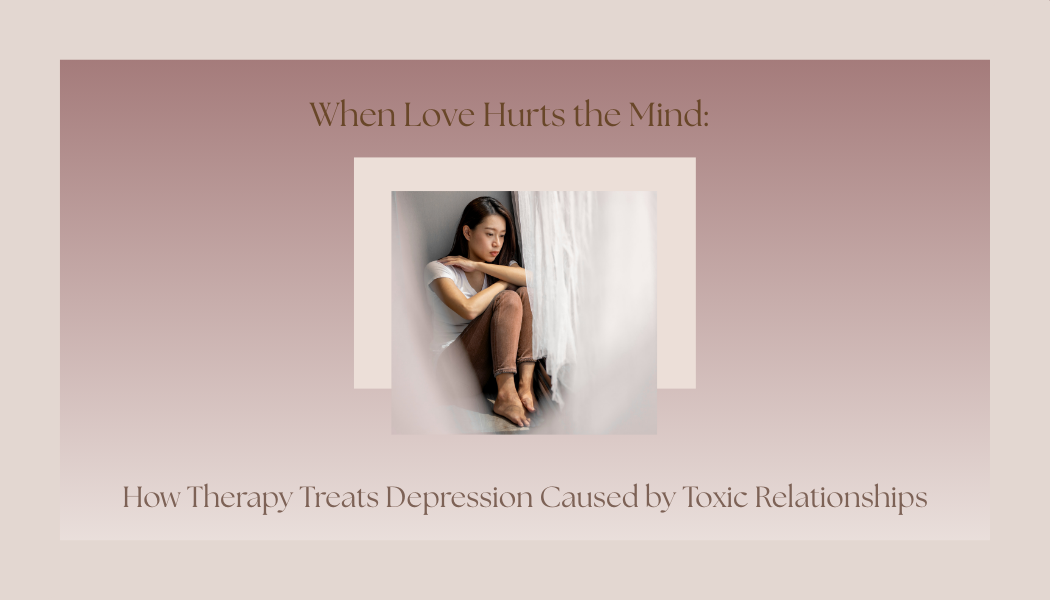
When Love Hurts the Mind: How Therapy Treats Depression Caused by Toxic Relationships
How Therapy Treats Depression Caused by Toxic Relationships
Depression linked to toxic relationships is a nervous system injury, not a personal failure. Learn how therapy helps restore emotional regulation, self-worth, and relational safety.
When a Relationship Becomes a Source of Depression
Depression does not always emerge from within. For many people, it develops in response to prolonged exposure to relational stress, emotional invalidation, control, or instability. Toxic relationships can slowly erode mood, motivation, self-trust, and a sense of vitality until life feels heavy, colorless, or exhausting.
You may find yourself asking:
Why do I feel so depleted around this person?
Why has my confidence disappeared?
Why do I feel numb, sad, or hopeless even when nothing is technically wrong?
Why did my depression deepen after the relationship ended?
Depression connected to toxic relationships is not a character flaw or a lack of resilience. It is a predictable response to chronic relational stress acting on the nervous system and brain.
Therapy offers a structured, neuroscience-informed path toward recovery, clarity, and emotional repair.
What Makes a Relationship Toxic
A toxic relationship is not defined by occasional conflict. It is characterized by patterns that consistently undermine emotional safety and self-worth.
These patterns may include:
— Emotional manipulation or gaslighting
— Chronic criticism or contempt
— Inconsistency or emotional withdrawal
— Control over choices, time, or identity
— Repeated boundary violations
— Lack of accountability or repair
Over time, these dynamics signal threat to the nervous system, even when harm is subtle or intermittent.
How Toxic Relationships Affect the Brain
The human brain is relational. It evolved to regulate stress, emotion, and meaning through connection. When a relationship becomes a source of unpredictability or emotional danger, the nervous system adapts in ways that can lead to depression.
Chronic Stress and the Nervous System
Prolonged relational stress activates the hypothalamic-pituitary-adrenal axis, increasing cortisol and inflammatory responses. When this stress is ongoing, the nervous system struggles to return to baseline.
This can result in:
— Low mood and anhedonia
— Fatigue and low motivation
— Impaired concentration
— Emotional numbness or withdrawal
— Disrupted sleep and appetite
From a neuroscience perspective, depression often reflects a nervous system that has been overloaded for too long.
Why Depression Often Persists After the Relationship Ends
Many people expect relief once a toxic relationship ends. When depression lingers, shame and confusion can follow.
This happens because the nervous system does not operate on logic or timelines. The brain continues to anticipate threat even after the relationship has ended, especially if the bond involved attachment trauma or intermittent reinforcement.
Therapy helps the nervous system update its expectations of safety.
Attachment Wounds and Relational Depression
Toxic relationships often activate early attachment patterns. Individuals with anxious, avoidant, or disorganized attachment may be especially vulnerable to depression in relational contexts.
For example:
— Anxious attachment may internalize rejection and inconsistency as personal failure
— Avoidant attachment may suppress emotional needs until numbness develops
— Disorganized attachment may oscillate between longing and fear
Therapy addresses these patterns with compassion rather than pathologizing them.
How Therapy Treats Depression Linked to Toxic Relationships
Effective therapy does not simply focus on symptoms. It addresses the underlying relational and nervous system injuries that maintain depression.
At Embodied Wellness and Recovery, we approach this work through a trauma-informed, neuroscience-based, and relational lens.
1. Restoring Nervous System Regulation
Therapy helps calm chronic threat responses through somatic awareness, breathwork, and grounding practices. Regulation allows the brain to shift out of survival mode and reaccess emotional range.
2. Rebuilding Self-Trust and Identity
Toxic relationships often distort self-perception. Therapy supports clients in separating internalized criticism from authentic self-knowledge.
This process restores agency and confidence.
3. Processing Relational Trauma
Approaches such as EMDR help reprocess memories, beliefs, and emotional responses associated with the relationship. This reduces emotional charge and rumination.
4. Repairing Attachment Patterns
Therapy offers a corrective emotional experience where consistency, attunement, and boundaries are modeled and practiced.
5. Addressing Shame and Self-Blame
Depression is often maintained by shame. Therapy reframes symptoms as adaptive responses to relational stress rather than personal defects.
Why Talk Therapy Alone Is Often Not Enough
While insight is valuable, depression rooted in relational trauma is also stored in the body. Somatic therapy helps release tension, shutdown, and hypervigilance that talking alone cannot resolve.
By working with both mind and body, therapy supports deeper integration.
Signs Therapy Is Supporting Recovery
Clients healing from toxic relationships often notice:
— Gradual improvement in mood and energy
— Reduced rumination about the relationship
— Increased emotional clarity
— Stronger boundaries
— Improved sleep and concentration
— Renewed interest in relationships and creativity
These shifts reflect nervous system repair, not forced positivity.
Relationships, Sexuality, and Intimacy After Toxic Dynamics
Toxic relationships often impact sexual desire, trust, and intimacy. Therapy supports reconnection to the body, pleasure, and relational safety at a pace that respects nervous system readiness.
This is especially important for individuals who have experienced coercion, emotional neglect, or control around intimacy.
Why Professional Support Matters
Depression caused by toxic relationships is complex. It involves attachment, neurobiology, trauma, and identity. Therapy provides a contained, supportive environment where these layers can be addressed without overwhelm.
At Embodied Wellness and Recovery, we specialize in helping individuals heal relational wounds so that emotional vitality, self-worth, and connection can return.
Reach out to schedule a complimentary 20-minute consultation with our team of therapists, trauma specialists, somatic practitioners, or relationship experts, and start working towards integrative, embodied healing today.
The Cost of Sustained Emotional Injury
Depression linked to toxic relationships is not a sign of weakness. It is the cost of sustained emotional injury. Therapy offers a pathway toward regulation, meaning, and renewed engagement with life.
By addressing nervous system dysregulation, attachment wounds, and relational trauma, therapy helps clients move forward with greater clarity, strength, and emotional freedom.
📞 Call us at (310) 651-8458
📱 Text us at (310) 210-7934
📩 Email us at admin@embodiedwellnessandrecovery.com
🔗 Visit us at www.embodiedwellnessandrecovery.com
👉 Check us out on Instagram @embodied_wellness_and_recovery
🌍 Explore our offerings at Linktr.ee: https://linktr.ee/laurendummit
References
1) Herman, J. L. (1992). Trauma and recovery: The aftermath of violence from domestic abuse to political terror. Basic Books.
2) McEwen, B. S., & Morrison, J. H. (2013). The brain on stress: Vulnerability and plasticity of the prefrontal cortex over the life course. Neuron, 79(1), 16–29.
3) Porges, S. W. (2011). The polyvagal theory: Neurophysiological foundations of emotions, attachment, communication, and self-regulation. W. W. Norton.
4) van der Kolk, B. A. (2014). The body keeps the score: Brain, mind, and body in the healing of trauma. Viking.