
Trauma and the Fear of Being “Too Much”: The Neuroscience of Rejection, Emotional Safety, and Attachment Wounds
Trauma and the Fear of Being “Too Much”: The Neuroscience of Rejection, Emotional Safety, and Attachment Wounds
Do you fear being “too much” emotionally in relationships? Learn how trauma, attachment wounds, nervous system dysregulation, and fear of rejection shape emotional insecurity, people pleasing, anxiety, and intimacy struggles through a neuroscience-informed lens.
Why Do So Many People Fear They Are “Too Much” for Others?
Do you constantly worry that your emotions, needs, sensitivity, or vulnerability will overwhelm people?
Have you ever:
— Apologized for crying?
— Minimized your emotional needs?
— Felt ashamed after expressing hurt?
— Feared that asking for reassurance would push someone away?
— Worried that your anxiety, sadness, or emotional intensity would make others leave?
Many people silently carry the painful belief:
— “I am too needy.”
— “I am too emotional.”
— “I am too sensitive.”
— “I take up too much space.”
— “People eventually get overwhelmed by me.”
For some individuals, this fear becomes deeply embedded in the nervous system and shapes how they experience:
— Intimacy
— Attachment
— Vulnerability
— Emotional expression
At Embodied Wellness and Recovery, we frequently help individuals explore how trauma, attachment wounds, nervous system dysregulation, and relational experiences contribute to chronic fears of rejection, abandonment, emotional shame, and insecurity.
Often, the fear of being “too much” is not a personality flaw. It is a trauma adaptation.
Where Does the Fear of Being “Too Much” Come From?
People are rarely born believing their emotions are unacceptable.
This belief often develops through repeated relational experiences in which emotional needs were:
— Dismissed
— Ignored
— Mocked
— Punished
— Invalidated
— Emotionally abandoned
Some people grew up hearing messages such as:
— “You are too sensitive.”
— “Stop crying.”
— “Calm down.”
— “You are overreacting.”
— “Why are you so emotional?”
— “You are exhausting.”
Others may not have heard these words directly, but experienced emotional inconsistency, emotional neglect, or caregivers who became overwhelmed by emotional expression. Over time, the nervous system may begin associating vulnerability with danger.
Trauma and Attachment Wounds
From an attachment perspective, humans are biologically wired to seek:
— Connection
— Emotional safety
— Attunement
— Responsiveness
When caregivers are emotionally unavailable, rejecting, inconsistent, or dysregulated, children often internalize painful conclusions about themselves.
Rather than thinking: “My environment feels unsafe.”
Children often conclude:
— “Something is wrong with me.”
— “My emotions are a problem.”
— “My needs overwhelm people.”
— “I need to become less visible to stay connected.”
These attachment wounds can persist into adulthood and shape:
— Friendships
— Marriage
The Neuroscience of Emotional Rejection
From a neuroscience perspective, social rejection activates many of the same brain regions involved in physical pain. Research suggests the anterior cingulate cortex becomes activated during experiences of emotional rejection and exclusion (Eisenberger et al., 2003).
This helps explain why:
— Criticism can feel physically painful
— Emotional invalidation can feel overwhelming
— Abandonment fears can trigger panic
— Relational conflict can activate intense nervous system responses
For trauma survivors, especially, the nervous system may become highly sensitive to cues of:
— Rejection
— Withdrawal
— Disappointment
— Emotional disconnection
— Abandonment
The body begins anticipating emotional danger before the conscious mind fully processes it.
The Fear of “Too Much” Often Creates Self-Abandonment
Ironically, many people cope with the fear of being “too much” by becoming emotionally smaller.
They may:
— Suppress feelings
— Avoid vulnerability
— People please
— Over apologize
— Avoid asking for needs to be met
— Become hyper-independent
— Minimize pain
— Tolerate emotional neglect
— Emotionally caretaking others while abandoning themselves
Some individuals become experts at:
— Reading other people’s emotions
— Adapting to others’ needs
— Avoiding conflict
— Staying emotionally “easy”
— Becoming low maintenance
But internally, they often feel:
— Lonely
— Unseen
— Anxious
— Emotionally deprived
— Disconnected from themselves
Why Highly Sensitive People Often Struggle With This Fear
Highly empathetic or emotionally sensitive individuals often feel emotions deeply. This sensitivity is not inherently unhealthy.
However, when emotional sensitivity is met with:
— Shame
— Emotional unpredictability
— Emotional invalidation
The nervous system may begin viewing emotional expression as dangerous.
Some people become trapped in a painful cycle:
— Craving connection
— Fearing rejection
— Suppressing needs
— Feeling emotionally unseen
— Becoming resentful or anxious
— Fearing they are “too much”
Trauma Can Create Hypervigilance in Relationships
Many trauma survivors become highly attuned to subtle emotional shifts in others.
They may constantly monitor:
— Facial expressions
— Tone of voice
— Texting patterns
— Pauses in communication
— Emotional distance
— Energy shifts
This hypervigilance is often the nervous system attempting to prevent abandonment or emotional pain.
The body learns: “If I can anticipate rejection early enough, maybe I can protect myself.”
Unfortunately, this often creates chronic anxiety and relational exhaustion.
The Difference Between Healthy Needs and Trauma-Driven Fear
One of the most important parts of healing is learning that having emotional needs does not make someone “too much.”
All humans need:
— Connection
— Reassurance
— Emotional safety
— Responsiveness
— Care
— Attunement
— Belonging
The problem is not emotional need itself. The problem is often unresolved shame surrounding those needs.
Trauma frequently teaches people:
— Needing others is unsafe
— Vulnerability creates rejection
— Emotional expression drives people away
Healthy relationships, however, are built through mutual emotional responsiveness and repair.
The Nervous System Needs Co-Regulation
Humans are relational beings.
According to Polyvagal Theory, the nervous system is regulated through safe connection with others (Porges, 2011).
This means:
— Warmth matters
— Emotional presence matters
— Attunement matters
— Responsiveness matters
People do not become emotionally secure through emotional isolation. They often heal through safe, consistent, emotionally attuned relationships.
How Therapy Can Help Heal the Fear of Being “Too Much”
At Embodied Wellness and Recovery, we help individuals understand how:
— Trauma
— Nervous system dysregulation
— Shame
shape fears of rejection and emotional insecurity.
Treatment may include:
— EMDR
— Self-compassion work
As healing progresses, many individuals begin:
— Tolerating vulnerability more safely
— Developing healthier emotional boundaries
— Reducing shame around emotional needs
— Improving self-worth
— Choosing healthier relationships
— Experiencing greater emotional regulation
Relearning Emotional Safety
Healing often involves learning that safe relationships do not require:
— Emotional perfection
— Emotional suppression
— Constant self-abandonment
— Shrinking yourself to maintain connection
Healthy intimacy allows space for:
— Emotions
— Needs
— Vulnerability
— Repair
— Humanity
— Imperfection
The goal is not becoming emotionless or “less needy.” The goal is to develop relationships where emotional authenticity feels safe.
Deeply Human Needs
The fear of being “too much” is often rooted in experiences where emotional expression was not safely received. Many people learned to suppress parts of themselves in order to preserve attachment, reduce conflict, or avoid rejection. But emotional sensitivity, vulnerability, and relational needs are not evidence of weakness. They are deeply human.
Sometimes healing begins when individuals stop asking: “How do I become less emotionally difficult?”
and begin asking: “What experiences taught me my emotions were unsafe in the first place?”
Reach out to schedule a complimentary 20-minute consultation with our team of therapists, trauma specialists, somatic practitioners, or relationship experts, and start working towards integrative, embodied healing today.
📞 Call us at (310) 651-8458
📱 Text us at (310) 210-7934
📩 Email us at admin@embodiedwellnessandrecovery.com
🔗 Visit us at www.embodiedwellnessandrecovery.com
👉 Check us out on Instagram @embodied_wellness_and_recovery
🌍 Explore our offerings at Linktr.ee: https://linktr.ee/laurendummit
References
1) Eisenberger, N. I., Lieberman, M. D., & Williams, K. D. (2003). Does rejection hurt? An FMRI study of social exclusion. Science, 302(5643), 290-292.
2) Porges, S. W. (2011). The polyvagal theory: Neurophysiological foundations of emotions, attachment, communication, and self-regulation. Norton.
3) Siegel, D. J. (2012). The developing mind: How relationships and the brain interact to shape who we are. Guilford Press.
4) van der Kolk, B. A. (2014). The body keeps the score: Brain, mind, and body in the healing of trauma. Viking.
Learned Helplessness: The Neuroscience of Low Self-Esteem, Trauma, and How Therapy Helps You Reclaim Personal Agency
Learned Helplessness: The Neuroscience of Low Self-Esteem, Trauma, and How Therapy Helps You Reclaim Personal Agency
Discover how learned helplessness develops through trauma, chronic stress, criticism, and emotional invalidation. Learn the neuroscience behind low self-esteem, hopelessness, anxiety, and emotional shutdown, along with how therapy can help restore confidence, nervous system regulation, and personal empowerment.
Why Do Some People Feel Stuck Even When They Want Change?
Have you ever felt like no matter how hard you try, nothing really changes?
Do you struggle with thoughts like:
— “What’s the point?”
— “I’ll probably fail anyway.”
— “Nothing I do matters.”
— “Other people seem capable, but I’m not.”
— “I don’t trust myself.”
— “I feel emotionally frozen or defeated.”
Do you find yourself staying in painful situations because part of you no longer believes you have the power to change them? Many individuals struggling with low self-esteem, anxiety, depression, trauma, or chronic relationship difficultiesare not simply “unmotivated” or lacking discipline. Sometimes they are experiencing learned helplessness.
From a neuroscience and trauma-informed perspective, learned helplessness is not weakness. It is often the nervous system’s adaptation to repeated experiences of powerlessness, unpredictability, criticism, failure, emotional invalidation, or chronic stress.
At Embodied Wellness and Recovery, we frequently help individuals explore how trauma, attachment wounds, emotional neglect, nervous system dysregulation, and relational experiences shape self-worth, confidence, motivation, and personal agency.
What Is Learned Helplessness?
Learned helplessness is a psychological condition in which individuals come to believe they have little or no control over their outcomes, even when change may be possible. The concept was first developed through research by psychologist Martin Seligman in the 1960s.
Research found that when individuals or animals are repeatedly exposed to uncontrollable stress or adverse experiences, they may eventually stop attempting to change their circumstances altogether (Seligman, 1975).
In humans, learned helplessness may appear as:
— Chronic self-doubt
— Fear of failure
— Emotional shutdown
— Passivity
— Procrastination
— Hopelessness
— Difficulty making decisions
— Remaining in unhealthy relationships
— Lack of motivation
— Anxiety
— Depression
Over time, the nervous system begins internalizing: “Nothing I do will matter.”
How Learned Helplessness Develops
Learned helplessness often develops gradually through repeated emotional experiences.
Childhood Criticism or Emotional Invalidation
Children who are:
— Excessively criticized
— Emotionally dismissed
— Shamed
— Controlled
— Chronically misunderstood
— Punished unpredictably
may begin believing their needs, feelings, or efforts are unimportant.
Over time, this can erode self-trust and confidence.
Trauma and Chronic Stress
Trauma often involves experiences where individuals feel trapped, powerless, unsafe, or unable to control outcomes.
This may include:
— Emotional abuse
— Childhood neglect
— Bullying
— Addiction in the family
— Chronic instability
The nervous system adapts by prioritizing survivalover exploration, creativity, risk-taking, or self-expression.
Repeated Failure or Rejection
Repeated experiences of rejection, disappointment, or failure may also contribute to helplessness, particularly when individuals lack emotional support or tools for self-regulation.
Perfectionism and Fear-Based Conditioning
Some individuals become so afraid of failure that they stop trying altogether. Perfectionism often masks profound fear, shame, and self-protection.
The Neuroscience of Learned Helplessness
From a neuroscience perspective, chronic helplessness affects both the brain and nervous system.
Research suggests chronic stress may impact:
— The amygdala
— Hippocampus
— Prefrontal cortex
— Dopamine pathways
— Stress hormone regulation
The brain begins organizing around threat detection rather than growth, exploration, or creativity.
Individuals may experience:
— Emotional shutdown
— Low motivation
— Exhaustion
— Hopelessness
— Nervous system dysregulation
Research has also linked helplessness to alterations in serotonin and dopamine functioning, both of which play important roles in mood, motivation, and emotional regulation (Maier & Seligman, 2016). This is why learned helplessness is not simply “negative thinking.” The body itself may begin expecting defeat, disappointment, criticism, or emotional pain.
Learned Helplessness and Low Self-Esteem
One of the most painful consequences of learned helplessness is its impact on identity and self-worth.
People may begin viewing themselves as:
— Incapable
— Weak
— Inadequate
— Defective
— Powerless
— Unintelligent
— Undeserving
This can create profound shame.
Many individuals compare themselves to others and wonder: “Why can everyone else handle life better than I can?”
Yet trauma-informed therapy recognizes that these beliefs often developed as adaptive survival responses. A nervous system conditioned by fear, unpredictability, criticism, or emotional pain may naturally struggle with confidence and self-trust.
How Learned Helplessness Shows Up in Relationships
Learned helplessness frequently affects intimate relationships.
Individuals may:
— Tolerate mistreatment
— Struggle to set boundaries
— Fear conflict
— Avoid expressing needs
— Remain in emotionally unsafe relationships
— People please excessively
— Assume they are the problem
— Feel emotionally trapped
Some people unconsciously believe:
— “My feelings do not matter.”
— “I cannot ask for more.”
— “Nothing will change anyway.”
— “I should just tolerate this.”
Over time, this can deepen anxiety, resentment, emotional exhaustion, and relational disconnection.
The Difference Between Laziness and Nervous System Shutdown
Many individuals with learned helplessness harshly criticize themselves.
They may call themselves:
— Lazy
— Weak
— Unmotivated
— Incapable
— Failures
But from a somatic and neuroscience perspective, many people are not lazy. They are overwhelmed, dysregulated, emotionally exhausted, or stuck in survival responses. The nervous system sometimes shuts down when it no longer perceives effort as emotionally safe or meaningful.
This shutdown can resemble:
— Procrastination
— Avoidance
— Emotional numbness
— Depression
— Passivity
— Low energy
Compassionate understanding is often far more effective than shame.
How Therapy Helps Heal Learned Helplessness
Therapy can help individuals gradually rebuild:
— Self-trust
— Emotional safety
— Personal agency
— Emotional resilience
At Embodied Wellness and Recovery, we approach learned helplessness through an integrative, trauma-informed lens that recognizes the relationship between the body, brain, attachment experiences, and nervous system functioning.
Somatic Therapy
Somatic approaches help individuals reconnect with their bodies, emotions, boundaries, instincts, and internal experiences. This can increase feelings of empowerment and embodiment.
EMDR Therapy
EMDR may help process unresolved trauma, shame, fear, criticism, or painful memories that continue reinforcing helplessness beliefs.
Attachment Focused Therapy
Attachment work helps individuals explore how early relational experiences shaped beliefs about worth, safety, capability, and emotional expression.
Nervous System Regulation
As the nervous system becomes more regulated, many individuals report:
— Increased motivation
— Greater clarity
— Improved emotional resilience
— Stronger boundaries
— More self-confidence
— Renewed creativity
— Greater willingness to take healthy risks
Self-Compassion Work
Research suggests self-compassion improves emotional resilience and reduces shame-based thinking(Neff, 2003). People often heal more effectively through compassion than self-punishment.
Reclaiming Personal Agency
Healing learned helplessness does not usually happen all at once.
It often develops gradually through:
— Small moments of empowerment
— Emotional safety
— Supportive relationships
— Self-trust
— Consistent experiences of agency
Sometimes healing begins with very small internal shifts:
— “My feelings matter.”
— “I can make choices.”
— “I am allowed to take up space.”
— “I do not have to stay powerless.”
— “My past does not define my future.”
From Shame to Self-Compassion and Healing
Learned helplessness can profoundly affect self-esteem, motivation, relationships, emotional well-being, and identity. But what often appears externally as passivity or lack of confidence may actually reflect years of nervous system adaptation to fear, unpredictability, criticism, trauma, or emotional pain. Understanding the neuroscience behind learned helplessness can help shift the conversation away from shame and toward compassion, regulation, and healing.
At Embodied Wellness and Recovery, we help individuals reconnect with their sense of agency, emotional resilience, confidence, and self-worth through trauma-informed, neuroscience-based therapy approaches that address both the mind and the nervous system.
Contact us today to schedule a free 20-minute consultation and begin your journey toward embodied connection, clarity, and confidence.
📞 Call us at (310) 651-8458
📱 Text us at (310) 210-7934
📩 Email us at admin@embodiedwellnessandrecovery.com
🔗 Visit us at www.embodiedwellnessandrecovery.com
👉 Check us out on Instagram @embodied_wellness_and_recovery
🌍 Explore our offerings at Linktr. ee:https://linktr.ee/laurendummit
References
1) Maier, S. F., & Seligman, M. E. P. (2016). Learned helplessness at fifty: Insights from neuroscience. Psychological Review, 123(4), 349-367.
2) Neff, K. D. (2003). Self-compassion: An alternative conceptualization of a healthy attitude toward oneself. Self and Identity, 2(2), 85-101.
3) Porges, S. W. (2011). The polyvagal theory: Neurophysiological foundations of emotions, attachment, communication, and self-regulation. Norton.
4) Seligman, M. E. P. (1975). Helplessness: On depression, development, and death. Freeman.
5) Van der Kolk, B. A. (2014). The body keeps the score: Brain, mind, and body in the healing of trauma. Viking.
Why the News Is Stressing You Out: The Neuroscience of Psychological Flexibility and How to Regulate Your Nervous System in a 24/7 Media World
Why the News Is Stressing You Out: The Neuroscience of Psychological Flexibility and How to Regulate Your Nervous System in a 24/7 Media World
A 2025 national survey found that 45% of U.S. adults feel stressed by news and social media each week. Learn how psychological flexibility, neuroscience, and somatic practices can reduce stress, improve nervous system regulation, and support long-term health.
Do you feel your body tense the moment you open the news?
Do you find yourself scrolling, absorbing one distressing headline after another, even when you know it is increasing your anxiety?
Do you notice headaches, fatigue, irritability, or trouble sleeping after time spent on social media?
You are not imagining it. A 2025 national survey from Ohio State University’s Wexner Medical Center found that 45% of American adults report feeling stressed because of the news or social media at least once per week, and 16% report experiencing this stress daily.
But what is perhaps even more important than the stress itself is this:
How your mind and body respond to stress may determine its long-term impact on your health. This is where a powerful, research-backed concept comes in:
Psychological flexibility.
At Embodied Wellness and Recovery, we help clients build this capacity using somatic therapy, EMDR, and neuroscience-informed approaches that address not just thoughts, but the nervous system itself.
What Is Psychological Flexibility?
Psychological flexibility refers to your ability to:
— Stay present during stress
— Adapt to changing circumstances
— Regulate emotional responses
— Take meaningful action even in discomfort
It is not about avoiding stress; it is about how you move through it.
Research in Acceptance and Commitment Therapy (ACT) has shown that psychological flexibility is strongly associated with lower anxiety, reduced depression, and greater overall well-being (Hayes et al., 2006). But more recent research goes even further. It suggests that psychological flexibility also influences how your body responds to stress.
The Neuroscience of Stress and the Body
When you encounter distressing news or social media content, your brain processes it as a potential threat. The amygdala activates. The sympathetic nervous system engages.
This leads to:
— Increased heart rate
— Muscle tension
— Shallow breathing
— Release of stress hormones like cortisol
Over time, repeated activation without adequate recovery can contribute to:
— Chronic inflammation
— Cardiovascular strain
— Immune dysregulation
— Increased risk of long-term disease
Research has shown that chronic stress is a significant contributor to inflammatory processes in the body, which are linked to conditions such as heart disease, autoimmune disorders, and metabolic dysfunction (Slavich & Irwin, 2014). This is why stress is not just emotional. It is physiological.
Why News and Social Media Amplify Stress
Unlike past generations, we are now exposed to:
— Constant updates
— Global crises in real time
— Emotionally charged content
— Algorithm-driven negativity
Your nervous system was not designed for this level of input.
It cannot always distinguish between:
— Direct threat
— Perceived threat
— Informational exposure
So even reading about distressing events can activate the same physiological responses as experiencing them.
This can lead to:
— Chronic hypervigilance
— Emotional overwhelm
— Fatigue and burnout
— Difficulty relaxing or feeling safe
The Role of Psychological Flexibility in Physical Health
Here is where the research becomes particularly important.
Studies indicate that individuals with higher psychological flexibility show:
— More adaptive cardiovascular responses to stress
— Better nervous system regulation
— Reduced inflammatory responses (Rozanski & Kubzansky, 2005).
In other words:
Their bodies recover more efficiently. They can move from activation back into regulation. This capacity is critical. Because stress itself is not the problem; getting stuck in stress is.
Signs You May Be Struggling with Stress Reactivity
You might relate to:
— Feeling constantly “on edge.”
— Difficulty turning your mind off
— Physical symptoms like headaches or muscle tension
— Disrupted sleep
— Emotional reactivity or irritability
— Compulsive news or social media checking
You might be asking:
Why can’t I stop checking?
Why do I feel worse after scrolling?
Why does my body feel exhausted even when I haven’t done anything physical?
These are not signs of weakness. They are signs your nervous system is overloaded.
How to Build Psychological Flexibility
The good news is that psychological flexibility is not fixed; it can be developed.
1. Increase Awareness Without Overidentifying
Instead of getting pulled into every thought or headline, practice noticing:
“I am feeling activated right now.”
This creates space between stimulus and response.
2. Regulate the Nervous System First
You cannot think clearly when your nervous system is activated.
Use somatic practices such as:
— Slow breathing with extended exhale
— Grounding through sensory awareness
— Gentle movement
These help shift the body out of stress mode.
3. Set Boundaries with Media Consumption
This is not avoidance. It is nervous system protection.
Consider:
— Limiting news intake to specific times
— Avoiding scrolling before bed
— Curating your feed
4. Practice Emotional Flexibility
Allow yourself to feel:
— Sadness
— Anger
— Concern
Without becoming overwhelmed by them. Emotions are meant to move, not stay stuck.
5. Engage in Meaningful Action
Psychological flexibility includes taking action aligned with your values.
This might look like:
— Connecting with others
— Contributing in small ways
— Focusing on what is within your control
The Somatic Component of Flexibility
At Embodied Wellness and Recovery, we emphasize that flexibility is not just cognitive. It is embodied. Your nervous system learns through experience.
When you repeatedly bring your body back into regulation, you are training it to:
— Tolerate stress
— Recover more quickly
— Feel safer in the present
This is how resilience is built, not through pushing harder, but through learning how to come back.
A Different Way to Understand Stress
What if your stress is not the problem? What if it is information, a signal that your system has reached its limit, a cue to pause, regulate, and reset? In a world that constantly demands attention, your ability to return to yourself becomes one of the most important skills you can develop.
Building Capacity to Move Through Stress
The data is clear. More people are feeling stressed by the news and social media than ever before. But the research is also clear about something else:
Your capacity to adapt, regulate, and recover can change how stress impacts your body and your life. Psychological flexibility is not about eliminating stress. It is about building the ability to move through it without becoming overwhelmed.
At Embodied Wellness and Recovery, we help clients develop this capacity through integrative, neuroscience-informed approaches that address both mind and body. Because lasting change happens when the nervous system learns it no longer has to stay in a constant state of activation.
Reach out to schedule a complimentary 20-minute consultation with our team of therapists, trauma specialists, somatic practitioners, or relationship experts, and start working towards integrative, embodied healing today.
📞 Call us at (310) 651-8458
📱 Text us at (310) 210-7934
📩 Email us at admin@embodiedwellnessandrecovery.com
🔗 Visit us at www.embodiedwellnessandrecovery.com
👉 Check us out on Instagram @embodied_wellness_and_recovery
🌍 Explore our offerings at Linktr.ee: https://linktr.ee/laurendummit
References
1) Hayes, S. C., Luoma, J. B., Bond, F. W., Masuda, A., & Lillis, J. (2006). Acceptance and commitment therapy: Model, processes and outcomes. Behavior Research and Therapy, 44(1), 1–25.
2) Kashdan, T. B., & Rottenberg, J. (2010). Psychological flexibility as a fundamental aspect of health. Clinical Psychology Review, 30(7), 865–878.
3) Rozanski, A., & Kubzansky, L. D. (2005). Psychologic functioning and physical health: a paradigm of flexibility. Biopsychosocial Science and Medicine, 67, S47-S53.
4) Slavich, G. M., & Irwin, M. R. (2014). From stress to inflammation and major depressive disorder. Psychological Bulletin, 140(3), 774–815.
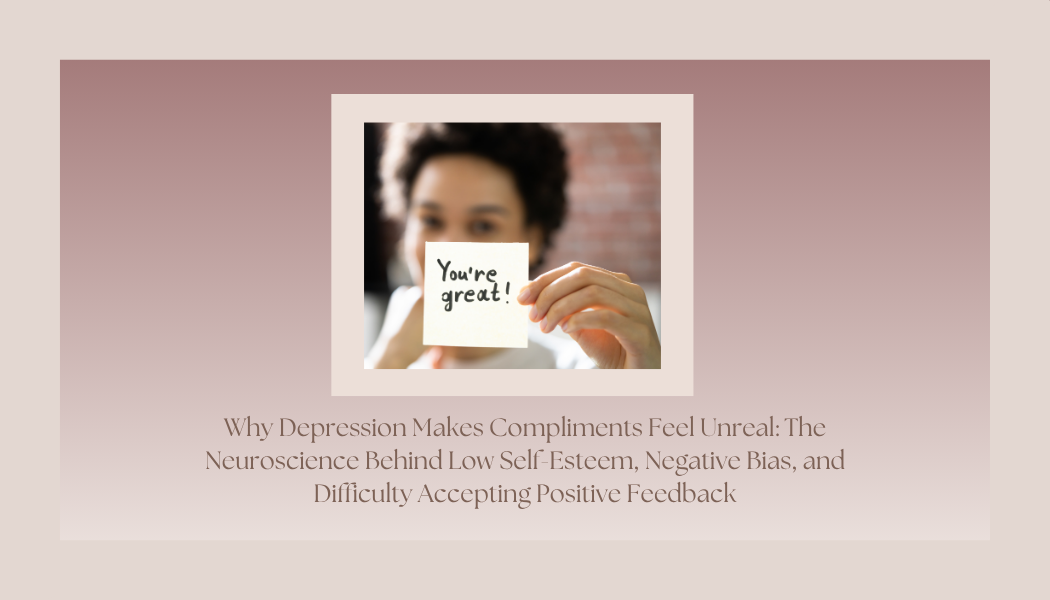
Why Depression Makes Compliments Feel Unreal: The Neuroscience Behind Low Self-Esteem, Negative Bias, and Difficulty Accepting Positive Feedback
Why Depression Makes Compliments Feel Unreal: The Neuroscience Behind Low Self-Esteem, Negative Bias, and Difficulty Accepting Positive Feedback
Why do compliments feel uncomfortable or unbelievable when you are depressed? Learn how depression affects the brain, self-esteem, and emotional processing, and how therapy can help restore a more balanced sense of self.
Many people who live with depression describe a strange and painful experience. Someone offers a compliment. They say you did a great job at work. They admire your creativity. They tell you that you are thoughtful, kind, or talented.
But instead of feeling encouraged, something inside you resists the feedback. Your mind immediately searches for reasons the compliment cannot be true.
Maybe they are just being polite. Maybe they do not really know you. Maybe they are mistaken. You might even feel uncomfortable or suspicious of praise.
If you have ever wondered why positive feedback can feel confusing or unreal during periods of depression, you are not imagining things. Research in psychology and neuroscience shows that depression alters how the brain processes positive information, particularly information related to the self (Dumit, 2003). Understanding this pattern can help illuminate why compliments sometimes feel difficult to accept and why this experience is deeply connected to the neurobiology of depression.
The Puzzle of Positive Feedback and Depression
People struggling with depression often report questions such as: Why does praise make me uncomfortable? Why do I assume that compliments are exaggerated or insincere? Why do I focus on criticism while dismissing positive feedback? Why does positive feedback feel disconnected from how I see myself?
These questions reflect a common cognitive pattern in depression known as negative self-bias. When depression shapes the way the brain interprets information, positive feedback can feel inconsistent with deeply held beliefs about the self. As a result, compliments may feel confusing, undeserved, or emotionally distant.
Depression and the Brain's Negative Bias
One of the most well-studied cognitive features of depression is negative bias, the tendency to notice, remember, and interpret information in ways that reinforce negative beliefs.
Research has shown that people experiencing depression are more likely to:
— Remember criticism more vividly than praise
— Interpret ambiguous situations negatively
— Discount positive experiences
— Maintain negative beliefs about their own worth (Pyszczynski & Greenberg, 1987).
This bias is not simply a personality trait. It is associated with specific patterns of brain activity. Neuroscientific research suggests that depression involves altered functioning in brain regions responsible for emotional processing, including the amygdala, prefrontal cortex, and anterior cingulate cortex (Disner et al., 2011).
These brain networks influence how people evaluate information about themselves and their relationships with others. When these systems are affected by depression, the brain may automatically filter information in ways that reinforce negative self-beliefs.
Why Compliments Feel Inconsistent With Self-Image
For many individuals, depression is closely connected to low self-esteem and negative core beliefs. A person might carry beliefs such as: I am not good enough. I am a disappointment. I am fundamentally flawed.
When someone offers positive feedback, the compliment clashes with these beliefs. The brain responds by attempting to resolve the inconsistency. Often, it resolves the conflict by discounting the compliment rather than revising the negative belief. Psychologists refer to this process as cognitive dissonance.
If a compliment contradicts a deeply held belief about the self, the brain may reject it to maintain psychological consistency.
The Role of Reward Processing in Depression
Depression also affects the brain's reward system, which plays a role in how people experience pleasure and positive reinforcement. The brain's reward circuitry includes areas such as the ventral striatum and dopamine pathways, which respond to positive experiences. Research shows that individuals with depression often exhibit reduced activation in reward-related brain regions when receiving positive feedback (Pizzagalli et al., 2009).
This reduced reward response can make compliments feel emotionally muted. Even when someone intellectually understands that a compliment is genuine, the emotional response may feel faint or absent. This phenomenon is closely related to anhedonia, the reduced ability to experience pleasure.
When Depression Meets Social Interaction
Difficulty accepting positive feedback can also affect relationships.
Consider these scenarios.
A partner expresses appreciation, but the compliment feels exaggerated.
A colleague praises your work, but you assume they are simply being polite.
A friend says they value your presence in their life, yet you feel skeptical.
Over time, these patterns can influence how people interpret social interactions.
Depression may lead individuals to:
— Mistrust positive feedback
— Assume others are being insincere
— Withdraw from supportive relationships
— Feel emotionally disconnected from others
Ironically, the very support that could help counter depressive thinking may feel difficult to absorb.
Trauma, Shame, and Self Perception
For many individuals, depression is connected to earlier experiences of shame, criticism, or emotional neglect. Children who grow up in environments where praise is inconsistent or conditional may internalize the belief that they are only valued when they perform well. Others may have experienced chronic criticism that shaped a negative internal narrative.
In these contexts, positive feedback may feel unfamiliar or even threatening. From a trauma-informed perspective, the nervous system may interpret compliments as unpredictable or unsafe, particularly if positive attention historically preceded criticism or disappointment. This dynamic can make accepting praise emotionally complicated.
The Nervous System and Emotional Safety
The ability to absorb positive feedback is also influenced by the state of the nervous system. According to Polyvagal Theory, the nervous system must feel relatively safe in order to process positive social cues. When the body is in a state of chronic stress or hypervigilance, the brain prioritizes threat detection.
This means that the nervous system may automatically scan for potential danger rather than absorb positive signals. Research by Porges (2017) suggests that felt safety is a prerequisite for social connection and emotional openness. If the nervous system remains in a defensive state, positive feedback may simply pass through without being fully experienced.
Why Depression and Self-Criticism Often Coexist
Self-criticism is another hallmark feature of depression. Many individuals with depression maintain an internal voice that constantly evaluates their performance and behavior.
This voice may say things such as:
You should have done better.
That success was just luck.
You fooled them this time.
Self-criticism reinforces negative beliefs and makes it difficult to internalize praise. Research indicates that high levels of self-criticism are associated with greater depression severity and poorer emotional well-being (Ehret et al., 2015).
Therapy and the Reconstruction of Self Perception
While depression can distort the way people interpret positive feedback, these patterns can change over time. Therapy offers a space where individuals can explore the underlying beliefs and emotional experiences that shape their self-perception.
At Embodied Wellness and Recovery, treatment integrates neuroscience-informed psychotherapy, trauma-informed care, and somatic approaches to support both emotional and nervous system regulation.
Therapeutic work may include:
Identifying Negative Core Beliefs
Clients often begin by identifying the internal beliefs that shape their self-image.
Understanding how these beliefs developed can reduce their power.
Developing Emotional Awareness
Therapy helps individuals notice how compliments or praise affect their bodies and emotions.
Over time, clients can learn to tolerate and gradually absorb positive feedback.
Nervous System Regulation
Somatic practices support the nervous system in moving out of chronic stress states.
When the body feels more secure, it becomes easier to process positive social signals.
Cultivating Self-Compassion
Research shows that self-compassion is associated with lower depression and greater emotional resilience (Baker et al., 2019).
Developing a kinder internal voice can gradually soften rigid self-criticism.
Relearning How to Receive Positive Feedback
Learning to accept positive feedback is often a gradual process. Instead of forcing belief in every compliment, individuals can experiment with small shifts.
For example:
— Noticing the impulse to dismiss praise
— Pausing before responding with self-criticism
— Allowing compliments to exist without immediately rejecting them
Over time, these small shifts can begin to reshape how the brain processes positive information. Neuroplasticity research shows that the brain can form new emotional associations through repeated experiences (LeDoux, 2012). With practice and supportive relationships, the nervous system can gradually learn to recognize positive feedback as safe and meaningful.
Depression Treatment at Embodied Wellness and Recovery
At Embodied Wellness and Recovery, therapists specialize in treating depression through an integrative approach that addresses the relationship between the brain, body, and relational environment.
Clients often seek therapy for challenges such as:
— Depression and low self-esteem
— Trauma and chronic stress
— Relationship and intimacy struggles
— Shame and self-criticism
— Difficulty connecting with positive experiences
By integrating trauma-informed psychotherapy, somatic therapy, and neuroscience-based interventions, treatment supports both emotional healing and nervous system regulation. As self-perception evolves, individuals often find that positive feedback becomes less foreign and more aligned with their emerging sense of identity.
Reach out to schedule a complimentary 20-minute consultation with our team of therapists, trauma specialists, somatic practitioners, or relationship experts, and start working towards integrative, embodied healing today.
📞 Call us at (310) 651-8458
📱 Text us at (310) 210-7934
📩 Email us at admin@embodiedwellnessandrecovery.com
🔗 Visit us at www.embodiedwellnessandrecovery.com
👉 Check us out on Instagram @embodied_wellness_and_recovery
🌍 Explore our offerings at Linktr.ee: https://linktr.ee/laurendummit
References
Baker, D. A., Caswell, H. L., & Eccles, F. J. (2019). Self-compassion and depression, anxiety, and resilience in adults with epilepsy. Epilepsy & behavior, 90, 154-161.
Disner, S. G., Beevers, C. G., Haigh, E. A., & Beck, A. T. (2011). Neural mechanisms of the cognitive model of depression. Nature Reviews Neuroscience, 12(8), 467 to 477.
Dumit, J. (2003). Is it me or my brain? Depression and neuroscientific facts. Journal of Medical Humanities, 24(1), 35-47.
Ehret, A. M., Joormann, J., & Berking, M. (2015). Self-criticism and depression. Clinical Psychology Review, 38, 45 to 57.
LeDoux, J. (2012). Rethinking the emotional brain. Neuron, 73(4), 653-676.
Pizzagalli, D. A., Holmes, A. J., Dillon, D. G., et al. (2009). Reduced caudate and nucleus accumbens response to rewards in unmedicated individuals with major depressive disorder. American Journal of Psychiatry, 166(6), 702-710.
Porges, S. W. (2017). The pocket guide to the polyvagal theory. Norton.
Pyszczynski, T., & Greenberg, J. (1987). Self-regulatory perseveration and the depressive self-focusing style: a self-awareness theory of reactive depression. Psychological bulletin, 102(1), 122.
The Hidden Emotional Cost of Masking Anxiety: Why High Functioning Anxiety Feels Exhausting and How Therapy Supports Nervous System Regulation
The Hidden Emotional Cost of Masking Anxiety: Why High Functioning Anxiety Feels Exhausting and How Therapy Supports Nervous System Regulation
Struggling with anxiety but feel pressure to hide it? Learn the emotional and neurological cost of masking anxiety and how therapy supports nervous system regulation, authenticity, and deeper connection.
Many people live with anxiety that is largely invisible to the outside world. They show up to work on time. They meet deadlines. They maintain relationships. They appear calm, competent, and composed. Yet internally, their experience can feel very different. Racing thoughts. Constant mental rehearsal. Fear of making mistakes. A persistent sense that something might go wrong. For many individuals, managing anxiety is not only about coping with the symptoms themselves. It is also about masking those symptoms so others do not notice.
Have you ever found yourself wondering:
Why does anxiety feel so exhausting even when I appear to be functioning well?
Why do I feel like I am constantly performing calmness rather than actually feeling calm?
Why does it feel difficult to show people how overwhelmed I truly am?
Why do I feel disconnected from others even when I am surrounded by people?
The emotional cost of masking anxiety can be significant. Over time, the effort required to hide internal distress may lead to burnout, loneliness, and a sense of living behind a carefully managed façade. Understanding what happens in the brain and nervous system when anxiety is masked can help illuminate why this pattern is so draining.
What Does It Mean to Mask Anxiety?
Masking anxiety refers to the process of concealing internal distress in order to appear composed, capable, or socially acceptable.
People who mask anxiety often develop sophisticated strategies to hide their symptoms.
These strategies may include:
— Smiling or joking while feeling internally overwhelmed
— Over-preparing for tasks to avoid mistakes
— Saying "I am fine" when feeling anxious or distressed
— Avoiding situations where anxiety might become visible
— Pushing through exhaustion in order to appear productive
In many cases, masking develops early in life. Children who grow up in environments where emotional expression is discouraged often learn that showing anxiety may lead to criticism, dismissal, or misunderstanding. Over time, masking can become an automatic coping strategy.
The Neuroscience of Anxiety and Emotional Suppression
From a neuroscience perspective, anxiety involves activation of the brain's threat detection system, particularly the amygdala and related stress circuits.
When the brain perceives potential danger or uncertainty, it activates the body's stress response.
This response can include:
— Increased heart rate
— Muscle tension
When individuals attempt to suppress or hide anxiety rather than process it, the nervous system often remains activated beneath the surface.
Research suggests that emotional suppression can increase rather than reduce physiological stress responses (Gross & Levenson, 1997).
In other words, masking anxiety may make the nervous system work harder. The brain must simultaneously manage the internal experience of anxiety while also maintaining the outward appearance of calm. This dual process can be mentally and emotionally exhausting.
High Functioning Anxiety and the Pressure to Appear Composed
Many individuals who mask anxiety fall into the category commonly referred to as high-functioning anxiety. These individuals may appear successful and capable. Yet their internal experience may include persistent worry, perfectionism, and difficulty relaxing.
High functioning anxiety often involves:
— Constant self-monitoring
— Fear of disappointing others
— Difficulty slowing down
— Chronic mental overthinking
While these patterns can sometimes lead to achievement and productivity, they often come at a significant emotional cost.
The nervous system rarely experiences true rest.
The Emotional Consequences of Masking Anxiety
Over time, masking anxiety can influence several aspects of psychological well-being.
Emotional Exhaustion
Maintaining a calm exterior while managing internal distress requires considerable emotional energy. Many individuals report feeling depleted after social interactions or workdays because they have spent hours monitoring and managing their outward behavior.
Loneliness and Disconnection
When anxiety remains hidden, others may never fully understand what someone is experiencing internally. This can create a painful sense of isolation.
People may think:
If others knew how anxious I really feel, they might see me differently.
Because anxiety is concealed, opportunities for empathy and support may never occur.
Loss of Authenticity
Masking anxiety can lead to the feeling that one's external identity no longer matches one's internal experience.
Individuals may begin to wonder, “Who am I when I am not performing calmness?” This disconnection from authenticity can influence self-esteem and identity.
Increased Stress on the Nervous System
When anxiety is continuously suppressed, the nervous system may remain stuck in a heightened state of vigilance. Research on stress physiology suggests that chronic activation of the stress response can affect sleep, concentration, immune functioning, and emotional regulation (McEwen, 2007).
Why Many People Feel Pressure to Hide Anxiety
Several cultural and social factors contribute to the tendency to mask anxiety.
Cultural Expectations Around Productivity
Modern culture often values productivity, composure, and achievement.
Many people worry that revealing anxiety may make them appear less capable.
Professional Environments
Workplaces sometimes reward individuals who appear calm under pressure. As a result, employees may feel reluctant to disclose emotional struggles.
Social Media and Comparison
Online environments frequently present curated images of confidence and success. This can reinforce the belief that others are managing life effortlessly.
Early Life Experiences
Individuals who grew up in environments where vulnerability was discouraged often develop strong habits of emotional concealment.
Anxiety, Trauma, and the Nervous System
For some individuals, anxiety masking is closely connected to earlier experiences of trauma or chronic stress. When the nervous system learns that vulnerability may lead to negative consequences, it may develop protective strategies to minimize exposure. These strategies can include emotional suppression, hyperindependence, or perfectionism.
From a trauma-informed perspective, masking anxiety can be understood as an adaptive survival response. However, patterns that once helped protect emotional safety may later contribute to exhaustion and disconnection.
Counseling for Anxiety and Emotional Authenticity
Therapy offers a space where individuals can gradually shift from masking anxiety toward a more authentic and regulated internal experience. At Embodied Wellness and Recovery, clinicians work with clients to address the deeper roots of anxiety while supporting nervous system regulation and relational safety.
Approaches may include:
Nervous System Regulation
Therapy often includes techniques that support the nervous system in moving out of chronic threat states.
These may involve:
— Breathing and grounding exercises
— Developing tolerance for emotional sensations
Research on Polyvagal Theory highlights the importance of felt safety in regulating the autonomic nervous system (Porges, 2017).
Trauma Informed Therapy
When anxiety is connected to earlier life experiences, trauma-informed therapy helps individuals process unresolved emotional patterns.
Relational Therapy
Therapy also supports the development of healthier relational dynamics. As clients learn to express vulnerability in safe environments, they often experience deeper emotional connection with others.
Identity and Self-Compassion Work
Another important element of therapy involves exploring how self-expectations and internal narratives influence anxiety. Developing self-compassion can help individuals relate to anxiety with greater understanding rather than criticism.
Moving Toward Authentic Emotional Experience
Shifting away from masking anxiety does not mean revealing every emotion to everyone. Instead, the goal is to develop a more flexible relationship with internal experiences.
Over time, individuals often learn to:
— Recognize early signs of anxiety in the body
— Communicate needs more clearly in relationships
— Reduce self-criticism related to emotional experiences
— Create space for rest and nervous system recovery
These changes can foster greater alignment between internal experience and outward life.
Anxiety Treatment at Embodied Wellness and Recovery
At Embodied Wellness and Recovery, therapists specialize in treating anxiety through an integrative approach that considers the relationship between the brain, body, and relational environment.
Our clinicians work with individuals and couples navigating challenges related to:
— Anxiety and chronic stress
— Trauma and nervous system dysregulation
— Relationship conflict and emotional disconnection
— Intimacy and sexuality concerns
— Identity transitions and life stressors
By integrating neuroscience-informed therapy, somatic approaches, and relational counseling, treatment addresses not only the symptoms of anxiety but also the underlying patterns that maintain it. When individuals develop new ways of relating to their internal experiences, they often discover that the effort required to maintain a mask gradually decreases. The nervous system begins to experience more moments of genuine calm rather than simply performing calmness.
Reach out to schedule a complimentary 20-minute consultation with our team of therapists, trauma specialists, somatic practitioners, or relationship experts, and start working towards integrative, embodied healing today.
📞 Call us at (310) 651-8458
📱 Text us at (310) 210-7934
📩 Email us at admin@embodiedwellnessandrecovery.com
🔗 Visit us at www.embodiedwellnessandrecovery.com
👉 Check us out on Instagram @embodied_wellness_and_recovery
🌍 Explore our offerings at Linktr.ee: https://linktr.ee/laurendummit
References
1) Gross, J. J., & Levenson, R. W. (1997). Hiding feelings: The acute effects of inhibiting positive and negative emotion. Journal of Abnormal Psychology, 106(1), 95 to 103.
2) McEwen, B. S. (2007). Physiology and neurobiology of stress and adaptation. Physiological Reviews, 87(3), 873 to 904.
3) Porges, S. W. (2017). The pocket guide to the polyvagal theory. Norton.