
The Emotional Side of Simplifying Your Life: The Neuroscience of Overwhelm, Nervous System Regulation, and Finding Peace in a Chronically Stimulated World
The Emotional Side of Simplifying Your Life: The Neuroscience of Overwhelm, Nervous System Regulation, and Finding Peace in a Chronically Stimulated World
Discover the emotional and neuroscience-informed benefits of simplifying your life. Learn how chronic overwhelm, clutter, work stress, social obligations, trauma, and nervous system dysregulation affect mental health, relationships, and emotional well-being, and explore practical ways to create more calm, clarity, and balance.
Why Does Life Feel So Overwhelming Now?
Many people today are not simply “busy.” They are neurobiologically overloaded.
The modern nervous system is being asked to manage:
— Constant notifications
— Endless information
— Chronic news exposure
— Social comparison
— Financial pressure
— Emotional labor
— Work demands
— Family responsibilities
— Digital overstimulation
— Clutter
— Unrealistic expectations
At the same time, many individuals are quietly carrying unresolved trauma, attachment wounds, perfectionism, anxiety, grief, or chronic sympathetic nervous system activation beneath the surface.
The result is that countless people move through life feeling:
— Emotionally flooded
— Mentally exhausted
— Disconnected from themselves
— Irritable
— Numb
— Chronically “on edge”
— Unable to rest fully
— Guilty whenever they slow down
You may wonder:
Why do I feel overstimulated all the time?
Why does even small stress feel overwhelming lately?
Why do I struggle to relax even when nothing is technically wrong?
Why does my home, schedule, or social life feel emotionally exhausting?
Why do I feel like I can never fully catch up?
At Embodied Wellness and Recovery, we help clients understand how trauma, nervous system dysregulation, attachment wounds, emotional overwhelm, relationships, and chronic stress impact mental and physical well-being. One of the most important truths many people discover is this:
Simplifying your life is not merely organizational. It is physiological.
The Nervous System Was Not Designed for Constant Stimulation
From a neuroscience perspective, the human nervous system evolved to operate in periods of activation followed by recovery. But modern life rarely allows for true recovery.
Many people remain trapped in chronic sympathetic nervous system activation, commonly referred to as:
— Hypervigilance
— Chronic stress activation
In this state, the body may experience:
— Elevated cortisol
— Increased heart rate
— Muscle tension
— Sleep disruption
— Irritability
— Digestive issues
— Emotional reactivity
Research suggests chronic stress can also affect:
— Memory
— Emotional regulation
— Immune functioning
— Inflammation
— Cardiovascular health
(McEwen & Gianaros, 2011).
When life becomes too crowded, overstimulating, emotionally demanding, or chronically noisy, the nervous system often struggles to distinguish between temporary stress and ongoing threat.
The Emotional Weight of Clutter and Overcommitment
Many people underestimate how much emotional energy clutter and overcommitment consume.
Physical clutter can contribute to:
— Mental fatigue
— Sensory overload
— Decision exhaustion
— Chronic stress activation
Research from UCLA’s Center on Everyday Lives and Families found that women who described their homes as cluttered experienced higher cortisol levels throughout the day.
(Saxbe & Repetti, 2010)
Similarly, emotional and social clutter can overwhelm the nervous system:
— Too many obligations
— Excessive social commitments
— Constant accessibility
— Emotional caretaking
— Inability to say no
— Overscheduled calendars
Many individuals begin living in a state of chronic internal urgency.
Why Slowing Down Can Feel Emotionally Uncomfortable
One reason simplifying life can feel surprisingly difficult is that many people unconsciously equate busyness with:
— Worth
— Productivity
— Safety
— Success
— Identity
— Belonging
For trauma survivors, especially, stillness can initially feel unfamiliar or even threatening.
When the nervous system has adapted to chronic activation, slowing down may trigger:
— Anxiety
— Guilt
— Restlessness
— Emotional discomfort
— Feelings of emptiness
This is one reason many people continue overfunctioning even when exhausted. The body becomes conditioned to intensity.
The Relationship Between Trauma and Overfunctioning
Many high-functioning individuals developed nervous system patterns rooted in survival.
For example:
— Hyper-independence
— Perfectionism
— People-pleasing
— Overachievement
— Inability to rest
These patterns often originate in environments where emotional safety felt uncertain.
The nervous system learned: “If I stay productive, vigilant, useful, or emotionally available to everyone else, I may remain safe, valued, or loved.”
Over time, however, chronic overfunctioning can lead to:
— Burnout
— Anxiety
— Resentment
— Emotional numbness
— Physical exhaustion
Simplifying Your Life Is Also About Emotional Boundaries
Simplification is not only about organizing closets or reducing possessions. It is also about learning to reduce unnecessary strain on the nervous system.
This may involve:
— Setting healthier boundaries
— Reducing emotional overextension
— Limiting overstimulation
— Protecting recovery time
— Reducing exposure to distressing media
— Creating more margin in daily life
— Learning to tolerate disappointing others
— Saying no without excessive guilt
Many people discover that the most exhausting clutter is not always physical. Sometimes it is emotional.
The Neuroscience of Rest and Regulation
Research increasingly shows that the nervous system requires intentional recovery experiences to function optimally (Chen, Cohen, & Hallett, 2002).
Activities that support parasympathetic nervous system regulation may include:
— Nature exposure
— Emotional connection
— Adequate sleep
— Reduced stimulation
— Laughter
— Music
— Safe touch
— Solitude
— Meaningful relationships
When the nervous system feels safer, people often notice:
— Clearer thinking
— Increased patience
— Better emotional regulation
— Improved relationships
— Reduced anxiety
— Greater creativity
— More presence
Why Work-Life Balance Often Feels Impossible
Many people struggle with work-life balance because modern culture rewards chronic productivity while undervaluing recovery.
There is often subtle pressure to:
— Always be available
— Constantly optimize
— Stay informed
— Remain productive
— Respond immediately
— Maintain social visibility
This creates nervous system fatigue even in people who appear highly successful externally. Some individuals eventually realize that their schedule may be full, but their nervous system feels profoundly depleted.
Relationships Often Improve When Life Simplifies
Chronic overwhelm affects intimacy and connection.
When the nervous system is overloaded, people may become:
— Impatient
— Emotionally reactive
— Withdrawn
— Distracted
— Less emotionally available
— Less sexually connected
— More conflict-prone
Emotional connection often requires:
— Presence
— Spaciousness
— Regulation
— Attentiveness
Simplifying life can create more room for:
— Meaningful conversations
— Emotional intimacy
— Nervous system co-regulation
— Rest
— Playfulness
— Connection
Questions Worth Asking Yourself
What currently overwhelms my nervous system most?
What commitments drain me emotionally?
Do I equate busyness with worth?
What parts of my life feel unnecessarily overstimulating?
Where do I need stronger boundaries?
What environments make my body feel calmer?
What would more emotional spaciousness look like in my daily life?
Simplifying Your Life Is Not About Perfection
Simplification does not mean living minimally or perfectly. It means becoming more intentional about what your nervous system can realistically sustain.
For some people, simplification may involve:
— Reducing obligations
— Cleaning or organizing spaces
— Decreasing social media exposure
— Spending more time in nature
— Limiting news consumption
— Creating slower mornings
— Prioritizing rest
— Letting go of perfectionism
The goal is not rigid control. The goal is to reduce chronic nervous system overload.
A Different Definition of Success
Many people eventually reach a point where they begin redefining success.
Not as:
— Constant productivity
— Endless striving
— External validation
— Overcommitment
…but as:
— Emotional presence
— Meaningful relationships
— Peace
— Connection
— Sustainability
— Authenticity
At Embodied Wellness and Recovery, we help clients strengthen emotional regulation, nervous system resilience, trauma recovery, relationships, intimacy, and self-understanding through somatic and neuroscience-informed therapy. Simplifying your life is not about giving up ambition or meaning. It is about creating a life your nervous system can actually inhabit.
Reach out to schedule a complimentary 20-minute consultation with our team of therapists, trauma specialists, somatic practitioners, or relationship experts, and start working towards integrative, embodied healing today.
📞 Call us at (310) 651-8458
📱 Text us at (310) 210-7934
📩 Email us at admin@embodiedwellnessandrecovery.com
🔗 Visit us at www.embodiedwellnessandrecovery.com
👉 Check us out on Instagram @embodied_wellness_and_recovery
🌍 Explore our offerings at Linktr.ee: https://linktr.ee/laurendummit
References
1) Chen, R., Cohen, L.G., Hallett, M., Nervous system reorganization following injury, Neuroscience, Volume 111, Issue 4, 2002, Pages 761-773.
2) McEwen, B. S., & Gianaros, P. J. (2011). Stress and allostasis induced brain plasticity. Annual Review of Medicine, 62, 431–445.
3) Porges, S. W. (2011). The polyvagal theory: Neurophysiological foundations of emotions, attachment, communication, and self-regulation. W. W. Norton & Company.
4) Saxbe, D. E., & Repetti, R. (2010). No place like home: Home tours correlate with daily patterns of mood and cortisol. Personality and Social Psychology Bulletin, 36(1), 71–81.
5) Siegel, D. J. (2012). The developing mind: How relationships and the brain interact to shape who we are (2nd ed.). Guilford Press.
Love Is Not Separate From Life: The Neuroscience of Connection, Belonging, and Learning to Receive Love
Love Is Not Separate From Life: The Neuroscience of Connection, Belonging, and Learning to Receive Love
Is love something we earn, lose, or prove? Explore the neuroscience of love, attachment, and nervous system regulation—and how therapy helps heal the belief that love is separate from who we are.
We often speak about love as if it is a limited resource.
We ask:
Do they love me enough?
Why do I keep losing love?
Why does receiving love feel so uncomfortable?
Why do I feel loved by some people and invisible to others?
We measure love in moments, words, affection, consistency, and attention. We experience its presence and its absence. We fear losing it. We grieve when it changes. We question whether we are worthy of it.
But what if love is not as fragile as we think? What if love is not divided into moments, amounts, or conditions, but is instead a force woven into the very fabric of human existence?
“Love is not separate from anything in life; it is not divided into moments of love or levels of love or amounts or absence of love. These are our relative terms, or mere glimpses of a force that remains intact and whole.”
This perspective invites a profound shift: love is not simply romance, validation, or approval. Love is connection, presence, truth, repair, belonging. It is not something external we must earn, but something fundamental we must learn to trust.
At Embodied Wellness and Recovery, we often help clients explore how trauma, attachment wounds, depression, and nervous system dysregulation interfere with their ability to experience love safely. Because often, the issue is not that love is absent; it is that the body no longer knows how to receive it.
Why Love Can Feel Unsafe
Many people living with anxiety, depression, or relational trauma deeply long for love while simultaneously pushing it away. Compliments feel unbelievable. Kindness feels suspicious. Intimacy feels threatening. Consistency feels unfamiliar. This is not self-sabotage. It is protection. The nervous system is shaped by early attachment experiences. If love is inconsistent, conditional, emotionally unsafe, or paired with criticism, abandonment, or unpredictability, the body learns that closeness is dangerous. The brain begins to associate vulnerability with risk.
As adults, this can create painful relational patterns:
— Choosing emotionally unavailable partners
— Struggling to trust healthy love
— Feeling numb in secure relationships
— Confusing intensity with intimacy
— Believing love must be earned through performance
People often interpret this as “I have trouble with relationships,” but beneath it is often a nervous system asking, “Is it safe to be loved?”
The Neuroscience of Love and Attachment
Love is not just emotional. It is biological. Human beings are wired for connection. From infancy, our nervous systems rely on attunement, eye contact, soothing, touch, presence, and emotional responsiveness to regulate stress and create a sense of safety.
Safety+Connection→Regulation
When we feel securely connected, the brain releases oxytocin, often called the bonding hormone, which supports trust and emotional closeness. Secure relationships also reduce cortisol, the body’s primary stress hormone, and improve parasympathetic nervous system regulation.
According to Stephen Porges and Polyvagal Theory, safety in relationships helps move the nervous system out of chronic fight-or-flight, freeze, or fawn responses and into a state of social engagement, where connection, intimacy, curiosity, and emotional regulation are possible. In other words, love helps the body feel safe enough to be fully alive. This is why relationships can be so healing and so activating.
Love Is More Than Romance
One of the greatest misconceptions about love is reducing it to romantic attachment. Love is not only passion, chemistry, or partnership.
Love is also:
— Boundaries that protect dignity
— Friendship that offers presence without performance
— Grief that reflects deep attachment
— Forgiveness that frees rather than erases
— Honest conversations
— Saying no
— Staying present with pain instead of abandoning yourself
Love is not always soft. Sometimes love is truth. Sometimes love is choosing your own emotional safety. Sometimes love is grieving what could not be. Sometimes love is learning to stop abandoning yourself in order to be chosen. This is where therapy becomes powerful, not because it teaches love as an abstract concept, but because it helps people experience it differently.
Depression and the Feeling of Being Unlovable
Depression often creates a profound sense of emotional disconnection.
It tells people:
You are too much.
You are not enough. You are a burden. You are difficult to love.
This internal narrative is often rooted in shame, attachment trauma, and nervous system exhaustion. Depression affects reward pathways in the brain, making joy and connection harder to access. It also narrows perception, causing people to filter relationships through fear, rejection, and self-criticism.
Someone may be deeply loved and still feel completely alone. This is why simply telling someone they are loved often does not reach them. The issue is not information; it is embodiment. The body must learn safety before the mind can trust love.
Therapy as a Path Back to Connection
Healing begins when people stop asking, “Am I lovable?” and start exploring, “What taught me love was unsafe?” This is where somatic therapy, EMDR, attachment repair, and trauma-informed psychotherapy become transformative.
At Embodied Wellness and Recovery, we help clients:
— Identify attachment wounds and relational patterns
— Heal shame-based beliefs around worthiness
— Regulate nervous system responses to intimacy
— Differentiate healthy love from familiar chaos
— Build secure boundaries and emotional clarity
— Learn how to receive support without guilt
The goal is not dependency. It is secure connection because true intimacy requires the nervous system to tolerate closeness without interpreting it as danger. Healing is not becoming more lovable. It is remembering that love was never absent, only filtered through fear.
Love Is the Thread
We often think of love as existing in extraordinary moments, but it is also ordinary.
It is in the pause before reacting.
The hand on your back.
The friend who remembers.
The apology that repairs trust.
The therapist who stays present.
The boundary that protects peace.
The grief that proves something mattered.
Love is not separate from life. It is the thread running through it all. When we stop measuring love only by intensity or performance, we begin to see it differently, not as something outside of us, but as something we are designed for.
Biologically.
Cognitively.
Physically.
Spiritually.
We are wired for love, to be loved, and to belong, and sometimes the deepest work of therapy is helping people believe that again.
Reach out to schedule a complimentary 20-minute consultation with our team of therapists, trauma specialists, somatic practitioners, or relationship experts, and start working towards integrative, embodied healing today.
📞 Call us at (310) 651-8458
📱 Text us at (310) 210-7934
📩 Email us at admin@embodiedwellnessandrecovery.com
🔗 Visit us at www.embodiedwellnessandrecovery.com
👉 Check us out on Instagram @embodied_wellness_and_recovery
🌍 Explore our offerings at Linktr.ee: https://linktr.ee/laurendummit
References
1) Brown, B. (2012). Daring greatly: How the courage to be vulnerable transforms the way we live, love, parent, and lead. Gotham Books.
2) Johnson, S. M. (2019). Attachment theory in practice: Emotionally focused therapy (EFT) with individuals, couples, and families. Guilford Press.
3) Porges, S. W. (2011). The polyvagal theory: Neurophysiological foundations of emotions, attachment, communication, and self-regulation. W. W. Norton & Company.
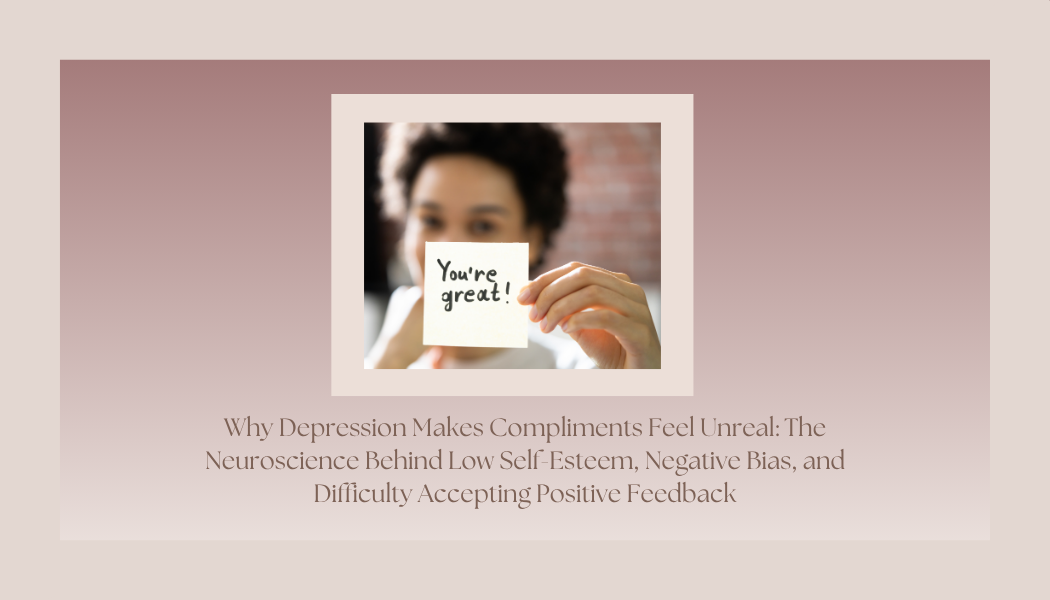
Why Depression Makes Compliments Feel Unreal: The Neuroscience Behind Low Self-Esteem, Negative Bias, and Difficulty Accepting Positive Feedback
Why Depression Makes Compliments Feel Unreal: The Neuroscience Behind Low Self-Esteem, Negative Bias, and Difficulty Accepting Positive Feedback
Why do compliments feel uncomfortable or unbelievable when you are depressed? Learn how depression affects the brain, self-esteem, and emotional processing, and how therapy can help restore a more balanced sense of self.
Many people who live with depression describe a strange and painful experience. Someone offers a compliment. They say you did a great job at work. They admire your creativity. They tell you that you are thoughtful, kind, or talented.
But instead of feeling encouraged, something inside you resists the feedback. Your mind immediately searches for reasons the compliment cannot be true.
Maybe they are just being polite. Maybe they do not really know you. Maybe they are mistaken. You might even feel uncomfortable or suspicious of praise.
If you have ever wondered why positive feedback can feel confusing or unreal during periods of depression, you are not imagining things. Research in psychology and neuroscience shows that depression alters how the brain processes positive information, particularly information related to the self (Dumit, 2003). Understanding this pattern can help illuminate why compliments sometimes feel difficult to accept and why this experience is deeply connected to the neurobiology of depression.
The Puzzle of Positive Feedback and Depression
People struggling with depression often report questions such as: Why does praise make me uncomfortable? Why do I assume that compliments are exaggerated or insincere? Why do I focus on criticism while dismissing positive feedback? Why does positive feedback feel disconnected from how I see myself?
These questions reflect a common cognitive pattern in depression known as negative self-bias. When depression shapes the way the brain interprets information, positive feedback can feel inconsistent with deeply held beliefs about the self. As a result, compliments may feel confusing, undeserved, or emotionally distant.
Depression and the Brain's Negative Bias
One of the most well-studied cognitive features of depression is negative bias, the tendency to notice, remember, and interpret information in ways that reinforce negative beliefs.
Research has shown that people experiencing depression are more likely to:
— Remember criticism more vividly than praise
— Interpret ambiguous situations negatively
— Discount positive experiences
— Maintain negative beliefs about their own worth (Pyszczynski & Greenberg, 1987).
This bias is not simply a personality trait. It is associated with specific patterns of brain activity. Neuroscientific research suggests that depression involves altered functioning in brain regions responsible for emotional processing, including the amygdala, prefrontal cortex, and anterior cingulate cortex (Disner et al., 2011).
These brain networks influence how people evaluate information about themselves and their relationships with others. When these systems are affected by depression, the brain may automatically filter information in ways that reinforce negative self-beliefs.
Why Compliments Feel Inconsistent With Self-Image
For many individuals, depression is closely connected to low self-esteem and negative core beliefs. A person might carry beliefs such as: I am not good enough. I am a disappointment. I am fundamentally flawed.
When someone offers positive feedback, the compliment clashes with these beliefs. The brain responds by attempting to resolve the inconsistency. Often, it resolves the conflict by discounting the compliment rather than revising the negative belief. Psychologists refer to this process as cognitive dissonance.
If a compliment contradicts a deeply held belief about the self, the brain may reject it to maintain psychological consistency.
The Role of Reward Processing in Depression
Depression also affects the brain's reward system, which plays a role in how people experience pleasure and positive reinforcement. The brain's reward circuitry includes areas such as the ventral striatum and dopamine pathways, which respond to positive experiences. Research shows that individuals with depression often exhibit reduced activation in reward-related brain regions when receiving positive feedback (Pizzagalli et al., 2009).
This reduced reward response can make compliments feel emotionally muted. Even when someone intellectually understands that a compliment is genuine, the emotional response may feel faint or absent. This phenomenon is closely related to anhedonia, the reduced ability to experience pleasure.
When Depression Meets Social Interaction
Difficulty accepting positive feedback can also affect relationships.
Consider these scenarios.
A partner expresses appreciation, but the compliment feels exaggerated.
A colleague praises your work, but you assume they are simply being polite.
A friend says they value your presence in their life, yet you feel skeptical.
Over time, these patterns can influence how people interpret social interactions.
Depression may lead individuals to:
— Mistrust positive feedback
— Assume others are being insincere
— Withdraw from supportive relationships
— Feel emotionally disconnected from others
Ironically, the very support that could help counter depressive thinking may feel difficult to absorb.
Trauma, Shame, and Self Perception
For many individuals, depression is connected to earlier experiences of shame, criticism, or emotional neglect. Children who grow up in environments where praise is inconsistent or conditional may internalize the belief that they are only valued when they perform well. Others may have experienced chronic criticism that shaped a negative internal narrative.
In these contexts, positive feedback may feel unfamiliar or even threatening. From a trauma-informed perspective, the nervous system may interpret compliments as unpredictable or unsafe, particularly if positive attention historically preceded criticism or disappointment. This dynamic can make accepting praise emotionally complicated.
The Nervous System and Emotional Safety
The ability to absorb positive feedback is also influenced by the state of the nervous system. According to Polyvagal Theory, the nervous system must feel relatively safe in order to process positive social cues. When the body is in a state of chronic stress or hypervigilance, the brain prioritizes threat detection.
This means that the nervous system may automatically scan for potential danger rather than absorb positive signals. Research by Porges (2017) suggests that felt safety is a prerequisite for social connection and emotional openness. If the nervous system remains in a defensive state, positive feedback may simply pass through without being fully experienced.
Why Depression and Self-Criticism Often Coexist
Self-criticism is another hallmark feature of depression. Many individuals with depression maintain an internal voice that constantly evaluates their performance and behavior.
This voice may say things such as:
You should have done better.
That success was just luck.
You fooled them this time.
Self-criticism reinforces negative beliefs and makes it difficult to internalize praise. Research indicates that high levels of self-criticism are associated with greater depression severity and poorer emotional well-being (Ehret et al., 2015).
Therapy and the Reconstruction of Self Perception
While depression can distort the way people interpret positive feedback, these patterns can change over time. Therapy offers a space where individuals can explore the underlying beliefs and emotional experiences that shape their self-perception.
At Embodied Wellness and Recovery, treatment integrates neuroscience-informed psychotherapy, trauma-informed care, and somatic approaches to support both emotional and nervous system regulation.
Therapeutic work may include:
Identifying Negative Core Beliefs
Clients often begin by identifying the internal beliefs that shape their self-image.
Understanding how these beliefs developed can reduce their power.
Developing Emotional Awareness
Therapy helps individuals notice how compliments or praise affect their bodies and emotions.
Over time, clients can learn to tolerate and gradually absorb positive feedback.
Nervous System Regulation
Somatic practices support the nervous system in moving out of chronic stress states.
When the body feels more secure, it becomes easier to process positive social signals.
Cultivating Self-Compassion
Research shows that self-compassion is associated with lower depression and greater emotional resilience (Baker et al., 2019).
Developing a kinder internal voice can gradually soften rigid self-criticism.
Relearning How to Receive Positive Feedback
Learning to accept positive feedback is often a gradual process. Instead of forcing belief in every compliment, individuals can experiment with small shifts.
For example:
— Noticing the impulse to dismiss praise
— Pausing before responding with self-criticism
— Allowing compliments to exist without immediately rejecting them
Over time, these small shifts can begin to reshape how the brain processes positive information. Neuroplasticity research shows that the brain can form new emotional associations through repeated experiences (LeDoux, 2012). With practice and supportive relationships, the nervous system can gradually learn to recognize positive feedback as safe and meaningful.
Depression Treatment at Embodied Wellness and Recovery
At Embodied Wellness and Recovery, therapists specialize in treating depression through an integrative approach that addresses the relationship between the brain, body, and relational environment.
Clients often seek therapy for challenges such as:
— Depression and low self-esteem
— Trauma and chronic stress
— Relationship and intimacy struggles
— Shame and self-criticism
— Difficulty connecting with positive experiences
By integrating trauma-informed psychotherapy, somatic therapy, and neuroscience-based interventions, treatment supports both emotional healing and nervous system regulation. As self-perception evolves, individuals often find that positive feedback becomes less foreign and more aligned with their emerging sense of identity.
Reach out to schedule a complimentary 20-minute consultation with our team of therapists, trauma specialists, somatic practitioners, or relationship experts, and start working towards integrative, embodied healing today.
📞 Call us at (310) 651-8458
📱 Text us at (310) 210-7934
📩 Email us at admin@embodiedwellnessandrecovery.com
🔗 Visit us at www.embodiedwellnessandrecovery.com
👉 Check us out on Instagram @embodied_wellness_and_recovery
🌍 Explore our offerings at Linktr.ee: https://linktr.ee/laurendummit
References
Baker, D. A., Caswell, H. L., & Eccles, F. J. (2019). Self-compassion and depression, anxiety, and resilience in adults with epilepsy. Epilepsy & behavior, 90, 154-161.
Disner, S. G., Beevers, C. G., Haigh, E. A., & Beck, A. T. (2011). Neural mechanisms of the cognitive model of depression. Nature Reviews Neuroscience, 12(8), 467 to 477.
Dumit, J. (2003). Is it me or my brain? Depression and neuroscientific facts. Journal of Medical Humanities, 24(1), 35-47.
Ehret, A. M., Joormann, J., & Berking, M. (2015). Self-criticism and depression. Clinical Psychology Review, 38, 45 to 57.
LeDoux, J. (2012). Rethinking the emotional brain. Neuron, 73(4), 653-676.
Pizzagalli, D. A., Holmes, A. J., Dillon, D. G., et al. (2009). Reduced caudate and nucleus accumbens response to rewards in unmedicated individuals with major depressive disorder. American Journal of Psychiatry, 166(6), 702-710.
Porges, S. W. (2017). The pocket guide to the polyvagal theory. Norton.
Pyszczynski, T., & Greenberg, J. (1987). Self-regulatory perseveration and the depressive self-focusing style: a self-awareness theory of reactive depression. Psychological bulletin, 102(1), 122.
The Hidden Emotional Cost of Masking Anxiety: Why High Functioning Anxiety Feels Exhausting and How Therapy Supports Nervous System Regulation
The Hidden Emotional Cost of Masking Anxiety: Why High Functioning Anxiety Feels Exhausting and How Therapy Supports Nervous System Regulation
Struggling with anxiety but feel pressure to hide it? Learn the emotional and neurological cost of masking anxiety and how therapy supports nervous system regulation, authenticity, and deeper connection.
Many people live with anxiety that is largely invisible to the outside world. They show up to work on time. They meet deadlines. They maintain relationships. They appear calm, competent, and composed. Yet internally, their experience can feel very different. Racing thoughts. Constant mental rehearsal. Fear of making mistakes. A persistent sense that something might go wrong. For many individuals, managing anxiety is not only about coping with the symptoms themselves. It is also about masking those symptoms so others do not notice.
Have you ever found yourself wondering:
Why does anxiety feel so exhausting even when I appear to be functioning well?
Why do I feel like I am constantly performing calmness rather than actually feeling calm?
Why does it feel difficult to show people how overwhelmed I truly am?
Why do I feel disconnected from others even when I am surrounded by people?
The emotional cost of masking anxiety can be significant. Over time, the effort required to hide internal distress may lead to burnout, loneliness, and a sense of living behind a carefully managed façade. Understanding what happens in the brain and nervous system when anxiety is masked can help illuminate why this pattern is so draining.
What Does It Mean to Mask Anxiety?
Masking anxiety refers to the process of concealing internal distress in order to appear composed, capable, or socially acceptable.
People who mask anxiety often develop sophisticated strategies to hide their symptoms.
These strategies may include:
— Smiling or joking while feeling internally overwhelmed
— Over-preparing for tasks to avoid mistakes
— Saying "I am fine" when feeling anxious or distressed
— Avoiding situations where anxiety might become visible
— Pushing through exhaustion in order to appear productive
In many cases, masking develops early in life. Children who grow up in environments where emotional expression is discouraged often learn that showing anxiety may lead to criticism, dismissal, or misunderstanding. Over time, masking can become an automatic coping strategy.
The Neuroscience of Anxiety and Emotional Suppression
From a neuroscience perspective, anxiety involves activation of the brain's threat detection system, particularly the amygdala and related stress circuits.
When the brain perceives potential danger or uncertainty, it activates the body's stress response.
This response can include:
— Increased heart rate
— Muscle tension
When individuals attempt to suppress or hide anxiety rather than process it, the nervous system often remains activated beneath the surface.
Research suggests that emotional suppression can increase rather than reduce physiological stress responses (Gross & Levenson, 1997).
In other words, masking anxiety may make the nervous system work harder. The brain must simultaneously manage the internal experience of anxiety while also maintaining the outward appearance of calm. This dual process can be mentally and emotionally exhausting.
High Functioning Anxiety and the Pressure to Appear Composed
Many individuals who mask anxiety fall into the category commonly referred to as high-functioning anxiety. These individuals may appear successful and capable. Yet their internal experience may include persistent worry, perfectionism, and difficulty relaxing.
High functioning anxiety often involves:
— Constant self-monitoring
— Fear of disappointing others
— Difficulty slowing down
— Chronic mental overthinking
While these patterns can sometimes lead to achievement and productivity, they often come at a significant emotional cost.
The nervous system rarely experiences true rest.
The Emotional Consequences of Masking Anxiety
Over time, masking anxiety can influence several aspects of psychological well-being.
Emotional Exhaustion
Maintaining a calm exterior while managing internal distress requires considerable emotional energy. Many individuals report feeling depleted after social interactions or workdays because they have spent hours monitoring and managing their outward behavior.
Loneliness and Disconnection
When anxiety remains hidden, others may never fully understand what someone is experiencing internally. This can create a painful sense of isolation.
People may think:
If others knew how anxious I really feel, they might see me differently.
Because anxiety is concealed, opportunities for empathy and support may never occur.
Loss of Authenticity
Masking anxiety can lead to the feeling that one's external identity no longer matches one's internal experience.
Individuals may begin to wonder, “Who am I when I am not performing calmness?” This disconnection from authenticity can influence self-esteem and identity.
Increased Stress on the Nervous System
When anxiety is continuously suppressed, the nervous system may remain stuck in a heightened state of vigilance. Research on stress physiology suggests that chronic activation of the stress response can affect sleep, concentration, immune functioning, and emotional regulation (McEwen, 2007).
Why Many People Feel Pressure to Hide Anxiety
Several cultural and social factors contribute to the tendency to mask anxiety.
Cultural Expectations Around Productivity
Modern culture often values productivity, composure, and achievement.
Many people worry that revealing anxiety may make them appear less capable.
Professional Environments
Workplaces sometimes reward individuals who appear calm under pressure. As a result, employees may feel reluctant to disclose emotional struggles.
Social Media and Comparison
Online environments frequently present curated images of confidence and success. This can reinforce the belief that others are managing life effortlessly.
Early Life Experiences
Individuals who grew up in environments where vulnerability was discouraged often develop strong habits of emotional concealment.
Anxiety, Trauma, and the Nervous System
For some individuals, anxiety masking is closely connected to earlier experiences of trauma or chronic stress. When the nervous system learns that vulnerability may lead to negative consequences, it may develop protective strategies to minimize exposure. These strategies can include emotional suppression, hyperindependence, or perfectionism.
From a trauma-informed perspective, masking anxiety can be understood as an adaptive survival response. However, patterns that once helped protect emotional safety may later contribute to exhaustion and disconnection.
Counseling for Anxiety and Emotional Authenticity
Therapy offers a space where individuals can gradually shift from masking anxiety toward a more authentic and regulated internal experience. At Embodied Wellness and Recovery, clinicians work with clients to address the deeper roots of anxiety while supporting nervous system regulation and relational safety.
Approaches may include:
Nervous System Regulation
Therapy often includes techniques that support the nervous system in moving out of chronic threat states.
These may involve:
— Breathing and grounding exercises
— Developing tolerance for emotional sensations
Research on Polyvagal Theory highlights the importance of felt safety in regulating the autonomic nervous system (Porges, 2017).
Trauma Informed Therapy
When anxiety is connected to earlier life experiences, trauma-informed therapy helps individuals process unresolved emotional patterns.
Relational Therapy
Therapy also supports the development of healthier relational dynamics. As clients learn to express vulnerability in safe environments, they often experience deeper emotional connection with others.
Identity and Self-Compassion Work
Another important element of therapy involves exploring how self-expectations and internal narratives influence anxiety. Developing self-compassion can help individuals relate to anxiety with greater understanding rather than criticism.
Moving Toward Authentic Emotional Experience
Shifting away from masking anxiety does not mean revealing every emotion to everyone. Instead, the goal is to develop a more flexible relationship with internal experiences.
Over time, individuals often learn to:
— Recognize early signs of anxiety in the body
— Communicate needs more clearly in relationships
— Reduce self-criticism related to emotional experiences
— Create space for rest and nervous system recovery
These changes can foster greater alignment between internal experience and outward life.
Anxiety Treatment at Embodied Wellness and Recovery
At Embodied Wellness and Recovery, therapists specialize in treating anxiety through an integrative approach that considers the relationship between the brain, body, and relational environment.
Our clinicians work with individuals and couples navigating challenges related to:
— Anxiety and chronic stress
— Trauma and nervous system dysregulation
— Relationship conflict and emotional disconnection
— Intimacy and sexuality concerns
— Identity transitions and life stressors
By integrating neuroscience-informed therapy, somatic approaches, and relational counseling, treatment addresses not only the symptoms of anxiety but also the underlying patterns that maintain it. When individuals develop new ways of relating to their internal experiences, they often discover that the effort required to maintain a mask gradually decreases. The nervous system begins to experience more moments of genuine calm rather than simply performing calmness.
Reach out to schedule a complimentary 20-minute consultation with our team of therapists, trauma specialists, somatic practitioners, or relationship experts, and start working towards integrative, embodied healing today.
📞 Call us at (310) 651-8458
📱 Text us at (310) 210-7934
📩 Email us at admin@embodiedwellnessandrecovery.com
🔗 Visit us at www.embodiedwellnessandrecovery.com
👉 Check us out on Instagram @embodied_wellness_and_recovery
🌍 Explore our offerings at Linktr.ee: https://linktr.ee/laurendummit
References
1) Gross, J. J., & Levenson, R. W. (1997). Hiding feelings: The acute effects of inhibiting positive and negative emotion. Journal of Abnormal Psychology, 106(1), 95 to 103.
2) McEwen, B. S. (2007). Physiology and neurobiology of stress and adaptation. Physiological Reviews, 87(3), 873 to 904.
3) Porges, S. W. (2017). The pocket guide to the polyvagal theory. Norton.