

Can the Brain Repress Traumatic Memories? The Controversial Science of Repressed Memory, PTSD, and What the Body Actually Remembers
Can the Brain Repress Traumatic Memories? The Controversial Science of Repressed Memory, PTSD, and What the Body Actually Remembers
Can traumatic memories be repressed and later recovered? Explore the neuroscience of trauma, PTSD, fragmented memory, body-based symptoms, and the ongoing scientific debate about repressed memories with a balanced, evidence-based perspective.
If you've survived trauma, you may have wondered:
Why can't I remember parts of what happened?
Why do certain smells, sounds, or situations make my body react before my mind understands why?
Why do I avoid thinking about certain experiences, even when I know they occurred?
Can the brain truly bury traumatic memories outside conscious awareness?
These questions sit at the center of one of psychology's longest-running and most controversial debates: the science of repressed memories.
For decades, some theories proposed that overwhelming trauma could be unconsciously repressed and stored outside conscious awareness, only to emerge years later through symptoms or recovered memories. Others argued that while trauma undeniably affects the brain and body, there is insufficient evidence to conclude that the mind routinely buries accurate autobiographical memories in a special unconscious vault awaiting retrieval.
The truth is more nuanced than either extreme suggests.
The Origins of Repressed Memory Theory
The concept of repression emerged from psychoanalytic theory, most notably through the work of Sigmund Freud, who proposed that the mind could unconsciously exclude distressing thoughts or memories from awareness as a defense mechanism. According to this perspective, traumatic experiences might remain inaccessible to conscious recall while continuing to influence emotions, relationships, and physical symptoms. Over time, this idea became deeply embedded in popular culture and some therapeutic traditions.
What Does Modern Memory Science Say?
Contemporary memory research paints a more complicated picture. Most cognitive scientists agree that memory is reconstructive rather than perfectly reproductive. Memories are encoded, stored, and retrieved through dynamic neural processes influenced by attention, emotion, repetition, and subsequent experiences. Trauma can profoundly affect these processes.
However, many researchers caution against assuming that symptoms or bodily sensations necessarily indicate the existence of completely inaccessible traumatic memories waiting to be uncovered. Instead, trauma may influence how memories are encoded, organized, and retrieved rather than whether they exist at all.
Trauma Often Produces Fragmented Rather Than Forgotten Memories
Paradoxically, many individuals with post-traumatic stress disorder (PTSD) struggle not because they cannot remember traumatic events, but because they remember them too vividly. They may experience intrusive images, nightmares, flashbacks, physiological reactivity, or persistent reminders.
At the same time, certain contextual details may remain fragmented, incomplete, or difficult to place in chronological order. High levels of stress hormones can interfere with aspects of memory consolidation, producing recollections that feel disjointed or sensory-based rather than coherent narratives.
Avoidance Is Not the Same as Repression
One of the most important distinctions in trauma psychology is the difference between actively or unconsciously avoiding painful memories and having no access whatsoever to those memories. Many survivors understandably avoid discussing traumatic events because remembering them feels emotionally overwhelming or physically activating.
This avoidance can reduce opportunities to process the experience and may contribute to persistent symptoms. Avoidance is a well-recognized feature of PTSD and should not automatically be interpreted as evidence that memories have been repressed.
Can the Body Remember Trauma?
The phrase "the body keeps the score" has become widely recognized, but it is often misunderstood. There is broad scientific agreement that traumatic stress can produce lasting physiological changes. Stress-related activation of hormones such as cortisol, adrenaline, and noradrenaline influences multiple body systems and may contribute to elevated blood pressure, digestive symptoms, sleep disruption, sexual difficulties, hypervigilance, and chronic muscle tension.
Trauma survivors may also experience nausea, panic attacks, rapid breathing, exhaustion, or persistent feelings of unsafety. These bodily experiences are real and deserve compassionate clinical attention. However, saying that the body stores the effects of trauma is different from saying that the body stores hidden autobiographical memories in a way that bypasses the brain's memory systems. Current neuroscience supports the former far more clearly than the latter.
The Risks of Oversimplification
The debate surrounding repressed memories became particularly heated during the 1980s and 1990s when some individuals recovered previously unremembered memories during therapy, while others raised concerns about the possibility of suggestion, false memories, and memory distortion.
Today, many experts encourage clinicians to maintain a balanced position:
— Trauma is real.
— Trauma affects the brain and body.
— Memory can become fragmented and incomplete.
— Individuals may avoid recalling painful experiences for many reasons.
At the same time, memories are malleable and can be influenced by suggestion, expectation, and repeated imagination. Responsible trauma treatment emphasizes curiosity, careful assessment, and avoiding assumptions about events that cannot be independently verified.
Why Certain Triggers Feel So Powerful
Many trauma survivors notice that their bodies react before conscious thought catches up. Triggers may include a sound, a scent, a facial expression, or a location. These triggers may activate emotional learning networks associated with prior experiences without requiring deliberate recollection. This phenomenon helps explain why someone may experience physiological distress despite struggling to articulate exactly why. The nervous system has learned patterns of prediction and protection.
PTSD Is Both Psychological and Physiological
Post-traumatic stress disorder is characterized by more than distressing memories.
Common symptoms include:
— Intrusive recollections
— Avoidance of reminders
— Difficulty sleeping
— Exaggerated startle responses
— Emotional numbing
— Irritability
— Persistent physiological arousal
These experiences reflect complex interactions among the brain, autonomic nervous system, endocrine system, and psychological processes.
Does Healing Require Recovering Every Memory?
Fortunately, no. Many individuals experience meaningful improvement without recovering additional autobiographical details. Therapeutic progress often comes through helping the nervous system become more regulated, processing emotions in the present, improving relationships, and reducing patterns of avoidance. The goal is not necessarily to excavate forgotten memories. The goal is to reduce suffering and increase flexibility, safety, and connection.
A Neuroscience-Informed, Trauma-Sensitive Approach
At Embodied Wellness and Recovery, we approach trauma with both compassion and scientific humility. We recognize that trauma can profoundly affect emotions, relationships, sexuality, identity, and the nervous system. We also appreciate the complexity of memory research and avoid simplistic conclusions about what bodily symptoms necessarily mean.
Our clinicians integrate somatic therapy, EMDR, attachment-focused psychotherapy, and neuroscience-informed interventions to help clients process trauma while strengthening emotional regulation and restoring a greater sense of internal safety. We specialize in trauma recovery, nervous system repair, relationships, sexuality, and intimacy, supporting individuals through evidence-based care that respects both lived experience and the evolving scientific literature.
Understanding trauma does not require certainty about every memory. Often, it begins with recognizing how the brain and body have adapted to survive, approaching those adaptations with curiosity rather than judgment, and creating conditions where the nervous system can gradually experience greater flexibility and peace.
Reach out to schedule a complimentary 20-minute consultation with our team of therapists, trauma specialists, somatic practitioners, or relationship experts, and start working towards integrative, embodied healing today.
📞 Call us at (310) 651-8458
📱 Text us at (310) 210-7934
📩 Email us at admin@embodiedwellnessandrecovery.com
🔗 Visit us at www.embodiedwellnessandrecovery.com
👉 Check us out on Instagram @embodied_wellness_and_recovery
🌍 Explore our offerings at Linktr.ee: https://linktr.ee/laurendummit
References
Brewin, C. R. (2014). Episodic memory, perceptual memory, and their interaction: Foundations for a theory of posttraumatic stress disorder. Psychological Bulletin, 140(1), 69-97.
Lynn, S. J., Lilienfeld, S. O., Merckelbach, H., Giesbrecht, T., & van der Kloet, D. (2014). Dissociation and dissociative disorders: Challenging conventional wisdom. Current Directions in Psychological Science, 23(1), 48-53.
McNally, R. J. (2003). Remembering trauma. Harvard University Press.
Porges, S. W. (2011). The polyvagal theory: Neurophysiological foundations of emotions, attachment, communication, and self-regulation. W. W. Norton & Company.
Shin, L. M., & Liberzon, I. (2010). The neurocircuitry of fear, stress, and anxiety disorders. Neuropsychopharmacology, 35(1), 169-191.
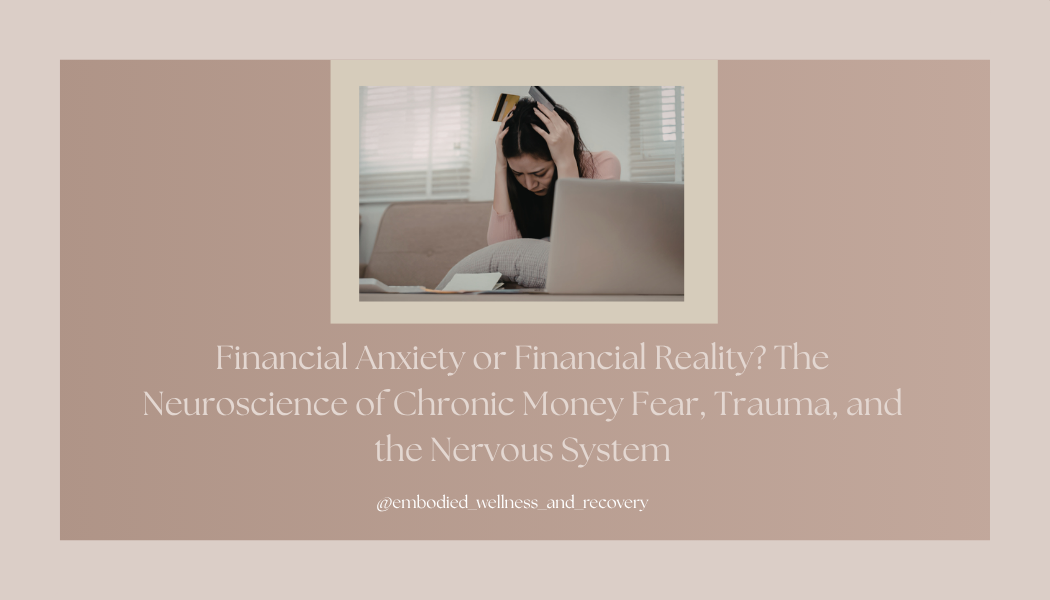
Financial Anxiety or Financial Reality? The Neuroscience of Chronic Money Fear, Trauma, and the Nervous System
Financial Anxiety or Financial Reality? The Neuroscience of Chronic Money Fear, Trauma, and the Nervous System
Do you constantly fear running out of money even when you are financially stable? Explore the neuroscience of financial anxiety, trauma, scarcity mindset, and chronic money stress, and learn how therapy and nervous system regulation can help you develop a healthier relationship with financial security and emotional safety.
Do you check your bank account compulsively even when you know there is enough money there?
Do you feel guilty spending money on yourself, even for necessities?
Do you constantly fear losing everything, even though you're financially responsible?
Do you catastrophize about the future, obsess over worst-case scenarios, or feel physically anxious whenever money is discussed?
For many people, financial fear is not just about numbers. It is deeply emotional, physiological, and relational. Money has become one of the most psychologically loaded aspects of modern life. Financial anxiety can affect sleep, relationships, parenting, dating, self-worth, sexuality, career decisions, nervous system regulation, and overall mental health. Even people with stable incomes, savings, successful careers, or supportive partners may live with chronic fear that disaster is just around the corner.
At Embodied Wellness and Recovery, we often help clients explore an important question:
“Is my financial fear realistic, or is my nervous system responding to unresolved trauma, scarcity, or chronic stress?”
The answer is often both.
Why Financial Anxiety Feels So Intense
Financial stress activates some of the most primitive survival systems in the human brain. From an evolutionary perspective, access to resources meant safety, stability, food, shelter, social belonging, and survival. Today, financial uncertainty can activate those same deeply rooted survival circuits. This is why money anxiety often feels visceral rather than merely intellectual. You may logically understand that you are financially stable, yet your body continues to react as though danger is imminent. Research consistently shows that chronic financial stress is strongly associated with anxiety disorders, depression, sleep disruption, relationship conflict, and reduced psychological well-being (Richardson et al., 2013). When financial fear becomes chronic, the nervous system may remain in a persistent state of hyperarousal.
This can lead to:
— Racing thoughts
— Compulsive budgeting or checking accounts
— Panic about spending
— Difficulty relaxing
— Irritability
— Muscle tension
— Digestive issues
— Emotional exhaustion
— Shame
— Decision paralysis
— Avoidance around finances
— Chronic fear about the future
For some individuals, financial anxiety is directly connected to present-day financial instability. But for others, the intensity of the fear exceeds the objective reality of the situation. This is where trauma, attachment history, and nervous system conditioning often enter the picture.
When Financial Fear Is Rooted in Trauma
Many people grew up in environments where money was associated with fear, chaos, unpredictability, conflict, deprivation, criticism, or emotional insecurity.
Perhaps:
— Your family struggled financially
— A parent lost a job unexpectedly
— You witnessed foreclosure, eviction, or instability
— Money discussions led to yelling or shame
— Love and approval felt tied to achievement or productivity
— Caregivers used financial support as control
— You experienced neglect or emotional abandonment
— You learned that safety could disappear without warning
The nervous system remembers these experiences. Even decades later, financial triggers can reactivate old survival responses. This is why someone with a healthy savings account may still feel panicked buying groceries or booking a vacation. The body is not always responding to the present moment. Sometimes it is responding to unresolved emotional memory. From a neuroscience perspective, the amygdala, which helps detect threats, becomes highly activated during uncertainty. Trauma can sensitize this system, making the brain more likely to perceive future danger even when objective safety exists. In trauma survivors, the nervous system may become conditioned toward hypervigilance around security and survival. Money becomes psychologically fused with a sense of emotional safety.
Scarcity Mindset and the Nervous System
The term “scarcity mindset” has become popular online, but there is important neuroscience behind it. When the brain perceives scarcity, attention narrows toward threat detection and future planning. Research by Mullainathan and Shafir (2013) found that scarcity consumes cognitive bandwidth, making it harder to think flexibly, regulate emotions, and experience psychological spaciousness.
In chronic scarcity states, the nervous system becomes organized around:
— Anticipating danger
— Conserving resources
— Avoiding risk
— Monitoring for loss
— Preparing for catastrophe
This can happen regardless of actual income level. A person earning six figures may still experience profound internal insecurity if their nervous system never learned what safety feels like.
This is particularly common among:
— Adult children of emotionally immature or addicted parents
— Individuals with anxious attachment
— Perfectionists
— High achievers
— Caregivers who became emotionally parentified early in life
Many clients describe feeling as though they can never fully exhale financially.
The Relationship Between Financial Anxiety and Relationships
Money fears rarely stay contained within finances alone.
Financial anxiety often impacts:
— Dating
— Marriage
One partner may overspend to soothe emotional distress while the other compulsively saves to feel safe.
One person may avoid discussing finances altogether because it activates shame. Another may become controlling or hyper-focused on budgeting because unpredictability feels intolerable. Research shows that financial stress is one of the leading predictors of relationship conflict and dissatisfaction (Dew, 2008).
But beneath many financial arguments are deeper nervous system fears:
— “Will we survive?”
— “Can I trust you?”
— “Am I carrying this alone?”
— “Will I lose security?”
— “Will I be abandoned?”
— “Am I enough?”
These fears are often less about math and more about attachment, emotional regulation, and perceived safety.
Is Your Financial Fear Rational or Trauma-Based?
This question deserves nuance.
Sometimes, financial anxiety is an appropriate response to real-world stressors:
— Debt
— Inflation
— Job instability
— Medical bills
— Economic uncertainty
— Caregiving burdens
Therapy should never invalidate legitimate concerns. However, it is also important to notice when the nervous system remains activated even when objective stability exists.
Consider these questions:
— Do you constantly anticipate financial catastrophe despite evidence of stability?
— Does spending trigger disproportionate shame orpanic?
— Do financial conversations feel emotionally overwhelming?
— Do you struggle to enjoy what you have because you are preoccupied with losing it?
— Do you equate productivity with worthiness or safety?
— Does resting feel unsafe unless you are financially “ahead”?
— Are you unable to feel secure regardless of how much you save?
If so, your nervous system may be carrying unresolved survival fear.
The Neuroscience of Safety and Regulation
One of the most important aspects of healing chronic financial anxiety is understanding that emotional safety is not created solely through external circumstances. The nervous system must also learn how to recognize internal safety. This does not mean ignoring practical financial planning. It means helping the body differentiate between present reality and unresolved threat activation.
Therapeutic approaches such as:
— EMDR
— Nervous system regulation work
can help individuals process financial trauma, reduce hypervigilance, and build greater emotional flexibility around uncertainty.
Research in neuroscience and trauma therapy suggests that regulation improves prefrontal cortex functioning, helping individuals think more clearly, make grounded decisions, and reduce catastrophic thinking (Siegel, 2020).
When the nervous system becomes less overwhelmed, people are often better able to:
— Budget realistically
— Set boundaries
— Communicate about finances
— Make thoughtful decisions
— Experience pleasure without panic
— Tolerate uncertainty
— Build healthier relationships with money
Moving Toward a Healthier Relationship With Money
Healing financial anxiety does not mean becoming careless or unrealistic. It means developing a relationship with money that is informed by both wisdom and nervous system balance.
Some helpful starting points include:
Notice Your Emotional Triggers Around Money
Pay attention to what activates fear, shame, urgency, or panic.
Separate Present Reality From Past Survival States
Ask yourself: “Is this fear about today, or does it feel older than this moment?”
Develop Nervous System Regulation Practices
Grounding exercises, breathwork, therapy, movement, mindfulness, and somatic practices can help reduce chronic hyperarousal.
Create Practical Financial Structure
Budgets, savings plans, and financial education can support nervous system stability when approached from grounded awareness rather than panic.
Explore Your Attachment Relationship With Money
For many people, money unconsciously represents:
— Safety
— Love
— Freedom
— Stability
— Power
— Control
— Belonging
Understanding these emotional associations can be transformative.
Final Thoughts
Financial fear is deeply human.
In today’s world, where economic uncertainty, rising costs, and cultural pressure around success are everywhere, it makes sense that many people feel overwhelmed around money. But chronic financial anxiety is not always just about finances. Sometimes it reflects a nervous system shaped by unpredictability, emotional insecurity, trauma, attachment wounds, or chronic survival stress.
The goal is not blind optimism or denial. The goal is to learn how to approach finances from a more regulated, grounded, and embodied place where practical planning and emotional safety can coexist.
At Embodied Wellness and Recovery, we specialize in helping individuals and couples navigate trauma, anxiety, nervous system dysregulation, relationship stress, attachment wounds, and emotional overwhelm through neuroscience-informed, somatic, and trauma-focused therapy.
Reach out to schedule a complimentary 20-minute consultation with our team of therapists, trauma specialists, somatic practitioners, or relationship experts, and start working towards integrative, embodied healing today.
📞 Call us at (310) 651-8458
📱 Text us at (310) 210-7934
📩 Email us at admin@embodiedwellnessandrecovery.com
🔗 Visit us at www.embodiedwellnessandrecovery.com
👉 Check us out on Instagram @embodied_wellness_and_recovery
🌍 Explore our offerings at Linktr.ee: https://linktr.ee/laurendummit
References
Dew, J. (2008). Changes in debt and marital satisfaction among recently married couples. Family Relations, 57(1), 60-71.
Mullainathan, S., & Shafir, E. (2013). Scarcity: Why having too little means so much. New York, NY: Times Books.
Richardson, T., Elliott, P., & Roberts, R. (2013). The relationship between personal unsecured debt and mental and physical health: A systematic review and meta-analysis. Clinical Psychology Review, 33(8), 1148-1162.
Siegel, D. J. (2020). The developing mind: How relationships and the brain interact to shape who we are (3rd ed.). New York, NY: Guilford Press.
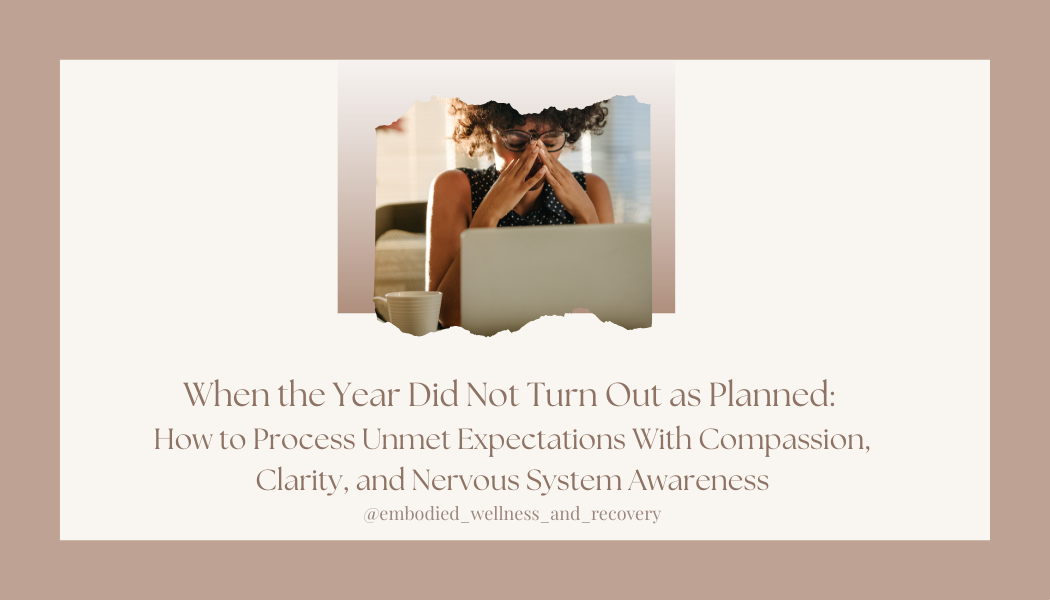
When the Year Did Not Turn Out as Planned: How to Process Unmet Expectations With Compassion, Clarity, and Nervous System Awareness
When the Year Did Not Turn Out as Planned: How to Process Unmet Expectations With Compassion, Clarity, and Nervous System Awareness
Unmet expectations at the end of the year can activate shame, anger, and harsh self-criticism. Learn how to process disappointment through a neuroscience-informed, trauma-aware lens and restorative balance with compassionate reflection.
As the year comes to a close, many people experience a quiet emotional reckoning. Goals were set with hope. Intentions felt sincere. Plans were made with the belief that effort would equal outcome. And yet, as the calendar shifts, the internal experience may feel heavy, disappointed, or tinged with shame.
You might be asking yourself:
— Why did I not accomplish what I planned?
— What is wrong with me that I could not follow through?
— Why does this year feel like a letdown instead of a milestone?
— Why am I so angry or numb when I should feel grateful?
Unmet expectations at the end of the year are not just cognitive disappointments. They are emotional and physiological experiences that live in the nervous system. At Embodied Wellness and Recovery, we understand year-end distress as a nervous system response shaped by trauma history, attachment patterns, and internalized pressure rather than a personal failure.
Why Unmet Expectations Hurt So Deeply
Expectations are not neutral. They are often woven with identity, self-worth, and hope for repair. When expectations go unmet, the brain does not simply register disappointment. It often interprets the outcome as a threat to belonging, competence, or safety.
From a neuroscience perspective, unmet expectations can activate:
— The anterior cingulate cortex, which processes emotional pain
— The amygdala, which detects threat and uncertainty
— Stress hormones such as cortisol, which heighten self-criticism and vigilance
This is why unmet goals can quickly spiral into shame or harsh self-talk rather than simple disappointment.
The Difference Between Disappointment and Shame
Disappointment says, “This did not go as planned.”
Shame says, “This happened because there is something wrong with me.”
Many people unknowingly collapse disappointment into shame at the end of the year, especially if they grew up in environments where achievement, productivity, or emotional self-control were tied to worth.
If you find yourself replaying the year with a judgmental tone rather than curiosity, this may reflect old relational learning rather than the reality of your effort or capacity.
How Year-End Reflection Can Trigger Old Wounds
The end of the year invites comparison. Social media highlights milestones. Cultural narratives emphasize resolutions, reinvention, and progress. These external pressures can amplify internal wounds related to:
— Not feeling good enough
— Fear of falling behind
— Chronic self-blame
— Internalized perfectionism
For individuals with trauma histories or attachment injuries, year-end reflection can unconsciously reactivate earlier experiences of disappointment, criticism, or emotional abandonment.
The nervous system remembers what the mind may overlook.
Why Anger Often Shows Up Alongside Shame
Anger is a common but misunderstood response to unmet expectations. While shame turns inward, anger often emerges when the body senses injustice or exhaustion.
Anger at the end of the year may reflect:
— Burnout from chronic over-functioning
— Resentment about unmet needs
— Grief for lost time or opportunities
— Anger at systems, relationships, or circumstances that limited choice
When anger is suppressed or judged, it can turn inward as depression or self-contempt. When it is understood, it can offer clarity about boundaries, values, and unmet needs.
The Nervous System and Year-End Overload
Many people underestimate how much cumulative stress the nervous system carries by December. Even positive events require regulation. By the end of the year, the body may be operating from depletion rather than motivation.
Signs of nervous system overload include:
— Difficulty reflecting without becoming overwhelmed
— Emotional numbness or irritability
— Increased self-criticism
— Reduced capacity for hope or planning
This is not a character flaw. It is a physiological state.
Why Traditional Goal Review Often Backfires
Standard year-end practices often emphasize productivity, evaluation, and optimization. While these approaches may work for some, they can be counterproductive for individuals whose nervous systems are already taxed.
For trauma-impacted systems, pressure-driven reflection can reinforce:
— Hypervigilance
— Self-surveillance
— Conditional self-acceptance
A nervous system-informed approach prioritizes regulation before reflection.
A Compassionate Framework for Processing Unmet Expectations
1. Regulate Before You Reflect
Before evaluating the year, attend to the body. Gentle regulation practices such as slow breathing, grounding, or mindful movement help shift the nervous system out of threat mode. Reflection without regulation often leads to distortion.
2. Separate Effort From Outcome
Many unmet expectations are not the result of a lack of effort, but of:
— Limited emotional bandwidth
— Unanticipated stressors
— Systemic constraints
— Trauma-related survival responses
Naming effort honestly restores dignity and reduces shame.
3. Name What Was Lost
Unmet expectations often carry grief. Perhaps you hoped for more connection, stability, healing, or ease. Allowing space to name what did not happen honors the emotional reality of the year. Grief is not weakness. It is integration.
4. Notice the Inner Critic Without Obeying It
The inner critic often becomes loud during year-end reflection. Instead of arguing with it, notice its tone and function. Many critical voices developed to prevent disappointment or rejection earlier in life.
Understanding the critic reduces its authority.
5. Explore Meaning Without Forcing Positivity
There is no requirement to frame the year as a success. Meaning can be found in endurance, survival, boundary-setting, or learning what no longer works.
Neuroscience shows that coherent narratives support emotional integration more than forced optimism.
How Therapy Supports Year-End Emotional Processing
At Embodied Wellness and Recovery, we address unmet expectations through a trauma-informed, nervous-system-aware lens. Therapy offers a space to:
— Process shame without reinforcing it
— Regulate emotional intensity safely
— Integrate anger and grief
— Reframe expectations with compassion
— Restore self-trust and internal permission.
Rather than focusing on fixing the self, therapy focuses on understanding what the nervous system has been managing all along.
Reframing Expectations as Information, Not Verdicts
Unmet expectations often provide valuable information:
— About capacity
— About values
— About relational dynamics
— About what the body can sustain
When expectations are treated as data rather than judgments, they guide wiser choices moving forward.
Moving Into the New Year Without Pressure
Gentler transitions may include:
— Naming what you are releasing rather than what you are achieving
— Prioritizing rest and regulation over ambition
— Setting intentions that support nervous system health
— Allowing clarity to emerge gradually rather than on demand
A nervous system that feels safe is far more capable of growth than one driven by fear or shame.
Moving from Self-Judgment to Curiosity
If this year did not unfold as expected, that does not mean it was wasted. It may mean your nervous system was busy surviving, adapting, or protecting something essential.
At Embodied Wellness and Recovery, we help individuals and couples process disappointment with curiosity rather than self-punishment. When unmet expectations are met with understanding, the nervous system can finally exhale.
Reach out to schedule a complimentary 20-minute consultation with our team of therapists, trauma specialists, somatic practitioners, or relationship experts, and start working towards integrative, embodied healing today.
📞 Call us at (310) 651-8458
📱 Text us at (310) 210-7934
📩 Email us at admin@embodiedwellnessandrecovery.com
🔗 Visit us at www.embodiedwellnessandrecovery.com
👉 Check us out on Instagram @embodied_wellness_and_recovery
🌍 Explore our offerings at Linktr.ee: https://linktr.ee/laurendummit
References
1) Gilbert, P. (2010). Compassion-focused therapy. Routledge.
2) Porges, S. W. (2011). The polyvagal theory: Neurophysiological foundations of emotions, attachment, communication, and self-regulation. W. W. Norton & Company.
3) Schore, A. N. (2012). The science of the art of psychotherapy. W. W. Norton & Company.
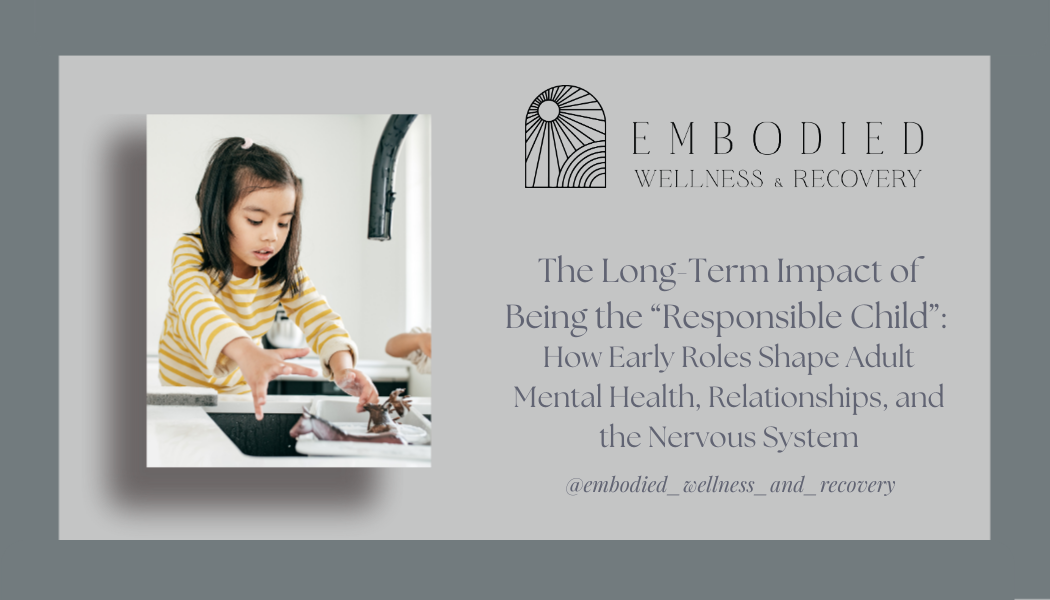
The Long-Term Impact of Being the “Responsible Child”: How Early Roles Shape Adult Mental Health, Relationships, and the Nervous System
The Long-Term Impact of Being the “Responsible Child”: How Early Roles Shape Adult Mental Health, Relationships, and the Nervous System
Growing up as the responsible child can shape identity, relationships, and nervous system functioning well into adulthood. Learn the long-term psychological and physiological impact and how therapy supports repair and balance.
Many adults arrive in therapy with a familiar story. They were the dependable ones. The mature one. The child who never caused trouble, who handled responsibility early, who noticed what others needed and responded without being asked. From the outside, this role often looked admirable. Inside, it usually carried hidden costs that were never named.
If you grew up as the responsible child, you may find yourself asking:
— Why do I feel exhausted even when I am doing well?
— Why is it hard to rest or ask for help?
— Why do I feel overly responsible for others’ emotions?
— Why do relationships feel draining or unbalanced?
— Why does intimacy feel complicated or performative?
These questions are not signs of personal failure. They are often the long-term effects of an early survival role.
At Embodied Wellness and Recovery, we understand the responsible child not as a personality trait, but as an adaptive response to family dynamics, attachment disruption, and nervous system conditioning.
What Does It Mean to Be the Responsible Child?
The responsible child is often the one who:
— Took on adult-like duties at a young age
— Managed siblings or household tasks
— Provided emotional support to caregivers
— Stayed hyperaware of family moods
— Avoided conflict to keep the peace
— Learned to be competent, reliable, and self-controlled
This role frequently emerges in families impacted by:
— Emotional neglect
— Chronic stress or instability
— Addiction or mental illness
— Divorce or loss
— Immature or overwhelmed caregivers
— High achievement or perfectionistic expectations
The responsible child learns early that safety comes from being useful, mature, and non-needy.
Parentification and Early Role Reversal
Clinically, the responsible-child role is often associated with parentification. Parentification occurs when a child takes on emotional or practical responsibilities that exceed their developmental capacity.
There are two common forms:
— Instrumental parentification, where the child manages tasks or caregiving
— Emotional parentification, where the child regulates a caregiver’s emotions or provides psychological support
While some degree of responsibility can build skills, chronic parentification can shift the child’s nervous system into a state of long-term vigilance. The child learns to monitor, anticipate, and respond rather than explore, rest, or receive care.
How the Responsible Child Role Shapes the Nervous System
From a neuroscience perspective, the responsible child often develops a nervous system organized around threat prevention and performance.
Key patterns include:
— Chronic sympathetic activation focused on problem-solving and control
— Difficulty accessing parasympathetic states associated with rest and play
— Heightened sensitivity to others’ emotional cues
— Suppression of personal needs to maintain stability
Over time, the nervous system associates safety with competence rather than connection. This can lead to long-term stress physiology even in objectively safe environments.
Psychological Traits That Often Develop
Adults who were responsible children frequently present with:
— Perfectionism
— High self-criticism
— Over-functioning in relationships
— Difficulty delegating or trusting others
— Guilt when resting or saying no
— A strong inner critic
— Fear of disappointing others
— Difficulty identifying personal desires
These traits once served a protective function. In adulthood, they can limit flexibility, spontaneity, and emotional freedom.
The Impact on Adult Relationships
Over-Responsibility in Intimate Partnerships
Responsible children often become the emotional managers in adult relationships. They anticipate needs, smooth tension, and carry the emotional labor.
This can lead to:
— One-sided relational dynamics
— Resentment that feels hard to name
— Attraction to partners who need caretaking
— Difficulty receiving care without discomfort
Difficulty With Emotional Vulnerability
Because the responsible child learned that emotions could destabilize the system, vulnerability may feel risky. Intimacy can become performance-based rather than reciprocal.
You may appear emotionally available while internally monitoring, managing, or self-editing.
Sexuality and Intimacy Challenges
The responsible child role can also shape sexual experiences and desire.
Common patterns include:
— Feeling responsible for a partner’s satisfaction
— Difficulty accessing pleasure without performance
— Trouble relaxing into bodily sensations
— Confusion between intimacy and obligation
— Reduced libido during stress or relational imbalance
Sexuality thrives in nervous systems that feel safe, playful, and embodied. Responsibility-driven nervous systems often struggle to access these states without therapeutic support.
The Cost to Identity and Desire
One of the most profound impacts of being a responsible child is disrupting authentic self-development.
Because attention was focused outward, many adults struggle with:
— Knowing what they want
— Identifying personal preferences
— Feeling entitled to rest, joy, or pleasure
— Making decisions without guilt
Desire may feel muted or dangerous because it was once secondary to family stability.
Why Success Does Not Always Feel Satisfying
Many responsible children grow into high-achieving adults. They are capable, respected, and outwardly successful. Yet internal satisfaction may remain elusive.
This is because achievement was often tied to safety rather than fulfillment. The nervous system learned to perform to prevent disruption, not to express authentic values. Without meaning and internal alignment, success can feel hollow.
Emotional and Physical Health Consequences
Long-term nervous system overactivation can contribute to:
— Anxiety disorders
— Depression
— Burnout
— Chronic fatigue
— Autoimmune or stress-related conditions
— Sleep disturbances
— Difficulty relaxing or feeling present
These outcomes are not character flaws. They are the cumulative effect of prolonged self-suppression and vigilance.
Why Letting Go of the Role Feels So Hard
The responsible child role is often deeply intertwined with identity. Letting go can evoke:
— Fear of chaos or abandonment
— Guilt about prioritizing self
— Anxiety about being perceived as selfish
— Grief for the childhood that was missed
Therapy helps untangle these emotions while preserving the strengths developed through responsibility.
How Therapy Supports Repair and Balance
At Embodied Wellness and Recovery, we work with responsible children through trauma-informed, attachment-focused, and somatic approaches.
Therapy supports healing by:
— Regulating the nervous system and reducing hypervigilance
— Differentiating responsibility from self-worth
— Processing grief and anger safely
— Reconnecting with bodily cues and desire
— Building tolerance for rest and receptivity
— Establishing boundaries without shame
— Cultivating reciprocal relationships
Rather than eliminating competence, therapy restores choice.
Reclaiming Agency Without Losing Strength
Being responsible developed resilience, intelligence, and empathy. Healing does not require abandoning these strengths. It involves learning when to use them and when to rest.
Over time, many clients discover:
— Increased emotional flexibility
— More balanced relationships
— Improved intimacy and pleasure
— Greater clarity around values and purpose
— A more profound sense of internal permission
The nervous system learns that safety can coexist with ease.
A Compassionate Reframe
If you were the responsible child, you adapted brilliantly to the environment you were given. Your nervous system learned what it needed to know to survive.
Now, with the proper support, it can learn something new.
At Embodied Wellness and Recovery, we help adults gently reorient from a survival-based sense of responsibility toward an understanding of regulation, connection, and authenticity. The goal is not to undo who you became, but to expand who you are allowed to be.
Reach out to schedule a complimentary 20-minute consultation with our team of therapists, trauma specialists, somatic practitioners, or relationship experts, and start working towards integrative, embodied healing today.
📞 Call us at (310) 651-8458
📱 Text us at (310) 210-7934
📩 Email us at admin@embodiedwellnessandrecovery.com
🔗 Visit us at www.embodiedwellnessandrecovery.com
👉 Check us out on Instagram @embodied_wellness_and_recovery
🌍 Explore our offerings at Linktr.ee: https://linktr.ee/laurendummit
References
1) Boszormenyi-Nagy, I., & Spark, G. M. (1973). Invisible loyalties: Reciprocity in intergenerational family therapy. Harper & Row.
2) Hooper, L. M. (2007). The application of attachment theory and family systems theory to the phenomenon of parentification. The Family Journal, 15(3), 217–223.
3) Porges, S. W. (2011). The polyvagal theory: Neurophysiological foundations of emotions, attachment, communication, and self-regulation. W. W. Norton & Company.
4) Schore, A. N. (2012). The science of the art of psychotherapy. W. W. Norton & Company.

Why a Sense of Purpose Matters: How Meaning Shapes Your Health and How to Rediscover Yours
Why a Sense of Purpose Matters: How Meaning Shapes Your Health and How to Rediscover Yours
A sense of purpose plays a decisive role in mental and physical health. Learn what purpose really means, how it affects the brain and nervous system, and practical ways to find or rediscover yours.
Many people move through life feeling busy, accomplished, or outwardly successful yet quietly disconnected inside. You may be doing everything you were told would lead to fulfillment, but something still feels off. Motivation is low. Energy feels inconsistent. Joy is muted. Over time, this lack of direction can begin to affect mental health, relationships, and even the body.
You might find yourself wondering:
— Why do I feel empty or unmotivated even when things look “fine” on the outside?
— Is something wrong with me if I do not know my purpose?
— How do people actually find meaning in their lives?
— Can a lack of purpose really affect my health?
A growing body of neuroscience and health research suggests that a sense of purpose is not a luxury or personality trait. It is a core component of psychological and physiological well-being (McKnight & Kashdan, 2009).
At Embodied Wellness and Recovery, we see purpose not as a single life mission, but as a lived, embodied experience that supports nervous system regulation, emotional resilience, and relational connection.
What Does It Mean to Have a Sense of Purpose?
A sense of purpose refers to the feeling that your life has meaning, direction, and coherence. It is the internal experience that what you do, who you are, and how you live matter to you and often to others.
Purpose is not the same as:
— A job title
— A passion you monetize
— A constant sense of motivation
— A fixed identity
Instead, purpose is an organizing principle. It helps the nervous system make sense of effort, stress, and challenge. When purpose is present, discomfort feels tolerable because it is connected to something meaningful.
Purpose can be expressed through:
— Relationships
— Caregiving
— Creativity
— Service
— Spiritual or philosophical values
— Healing work
— Parenting
— Advocacy
— Living in alignment with deeply held values
Significantly, purpose can change across seasons of life.
How a Lack of Purpose Affects Mental and Physical Health
When people lack a sense of purpose, they often experience more than emotional dissatisfaction. Research shows meaningful connections between purpose and health outcomes (Musich et al., 2018).
Mental Health Effects
A diminished sense of purpose is associated with:
— Depression
— Anxiety
— Hopelessness
— Emotional numbness
— Low motivation
— Increased rumination
From a trauma-informed perspective, a lack of purpose can also emerge after loss, burnout, relational rupture, or prolonged stress. When survival becomes the primary focus, meaning often gets sidelined.
Physical Health Effects
Studies have linked a strong sense of purpose to:
— Lower rates of cardiovascular disease
— Reduced inflammation
— Better immune functioning
— Improved sleep
— Lower mortality risk (Musich et al., 2018).
Neuroscience suggests that purpose supports regulation of the stress response. When the brain understands why effort matters, the body tolerates stress more effectively.
Purpose, the Brain, and the Nervous System
Purpose is not just a philosophical concept. It has measurable effects on brain function and nervous system regulation.
The Brain and Meaning
The brain is a meaning-making organ. When experiences feel random or disconnected, the brain remains in a heightened state of vigilance. When experiences are organized around purpose, the brain experiences coherence.
Meaning activates neural networks involved in:
— Motivation
— Reward
— Emotional regulation
— Long-term planning
Purpose helps shift the brain out of chronic threat orientation and into a state where effort feels worthwhile.
The Nervous System Perspective
From a nervous system lens, purpose supports:
— Increased tolerance for stress
— Faster recovery after setbacks
— Greater emotional flexibility
— Reduced shutdown or collapse
When people lack purpose, the nervous system may oscillate between anxiety-driven overfunctioning and exhaustion-driven withdrawal.
Why Trauma and Burnout Can Disrupt Purpose
Many people do not lose purpose because they failed to find it. They lose it because trauma, chronic stress, or relational pain has narrowed their focus to survival.
Trauma can disrupt purpose by:
— Fragmenting identity
— Reducing access to curiosity and imagination
— Creating fear around desire or hope
— Conditioning the nervous system to expect disappointment
Burnout similarly erodes purpose by overwhelming the nervous system. When the body is depleted, even meaningful activities can feel burdensome.
This is why rediscovering purpose often requires nervous system repair, not just goal setting.
Common Myths About Purpose
Myth 1: Purpose Is a Single Big Answer
Purpose is rarely one static thing. It evolves as you evolve.
Myth 2: You Should Feel Purpose All the Time
Purpose does not eliminate doubt, fatigue, or grief. It coexists with them.
Myth 3: Purpose Must Be Impressive or Public
Purpose can be quiet, relational, or deeply personal.
Myth 4: If You Lost Your Purpose, You Failed
Losing touch with purpose often reflects adaptation to stress, not personal deficiency.
Signs You May Be Disconnected From Purpose
You may be struggling with purpose if you notice:
— Persistent boredom or restlessness
— Difficulty sustaining motivation
— A sense of going through the motions
— Envy of people who seem passionate
— Feeling unmoored after life transitions
— A sense that effort does not matter
These signals are invitations, not indictments.
How Therapy Supports Finding or Rediscovering Purpose
At Embodied Wellness and Recovery, we approach purpose through a trauma-informed, relational, and somatic lens.
Therapy helps by:
— Stabilizing the nervous system so curiosity can return
— Processing grief or loss that disrupted meaning
— Exploring values beneath survival patterns
— Reconnecting with the body as a source of guidance
— Addressing shame around desire or ambition
— Supporting identity integration after trauma
Purpose emerges when the nervous system feels safe enough to imagine a future again.
Practical Ways to Find or Rediscover Your Sense of Purpose
Purpose is not found by pressure. It is cultivated through attunement.
1. Start With What Feels Alive
Notice moments, even small ones, where you feel:
— Engaged
— Calm and focused
— Emotionally present
— Connected to others
These moments offer clues.
2. Clarify Values Rather Than Goals
Ask:
— What do I want to stand for?
— What feels meaningful to contribute?
— What values feel non-negotiable?
Purpose grows from values, not productivity.
3. Listen to the Body
Somatic awareness helps identify what aligns or drains. The body often knows before the mind does.
4. Honor Seasons of Life
Purpose in one season may look different in another. Parenting, healing, caregiving, and rest are not detours from purpose.
5. Repair the Relationship With Desire
Many people suppress desire due to trauma or disappointment. Therapy helps safely reconnect with wanting.
6. Focus on Contribution, Not Perfection
Purpose often deepens through contribution rather than achievement.
Purpose in Relationships, Sexuality, and Intimacy
Purpose is deeply relational. Meaning often emerges through connection.
In relationships, purpose may involve:
— Showing up with integrity
— Creating emotional safety
— Repairing relational wounds
In sexuality and intimacy, purpose can involve:
— Reclaiming pleasure after trauma
— Cultivating authenticity
— Exploring connection without performance
At Embodied Wellness and Recovery, we integrate purpose work into relational and intimacy-focused therapy, recognizing that meaning is often embodied through connection.
A Compassionate Path Forward
Struggling with purpose does not mean you are lost. It often means you are listening more deeply to what no longer fits.
Purpose is not something you force yourself to discover. It is something that emerges as the nervous system stabilizes, the body is heard, and values are honored.
Therapy offers a supportive space to explore purpose with curiosity, safety, and depth.
At Embodied Wellness and Recovery, we support individuals and couples in reconnecting with meaning through trauma-informed, neuroscience-based, and relationally focused care.
Reach out to schedule a complimentary 20-minute consultation with our team of therapists, trauma specialists, somatic practitioners, or relationship experts and start working towards integrative, embodied healing today.
📞 Call us at (310) 651-8458
📱 Text us at (310) 210-7934
📩 Email us at admin@embodiedwellnessandrecovery.com
🔗 Visit us at www.embodiedwellnessandrecovery.com
👉 Check us out on Instagram @embodied_wellness_and_recovery
🌍 Explore our offerings at Linktr.ee: https://linktr.ee/laurendummit
References
1) Alimujiang, A., et al. (2019). Association between life purpose and mortality among US adults older than 50 years. JAMA Network Open, 2(5), e194270.
2) Hill, P. L., & Turiano, N. A. (2014). Purpose in life as a predictor of mortality. Psychological Science, 25(7), 1482–1486.
3) McKnight, P. E., & Kashdan, T. B. (2009). Purpose in life as a system that creates and sustains health and well-being: An integrative, testable theory. Review of General Psychology, 13(3), 242-251.
4) Musich, S., Wang, S. S., Kraemer, S., Hawkins, K., & Wicker, E. (2018). Purpose in life and positive health outcomes among older adults. Population health management, 21(2), 139-147.
5) Steger, M. F., Kashdan, T. B., & Oishi, S. (2008). Being good by doing good: Daily eudaimonic activity and wellbeing. Journal of Research in Personality, 42(1), 22–42.
6) Porges, S. W. (2011). The polyvagal theory: Neurophysiological foundations of emotions, attachment, communication, and self-regulation. W. W. Norton & Company.

Trauma Recovery Is Not Linear: What Your Therapist Really Means and Why It Matters
Trauma Recovery Is Not Linear: What Your Therapist Really Means and Why It Matters
Trauma recovery is rarely a straight line. Learn what therapists mean when they say trauma recovery is not linear, how the nervous system heals, and how therapy supports sustainable progress.
If you are in therapy for trauma, you may have heard your therapist say something like, “Trauma recovery is not linear.” While the phrase is well-intentioned, it can feel confusing or even discouraging when you are doing everything you can to feel better. One week, you feel grounded and hopeful. The following old symptoms return, emotions intensify, or your body feels hijacked by sensations you thought you had already worked through.
You may find yourself asking:
— Why am I struggling again after making progress?
— Does this mean therapy is not working?
— Why do triggers come back when I thought I had processed them?
— Am I failing at trauma recovery?
Understanding what “not linear” actually means from a neuroscience and trauma-informed perspective can reduce shame, restore hope, and help you recognize real progress as it happens.
At Embodied Wellness and Recovery, we work with trauma as a nervous system experience, not a checklist of symptoms. Recovery does not move in a straight upward line. It unfolds in cycles, layers, and rhythms that reflect how the brain and body learn safety.
Why Trauma Recovery Does Not Follow a Straight Line
Trauma is not stored as a single memory that gets erased once talked about. It is encoded across multiple systems, including the brain, the autonomic nervous system, muscles, hormones, and sensory networks. Because of this, healing unfolds gradually and often revisits similar themes at deeper levels.
Neuroscience shows that the brain learns through repetition and pattern recognition. The nervous system does not shift from threat to safety all at once. It tests safety, retreats, and re-engages. This is not regression. It is how learning occurs.
Trauma recovery looks less like climbing a ladder and more like walking a spiral. You may revisit familiar emotions, memories, or relational patterns, but each time with slightly more awareness, capacity, or choice.
The Nervous System and Cycles of Healing
From a nervous system perspective, trauma recovery involves moving between states of activation and regulation. According to polyvagal theory, the autonomic nervous system constantly scans for safety or threat. When safety increases, regulation improves. When stress or reminders arise, the system may temporarily revert to protective responses.
This can look like:
— Increased anxiety after a period of calm
— Emotional flooding following insight
— Numbness after vulnerability
— A return of hypervigilance during relational stress
These shifts are not signs of failure. They are signs that the nervous system is learning to be flexible.
A regulated nervous system is not one that never gets activated. It is one that can move in and out of activation and return to baseline.
Why Symptoms Can Resurface After Progress
Many people are surprised when symptoms return after meaningful therapeutic work. This can be deeply discouraging without the proper framework.
Symptoms resurface for several reasons:
— New layers of trauma emerge as safety increases
— The nervous system tests whether regulation is reliable
— Life stress activates old neural pathways
— Relationship dynamics mirror early attachment wounds
— The body releases stored material in stages
In trauma therapy, improvement often creates enough stability for deeper material to surface. What feels like going backward is frequently a sign that the system trusts the process enough to reveal more.
Trauma Memory Is State Dependent
Trauma memory is not accessed randomly. It is often state-dependent. This means certain emotional or relational states activate specific memories or body responses.
For example:
— Intimacy may activate attachment trauma
— Conflict may trigger early powerlessness
— Rest may bring up grief that was previously suppressed
— Success may activate fear or shame
When these responses arise, they are not evidence that you have not healed. They provide information about what is still in need of integration.
Therapy helps you recognize these patterns and respond with curiosity rather than self-criticism.
The Difference Between Symptom Reduction and Integration
Many people equate healing with the absence of symptoms. While symptom relief is essential, trauma recovery is more accurately measured by integration.
Integration means:
— You notice triggers sooner
— You recover faster after activation.
— You have more choices in how you respond.
— You can feel emotions without being overwhelmed.
— You experience more internal coherence.
You may still have reactions, but they no longer define you or control your life in the same way.
Why Trauma Recovery Often Feels Messy
Healing disrupts old survival strategies. As those strategies loosen, there can be a temporary sense of disorientation.
You may notice:
— Shifts in identity
— Changes in relationships
— Grief for what was lost
— Anger you were not allowed to feel before
— Sadness that had been held at bay
This phase can feel unsettling, but it often precedes deeper stability.
Trauma recovery is not about becoming someone new. It is about reclaiming parts of yourself that were organized around survival.
Trauma Recovery and Relationships
Trauma healing rarely happens in isolation. As you change internally, your relationships may change as well.
You may:
— Set new boundaries.
— Tolerate less emotional inconsistency.
— Feel discomfort with old relational patterns.
— Grieve relationships that no longer fit.
— Experience conflict as you assert needs.
These shifts can temporarily increase distress even as they move you toward healthier connection. Therapy supports navigating relational change with clarity and compassion. At Embodied Wellness and Recovery, we pay close attention to how trauma recovery intersects with intimacy, sexuality, attachment, and partnership.
Why Linear Thinking Increases Shame
When people expect recovery to be linear, they often interpret normal fluctuations as personal failure. This can lead to:
— Self-blame
— Hopelessness
— Premature termination of therapy
— Avoidance of deeper work
— Suppression of emotion
Understanding the nonlinear nature of healing reduces shame and fosters patience.
Progress is not defined by never struggling again. It is characterized by increased capacity to meet struggles with support and skill.
What Actually Signals Progress in Trauma Recovery
Signs of progress may include:
— You name what is happening instead of dissociating.
— You ask for support sooner.
— You feel safer in your body more often.
— You tolerate uncertainty with less panic.
— You experience more self-compassion.
— You repair relational ruptures more effectively.
These changes are subtle but profound. They often go unnoticed if you measure progress only by symptom elimination.
How Therapy Supports Nonlinear Healing
Trauma-informed therapy provides:
— A regulated relational environment
— Tools for nervous system regulation
— Meaning-making for confusing experiences
— A framework that normalizes fluctuation
— Support for pacing and integration
A
t Embodied Wellness and Recovery, we use attachment-focused, somatic, and neuroscience-based approaches to help clients understand and trust their own process. Rather than pushing for constant forward movement, we support stabilization, curiosity, and integration. This allows the nervous system to reorganize at its own pace.
A More Accurate Way to Think About Trauma Recovery
Instead of asking, “Why am I not over this yet?” consider asking:
— What is my nervous system learning right now?
— What is this reaction protecting?
— What support do I need in this moment?
— How is this different from last time?
These questions shift the focus from judgment to understanding. Trauma recovery is not linear because humans are not machines. We are adaptive systems shaped by experience, relationship, and meaning.
Moving Forward With Compassion and Perspective
If trauma recovery feels uneven, it does not mean you are doing it wrong. It means your nervous system is doing what it was designed to do: learn through experience.
Therapy offers a steady anchor as you navigate the ups and downs of healing. With the proper support, the overall trajectory moves toward greater safety, connection, and choice even when the path curves.
At Embodied Wellness and Recovery, we are honored to offer attuned, ongoing care and steady therapeutic presence as individuals and couples make sense of their healing process and reconnect with their bodies, relationships, and inner resilience.
Reach out to schedule a complimentary 20-minute consultation with our team of therapists, trauma specialists, somatic practitioners, or relationship experts, and start working towards integrative, embodied healing today.
📞 Call us at (310) 651-8458
📱 Text us at (310) 210-7934
📩 Email us at admin@embodiedwellnessandrecovery.com
🔗 Visit us at www.embodiedwellnessandrecovery.com
👉 Check us out on Instagram @embodied_wellness_and_recovery
🌍 Explore our offerings at Linktr.ee: https://linktr.ee/laurendummit
References
1) Herman, J. L. (1992). Trauma and recovery: The aftermath of violence from domestic abuse to political terror. Basic Books.
2) Porges, S. W. (2011). The polyvagal theory: Neurophysiological foundations of emotions, attachment, communication, and self-regulation. W. W. Norton & Company.
3) Schore, A. N. (2012). The science of the art of psychotherapy. W. W. Norton & Company.
4) van der Kolk, B. A. (2014). The body keeps the score: Brain, mind, and body in the healing of trauma. Viking.

Reflective and Mindful New Year Practices: A Gentle Alternative to Pressure-Driven Goal Setting
Reflective and Mindful New Year Practices: A Gentle Alternative to Pressure-Driven Goal Setting
Feeling exhausted by performance-driven New Year goals? Discover reflective and mindful New Year practices that support rest, emotional integration, and nervous system repair instead of pressure.
From Pressure Fatigue to Rest and Restoration
The transition from one year to the next is often framed as a time for ambition, reinvention, and productivity. Social feeds fill with goal lists, vision boards, and declarations of what must be accomplished next. Yet for many people, this season evokes something very different. Fatigue. Grief. Mixed emotions. A deep longing to rest rather than strive.
If you find yourself feeling overwhelmed by the pressure to optimize your life every January, you are not imagining it. Many people experience what can be called pressure fatigue, a form of emotional and nervous-system exhaustion caused by constant performance-oriented goal-setting.
Reflective and mindful New Year practices offer an alternative. Instead of asking, What should I do next?, they ask, What needs tending right now?
At Embodied Wellness and Recovery, we support this gentler approach because it aligns with neuroscience, trauma-informed care, and what the nervous system actually needs to reset and restore.
When New Year Goals Become a Source of Stress
Have you ever felt discouraged before the new year even begins? Do goal-setting rituals leave you anxious, numb, or self-critical rather than inspired? Do you feel pressure to have clarity, motivation, and excitement when what you actually feel is tired or uncertain?
From a nervous system perspective, these reactions make sense. Performance-based goal setting often activates the sympathetic nervous system, the system responsible for effort, striving, and threat response. While this state can be helpful in short bursts, prolonged activation leads to burnout, anxiety, and eventual shutdown.
For individuals with trauma histories, chronic stress, or attachment wounds, the demand to immediately move forward can feel unsafe. The body may respond with resistance, collapse, or emotional disconnection.
Why Reflection Matters for the Nervous System
Reflection is not passive. It is a regulatory process.
Neuroscience shows that when we slow down to reflect, integrate, and make sense of experiences, we engage brain regions associated with emotional regulation, coherence, and self-awareness. This process supports nervous system settling and reduces stress physiology.
Reflection allows the brain to complete cycles that were interrupted by stress. Without this integration, the body carries unfinished emotional material into the new year, increasing fatigue and emotional reactivity.
Mindful New Year practices help close the chapter gently rather than tearing the page.
Reflective Journaling as Nervous System Integration
One of the most accessible reflective practices is journaling, not as a productivity tool, but as a space for honest emotional integration.
Reflective journaling may include prompts such as:
— What moments from this year still feel alive in my body?
— What losses or disappointments need acknowledgment?
— What sustained me during difficult times?
— Where did I adapt, even if it did not feel triumphant?
Research on expressive writing shows that naming emotional experiences helps regulate the limbic system and reduce physiological stress responses (Lepore, Greenberg, Bruno, & Smyth, 2002). The goal is not positivity, but coherence.
At Embodied Wellness and Recovery, we often encourage journaling that honors ambivalence. Gratitude and grief can coexist. Pride and exhaustion can both be genuine.
Creating Memory Boxes and Meaning-Making Rituals
Memory boxes are a tangible way to integrate the year. This practice involves gathering physical items that represent moments of meaning, challenge, or connection. Notes, photos, small objects, or written reflections can all become part of the box.
From a psychological perspective, rituals like this help the brain process time and transition. They provide emotional containment, which is especially helpful for individuals who feel overwhelmed by reflection.
The act of choosing what to place in the box invites discernment rather than judgment. You are not ranking experiences. You are acknowledging them.
This practice can be done alone, with a partner, or as a family, supporting relational connection without pressure.
Choosing Calm Connection Over Busy Celebrations
Many people feel obligated to celebrate the New Year in ways that do not match their nervous system capacity. Loud environments, late nights, and social performance can increase stress rather than joy.
Choosing calm connection may look like:
— A quiet dinner with one or two trusted people
— A shared reflective conversation
— A walk, bath, or grounding ritual
— Going to bed early without apology
From a trauma-informed lens, honoring your capacity is an act of self-attunement. It teaches the nervous system that rest and safety are allowed.
This is particularly important for those who associate celebration with emotional labor or past relational strain.
Honoring Grief, Exhaustion, and Gratitude Together
The end of the year often brings a collision of emotions. There may be gratitude for survival, grief for what was lost, and exhaustion from enduring prolonged stress.
Mindful New Year practices do not require emotional resolution. They allow emotional truth.
Neuroscience tells us that emotional suppression increases physiological stress. Allowing emotion to be named and felt in safe ways supports parasympathetic regulation and emotional resilience.
At Embodied Wellness and Recovery, we view emotional honesty as a foundation for long-term mental health rather than a barrier to growth.
Letting Go of Traditional Goal Lists
Traditional goal lists often imply that the current self is insufficient. They prioritize outcomes over internal state. For many people, this framing reinforces shame and urgency.
Reflective practices shift the focus from doing to being. Instead of asking what must be achieved, they ask:
— What feels complete?
— What needs gentleness?
— What pace supports sustainability?
This does not mean abandoning growth. It means allowing growth to emerge from regulation rather than pressure.
Intentions as Nervous System Anchors
If future orientation feels appropriate, intentions can be a gentler alternative to goals. Intentions focus on the quality of experience rather than performance.
Examples include:
— Moving through the year with more spaciousness
— Prioritizing rest and repair
— Practicing honesty in relationships
— Staying attuned to bodily signals
Intentions act as nervous system anchors, guiding attention without demanding outcomes. They allow flexibility when capacity fluctuates.
The Role of Therapy in Mindful Transitions
For individuals carrying trauma, grief, or relational wounds, the New Year can amplify unresolved material. Therapy provides a space to process these transitions with support.
At Embodied Wellness and Recovery, we integrate somatic therapy, attachment theory, and nervous system science to help clients:
— Release pressure-based narratives
— Restore nervous system regulation
— Reconnect with meaning and agency
— Approach change without overwhelm
Mindful New Year practices are not about avoiding growth. They are about creating conditions that make growth possible.
A New Year That Honors What Is
You do not need clarity, motivation, or a five-year plan to start the new year well. You need honesty, rest, and permission to move at the pace your nervous system allows.
Reflective and mindful New Year practices invite peace with what is. From that place, change becomes grounded rather than forced.
Reach out to schedule a complimentary 20-minute consultation with our team of therapists, trauma specialists, somatic practitioners, or relationship experts, and start working towards integrative, embodied wellness today.
📞 Call us at (310) 651-8458
📱 Text us at (310) 210-7934
📩 Email us at admin@embodiedwellnessandrecovery.com
🔗 Visit us at www.embodiedwellnessandrecovery.com
👉 Check us out on Instagram @embodied_wellness_and_recovery
🌍 Explore our offerings at Linktr.ee: https://linktr.ee/laurendummit
References
Lepore, S. J., Greenberg, M. A., Bruno, M., & Smyth, J. M. (2002). Expressive writing and health: Self-regulation of emotion-related experience, physiology, and behavior.
Pennebaker, J. W., & Chung, C. K. (2011). Expressive writing and its links to mental and physical health. Oxford handbook of health psychology, 417–437.
Porges, S. W. (2011). The polyvagal theory: Neurophysiological foundations of emotions, attachment, communication, and self regulation. W. W. Norton & Company.
Siegel, D. J. (2012). The developing mind: How relationships and the brain interact to shape who we are. Guilford Press.
van der Kolk, B. A. (2014). The body keeps the score: Brain, mind, and body in the healing of trauma. Viking.

Feminism and Mental Health: How Gendered Stress Shapes Women’s Psychological Well-Being
Feminism and Mental Health: How Gendered Stress Shapes Women’s Psychological Well-Being
How does gendered oppression affect women’s mental health? Explore the neuroscience of gendered stress, trauma, and nervous system overload, and how feminist, trauma-informed therapy supports psychological well-being.
Why do so many women experience chronic anxiety, burnout, depression, autoimmune issues, and relational distress even when they are competent, accomplished, and deeply self-aware? Why does stress seem to accumulate in women’s bodies and nervous systems in ways that feel relentless and invisible?
These questions sit at the intersection of feminism and mental health, an area of growing research, cultural dialogue, and clinical urgency. Gendered oppression is not only a social or political issue. It is both psychological and physiological. When women live within systems shaped by power imbalance, chronic evaluation, and emotional labor expectations, their nervous systems adapt in ways that profoundly impact mental health.
At Embodied Wellness and Recovery, we understand gendered stress as a form of cumulative trauma that affects the brain, body, relationships, sexuality, and sense of self. Addressing it requires more than coping strategies. It requires a trauma-informed, nervous system-centered, and relationally aware approach to healing.
What Is Gendered Stress?
Gendered stress refers to the chronic psychological and physiological strain women experience as a result of systemic inequality, social conditioning, and cultural expectations placed on femininity.
This stress is not limited to overt discrimination or abuse. It includes:
— Chronic pressure to be agreeable, attractive, productive, and emotionally available
— Socialization to suppress anger and prioritize others’ needs
— Disproportionate caregiving and emotional labor
— Exposure to sexism, objectification, and subtle invalidation
— Fear-based adaptations around safety, sexuality, and power
Over time, these experiences shape how women relate to their bodies, emotions, boundaries, and relationships.
The Neuroscience of Gendered Oppression
From a neuroscience perspective, chronic gendered stress keeps the autonomic nervous system in a state of heightened vigilance. When the brain repeatedly perceives threat or lack of agency, it prioritizes survival over restoration.
Key systems affected include:
— The amygdala, which becomes sensitized to social threat and criticism
— The hypothalamic pituitary adrenal axis, leading to sustained cortisol release
— The vagus nerve, which governs emotional regulation, digestion, and heart rate
This chronic activation contributes to anxiety disorders, depression, sleep disruption, immune dysregulation, and somatic symptoms. Research in affective neuroscience shows that the body does not distinguish between physical danger and social threat. Gendered oppression, even when subtle, registers as a threat at a biological level.
Mental Health Symptoms Linked to Gendered Stress
Many women seek therapy believing something is wrong with them individually, without realizing their symptoms make sense in context.
Common presentations include:
— High-functioning anxiety and perfectionism
— Burnout and emotional exhaustion
— Depression marked by numbness rather than sadness
— Autoimmune conditions and chronic pain
— Disordered eating or body image distress
— Sexual shutdown or difficulty accessing desire
— Relational patterns rooted in people pleasing or emotional over-responsibility
These are not character flaws. They are adaptive responses to living in systems that demand self-erasure while rewarding compliance.
Why Traditional Mental Health Models Often Fall Short
Historically, mental health frameworks have pathologized women’s responses to oppression rather than contextualizing them. Diagnoses have been applied without sufficient attention to social power dynamics, trauma history, or embodied experience.
For example:
— Anger is reframed as irritability rather than boundary intelligence
— Burnout is treated as poor stress management rather than systemic overload
— Sexual distress is individualized rather than linked to cultural conditioning
— Anxiety is medicalized without addressing chronic safety concerns
A feminist, trauma-informed lens does not deny the reality of mental health diagnoses. It deepens understanding by asking a different question: What has the nervous system adapted to survive?
Gender, Trauma, and the Body
Trauma research shows that experiences involving powerlessness, lack of voice, and bodily threat are encoded somatically. For women, gendered oppression often involves repeated microtraumas that accumulate over time.
These may include:
— Early sexualization or boundary violations
— Chronic invalidation of emotional experience
— Fear-based socialization around safety
— Suppression of anger and assertion
According to Bessel van der Kolk, trauma is stored not only in memory but in the body. This explains why women often experience symptoms that feel physical rather than psychological alone.
Somatic symptoms are not secondary to mental health. They are central to it.
Relationships, Attachment, and Gendered Stress
Gendered conditioning shapes attachment patterns and relational dynamics. Many women learn that connection requires accommodation, emotional labor, and self-minimization.
In adult relationships, this can lead to:
— Difficulty setting boundaries
— Fear of conflict or abandonment
— Over-functioning in emotional roles
— Sexual compliance disconnected from desire
— Loss of authentic self-expression
These patterns are reinforced by cultural narratives that frame women as responsible for relational harmony while minimizing their needs.
Therapy that integrates attachment theory, and feminism helps women reclaim relational agency without guilt or fear.
Sexuality and the Impact of Gendered Trauma
Sexuality is often where gendered oppression becomes most embodied. Cultural messages about desirability, purity, availability, and performance shape how women experience their bodies and pleasure.
Mental health symptoms related to sexuality may include:
— Low desire or arousal difficulties
— Dissociation during sex
— Shame around pleasure or boundaries
— Difficulty voicing needs
A nervous system-informed approach recognizes that sexual distress is often a survival response, not a dysfunction. Safety, agency, and attuned connection are prerequisites for desire.
A Nervous System-Informed Feminist Approach to Healing
Healing gendered stress requires addressing both the individual nervous system and the relational contexts in which stress developed.
At Embodied Wellness and Recovery, we integrate:
— Trauma-informed psychotherapy
— Somatic and body-based interventions
— Attachment-focused relational work
— Psychoeducation grounded in neuroscience
— Exploration of power, agency, and identity
This approach supports the nervous system in moving from chronic survival states toward regulation, presence, and vitality.
Key therapeutic goals include:
— Restoring internal authority and bodily trust
— Increasing capacity for emotional expression
— Reclaiming anger as boundary information
— Supporting relational repair and mutuality
— Reconnecting women to desire, agency, and embodiment
Why Feminism Belongs in Mental Health Care
Feminism in therapy is not a political ideology. It is contextual accuracy.
Understanding how power imbalance shapes psychological experience allows clinicians to treat symptoms without reinforcing shame. It validates women’s experiences while supporting real change at the level of nervous system regulation and relational functioning.
When mental health care acknowledges gendered stress, women no longer have to carry the belief that their suffering is a personal failure.
Embodied Wellness and Recovery: Expertise at the Intersection of Gender and Mental Health
Embodied Wellness and Recovery specializes in treating trauma, nervous system dysregulation, relational distress, sexuality, and intimacy through a neuroscience-informed and feminist lens.
Our clinicians understand that mental health does not exist in a vacuum. It is shaped by culture, power, relationships, and lived experience. We work collaboratively with clients to support embodied healing that honors both psychological insight and physiological regulation.
A Collective Readiness to Address Gendered Oppression
Gendered oppression has shaped women’s mental health for centuries. The rising demand for content and care that links feminism with psychological well-being reflects a collective readiness to address this reality with depth and integrity.
When mental health care integrates neuroscience, trauma theory, and gender justice, it creates space for meaningful and lasting change.
Reach out to schedule a complimentary 20-minute consultation with our team of therapists, trauma specialists, somatic practitioners, or relationship experts, and start working towards integrative, embodied healing today.
📞 Call us at (310) 651-8458
📱 Text us at (310) 210-7934
📩 Email us at admin@embodiedwellnessandrecovery.com
🔗 Visit us at www.embodiedwellnessandrecovery.com
👉 Check us out on Instagram @embodied_wellness_and_recovery
🌍 Explore our offerings at Linktr.ee: https://linktr.ee/laurendummit
References
1) Herman, J. L. (1992). Trauma and recovery: The aftermath of violence from domestic abuse to political terror. Basic Books.
2) Maté, G. (2022). The myth of normal: Trauma, illness, and healing in a toxic culture. Avery.
3) Porges, S. W. (2011). The polyvagal theory: Neurophysiological foundations of emotions, attachment, communication, and self-regulation. W. W. Norton & Company.
4) van der Kolk, B. A. (2014). The body keeps the score: Brain, mind, and body in the healing of trauma. Viking.

The Healing Bond: How Pets and Emotional Support Animals Support Depression Recovery
The Healing Bond: How Pets and Emotional Support Animals Support Depression Recovery
Struggling with depression? Learn how pets and emotional support animals support nervous system regulation, reduce isolation, and promote emotional resilience through neuroscience-informed care.
Depression and the Experience of Disconnection
Depression often feels less like sadness and more like disconnection. Disconnection from pleasure. From motivation. From meaning. From others.
You may find yourself asking:
Why do I feel numb or withdrawn?
Why does connection feel exhausting?
Why do I feel calmer around animals than people?
For many individuals, pets provide a unique form of emotional regulation and relational safety that supports recovery from depression in meaningful ways.
The Neuroscience of Human Animal Bonding
Interaction with animals activates oxytocin, a hormone involved in bonding and stress reduction. At the same time, cortisol levels often decrease.
From a nervous system perspective, animals offer nonjudgmental presence and predictable responses. This creates a sense of safety that the depressed nervous system often craves.
Why Animals Feel Easier Than People During Depression
Depression can heighten sensitivity to social cues and perceived rejection. Animals do not require conversation, emotional performance, or explanation.
Their presence allows the nervous system to settle without demand.
Emotional Support Animals and Regulation
Emotional support animals are not service animals, but they play an important role in emotional regulation. Routine care provides structure. Physical touch offers grounding. Eye contact supports connection.
These experiences help counteract isolation and withdrawal.
Pets and Attachment Repair
For individuals with relational trauma, animals can serve as safe attachment figures. They provide consistency, affection, and responsiveness.
Over time, this can gently reshape expectations of connection and trust.
Movement, Routine, and Purpose
Depression often disrupts daily rhythms. Caring for a pet introduces routine and movement, both of which support mood regulation through circadian and neurotransmitter pathways.
Small acts of care can restore a sense of usefulness and purpose.
Limits and Considerations
Pets are not a replacement for therapy. They do not resolve trauma or depression on their own. However, when integrated into a broader treatment plan, they can provide meaningful support.
Therapy and Animal Assisted Healing
At Embodied Wellness and Recovery, we view pets as part of a larger relational ecosystem. Therapy helps individuals understand why animals feel regulating and how to translate that safety into human relationships.
The bond between humans and animals reflects the nervous system’s deep need for connection. In depression recovery, this bond can offer comfort, rhythm, and emotional warmth that support healing over time.
Reach out to schedule a complimentary 20-minute consultation with our team of therapists, trauma specialists, somatic practitioners, or relationship experts, and start working towards integrative, embodied healing today.
📞 Call us at (310) 651-8458
📱 Text us at (310) 210-7934
📩 Email us at admin@embodiedwellnessandrecovery.com
🔗 Visit us at www.embodiedwellnessandrecovery.com
👉 Check us out on Instagram @embodied_wellness_and_recovery
🌍 Explore our offerings at Linktr.ee: https://linktr.ee/laurendummit
References
1) Beetz, A., Uvnäs Moberg, K., Julius, H., & Kotrschal, K. (2012). Psychosocial and psychophysiological effects of human animal interactions. Frontiers in Psychology, 3, 234.
2) Fine, A. H. (2019). Handbook on animal-assisted therapy. Academic Press.
) Odendaal, J. S. J. (2000). Animal-assisted therapy. Journal of Psychosomatic Research, 49(4), 275–280.
4) Porges, S. W. (2011). The polyvagal theory. W. W. Norton.
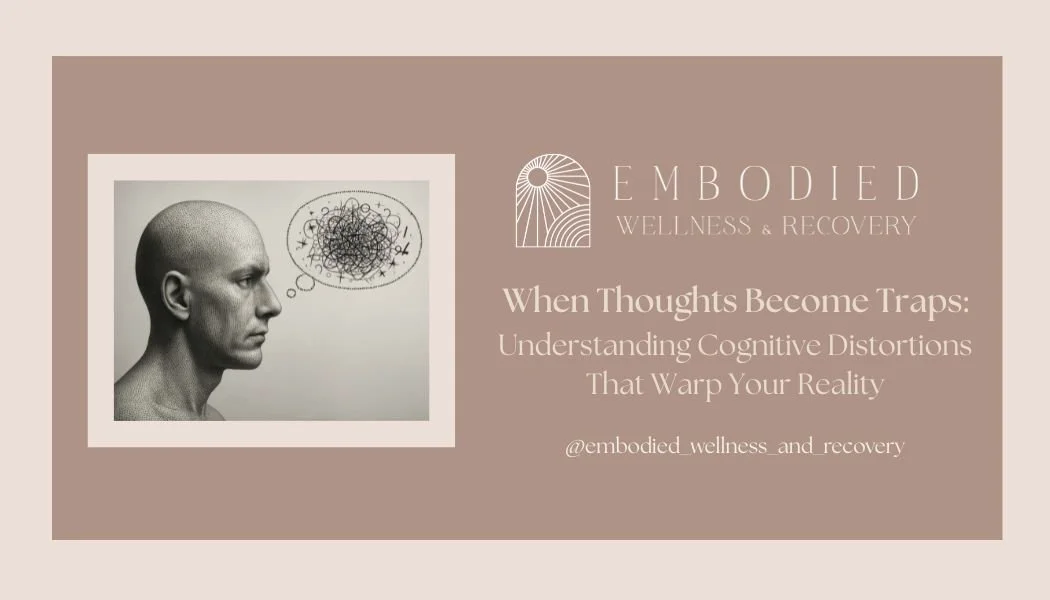
When Thoughts Become Traps: Understanding Cognitive Distortions That Warp Your Reality
When Thoughts Become Traps: Understanding Cognitive Distortions That Warp Your Reality
Learn how cognitive distortions distort our reality and fuel anxiety, depression, and self-criticism. Discover neuroscience-informed strategies to identify and change distorted thinking patterns with guidance from Embodied Wellness and Recovery.
The Human Mind is a Powerful Force
Have you ever caught yourself thinking, “I always fail,” “This will never work,” or “If they really knew me, they would leave”? Do you find your mind zeroing in on the worst-case scenario, magnifying the negative and rejecting the good? If so, you may be experiencing one of those subtle but powerful mind habits known as cognitive distortions.
The human mind is a powerful force. It shapes how we experience the world, interpret situations, and connect with, or disconnect from, ourselves and others. But sometimes that power works against us. Through distorted thinking, we bend reality until it looks much scarier, harsher, or more hopeless than it truly is.
In this article, we’ll explore:
— What cognitive distortions are and how they impact mental health, nervous system regulation, relationships, and even sexuality.
— Critical questions that speak to the pain of recurring negative thoughts.
— Hope and solution: how you can begin shifting those habits and reclaiming clarity, connection, and resilience.
— Why Embodied Wellness and Recovery is uniquely positioned to guide you from distortion toward embodied freedom in trauma, nervous system repair, intimacy, and relationships.
What Are Cognitive Distortions?
Cognitive distortions are habitual, inaccurate thought patterns, mental “filters” that skew perception, interpretation, and meaning Roberts, 2015). They were first described in the cognitive-behavioral therapy work of Aaron T. Beck, who found that patients with depression often had automatic negative thoughts about themselves, the world, and the future (Beck, 1997).
Neuroscience helps us understand how this happens:
— The prefrontal cortex (our reasoning center) may under-engage, while the amygdala (our threat detector) over-reacts, resulting in a brain wired for danger rather than nuance (Roberts, 2015).
— Repeated distorted thoughts create neural pathways that make those patterns stronger and more automatic (Roberts, 2015).
— Distorted thinking is not just a “bad habit” but part of the way our nervous system learned to protect us, often in childhood or trauma.
So when your mind whispers “I’m worthless,” or “Nothing good ever lasts,” those thoughts are not random; they are wired in.
Why Does This Matter So Much?
If you live with frequent and persistent patterns of pessimistic or self-critical thoughts, you are not simply dealing with “thinking errors.” You are experiencing cognitive distortions that influence mood, behavior, relationships, and even your nervous system. Here’s how:
Emotional and Mental Health Impact
— These distortions fuel anxiety, depression, self-doubt, and relational conflict because they shape meaning in destructive ways. In a study of cognitive distortions, higher levels correlated with increased depressive symptoms (McGrath & Repetti, 2002).
— For folks in therapy, distortions undermine progress; the thoughts you carry inside pull your nervous system into survival mode rather than healing.
Nervous System and Trauma Implications
— When your brain continually interprets events through distortion, your nervous system stays in a state of alert, freeze, or avoidance instead of regulation and connection.
— Especially for clients with trauma or attachment injury, distorted thinking often maps directly onto bodily responses, heart racing, dissociation, muscle tension. The mind-body loop keeps you stuck.
Relational and Intimate Life Consequences
— Distorted beliefs affect how you interpret your partner’s behavior (“They must not love me”) or your own sexual desires (“I should always feel this way”).
— This becomes a barrier to intimacy, authenticity, and embodied connection, themes central to our work at Embodied Wellness and Recovery.
Questions Worth Asking Yourself
— Do I find myself automatically thinking the worst about a situation or about myself, without evidence or perspective?
— Are these thoughts so familiar that they feel normal? When I try to stop them, does my body feel tense, exhausted, or “on guard”?
— Does the voice inside sound like a critic, a predictor of doom, or a judge?
— How does this thinking pattern impact my relationships, my emotional life, or my capacity for pleasure, connection, and intimacy?
— Would I like to feel freer in my thinking, calmer in my body, and more aligned in my mind-body self?
If your answer to any of these is yes, know that the path ahead is not one of fixing something wrong, but of deeply retraining what your nervous system and mind learned to protect you and learning new patterns that support safety, regulation, and connection.
Hope and Practical Solutions
At Embodied Wellness and Recovery, we specialize in integrative work around trauma, nervous system repair, relationships, sexuality, and intimacy. Here’s how our team addresses cognitive distortions with both depth and compassion:
1. Naming the Distortions (cognitive awareness)
We help you identify patterns such as all-or-nothing thinking, overgeneralization, mental filtering, catastrophizing, and personalization (Amjad, 2025). Bringing awareness is the first step toward choice, not being subject to your mind’s filters.
2. Somatic Regulation and Nervous System Support
Because distorted thoughts reside in the nervous system, we utilize tools such as grounding, breathwork, body scanning, and mindfulness to calm the activation and create space for new thinking.
Neuroscience shows that when the prefrontal cortex can engage (rather than being flooded by the amygdala), thought patterns become more flexible (Salzman & Fusi, 2010).
3. Cognitive Restructuring (thought work)
Using adapted CBT and trauma-responsive models, we help you challenge distorted thoughts, replace them with balanced, realistic thoughts, and test them in life (Brisset, 2025).
For example:
— Thought: “If I try and fail, then I am worthless.”
— Reframe: “Trying and learning make me human. My worth is inherent, not dependent on perfection.”
4. Relational and Intimacy Integration
We explore how distorted thinking impacts relationships and sexuality, how your internal voice influences your connection, desire, safety, and pleasure. Then we support you in creating new relational scripts anchored in safety, communication, and embodied presence.
5. Trauma- and Nervous System-Informed Continuity
We recognize that for many adults, cognitive distortions are not simply “bad thinking” but survival strategies from early trauma, neglect, or dysfunctional family systems. We help rebuild neural capacity for regulation, rewiring the mind-body loop over time.
Bringing It All Together
Your mind is powerful, but what’s even more powerful is your capacity to change how you relate to it. Cognitive distortions are not character flaws; they are wired responses that once served you. The journey we support at Embodied Wellness and Recovery is one of curiosity over judgment, presence over avoidance, and integration over fragmentation.
When your body is regulated, your mind becomes flexible. When your thoughts are observed instead of believed, you create space for connection, authenticity, and embodied intimacy.
You don’t have to live at the mercy of your thinking patterns. With compassionate awareness, neuroscience-informed interventions, and relational support, you can move toward a life where your mind works for you, rather than against you.
Reach out to schedule a free 20-minute consultation with our team of therapists, relationship experts, trauma specialists, and somatic practitioners, and gain freedom from distorted thoughts today.
📞 Call us at (310) 651-8458
📱 Text us at (310) 210-7934
📩 Email us at admin@embodiedwellnessandrecovery.com
🔗 Visit us at www.embodiedwellnessandrecovery.com
👉 Check us out on Instagram @embodied_wellness_and_recovery
🌍 Explore our offerings at Linktr.ee: https://linktr.ee/laurendummit
References
1) Amjad, M. (2025). Rewiring the Mind: A Cognitive Psychology Approach to Changing Negative Thinking.
2) Brisset, J. (2025). Trauma-Responsive Integrative Art and DBT (TRIAD) as an Art Therapy Treatment Model for Adolescents with Complex Posttraumatic Stress Disorder (CPTSD): A Theoretical Intervention Research.
3) Gilbert, P. (1998). The Evolved Basis and Adaptive Functions of Cognitive Distortions. British Journal of Medical Psychology, 71(4), 447-463.
4) Hendrix, H., & Hunt, H. L., authors of Getting the Love You Want: A Guide for Couples and Making Marriage Simple.
5) McGrath, E. P., & Repetti, R. L. (2002). A longitudinal study of children's depressive symptoms, self-perceptions, and cognitive distortions about the self. Journal of Abnormal Psychology, 111(1), 77.
6) Roberts, M. B. (2015). Inventory of cognitive distortions: Validation of a measure of cognitive distortions using a community sample.
7) Salzman, C. D., & Fusi, S. (2010). Emotion, cognition, and mental state representation in the amygdala and prefrontal cortex. Annual review of neuroscience, 33(1), 173-202.

From Mind to Body: How to Stop Intellectualizing and Start Feeling Your Feelings
From Mind to Body: How to Stop Intellectualizing and Start Feeling Your Feelings
Discover how to shift from intellectualizing emotions to truly feeling them in your body. Learn practical body-based strategies to calm anxiety, release unresolved trauma, and rebuild connection through Embodied Wellness and Recovery.
Thinking vs. Feeling
Have you ever felt deeply cut off from your body? You might know what you’re supposed to feel, or what you think you should feel, but in reality, there is a hollow space where genuine sensation should be. You catch yourself thinking about your sadness, your longing, your wanting, and yet what you feel in your body is minimal, muted, or even absent. When that happens, depression and anxiety often quietly take root.
At Embodied Wellness and Recovery, we specialize in trauma, nervous-system repair, relationships, sexuality, and intimacy. We believe the path to genuine emotional freedom lies not simply in talking it through but in feeling it through. When we stop intellectualising and start noticing bodily signals, we engage a robust neurobiological process that allows old emotional hooks to release.
Why Intellectualizing Feels Safe, and Why It Actually Keeps You Stuck
When emotional pain or longing arises, the mind often jumps to story-mode: “I should feel better,” “Why am I stuck again?” or “There’s something wrong with me.” Intellectually, we analyse the feeling, but physiologically, we bypass it. This feels safe because the body’s sensations, heart palpitations, guttural ache, visceral tension, are raw, unknown, unpredictable.
Unfortunately, though avoiding the body may feel safer in the moment, it perpetuates disconnection. Research in embodied emotion shows that our feelings are deeply tied to bodily sensations, not just to the thoughts we tell ourselves. For example, one large-scale study mapped bodily sensations associated with different emotions and found consistent patterns of felt experience across cultures. (Volynets et al., 2020).
In other words, the body knows the feeling even when the mind is trying to make sense of it. Ignoring the body's signals means the emotion stays lodged in the system. Over time, that creates chronic nervous-system stress, and symptoms such as anxiety, restlessness, and depression rise. American Psychological Foundation -+1
The Neurobiology of Feeling vs. Thinking
To stop intellectualizing and begin feeling, it helps to understand what’s happening behind the scenes. Neuroscience shows that emotions are not purely thoughts; they emerge from dynamic interactions between brain networks and body signals. Research reveals a “bodily map” of emotions: certain feelings activate distinct regions of the body, sensed via interoception (the brain’s awareness of inner body states) (Carvalho & Damasio, 2021).
When trauma or chronic stress is present, the body’s nervous system often becomes dysregulated, stuck in states of fight, flight, or freeze, even when the mind is calm. When you’re intellectually analyzing your feelings instead of attending to body signals, you bypass the body’s natural regulatory mechanisms.
In contrast, practices that bring awareness to bodily sensation (somatic therapy, body awareness, interoception) help reconnect mind and body and facilitate healing at a deeper level (Sciandra, n.d.).
What It Feels Like When You’re Disconnected
Ask yourself:
— Do you know you’re “supposed” to feel sad, anxious, or angry, but all you feel is a vague ache or numb emptiness?
— Do your thoughts spin around what you should be doing about your feelings, rather than noticing what you are feeling?
— Does your body feel tense, restless, tight, or heavy, but you can’t identify the emotion behind it?
— Do you cope with wanting something (a relationship, a sense of belonging, more intimacy) but your body seems oblivious to the “wanting” and you end up stuck in frustration or emptiness?
If so, you’re likely intellectualizing rather than experiencing. That lack of bodily experience keeps emotion in a suspended state, which often translates into depression (“I feel nothing”) or anxiety (“Something’s wrong with me”) or numbing out altogether.
Why Feeling Your Feelings Matters
When you allow yourself to feel what’s happening in your body, something shifts. Instead of the emotion being trapped in thought and rumination, it begins to move. The body becomes the portal through which you release, assimilate, and integrate.
Here are the key benefits of shifting from thinking to feeling:
— You regulate your nervous system by allowing sensations to surface and subside rather than battle them.
— You increase your capacity for authentic intimacy and connection (in relationships and sexuality) because you’re present in your body.
— You interrupt patterns of dissociation or avoidance that perpetuate trauma responses.
— You reclaim agency: instead of being driven unconsciously by unnoticed sensations, you become responsive to your body’s signals.
How to Move from Intellectualizing to Feeling
Here is a practical roadmap you can use. Each step is designed to reconnect you with bodily awareness and help you sit with your feelings rather than avoid them.
1. Anchor Attention in the Body
Start by pausing. Close your eyes (if safe). Take three slow, deep breaths. Bring awareness to one area of sensation, such as your chest, belly, throat, or legs. Notice what’s happening in the body without labeling or judging.
2. Name Sensation, Then Emotion
Ask: What do I feel physically? Is there a tightness, a flutter, a heaviness, an ache? Stay with it for 30 seconds. Then ask: What emotion might this correlate with? Let the feeling emerge rather than force a label.
3. Allow Without Fixing
Many people jump to “How do I change this?” or “Why is this happening?” Instead, try: I’m noticing this feeling. I’ll sit with it for now until it changes naturally. Let the body’s tempo guide you.
4. Breathe Into the Sensing
Use your breath to soften the system. Inhale into the area where you sense the emotion; exhale and allow the body to expand or soften. By breathing into the feeling, you communicate safety to your nervous system.
5. End with Gentle Inquiry
When the sensation shifts (becomes less intense or changes in quality), ask quietly: What does this want from me? It might want attention, connection, movement, rest, or expression. Then respond gently.
6. Integrate with Support
Because patterns of disconnection often stem from trauma or nervous-system dysregulation, working with embodied modalities can amplify this process. At Embodied Wellness and Recovery, we combine trauma-informed somatic therapy, nervous-system repair, relational work, sexuality, and intimacy integration so that you’re supported from mind and body.
What You Can Expect with Practice
When you consistently shift from intellectualizing to feeling:
— The body becomes a source of intelligence rather than a battleground.
— You begin to catch subtle cues of emotional energy before they become overwhelming.
— The cycle of “thinking about feeling” breaks, and you start experiencing feelings, which allows them to be released.
— You gain access to deeper layers of relational connection and bodily presence, which are important in sexuality, intimacy, and trauma recovery.
At first, it might feel strange or unfamiliar. The body might register sensations louder than the mind expects. But this is precisely where transformation happens. The nervous system learns it can feel and return to baseline. Those buried emotions begin to move; they’re no longer bottled up in intellectual loops.
Why Embodied Wellness and Recovery is an Expert Guide
At Embodied Wellness and Recovery, we specialize in precisely this terrain. With decades of combined experience in trauma treatment, nervous-system repair, relational and sexual healing, we offer a framework that honours the full mind-body lived experience. We integrate:
— Somatic therapy practices that emphasise bodily signal awareness.
— Nervous system regulation work (breathwork, movement, grounding).
— Relational and intimacy work to restore a healthy body-mind-connection in relationships and sexuality.
— Evidence-based neuroscience-informed approaches that track how sensation, emotion, and neurobiology intersect.
Our compassion-rooted, professional approach is designed for those who are done with thinking about change and are ready to feel through to change.
Take the First Step Today
Begin one of the felt-experiments above. Choose a moment today to pause, anchor into your body, name your sensation, and allow it without fixing. Notice what happens. Record what you feel. No judgement. No urgency. Just presence.
Over time, you will reclaim access to the more profound wisdom of your body, end the exhausting cycle of intellectualizing, and open into a life where you feel your feelings, allow them to flow, and free yourself from their hidden hold.
Returning to the Body as an Ally
Feeling your feelings is not about emotion-dumping or relentless self-analysis. It is about returning to the body as an ally. It is about recognizing that your nervous system holds memories, your body stores sensation, and your mind often bypasses them to stay safe. But safety doesn’t come from avoidance; it comes from integration.
When you shift from mind to body, from story to sensation, you set in motion a profound transformation: old emotional charge no longer rules you; instead, you respond, you feel, you release, and you live from a place of embodied wisdom, not intellectual overload.
If you’re ready to move beyond thinking and into feeling, emotionally, physically, relationally, Embodied Wellness and Recovery is here to support your journey. Let’s talk.
Reach out to schedule a free 20-minute consultation with our team of therapists, relationship experts, trauma specialists, and somatic practitioners, and begin reconnecting with your embodied feelings today.
📞 Call us at (310) 651-8458
📱 Text us at (310) 210-7934
📩 Email us at admin@embodiedwellnessandrecovery.com
🔗 Visit us at www.embodiedwellnessandrecovery.com
👉 Check us out on Instagram @embodied_wellness_and_recovery
🌍 Explore our offerings at Linktr.ee: https://linktr.ee/laurendummit
References
Carvalho, G. B., & Damasio, A. (2021). Interoception and the origin of feelings: A new synthesis. BioEssays, 43(6), 2000261.
Nummenmaa, L., et al. (2013). Bodily maps of emotions. Proceedings of the National Academy of Sciences, 110(7), 2620-2625.
Harvard Health. (2023). What is somatic therapy? Retrieved from https://www.health.harvard.edu/blog/what-is-somatic-therapy-202307072951 Harvard Health
Sciandra, F. Embodied Wisdom: An Exploration of Interoception.
Volynets, S., Glerean, E., Hietanen, J. K., Hari, R., & Nummenmaa, L. (2020). Bodily maps of emotions are culturally universal. Emotion, 20(7), 1127.

The Power of Touch: Why Physical Contact Is Essential for Emotional Health, Nervous System Regulation, and Human Connection
The Power of Touch: Why Physical Contact Is Essential for Emotional Health, Nervous System Regulation, and Human Connection
Touch is the first sense we develop and one of the most essential for emotional well-being, nervous system regulation, and intimacy. Discover how physical touch improves mental health, strengthens relationships, and why our tech-driven world is leaving many of us touch-deprived.
Ever felt the aching absence of a hug, a gentle hand on your shoulder, or a warm embrace after a long day? In a world increasingly shaped by screens, individualism, and digital convenience, physical touch has become an endangered form of connection. Yet the human body was designed to receive and respond to touch from the very beginning of life.
Touch is not a luxury. It is a biological necessity.
At Embodied Wellness and Recovery, we see the profound effects of touch deprivation on our clients every day. Whether through trauma, isolation, cultural messaging, or tech-centered lifestyles, many individuals experience emotional dysregulation, anxiety, and a loss of connection to their bodies and others when meaningful physical contact is missing.
Let’s explore why touch is considered the “mother of all senses”, what happens to the brain and body when we don’t receive enough of it, and how somatic therapy and nervous system regulation can help restore what we were wired to need.
Touch Is the First Sense We Develop
Long before we can see or hear, we feel.
Touch is the first sensory system to develop in the human embryo. By just eight weeks in utero, a developing baby begins responding to physical stimuli. These early tactile experiences lay the groundwork for attachment, emotional regulation, and the development of the nervous system (Field, 2010).
From the moment we are born, we rely on physical contact to survive and thrive. Skin-to-skin contact between parent and infant regulates the newborn’s heart rate, breathing, and stress response. These effects are not limited to infancy. The need for touch continues throughout the lifespan.
The Neuroscience of Touch and the Nervous System
Physical touch activates the parasympathetic nervous system, which governs rest, digestion, and restoration. Safe, nurturing touch helps calm the amygdala, the brain’s alarm center, and stimulates the release of oxytocin, the hormone associated with trust, bonding, and emotional safety (Walker et al., 2017).
Even a simple act, such as placing a hand on the heart, can regulate breathing, lower cortisol levels, and signal safety to the body. For those recovering from trauma, consistent, consensual, and mindful touch can help reset patterns of hypervigilance and chronic stress stored in the nervous system.
Benefits of healthy physical touch include:
— Decreased anxiety and depression
— Improved immune function
— Lowered heart rate and blood pressure
— Strengthened interpersonal bonds
— Greater self-awareness and embodiment
— Enhanced emotional regulation
Touch literally rewires the brain for connection.
Touch Deprivation in the Digital Age
Despite its importance, many people suffer from touch starvation, also known as skin hunger, a condition characterized by emotional and physiological distress resulting from a lack of meaningful physical contact.
Technology, urban living, isolation, work-from-home models, and cultural taboos around touch have all contributed to a society that is increasingly disconnected from the body and from one another.
Consider the painful questions many people quietly carry:
— Why do I feel anxious and irritable when I haven’t been hugged in weeks?
— Why is it so hard for me to tolerate being touched, even though I crave closeness?
— How can I heal the discomfort or numbness I feel in my body?
These are the questions of a society in sensory deficit, where touch has been minimized or pathologized. But the craving for touch has not disappeared. It remains, often unmet, beneath symptoms of anxiety, dissociation, loneliness, and intimacy issues.
The Role of Touch in Relationships and Intimacy
Touch is fundamental to human bonding. In romantic relationships, platonic friendships, and family systems, touch communicates what words cannot. It provides reassurance, calms conflict, and strengthens emotional trust.
Yet many people carry unresolved trauma that makes physical closeness feel unsafe. Others feel disconnected from their bodies due to shame, medical trauma, or a lack of early nurturing touch. In therapy, we often hear clients say:
— “I feel disconnected during sex.”
— “I can’t remember the last time someone held me without expectation.”
— “I flinch when someone touches me, even when I want it.”
These experiences are not signs of personal failure. They are nervous system responses shaped by history and habit. At Embodied Wellness and Recovery, we work gently and somatically to help clients rebuild their tolerance for connection, both with themselves and with others.
Reclaiming the Healing Power of Touch
Just as trauma is stored in the body, so is healing.
Somatic therapy helps re-establish a sense of safety and comfort within the skin. Using gentle techniques such as breathwork, body awareness, and guided self-touch, clients begin to rebuild a sense of trust in their physical sensations.
When appropriate and ethical, practices like trauma-informed massage, partner-assisted co-regulation, or therapeutic touch can support nervous system regulation and deepen the healing process.
At Embodied Wellness and Recovery, our clinicians are trained in body-based modalities that respect personal boundaries, consent, and cultural sensitivity. We help individuals reconnect with their natural need for touch in ways that feel safe, empowering, and life-giving.
What You Can Do Today to Nourish Your Sense of Touch
You don’t need to wait for a massage appointment or a romantic partner to begin receiving the benefits of touch.
Try these gentle practices:
— Place one hand on your heart and one on your belly. Notice the warmth and rhythm beneath your hands. Breathe slowly.
— Wrap yourself in a heavy blanket or weighted throw. Pressure can stimulate calming touch receptors and help soothe anxiety.
— Take a warm bath or shower with intention. Let the water serve as gentle sensory input. Focus on the sensations against your skin.
— Hug a loved one or a pet for at least 20 seconds. Sustained physical contact helps release oxytocin and reduce stress hormones.
These small, intentional acts of self-contact or safe connection can remind your body of what it already knows. You were made to feel. You were made to connect.
Reclaim Your Body’s Innate Wisdom
Touch is more than a sensation. It is a language of safety, connection, and presence. It shapes the way we experience ourselves, our relationships, and the world around us.
In a culture that often rushes past the body, it takes courage to slow down and reclaim the wisdom held in our skin.
At Embodied Wellness and Recovery, we help you reconnect with your breath, your body, and the people you love. You do not have to live cut off from your own senses. You were born to feel.
Reach out to schedule a free 20-minute consultation with a trauma-informed therapist or somatic practitioner and begin the process of reconnecting to your body today.
📞 Call us at (310) 651-8458
📱 Text us at (310) 210-7934
📩 Email us at admin@embodiedwellnessandrecovery.com
🔗 Visit us at www.embodiedwellnessandrecovery.com
👉 Check us out on Instagram @embodied_wellness_and_recovery
🌍 Explore our offerings at Linktr.ee: https://linktr.ee/laurendummit
References:
Field, T. (2010). Touch for socioemotional and physical well-being: A review. Developmental Review, 30(4), 367–383. https://doi.org/10.1016/j.dr.2011.01.001
Walker, S. C., Trotter, P. D., Swaney, W. T., Marshall, A., & McGlone, F. P. (2017). C-tactile afferents: Cutaneous mediators of oxytocin release during affiliative tactile interactions? Neuron, 93(2), 329–331. https://doi.org/10.1016/j.neuron.2016.12.028
Morrison, I. (2016). Keep calm and cuddle on: Social touch as a stress buffer. Adaptive Human Behavior and Physiology, 2(4), 344–362. https://doi.org/10.1007/s40750-016-0052-x

The Science of Presence: How Your Energy Speaks Before You Do
The Science of Presence: How Your Energy Speaks Before You Do
Your body broadcasts emotion, energy, and intention before you ever say a word. Learn how the heart’s electromagnetic field, nervous system regulation, and somatic awareness impact your relationships, communication, and emotional well-being.
Did you know your heart emits an electromagnetic field up to three feet outside your body?
That’s not a metaphor; it’s measurable. Research from the HeartMath Institute has shown that the heart produces the strongest rhythmic electromagnetic field in the body. And this field is not only real; it shifts and responds based on your emotional state.
This means that even before you speak, your presence is already communicating.
Your energy precedes your words.
Your body is telling a story long before you open your mouth.
You Are Always Communicating, Even in Silence
So often, we think communication starts with words. But in reality, it begins in the nervous system.
When you’re calm and grounded, your body signals safety to others. When you’re anxious, guarded, or overwhelmed, your heart rate, posture, facial expressions, and even your subtle energy field broadcast those cues outward, whether you’re conscious of it or not. This is called neuroception, your body’s ability to detect safety or danger without conscious awareness (Porges, 2011). It’s how we pick up on “vibes,” even when nothing explicit is being said.
The Body as a Field of Wisdom
Your body is more than just flesh and bones. It is a living, breathing broadcast of emotion, energy, and intention. When you walk into a room, your nervous system is already engaging with others. Your presence becomes a form of communication.
When you feel regulated, aligned, and authentic, you naturally emanate calm and clarity.
When you’re dysregulated, fragmented, or disconnected from your truth, that too is felt.
In somatic therapy, we teach clients how to listen to these signals, not just in others, but in themselves. Because embodiment is the first step to congruent communication. When you know what you’re feeling and can stay with it, you can offer your presence without distortion.
Regulating Your Nervous System to Shift Your Energy Field
Want to change how others experience your presence? Start by regulating your nervous system. Here’s how:
1. Breathe Coherently
Slow, rhythmic breathing (like inhaling for 4 counts, exhaling for 6) balances the sympathetic and parasympathetic branches of the autonomic nervous system (McCraty & Zayas, 2014).
2. Ground Through the Senses
Feel your feet on the floor. Notice the sounds around you. Sensory awareness anchors you in the present moment, which translates to a more grounded presence.
3. Feel Without Judgment
Allow emotional sensations in the body to arise and move without immediately fixing or suppressing them. This builds emotional tolerance and coherence.
4. Practice Somatic Awareness
Learn the language of your body. Notice posture, breath,and micro-movements. These subtle shifts shape how you show up.
Your Presence Is Power
If you’ve been doubting your impact…
If you’ve been feeling invisible or unsure whether your voice matters…
Let this be your reminder:
You are already communicating.
Your nervous system is a tuning fork.
Your heart is a transmitter.
Even your silence is speaking.
You don’t have to “do” more to matter.
You already are.
Ready to Embody the Power of Your Presence?
At Embodied Wellness and Recovery, we help you reconnect with your authentic self by healing trauma, regulating your nervous system, and learning to trust your body’s wisdom. Whether you’re navigating anxiety, relationship struggles, or emotional burnout, our somatic, neuroscience-informed approach supports deep, lasting transformation.
Contact us today to schedule a free 20-minute consultation with our team of top-rated somatic practitioners, trauma specialists, or relationship experts, and begin your journey toward embodied connection, clarity, and confidence.
📞 Call us at (310) 651-8458
📱 Text us at (310) 210-7934
📩 Email us at admin@embodiedwellnessandrecovery.com
🔗 Visit us at www.embodiedwellnessandrecovery.com
👉 Check us out on Instagram @embodied_wellness_and_recovery
🌍 Explore our offerings at Linktr.ee: https://linktr.ee/laurendummi
References:
HeartMath Institute. (n.d.). Science of the Heart: Exploring the Role of the Heart in Human Performance. McCraty, R., & Zayas, M. A. (2014). Cardiac coherence, self-regulation, autonomic stability, and psychosocial well-being. Frontiers in Psychology, 5, 1090.
Porges, S. W. (2011). The Polyvagal Theory: Neurophysiological Foundations of Emotions, Attachment, Communication, and Self-Regulation. W.W. Norton & Company.

What Your Nervous System Wants You to Know: Applying Polyvagal Theory to Everyday Life
What Your Nervous System Wants You to Know: Applying Polyvagal Theory to Everyday Life
Feeling stuck in a constant state of anxiety, shutdown, or reactivity? Learn how Polyvagal Theory explains your nervous system's response to stress and discover how somatic therapy at Embodied Wellness and Recovery can help you regulate, reconnect, and heal.
Polyvagal Theory in Everyday Life: What Your Nervous System Is Trying to Tell You
Have you ever wondered why you feel chronically on edge, emotionally shut down, or easily overwhelmed in seemingly normal situations? Why certain conversations leave you breathless, your heart racing, or your stomach in knots? These aren’t random reactions; they’re your nervous system sending vital messages about safety, threat, and survival. Thanks to Polyvagal Theory, we now have a roadmap for understanding them.
What Is Polyvagal Theory?
Developed by Dr. Stephen Porges, Polyvagal Theory explains how the vagus nerve, a key part of the parasympathetic nervous system, influences our emotional and physiological states. Rather than viewing the nervous system as binary (fight-or-flight vs. rest-and-digest), Polyvagal Theory introduces a third state: dorsal vagal shutdown, a freeze-like state of collapse.
The three primary nervous system states are:
1. Sympathetic Activation (Fight or Flight): Anxiety, agitation, anger, racing thoughts
2. Dorsal Vagal Shutdown (Freeze): Numbness, disconnection, fatigue, depression
3. Ventral Vagal State (Safety and Connection): Calm, presence, attunement, engagement
Understanding which state you're in can illuminate not only your emotional experience but also the health of your relationships, sexuality, and ability to feel connected to yourself and others.
Are You Stuck in Survival Mode?
If you live with trauma, chronic stress, or unresolved attachment wounds, your nervous system may default to high-alert patterns. This is especially true for individuals with complex trauma histories or those who feel stuck in sympathetic nervous system arousal:
How Polyvagal Theory Applies to Intimacy and Sexuality
If you've ever felt like your body "shuts down" during sex, or if conflict with your partner sends you spiraling, Polyvagal Theory can help make sense of it. Safety and connection are prerequisites for desire and vulnerability. If your nervous system is in a defensive state, it will prioritize survival over pleasure.
At Embodied Wellness and Recovery, we specialize in working with individuals and couples to restore nervous system safety in the context of intimacy. Whether you’re navigating sexual trauma, low desire, or disconnection in your relationship, we approach the healing process with compassion, neuroscience, and somatic tools.
Signs You May Benefit from Nervous System-Informed Therapy
— Difficulty setting boundaries without guilt or fear
— Feeling chronically overwhelmed or easily triggered
— Shutdown, avoidance, or numbness during intimacy
— A tendency to people-please or over-function in relationships
These aren’t personality flaws. They’re adaptive survival strategies rooted in nervous system dysregulation. With the right support, they can shift.
Listening to What Your Body Has Been Trying to Say
Your nervous system is not the enemy; it’s an innately wise, protective system shaped by your history. But you don’t have to stay stuck in the same loops. Through somatic therapy, polyvagal education, and compassionate support, it is possible to build a felt sense of safety, foster intimacy, and feel at home in your own body.
At Embodied Wellness and Recovery, we offer trauma-informed, nervous system-focused therapy that supports deep, sustainable healing. Whether you're seeking help with anxiety, intimacy, or trauma recovery, our team is here to guide you toward regulation, connection, and embodied wholeness.
Reach out to schedule a free 20-minute consultation with our team of top-rated therapists and take the next step toward a more regulated nervous system today.
📞 Call us at (310) 651-8458
📱 Text us at (310) 210-7934
📩 Email us at admin@embodiedwellnessandrecovery.com
🔗 Visit us at www.embodiedwellnessandrecovery.com
👉 Check us out on Instagram @embodied_wellness_and_recovery
🌍 Explore our offerings at Linktr.ee: https://linktr.ee/laurendummit
References:
Dana, D. (2018). The Polyvagal Theory in Therapy: Engaging the Rhythm of Regulation. New York: W.W. Norton & Company.
Porges, S. W. (2011). The Polyvagal Theory: Neurophysiological Foundations of Emotions, Attachment, Communication, and Self-Regulation. New York: W.W. Norton & Company.
Van der Kolk, B. (2014). The Body Keeps the Score: Brain, Mind, and Body in the Healing of Trauma. New York: Viking.

High-Functioning but Hurting: How Achievement Can Mask Deep Emotional Pain
High-Functioning but Hurting: How Achievement Can Mask Deep Emotional Pain
Do you appear successful on the outside but feel emotionally empty or exhausted on the inside? Learn how high-functioning individuals often use achievement to mask trauma and discover how somatic therapy at Embodied Wellness and Recovery can help you reconnect with your emotional truth.
High-Functioning but Hurting: How Achievement Can Mask Deep Emotional Pain
You have the degrees, the career, the relationships, maybe even the social media presence that suggests everything is in place. And yet, when you pause long enough to listen inward, there is a quiet ache. A restlessness. A persistent sense of loneliness or emotional flatness you can’t quite explain.
You might be what many clinicians refer to as high-functioning but hurting, an individual whose external success conceals a complex web of internal emotional pain. It's more common than most people realize, especially among those who have experienced relational trauma, neglect, or chronic stress early in life.
Are You Using Success to Survive?
— Do you feel uncomfortable with stillness or rest?
— Is your self-worth tied to productivity, performance, or praise?
— Do you excel at taking care of others but struggle to identify your own needs?
— Do you often feel disconnected from your body, emotions, or even joy?
If any of this resonates, your high achievement may be functioning as a protective strategy. In many trauma-informed frameworks, this is understood not as pathology, but as adaptation, a sophisticated, unconscious way your nervous system learned to ensure safety and belonging in an unpredictable world.
The Neuroscience Behind High-Functioning Coping
When the nervous system has been shaped by chronic emotional neglect, relational trauma, or inconsistent caregiving, it adapts. The brain learns to prioritize external validation as astand-in for emotional attunement. This is often linked to a sympathetic dominance in the autonomic nervous system: a perpetual state of doing, striving, proving.
The prefrontal cortex may become overactive while the body remains in a hypervigilant state. This internal disconnection can lead to symptoms such as:
— Chronic anxiety
— Difficulty accessing pleasure or joy
— Somatic complaints like headaches or digestive issues
— Feeling "numb" or "on autopilot"
— Sexual disconnection or performance anxiety. Achievement provides momentary relief, a dopamine hit of validation, but it rarely satisfies the deeper need for connection, rest, or emotional authenticity.
Trauma and the Drive to Excel
At Embodied Wellness and Recovery, we often work with individuals who have learned to perform strength because vulnerability felt unsafe in childhood. High-achieving adults may have grown up in environments where love was conditional, emotions were dismissed, or chaos required them to become the "responsible one."
This creates a false binary: be perfect or be rejected. Succeed or disappear. For many, especially women, LGBTQIA+ individuals, and those raised in high-demand families or communities, excellence became armor.
But under that armor often lives a neglected inner child longing to be seen without needing to earn worthiness.
The Somatic Cost of Suppressed Emotion
When emotional pain is never given space, the body carries the burden. Suppressed emotions become tension, insomnia, digestive issues, chronic fatigue, or sexual numbness. The nervous system gets stuck in survival mode and is unable to access the ventral vagal state of safety, connection, and presence as described in Polyvagal Theory.
This dysregulation often shows up in intimacy: — Avoiding emotional closeness even with a partner
— Struggling to relax during physical touch
— Going through the motions sexually without real connection
— Feeling a strong inner critic that judges vulnerability as weakness
What Somatic Therapy Offers That Talk Therapy Alone May Not
Many high-functioning clients are skilled at intellectualizing their emotions. They can name their patterns, quote Brene Brown, and check off growth milestones. But they often haven’t learned to feel their emotions in the body.
Somatic therapy gently helps the body feel safe enough to release stored survival responses. At Embodied Wellness and Recovery, we integrate:
— Body tracking to identify where emotions live in the body
— Nervous system mapping to recognize survival states (fight/flight/freeze/fawn)
— Somatic resourcing to build internal safety and resilience
— Guided movement and breathwork to support emotional release
— Parts work and inner child reconnection to foster wholeness
This integrative approach helps clients not only understand their trauma but also metabolize it.
You Don't Have to Choose Between Success and Authenticity
One of the great myths of trauma is that you can only be safe if you hide your truth. But it is possible to remain high-functioning and live a more emotionally congruent, embodied life.
When clients begin to regulate their nervous systems, feel their feelings, and reconnect with their bodies, they find:
— Deeper intimacy in relationships
— Greater capacity for pleasure
— Freedom from chronic over-functioning
— A more authentic connection to their work and purpose
Success Doesn't Have to Hurt
You don’t have to abandon your ambition. But the drive to achieve doesn’t need to come at the expense of your emotional and physical well-being. When you slow down enough to listen to your body’s cues, you may find a rich inner world that no resume or accolade can replace. At Embodied Wellness and Recovery, we specialize in working with high-functioning individuals who carry hidden emotional pain. Through somatic therapy, nervous system healing, and trauma-informed care, we help you move beyond survival and into embodied self-connection. Reach out to schedule a free 20-minute consultation with our team of top-rated somatic therapists and take the next step toward a more regulated nervous system today.
📞 Call us at (310) 651-8458
📱 Text us at (310) 210-7934
📩 Email us at admin@embodiedwellnessandrecovery.com
🔗 Visit us at www.embodiedwellnessandrecovery.com
👉 Check us out on Instagram @embodied_wellness_and_recovery
🌍 Explore our offerings at Linktr.ee: https://linktr.ee/laurendummit
References:
Brown, B. (2012). Daring greatly: How the courage to be vulnerable transforms the way we live, love, parent, and lead. Gotham Books.
Dana, D. (2018). The polyvagal theory in therapy: Engaging the rhythm of regulation. W.W. Norton & Company.
Van der Kolk, B. (2014). The body keeps the score: Brain, mind, and body in the healing of trauma. Viking.

Rediscovering Yourself After Motherhood: How to Heal Disconnection, Reignite Passion, and Reclaim Your Identity
Rediscovering Yourself After Motherhood: How to Heal Disconnection, Reignite Passion, and Reclaim Your Identity
Feeling lost after years of motherhood? Discover how to heal emotional disconnection, reignite passion, and reconnect with your authentic self through trauma-informed, neuroscience-backed care. Embodied Wellness and Recovery specializes in supporting moms navigating identity loss, mental health, relationships, and intimacy.
When Motherhood Becomes Your Entire Identity
Motherhood can be beautiful, profound, and consuming. If you find yourself feeling disconnected from your body, emotions, partner, and even your dreams, you're not imagining it. Many mothers, especially those with young children, spend years living in a state of hypervigilant caregiving. Every day is a cycle of survival: packing lunches, navigating tantrums, attending school events, nursing fevers, and ensuring everyone's emotional and physical needs are met.
But somewhere along the way, you may realize, “ I don’t know who I am anymore.”
Maybe you’ve been asking yourself:
– Where did the old me go?
– How do I even feel beyond exhausted?
– What am I passionate about beyond keeping everyone else afloat?
– Why do I feel invisible, even to myself?
The deep emotional hunger beneath these questions is not a personal failure. It’s a sign that something vital inside you, your own vibrant selfhood, needs attention, nurturing, and permission to reemerge.
Why Moms Feel Disconnected from Themselves and Their Partners
From a neuroscience perspective, chronic caregiving often leads to excess sympathetic nervous system arousal (Porges, 2011). In simple terms: when you spend months or years locked in "fight-or-flight" mode (even in subtle ways), your brain prioritizes survival tasks and deemphasizes self-reflection, intimacy, and pleasure.
This state of hypervigilance rewires your emotional and relational systems:
– Emotional numbness: Constantly anticipating your children's needs can suppress your own internal emotional cues.
– Relationship strain: Intimacy with your partner may diminish because there's no emotional or energetic bandwidth left for connection.
– Loss of identity: Your "Mom Parts," the aspects of you dedicated to nurturing, protecting, organizing, and caregiving, become so dominant that your authentic adult self feels muted or even forgotten.
It's a neurological, emotional, and spiritual disconnection, not a moral or maternal shortcoming.
The Painful Symptoms of Losing Yourself in Motherhood
When your identity becomes enmeshed with your caretaking role, symptoms can emerge that may mirror trauma responses:
– Chronic exhaustion beyond typical "parenting tiredness"
– Emotional flatness or irritability
– Difficulty making decisions about anything unrelated to the children
– Lack of desire or low libido
– Feeling invisible in your romantic relationship
– Yearning for something more but feeling guilty for wanting it
– Anxiety when trying to focus on yourself
– Feeling like a ghost in your own life
If you recognize yourself in these experiences, take heart: the road back to yourself has not disappeared. Your old self is not lost; she’s waiting.
Why It Feels So Hard to Reconnect
Unblending from the hypervigilant, hardworking Mom Parts isn’t as simple as taking a weekend getaway or scheduling a spa day. Those Partswere developed for a reason, to protect your children, your family, and yourself.
From a parts-work and somatic therapy perspective (Schwartz, 2021; Ogden, 2006), these caregiving Parts may resist letting go because they fear that if they stop, everything will fall apart. They’re burdened with an impossible mission: keep everyone safe, always.
No wonder it feels overwhelming or even terrifying to prioritize yourself again.
True reconnection requires a deep, compassionate healing process, one that honors the survival strategies that served you, while gently helping you rediscover your internal world.
How to Begin Reclaiming Your Identity After Motherhood
At Embodied Wellness and Recovery, we specialize in helping women navigate the complex emotional terrain of postpartum identity, trauma, mental health, relationships, and intimacy.
Here’s a neuroscience-informed, somatic, and trauma-sensitive path back to yourself:
1. Befriend Your Mom Parts Without Shaming Them
Instead of criticizing yourself for feeling "stuck," try meeting your hardworking Mom Parts with appreciation and curiosity. These Parts deserve gratitude for everything they've carried. Healing begins when we listen to them, not when we fight them.
2. Practice Sensory Awareness to Reconnect to Your Body
Simple somatic exercises like gentle breathwork, body scans, or mindful movement (even for five minutes a day) can begin to reawaken your internal felt sense. When you reconnect with your body, you create space to reconnect with your true emotional landscape.
3. Rebuild Emotional Vocabulary
Years of survival mode can dull emotional awareness.
Start small by asking yourself daily:
– What am I feeling right now?
– Where do I feel it in my body?
– What might this feeling be trying to tell me?
Naming your emotions builds the neural pathways needed for deeper self-connection (Siegel, 2020).
4. Cultivate Moments of Play, Curiosity, and Joy
Instead of pressuring yourself to have a grand passion immediately, start with micro-moments:
– Dance to a song you loved pre-kids.
– Doodle or write without an agenda.
– Spend ten minutes browsing a bookstore without a list.
– Let your mind wander.
These small invitations to curiosity and pleasure gradually reconnect you with your authentic, creative self.
5. Reignite Intimacy—First with Yourself, Then with Your Partner
Desire doesn't reignite through obligation; it thrives through feeling alive inside your own body again. At Embodied Wellness and Recovery, we use somatic and relational techniques to help women heal sexual disconnection, explore boundaries, and experience pleasure without pressure.
As you reconnect with your body and inner world, relational intimacy often blossoms naturally because you are relating from a place of authentic presence, not depletion.
You Are Allowed to Evolve
Motherhood transforms you, but it does not erase you. You are not required to remain solely identified with your caretaking Parts to be a good mother. In fact, your children thrive most when they see their mother as a whole, vibrant person: someone with feelings, needs, passions, and boundaries.
Reclaiming your identity is not selfish—it’s sacred.
At Embodied Wellness and Recovery, we believe in honoring the heroic work you've done and helping you remember the radiant, alive woman who has always been there underneath it all.
Through trauma-informed therapy, somatic resourcing, and relational healing, we guide mothers like you back to a life of deeper presence, joy, and connection.
Ready to Begin?
If you feel the longing to reconnect with yourself, your body, your passions, and your relationships, we invite you to reach out. At Embodied Wellness and Recovery, we offer a compassionate, neuroscience-based path home to yourself. Contact us today to schedule a free 20-minute consultation with our team of top-rated therapists, trauma specialists, somatic practitioners, or relationship experts.
Because your story deserves to keep evolving. Discover how we can help you feel more emotionally aligned and embodied, and support your healing process.
📞 Call us at (310) 651-8458
📱 Text us at (310) 210-7934
📩 Email us at admin@embodiedwellnessandrecovery.com
🔗 Visit us at www.embodiedwellnessandrecovery.com
👉 Check us out on Instagram @embodied_wellness_and_recovery
🌍 Explore our offerings at Linktr.ee: https://linktr.ee/laurendummit
References
– Ogden, P., Minton, K., & Pain, C. (2006). Trauma and the Body: A Sensorimotor Approach to Psychotherapy. W. W. Norton & Company.
–Porges, S. W. (2011). The Polyvagal Theory: Neurophysiological Foundations of Emotions, Attachment, Communication, and Self-Regulation. W. W. Norton & Company.
–Schwartz, R. C. (2021). No Bad Parts: Healing Trauma and Restoring Wholeness with the Internal Family Systems Model. Sounds True.
–Siegel, D. J. (2020). The Developing Mind: How Relationships and the Brain Interact to Shape Who We Are (3rd ed.). Guilford Press.

Embodied Healing: How Yoga and Movement Deepen Somatic Therapy
Embodied Healing: How Yoga and Movement Deepen Somatic Therapy
Experiencing symptoms of trauma or nervous system dysregulation? Discover how integrating yoga and movement into somatic therapy can support emotional regulation, embodiment, and healing at the root level.
When Talk Therapy Isn’t Enough
Have you ever felt like you’ve intellectually processed your trauma, but your body still carries it? Do you find yourself easily overwhelmed, shutting down in conflict, or chronically exhausted despite doing "the work"?
That’s because trauma isn’t just a memory—it’s a physiological imprint. The nervous system remembers. And true healing often requires more than talking.
At Embodied Wellness and Recovery, we help clients address trauma, addiction, intimacy issues, and nervous system dysregulation through an integrative, body-based lens. One of our most powerful tools? Incorporating yoga and movement into somatic therapy.
Why the Body Needs to Move to Heal
Unresolved trauma disrupts the body’s natural regulation system. It can keep the nervous system stuck in fight, flight, freeze, or fawn. This results in:
– Chronic anxiety or emotional reactivity
– Numbness or disconnection from the body
– Digestive and immune system issues
– Difficulty feeling safe in relationships
Research in neuroscience and somatics shows that movement helps process and release trauma stored in the body’s tissues and nervous system.
Movement creates new patterns. It teaches the body that safety, presence, and connection are possible.
The Role of Yoga in Somatic Therapy
Yoga is more than stretching or mindfulness. When offered in a trauma-informed way, it becomes a gateway to embodied awareness and emotional regulation.
Trauma-Informed Yoga Supports:
– Interoception (awareness of internal body sensations)
– Vagal tone (the strength of the vagus nerve, which regulates stress)
– Self-regulation through breath, posture, and presence
– Safe exploration of boundaries and agency
Yoga postures help release stored tension, while breathwork and mindful attention calm the limbic system and increase activity in the prefrontal cortex—the brain’s center for regulation and decision-making (Van der Kolk, 2014).
Types of Movement That Support Somatic Healing
At Embodied Wellness and Recovery, we use multiple movement-based modalities to support nervous system health:
1. Trauma-Sensitive Yoga
– Focuses on choice, invitational language, and body autonomy
– Encourages slow, grounding movements to restore safety and presence
2. Somatic Movement
– Gentle, intentional movements that help discharge stored trauma responses
– Used to support stuck patterns in the body or soothe hyperarousal
3. Dance and Free Movement
– Helps express and release emotions nonverbally
– Facilitates access to joy, vitality, and empowerment
4. Breath-Informed Movement
– Syncing breath with movement activates the parasympathetic nervous system
– Reduces anxiety, lowers heart rate, and deepens body-mind connection
Common Questions We Hear:
“Why do I feel like crying after yoga?”
Movement accesses parts of the nervous system that words often can’t reach. As tension releases, emotions that were held in the body may surface.
“Is this just another fitness trend?”
No. Trauma-informed yoga and somatic movement are clinically backed, neuroscience-informed practices used in therapeutic settings worldwide (Porges, 2011).
“What if I feel numb or disconnected from my body?”
That’s exactly where somatic movement can help—by gently rebuilding the bridge between sensation and self.
What Healing Through Movement Can Look Like
– Feeling safer in your own skin
– Responding to triggers with curiosity instead of reactivity
– Reclaiming access to pleasure, play, and full expression
– Regaining trust in your body’s cues
– Cultivating resilience from the inside out
Healing doesn’t just happen in your head. It happens in your breath. Your posture. The way you move through space.
When the body is invited into therapy, the whole system begins to shift.
Why We Integrate Movement at Embodied Wellness and Recovery
We believe the body is not just the site of trauma; it’s also the site of healing. Our team combines somatic therapy, EMDR, yoga therapy, and psychoeducation to support our clients in:
– Regulating their nervous systems
– Releasing stored trauma
– Restoring connection to self and others
– Rebuilding intimacy from a place of safety
Whether you’re working through trauma, intimacy issues, anxiety, or addiction, movement can be a profound ally on the path to healing.
You Deserve to Feel at Home in Your Body
Your symptoms are not signs of weakness. They are messages from a body that has been trying to keep you safe. With gentle movement, breath, and support, your system can learn something new.
At Embodied Wellness and Recovery, we’re here to support you on your path to recovery—one breath, one movement, one moment of awareness at a time. Reach out today to schedule a free 20-minute consultation with our team of top-rated somatic practitioners, trauma specialists, recovery coaches, or relationship experts.
📞 Call us at (310) 651-8458
📱 Text us at (310) 210-7934
📩 Email us at admin@embodiedwellnessandrecovery.com
🔗 Visit us at www.embodiedwellnessandrecovery.com
👉 Check us out on Instagram @embodied_wellness_and_recovery
🌍 Explore our offerings at Linktr.ee: https://linktr.ee/laurendummit
References:
Emerson, D., & Hopper, E. (2011). Overcoming Trauma through Yoga: Reclaiming Your Body. North Atlantic Books.
Porges, S. W. (2011). The Polyvagal Theory: Neurophysiological Foundations of Emotions, Attachment, Communication, and Self-Regulation. W. W. Norton & Company.
Van der Kolk, B. A. (2014). The Body Keeps the Score: Brain, Mind, and Body in the Healing of Trauma. Viking.

The Science of Reconnection: Using Somatic Therapy to Heal After Relationship Trauma
The Science of Reconnection: Using Somatic Therapy to Heal After Relationship Trauma
Discover how somatic therapy helps couples repair after betrayal, conflict, or emotional disconnection by healing the nervous system. Learn how body-based, trauma-informed approaches restore safety, trust, and intimacy in relationships.
Somatic Therapy in Couples Work: A Body-Based Path to Reconnection
Have you ever tried to fix a conflict with your partner through calm words—only to feel stuck in the same cycle of disconnection, tension, or shutdown?
It’s a common and deeply painful experience: after an emotional rupture—whether it’s betrayal, chronic conflict, or emotional withdrawal—many couples struggle to feel safe with one another again. They may say all the right things, but the feeling of closeness never quite returns.
That’s because healing isn’t just cognitive—it’s somatic.
At Embodied Wellness and Recovery, we specialize in helping couples heal through the lens of trauma-informed, body-based therapy. Using approaches grounded in neuroscience and somatic psychology, we help couples move beyond communication scripts and into the deeper work of nervous system repair, embodied safety, and relational trust.
💔 What Happens in the Body During a Relationship Rupture?
When a rupture happens—whether it’s a fight, betrayal, or repeated disconnection—your nervous system perceives danger. You may:
– Go into fight mode (arguing, blaming, controlling)
– Shut down into freeze (going numb, stonewalling)
– Move into flight (emotionally or physically distancing)
– Fawn to avoid conflict (self-abandonment, appeasing)
These responses aren’t character flaws—they’re biological survival strategies. According to the polyvagal theory, our nervous systems are constantly scanning for cues of safety or threat (Porges, 2011). When emotional safety breaks down in a relationship, the body responds to protect itself—even if that protection looks like defensiveness, withdrawal, or numbness.
This is why rational conversation often fails after conflict. The couple may try to “talk it through,” but one or both partners are stuck in a protective response—unable to truly listen, feel, or connect.
🌿 Why Somatic Therapy Helps Where Words Fall Short
Somatic therapy brings the body into the healing process. Rather than relying solely on conversation, it supports couples in:
– Noticing nervous system patterns that show up in conflict
– Regulating emotional intensity through breath, movement, and sensation
– Creating new embodied experiences of connection and repair
– Building co-regulation skills to calm and soothe each other in real time
In couples therapy, we often begin by helping each partner learn their own nervous system patterns—when they get activated, how it feels in the body, and what helps them return to a sense of safety.
From there, we guide the couple through mindful, body-aware repair practices that allow them to reconnect through shared presence rather than pressure or performance.
🔄 What Somatic Couples Therapy Might Look Like
In a somatic session, we might:
– Invite a partner to notice where they feel tension when recalling a recent conflict
– Practice grounding and orienting to settle the body before dialogue
– Use gentle touch or eye contact (with consent) to explore felt safety
– Support one partner in co-regulating the other through breath and voice
– Guide partners to identify somatic boundaries and express them safely
These practices help rewire not just beliefs but also the felt sense of the relationship. Instead of replaying old emotional patterns, couples build new neural circuits of safety, trust, and responsiveness (Siegel, 2010).
🧠 The Neuroscience of Repair
When safety and connection are present, the body moves into the ventral vagal state—a regulated nervous system mode where empathy, curiosity, and intimacy are possible. From this state:
– Partners can access vulnerability
– Old trauma responses soften
– Emotional repair becomes embodied, not forced
– The brain releases oxytocin (bonding hormone), creating trust and closeness
Somatic therapy isn’t just about calming down—it’s about creating a new experience in the body that contradicts the trauma of disconnection.
💬 Common Questions Couples Ask After a Rupture
– “Can we ever truly trust each other again?”
– “Why do I shut down when we get close?”
– “Why do I feel so anxious—even when things are going well?”
– “How do we reconnect after betrayal?”
– “We’ve done talk therapy—why does nothing change?”
These questions reveal deeper layers of attachment wounds, nervous system dysregulation, and trauma stored in the body. Somatic couples therapy helps answer these questions through experience, not just explanation.
🌱 Hope Is Found in the Body
One of the most powerful realizations in somatic work is this: your body wants to heal.
It doesn’t need to be forced or fixed—it simply needs the right conditions for safety, connection, and attunement.
At Embodied Wellness and Recovery, we support couples in building:
– Emotional attunement through right-brain-to-right-brain presence
– Secure attachment through consistent repair
– Embodied trust by co-regulating in moments of conflict and closeness
– Resilience to navigate future challenges with compassion
Whether you're healing from betrayal, navigating intimacy issues, or struggling with emotional reactivity, somatic therapy offers a path back to each other—through the innate intelligence of the body.
❤️🩹 How We Work at Embodied Wellness and Recovery
We offer trauma-informed couples therapy rooted in:
– Somatic Experiencing® and body-based trauma healing
– Attachment-Focused EMDR
– Polyvagal-informed practices
– Relational neuroscience and nervous system education
Serving couples in Los Angeles, Nashville, and virtually, we tailor each session to the unique emotional and physiological needs of each relationship. Our goal is not just to resolve conflict but to help partners feel deeply connected, safe, and whole together.
Your relationship deserves healing that goes deeper than words.
At Embodied Wellness and Recovery, we’re here to help you rediscover each other with presence, safety, and compassion.
Repair doesn’t happen through words—it happens through presence. Let us walk with you. Schedule a free 20-minute consultation with our team of top-rated couples therapists, somatic practitioners, EMDR providers, and trauma specialists and begin your journey to reconnection today.
🧠 Schedule a consultation with a somatic couples therapist
🌿 Learn more about our trauma-informed relationship therapy
📍 In-person in Los Angeles & Nashville | Virtual available nationwide
📞 Call us at (310) 651-8458
📱 Text us at (310) 210-7934
📩 Email us at admin@embodiedwellnessandrecovery.com
🔗 Visit us at www.embodiedwellnessandrecovery.com
👉 Check us out on Instagram @embodied_wellness_and_recovery
🌍 Explore our offerings at Linktr.ee: https://linktr.ee/laurendummit
References
Porges, S. W. (2011). The Polyvagal Theory: Neurophysiological Foundations of Emotions, Attachment, Communication, and Self-regulation. W. W. Norton & Company.
Siegel, D. J. (2010). The Mindful Therapist: A Clinician's Guide to Mindsight and Neural Integration. W. W. Norton & Company.
Levine, P. A. (2010). In an Unspoken Voice: How the Body Releases Trauma and Restores Goodness. North Atlantic Books.

Innovative Intimacy: How Modern Healing Tools Are Transforming Our Relationships
Innovative Intimacy: How Modern Healing Tools Are Transforming Our Relationships
Struggling with intimacy or disconnection in your relationship? Explore emerging trends in sexual wellness—like multisensory integration and intimacy technology—that are redefining how we connect. Learn how holistic approaches can support deeper pleasure, safety, and emotional intimacy.
Innovative Approaches to Sexual Wellness and Intimacy
Have you ever felt emotionally disconnected during sex—even with someone you love?
Or maybe you find yourself struggling with arousal, vulnerability, or shame when it comes to physical intimacy?
You’re not alone.
Many individuals and couples quietly wrestle with intimacy challenges—whether due to past trauma, performance anxiety, emotional disconnection, or chronic stress. And while traditional therapy and communication skills can be helpful, a new wave of innovative, holistic approaches to sexual wellness is transforming how we understand and experience connection, pleasure, and healing.
At Embodied Wellness and Recovery, we specialize in helping clients navigate complex issues around sexuality, intimacy, and relational trauma—with approaches that are grounded in neuroscience and somatic therapy. Let’s explore what’s emerging—and why it matters.
The Intimacy Gap: A Widespread But Often Silent Struggle
Intimacy isn’t just about physical closeness—it’s about feeling emotionally and energetically connected to ourselves and our partners. But for many, this connection is disrupted by:
– Unprocessed relational trauma
– Shame around sexual identity or desire
– Mismatched libidos or desire discrepancies
– Chronic stress, anxiety, or body image issues
– Lack of nervous system safety during physical touch
These experiences are often symptoms of deeper emotional wounds—and they can make intimacy feel overwhelming or even unsafe.
So what’s shifting? Today’s most exciting developments in sexual wellness integrate neuroscience, somatics, and technology to help us reconnect on every level.
1. Multisensory Integration: Healing Through the Body
Multisensory integration is a therapeutic approach that engages multiple senses at once—touch, sound, scent, movement—to regulate the nervous system and increase embodied awareness.
In the context of sexual wellness, this might include:
– Somatic breathwork or body-based mindfulness practices
– Aromatherapy or soundscapes designed to promote safety and arousal
– Guided touch exercises with a partner to enhance emotional presence
– Use of weighted blankets, warm stones, or textured fabrics to deepen sensory engagement
Why it works:
According to the polyvagal theory, safety is a prerequisite for intimacy. Engaging multiple senses activates the ventral vagal pathway, signaling to the brain and body that it’s safe to connect and receive pleasure.
“Our ability to feel pleasure is directly tied to how safe we feel in our bodies,” says Dr. Stephen Porges (2011). “When the nervous system is dysregulated, connection shuts down.”
Multisensory integration not only supports sexual healing but also helps people reclaim agency over their bodies—especially after trauma or shame-based conditioning.
2. The Role of Somatic Therapy in Sexual Healing
Somatic therapy focuses on the body’s experience of emotion, memory, and safety. It’s especially helpful for individuals who struggle to feel present or connected during physical intimacy.
At Embodied Wellness and Recovery, we use somatic therapy to:
– Help clients locate and soothe physical tension that blocks pleasure
– Repattern touch experiences using consent-based exercises
– Build a greater sense of internal yes and authentic no
– Rewire shame-based responses through body-positive, trauma-informed care
This approach teaches clients to tune into their body’s messages—moving from performance or anxiety-driven intimacy to embodied, present-moment connection.
3. The Rise of Intimacy Tech: Tools That Support Connection
Technology is also stepping into the sexual wellness space—but not in the way you might think.
Today’s intimacy-focused tech is about deepening presence, consent, and connection, not just stimulation. Examples include:
– Wearables and apps that track emotional states or biofeedback for couples
– AI-guided meditations that support intimacy rituals and emotional attunement
– Interactive sensory tools that allow for long-distance touch and shared pleasure
– Virtual reality experiences designed for somatic healing or self-connection
Used intentionally, these tools can support couples in creating rituals of connection, especially in long-distance or emotionally strained relationships. And for individuals recovering from sexual trauma or disconnection, they offer a gentle, empowering way to re-enter the realm of sensuality and pleasure.
4. Trauma-Informed Sexual Wellness: The Missing Link
Many people struggling with intimacy have histories of sexual trauma, boundary violations, or early attachment wounds. Without trauma-informed care, efforts to “improve sex” can actually retraumatize.
That’s why at Embodied Wellness and Recovery, we offer:
– Attachment-focused EMDR to process relational and sexual trauma
– Parts work to support internal alignment and consent
– Somatic experiencing to restore safety and regulation
– Relational therapy to repair trust and rebuild intimacy from the ground up
We understand that sexuality isn’t just physical—it’s emotional, neurological, and spiritual. And healing it requires more than tips and techniques. It requires compassionate attunement and whole-person integration.
5. Pleasure as a Path to Healing
Pleasure isn’t a luxury. It’s a biological necessity for healing, according to researchers like Bessel van der Kolk (2014), who emphasize that trauma recovery must include pathways back to joy and connection.
When we reclaim pleasure—through touch, creativity, movement, or intimacy—we:
– Activate the brain’s reward and bonding centers
– Boost oxytocin and reduce cortisol
– Rewire patterns of fear and avoidance
– Feel more alive, connected, and whole
What If Intimacy Became a Journey of Discovery—Not Obligation?
Ask yourself:
– What would it feel like to be fully present and safe in your body during sex?
– What if pleasure didn’t have to be performative but authentic and mutual?
– What if intimacy became a space for healing, not pressure or pain?
This is the future of sexual wellness—and it’s already here.
How We Support Sexual Wellness at Embodied Wellness and Recovery
Our practice offers a safe, inclusive, and science-backed space for clients to explore:
– Sexual identity and shame
– Relationship and intimacy challenges
– Desire discrepancies
– Recovery from sexual trauma
– Expanding pleasure and embodiment
With clinicians trained in somatic therapy, trauma-informed care, and relational healing, we offer both individual and couples therapy tailored to your unique experience and needs.
Intimacy is not about perfection—it’s about presence.
📅 Ready to explore a new path to connection, pleasure, and healing?
🧠 Schedule a free 20 minute-consultation with one of our trauma-informed therapists.
🌿 Serving clients in Los Angeles, Nashville, and virtually.
Start your journey to deeper intimacy!
📞 Call us at (310) 651-8458
📱 Text us at (310) 210-7934
📩 Email us at admin@embodiedwellnessandrecovery.com
🔗 Visit us at www.embodiedwellnessandrecovery.com
👉 Check us out on Instagram @embodied_wellness_and_recovery
🌍 Explore our offerings at Linktr.ee: https://linktr.ee/laurendummit
References
Porges, S. W. (2011). The Polyvagal Theory: Neurophysiological Foundations of Emotions, Attachment, Communication, and Self-regulation. W. W. Norton & Company.
Van der Kolk, B. (2014). The Body Keeps the Score: Brain, Mind, and Body in the Healing of Trauma. Viking.
Levine, P. A. (2010). In an Unspoken voice: How the Body Releases Trauma and Restores Goodness. North Atlantic Books.

Think EMDR Is Only for Trauma Survivors? Here’s How It Helps with Anxiety, Perfectionism, and More
Think EMDR Is Only for Trauma Survivors? Here’s How It Helps with Anxiety, Perfectionism, and More
Think EMDR is only for PTSD or abuse? Think again. EMDR therapy is a powerful tool for healing attachment wounds, anxiety, perfectionism, body image struggles, and even money blocks. Discover how this neuroscience-backed therapy can transform your emotional health.
Think EMDR Is Only for War or Abuse Survivors? Think Again.
When you hear the word trauma, what comes to mind?
Combat veterans. Abuse survivors. Catastrophic events.
But what if your trauma doesn't look like that?
What if you’re silently suffering from chronic anxiety, perfectionism, a painful breakup, or money shame—and no one has ever called it “trauma”?
You’re not alone—and yes, EMDR therapy can help.
At Embodied Wellness and Recovery, we specialize in treating both “big T” and “small t” traumas—those everyday emotional injuries that often go unseen but deeply shape your nervous system, beliefs, and relationships.
What Is EMDR—And How Does It Actually Work?
Eye Movement Desensitization and Reprocessing (EMDR) is a highly effective, neuroscience-based therapy that helps people process and integrate distressing memories and emotional patterns.
Originally developed to treat PTSD, EMDR works by using bilateral stimulation (like guided eye movements or tapping) to activate both hemispheres of the brain while revisiting unresolved emotional experiences.
This process allows your brain to “digest” unprocessed memories, resolve emotional blocks, and replace negative beliefs with healthier, adaptive ones.
“Small T” Trauma: The Invisible Injuries That Linger
While “big T” trauma refers to life-threatening events, “small t” trauma includes the chronic, cumulative, or subtle experiences that dysregulate your nervous system and shape your sense of safety, self-worth, and identity.
Examples include:
– Repeated criticism or emotional neglect in childhood
– Being shamed for expressing emotions
– Breakups that left you questioning your worth
– Feeling like love had to be earned
– Constant pressure to be perfect or high achieving
– Financial instability or inherited beliefs around money
These experiences don’t need to be extreme to be traumatic. They live in your body, distort your beliefs, and fuel anxiety, shame, and self-sabotage.
The Neuroscience of EMDR and Emotional Healing
Your nervous system remembers.
When something painful happens—especially if you were too young to process it or lacked emotional support—your brain stores that experience in a “frozen” state. Triggers in the present moment can then reactivate the original fear, shame, or powerlessness.
This is why:
– A colleague’s tone can make you feel like a scolded child
– A dating rejection spirals into “I’m not lovable.”
– Looking at your bank account floods you with anxiety and guilt
EMDR targets these emotionally encoded experiences and, through dual attention stimulation, helps your brain complete the healing cycle. It rewires how your nervous system responds and reshapes your core beliefs.
As Siegel (2012) explains, integration—the linking of differentiated parts of the brain—is the foundation of mental health. EMDR facilitates this process.
What EMDR Can Help You Heal—Beyond PTSD
EMDR is a powerful tool for healing non-traditional traumas that still have a profound emotional impact.
✔️ Attachment Wounds
– Heal the internalized belief that “I’m not enough” or “I’m too much.”
– Reprocess early experiences of neglect, abandonment, or inconsistent caregiving
– Learn to feel safe in relationships and trust emotional connection
✔️ Breakups and Relationship Trauma
– Unhook from obsessive thoughts about an ex
– Process betrayal, loss, or relational patterns rooted in childhood
– Shift from shame and blame to clarity and self-compassion
✔️ Chronic Anxiety and Hypervigilance
– Target the root causes of your nervous system’s overdrive
– Address unmet needs for safety, control, and certainty
– Reclaim your calm and clarity
✔️ Body Image and Shame
– Process experiences of body-based bullying or criticism
– Release internalized appearance standards or weight trauma
Learn to relate to your body with compassion instead of punishment
✔️ Perfectionism and Burnout
– Heal the internalized voice that says, “You’re only worthy if you’re achievin.”
– Reprocess experiences of conditional love or high parental expectations
– Begin to rest without guilt and live without constantly proving yourself
✔️ Money Blocks and Financial Shame
– Address inherited beliefs like “money is bad,” “I’ll never have enough,”
– Heal the emotional charge around debt, spending, or financial mistakes
– Build new, empowered neural pathways for abundance and stability
Why Traditional Talk Therapy May Not Be Enough
Talk therapy can provide insight, validation, and coping skills, but when your trauma lives in the non-verbal, emotional brain, words alone often can't reach it.
EMDR bypasses the logical brain and goes straight to the root, allowing you to feel different, not just think differently.
As Parnell (2013) emphasizes, trauma is not simply a memory—it is a lived experience stored in the nervous system, EMDR helps you shift from survival to safety.
You Don’t Have to Be in Crisis to Heal
If you’ve ever thought:
– “I know it wasn’t abuse, but it still really hurt.”
– “Why can’t I get over this breakup?”
– “Why do I feel so anxious all the time?”
– “I should be grateful, but I still feel empty.”
– “I’m tired of trying to be perfect.”
Tthen EMDR might be the missing piece.
How We Use EMDR at Embodied Wellness & Recovery
At Embodied Wellness and Recovery, we offer trauma-informed, somatic, and attachment-focused EMDR for a wide range of concerns—not just PTSD.
Our clinicians are trained in:
– Attachment-Focused EMDR
– Somatic integration and resourcing
– EMDR for complex trauma, anxiety, and emotional wounds
– Personalized EMDR intensives for accelerated healing
Whether you're processing long-standing patterns or seeking clarity after a recent emotional upheaval, we offer compassionate, neuroscience-backed care tailored to your individual needs.
EMDR is for anyone carrying invisible pain. You don’t need a diagnosis to deserve healing.
✨ Ready to explore how EMDR can help you heal and grow?
🧠 Book a consultation with one of our trauma-informed therapists.
🌱 Learn about our personalized EMDR intensives.
📍 Available in Los Angeles, Nashville, and virtually.
Reach out to schedule your free 20-minute consultation with our team of top-rated EMDR providers or somatic practitioners and begin your path to healing today.
📞 Call us at (310) 651-8458
📱 Text us at (310) 210-7934
📩 Email us at admin@embodiedwellnessandrecovery.com
🔗 Visit us at www.embodiedwellnessandrecovery.com
👉 Check us out on Instagram @embodied_wellness_and_recovery
🌍 Explore our offerings at Linktr.ee: https://linktr.ee/laurendummit
References
Parnell, L. (2013). Attachment-focused EMDR: Healing Relational Trauma. W. W. Norton & Company.
Siegel, D. J. (2012). The Developing Mind: How Relationships and the Brain Interact to Shape Who We Are (2nd ed.). The Guilford Press.
Van der Kolk, B. (2014). The Body Keeps the Score: Brain, Mind, and Body in the Healing of Trauma. Viking.