
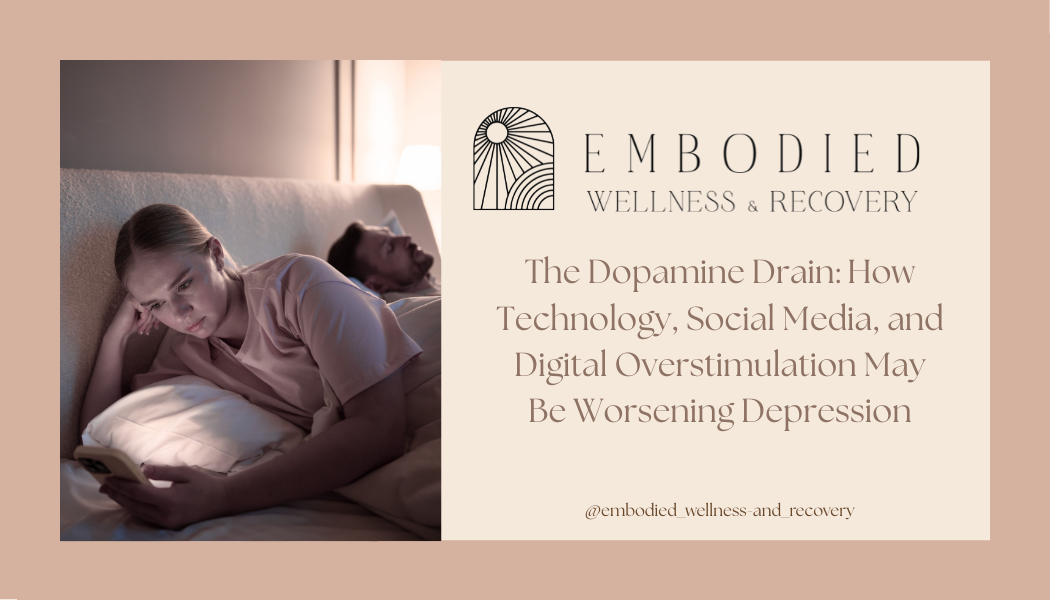
The Dopamine Drain: How Technology, Social Media, and Digital Overstimulation May Be Worsening Depression
The Dopamine Drain: How Technology, Social Media, and Digital Overstimulation May Be Worsening Depression
Discover how excessive screen time, social media use, dopamine dysregulation, and digital overstimulation can contribute to depression, emotional numbness, anxiety, and nervous system exhaustion. Learn the neuroscience behind tech habits and mental health, along with trauma-informed strategies to restore emotional balance and well-being.
Why Does Modern Life Feel Emotionally Exhausting?
Have you ever picked up your phone for “just a minute,” only to realize an hour had disappeared?
Do you find yourself endlessly scrolling, only to feel emotionally drained afterward?
Do you notice that your attention span feels shorter, your motivation lower, and your nervous system more restless than it used to be?
Have you ever felt strangely numb, disconnected, irritable, or depressed despite being constantly stimulated by screens, notifications, streaming platforms, social media, podcasts, and endless digital content?
Many people struggling with depression today are not simply dealing with sadness. They are navigating a nervous system that has become chronically overstimulated, emotionally fragmented, sleep-deprived, and depleted by modern technology habits.
From a neuroscience perspective, excessive technology use may profoundly affect dopamine regulation, emotional processing, stress hormones, attention, sleep quality, self-esteem, relationships, and overall mental health.
At Embodied Wellness and Recovery, we frequently help individuals explore how trauma, nervous system dysregulation, emotional disconnection, perfectionism, loneliness, and compulsive technology habits interact to impact depression and emotional well-being.
What Is Dopamine and Why Does It Matter?
Dopamine is often referred to as the brain’s “feel good” neurotransmitter, but its role is more complex than simple pleasure.
Dopamine is heavily involved in:
— Motivation
— Reward anticipation
— Learning
— Novelty seeking
— Goal-directed behavior
— Reinforcement patterns
Healthy dopamine functioning helps people feel engaged, curious, motivated, and emotionally connected to life. However, modern technology platforms are intentionally designed to capture and hold attention by repeatedly stimulating dopamine reward pathways. Social media notifications, likes, scrolling, short-form videos, gambling-style reward patterns, gaming, online shopping, and endless digital novelty can create repeated bursts of dopamine activation throughout the day. Over time, this constant stimulation may contribute to emotional fatigue, reduced attention span, decreased frustration tolerance, and diminished satisfaction from slower, real-world experiences.
The Relationship Between Technology and Depression
Research increasingly suggests a relationship between problematic technology use and depression symptoms, particularly among adolescents and young adults. A study published in JAMA Psychiatry found that increased social media use was associated with worsening depressive symptoms over time (Shensa et al., 2018).
Additional research has linked excessive screen time to:
— Increased loneliness
— Sleep disruption
— Anxiety
— Emotional dysregulation
— Reduced self-esteem
— Social comparison
— Lower mood
— Increased suicidal ideation in some populations
Importantly, technology itself is not inherently harmful. The issue is often the chronic overstimulation, compulsive use patterns, emotional avoidance, and nervous system depletionthat can result from excessive digital engagement.
The Nervous System Was Not Designed for Constant Stimulation
Human nervous systems evolved in environments vastly different from modern digital culture. Today, many individuals wake up to notifications, consume emotionally activating news before getting out of bed, multitask constantly, switch rapidly between screens, and rarely experience true mental stillness. The nervous system often remains in a subtle state of hyperarousal.
This can increase sympathetic nervous system activation, leading to:
— Restlessness
— Irritability
— Mental exhaustion
— Emotional numbness
— Sleep disruption
— Anxiety
— Burnout
— Depressive symptoms
From a Polyvagal perspective, chronic overstimulation may reduce the nervous system’s capacity to experience genuine regulation, connection, safety, and emotional presence. Ironically, many people use technology to self-soothe emotional discomfort while simultaneously increasing the dysregulation contributing to their distress.
Social Media, Comparison, and the Depressed Brain
One of the most emotionally painful aspects of social media is constant comparison. People are exposed to carefully curated images of success, beauty, productivity, relationships, fitness, wealth, and happiness throughout the day. For someone already struggling with depression, trauma, low self-worth, perfectionism, or loneliness, this can intensify shame and hopelessness. Research suggests social comparison processes can negatively affect mood, self-esteem, and emotional well-being (Vogel et al., 2014).
You may find yourself asking:
— Why does everyone else seem happier?
— Why am I struggling so much?
— Why do I feel stuck while everyone else appears successful?
— Why can I not enjoy life the way others seem to?
The depressed brain is already biased toward negative self-evaluation. Constant digital comparison can amplify this painful internal dialogue.
Dopamine Overload and Emotional Numbness
One of the paradoxes of chronic dopamine stimulation is that it can eventually reduce emotional sensitivity and pleasure responsiveness. When the brain becomes accustomed to rapid novelty and repeated stimulation, slower activities may begin to feel emotionally flat.
People may notice reduced enjoyment from:
— Reading
— Nature
— Creativity
— Intimacy
— Rest
— Quiet
— Deep focus
— Real-world social connection
This can contribute to an experience many individuals describe as emotional numbness. Some people begin feeling simultaneously overstimulated and underfulfilled. This pattern may resemble what researchers sometimes refer to as “reward deficiency” or dopamine dysregulation.
Technology as Emotional Avoidance
For many individuals, technology becomes a coping strategy.
Scrolling, gaming, binge watching, or compulsive phone use may temporarily distract from:
— Loneliness
— Anxiety
— Shame
— Emotional overwhelm
— Depression
— Fear of stillness
However, emotional avoidance often prevents the nervous system from fully processing underlying feelings and experiences. The result can be chronic emotional backlog. The body may remain physiologically activated while the mind becomes increasingly disconnected.
Sleep Disruption and Depression
Technology habits can also significantly affect sleep quality. Blue light from screens suppresses melatonin production and disrupts circadian rhythms. Late-night scrolling may increase cognitive stimulation precisely when the brain needs to downshift into restorative states. Research consistently links poor sleep quality with increased risk for depression, anxiety, emotional dysregulation, and impaired cognitive functioning (Walker, 2017).
Many people notice:
— Difficulty falling asleep
— Restless sleep
— Waking up anxious
— Emotional irritability
— Daytime fatigue
— Brain fog
— Lower stress tolerance
When sleep suffers, emotional resilience often declines dramatically.
Trauma, Depression, and Digital Overconsumption
Individuals with unresolved trauma may be especially vulnerable to compulsive technology use. Trauma survivors often live with elevated nervous system activation, emotional hypervigilance, shame, or dissociation.
Technology may provide:
— Distraction
— Numbing
— Stimulation
— Pseudo connection
— Temporary escape
— Emotional avoidance
But excessive digital stimulation may also worsen nervous system exhaustion over time.
At Embodied Wellness and Recovery, we often help clients explore the deeper emotional and physiological needs beneath compulsive screen habits while supporting nervous system regulation, emotional processing, and reconnection to embodied life.
Restoring Dopamine Balance and Emotional Well-Being
The goal is not necessarily to eliminate technology. The goal is to create healthier relationships with stimulation, attention, emotional regulation, and nervous system recovery. Small shifts can significantly support mood and mental health over time.
Nervous System Supportive Strategies
Reduce Passive Scrolling
Becoming more intentional with technology use may reduce overstimulation and emotional depletion.
Create Screen-Free Spaces
Many people benefit from avoiding screens:
— Immediately upon waking
— Before bedtime
— During meals
— During relational connection
Reconnect with Slow Dopamine Activities
Activities that restore emotional regulation often involve slower forms of engagement, including:
— Walking in nature
— Reading
— Journaling
— Creativity
— Exercise
— Face-to-face connection
— Music
Support Sleep Hygiene
Reducing nighttime screen exposure may significantly improve mood and nervous system functioning.
Address Underlying Emotional Pain
Technology habits often improve when deeper emotional wounds, trauma, loneliness, anxiety, or depression are compassionately addressed.
How Therapy Can Help
Therapy can help individuals understand the relationship between depression, trauma, nervous system dysregulation, emotional avoidance, and compulsive technology habits.
At Embodied Wellness and Recovery, we utilize integrative, neuroscience-informed approaches that may include:
— EMDR
— Mindfulness-based interventions
— Psychoeducation about dopamine and stress physiology
As individuals become more regulated and emotionally connected internally, many report reduced compulsive screen behaviors and greater capacity for presence, intimacy, creativity, joy, and emotional resilience.
Replacing Shame with Compassion
Modern technology has transformed how humans work, communicate, consume information, and seek stimulation. While technology offers many benefits, chronic overstimulation may also contribute to depression, emotional numbness, anxiety, loneliness, and nervous system exhaustion. Understanding the neuroscience of dopamine, stress, trauma, and emotional regulation can help individuals approach these struggles with greater compassion rather than shame.
Sometimes the nervous system is not asking for more stimulation. Sometimes it is asking for rest, embodiment, emotional connection, and space to breathe.
Reach out to schedule a complimentary 20-minute consultation with our team of therapists, trauma specialists, somatic practitioners, or relationship experts, and start working towards integrative, embodied healing today.
📞 Call us at (310) 651-8458
📱 Text us at (310) 210-7934
📩 Email us at admin@embodiedwellnessandrecovery.com
🔗 Visit us at www.embodiedwellnessandrecovery.com
👉 Check us out on Instagram @embodied_wellness_and_recovery
🌍 Explore our offerings at Linktr.ee: https://linktr.ee/laurendummit
References
1) Shensa, A., Escobar Viera, C. G., Sidani, J. E., Bowman, N. D., Marshal, M. P., & Primack, B. A. (2018). Problematic social media use and depressive symptoms among U.S. young adults: A nationally representative study. Social Science & Medicine, 182, 150-157.
2) Vogel, E. A., Rose, J. P., Roberts, L. R., & Eckles, K. (2014). Social comparison, social media, and self-esteem. Psychology of Popular Media Culture, 3(4), 206-222.
3) Volkow, N. D., Wang, G. J., Fowler, J. S., & Tomasi, D. (2012). Addiction circuitry in the human brain. Annual Review of Pharmacology and Toxicology, 52, 321-336.
4) Walker, M. (2017). Why we sleep: Unlocking the power of sleep and dreams. Scribner.

Triggered by the Scroll: How Social Media Fuels Trauma Responses and What You Can Do About It
Triggered by the Scroll: How Social Media Fuels Trauma Responses and What You Can Do About It
Struggling with trauma triggers on social media? Discover the neuroscience behind emotional dysregulation online and learn somatic, therapeutic tools to protect your nervous system. Embodied Wellness and Recovery offers expert trauma-informed care.
Have you ever felt anxious, angry, disconnected, or overwhelmed after just a few minutes of scrolling through Instagram, TikTok, or Facebook? Do certain posts unexpectedly leave you feeling ashamed, panicked, or emotionally hijacked for the rest of the day?
If so, you’re not imagining it, and you’re not weak. For individuals with unresolved trauma, social media can activate deep, unconscious emotional responses. But why does this happen? And more importantly, what can you do to protect your mental health in the digital age?
In this article, we’ll explore the neuroscience of trauma triggers, how social media impacts your nervous system, and what trauma-informed therapy can offer for lasting relief.
The Digital Landscape and Unseen Emotional Fallout
We live in a world where social media is woven into daily life. While it can offer connection, creativity, and community, it can also serve as a hidden minefield for those recovering from trauma.
From the perfect images of other people’s lives to divisive political arguments and shocking world news, every swipe or tap has the potential to trigger stored emotional responses from unresolved wounds. This is especially true for those with developmental trauma, attachment wounds, PTSD, or complex trauma.
Why Social Media Triggers Trauma Responses
1. Hypervigilance and the Nervous System
Trauma conditions the brain to scan for danger even when there is none. This heightened state of awareness, known as hypervigilance, is part of a dysregulated autonomic nervous system. Social media content can act like a flashing red light for a nervous system that is already on high alert.
For example, a seemingly harmless post about someone getting engaged may activate feelings of abandonment or rejection for someone who experienced emotional neglect or betrayal in childhood.
2. Comparison and Shame Spirals
Social media platforms are curated highlight reels. For trauma survivors, especially those with histories of emotional abuse, body shaming, or low self-worth, constant comparison can trigger deep shame or inner criticism.
This reaction is rooted in the brain’s default mode network, which governs self-referential thoughts. Trauma can create rigid narratives like “I’m not good enough,” which resurface when exposed to idealized images or lifestyles online.
3. Emotional Contagion and Dysregulation
Research shows that emotions are contagious online. Exposure to others’ fear, outrage, or sadness, especially in unfiltered or repeated doses, can overwhelm an already dysregulated nervous system.
For trauma survivors, this may lead to emotional flooding, freeze responses, or dissociation. Without grounding or containment, the body may go into fight, flight, freeze, or fawn, all unconscious trauma responses designed to protect us, but which ultimately leave us feeling powerless or ashamed.
Common Social Media Trauma Triggers
— Images of violence or injustice
— Idealized bodies or lifestyles
— Content about families, babies, or romantic relationships
— Polarizing opinions or online shaming
— “Before and after” transformations
— News of death, war, or disaster
— Memes or jokes about trauma or abuse
— Sudden exposure to personal memories via “time hop” or “memory” features
Even positive content can be triggering if it highlights what a person feels they’ve lost, never had, or are undeserving of.
Neuroscience Insight: Why Trauma Triggers Feel So Immediate
Trauma is not just a psychological issue; it’s a physiological one. Traumatic memories are stored in the limbic system, particularly the amygdala, and bypass the prefrontal cortex, the part of the brain responsible for logic and reasoning.
When a trauma-related stimulus shows up in your feed, your brain may not distinguish between a digital image and a real-life threat. This implicit memory recall lights up your survival brain, causing physical symptoms like racing heart, tight chest, stomach upset, or dissociation, even if you’re just sitting on the couch.
The Role of Somatic Therapy in Social Media Trauma Recovery
At Embodied Wellness and Recovery, we understand how disorienting and painful trauma triggers can be, especially when they’re tied to something as pervasive as social media. Our approach integrates:
Somatic Experiencing
Helps clients recognize how trauma lives in the body and discharge it in a safe, contained way. You’ll learn to notice and regulate sensations instead of being overwhelmed by them.
EMDR Therapy (Eye Movement Desensitization and Reprocessing)
A powerful tool to help reprocess trauma triggers so that images or content that once hijacked your nervous system no longer do.
Attachment-Focused Therapy
Addresses the root of relational trauma and how it impacts how we view ourselves and others, often reflected painfully on social media.
Psychoeducation
Understanding the science behind your reactions can foster self-compassion and reduce shame. When you know it’s your nervous system trying to protect you, you can respond more intentionally.
How to Cope with Social Media Triggers: Practical Tools
If you’re feeling flooded by social media, here are five trauma-informed strategies to support your emotional well-being:
1. Pause Before You Scroll
Ask: “What am I seeking right now?” Connection? Numbing? Validation? Try grounding first. Touch something cold, take a breath, feel your feet on the floor.
2. Create a “Safe Feed”
Unfollow or mute accounts that spike shame or comparison. Curate your content with accounts that prioritize mental health, authenticity, body neutrality, and trauma-informed messages.
3. Set Time Limits
Use screen time settings to protect your nervous system. Take regular “digital fasts” to reset your baseline.
4. Track Your Triggers
Keep a digital journal. When you feel dysregulated after social media use, note what post, comment, or image affected you. This increases awareness and supports healing.
5. Work with a Trauma-Informed Therapist
Triggers are not failures; they are roadmaps. With support, you can explore what your reactions are pointing to and begin to transform the pain into a pathway for healing.
You’re Wired to Survive, Not to Compare
The trauma response is not a sign of weakness. It’s a sign of strength, your body doing what it was designed to do to keep you safe. But in a hyperconnected, image-saturated world, the same protective wiring can become overstimulated.
At Embodied Wellness and Recovery, our clinicians help you work with, not against, your nervous system. We specialize in trauma treatment, somatic therapy, EMDR, and attachment repair for individuals impacted by trauma, anxiety, relational wounds, and emotional dysregulation.
Your experience matters. Your nervous system’s cues are valid. With the right tools and support, social media no longer has to dominate your emotional state. You can reclaim your relationship with your body, your mind, and your digital world.
Are social media triggers disrupting your nervous system?
Embodied Wellness and Recovery offers trauma-informed therapy, somatic healing, and nervous system regulation tools in Nashville and Los Angeles. Schedule a free 20-minute consultation today and begin your journey toward grounded resilience.
📞 Call us at (310) 651-8458
📱 Text us at (310) 210-7934
📩 Email us at admin@embodiedwellnessandrecovery.com
🔗 Visit us at www.embodiedwellnessandrecovery.com
👉 Check us out on Instagram @embodied_wellness_and_recovery
🌍 Explore our offerings at Linktr.ee: https://linktr.ee/laurendummit
References:
1. Porges, S. W. (2011). The Polyvagal Theory: Neurophysiological Foundations of Emotions, Attachment, Communication, and Self-regulation. W.W. Norton & Company.
2. Siegel, D. J. (2020). The Developing Mind: How Relationships and the Brain Interact to Shape Who We Are (3rd ed.). Guilford Press.
3.Van der Kolk, B. A. (2014). The Body Keeps the Score: Brain, Mind, and Body in the Healing of Trauma. Penguin Books.