
Why Financial Stress Makes Everyday Decisions Feel Overwhelming: The Neuroscience of Economic Uncertainty, Anxiety, and Decision Fatigue
Why Financial Stress Makes Everyday Decisions Feel Overwhelming: The Neuroscience of Economic Uncertainty, Anxiety, and Decision Fatigue
Why does financial uncertainty make even simple decisions feel overwhelming? Learn how economic stress affects the brain, nervous system, relationships, and daily decision-making, and discover neuroscience-informed strategies for navigating uncertainty with greater clarity and resilience.
Have you noticed that lately even small decisions feel harder than they used to?
Should you make that purchase?
Take that vacation?
Change jobs?
Invest in your business?
Hire help?
Start therapy?
Move forward with a major life decision?
When economic uncertainty increases, many people find themselves second-guessing choices they would have made confidently in the past. What often appears to be indecisiveness is frequently something deeper. It may be your brain and nervous system responding to perceived financial threat.
Economic uncertainty does not merely affect bank accounts. It affects attention, emotions, relationships, physical health, and the way we evaluate risk and make decisions. Understanding the neuroscience behind financial stress can help explainwhy everyday choices suddenly feel exhausting and what you can do to regain a sense of clarity and stability.
Why Economic Uncertainty Feels So Personal
Humans are wired to seek predictability.
The brain constantly scans the environment, asking:
— Am I safe?
— Can I meet my needs?
— What threats should I prepare for?
— What happens if things get worse?
Economic instability activates many of these same survival systems. Whether the concern involves inflation, job security, market volatility, rising living expenses, business uncertainty, retirement savings, or debt, the brain often interprets financial uncertainty as a potential threat to safety and survival. This is not irrational.
Throughout human history, access to resources has been directly connected to survival. As a result, financial insecurity often triggers powerful emotional and physiological responses.
Why You Suddenly Overthink Every Purchase
Have you found yourself asking questions like:
— Should I really spend money on this?
— What if I need that money later?
— Am I making a mistake?
— What if the economy gets worse?
— What if I lose my job?
—What if I can't recover financially?
These concerns can create a cycle of overthinking and decision paralysis.
Research suggests that uncertainty itself is often more stressful than a known negative outcome because the brain struggles to prepare for unpredictable threats (Grupe & Nitschke, 2013). When uncertainty increases, many people begin scrutinizing every choice more intensely. What once felt like a simple decision becomes a source of anxiety.
The Neuroscience of Financial Stress
When financial uncertainty persists, several important brain systems become involved.
The Amygdala: The Brain's Threat Detector
The amygdala plays a critical role in identifying potential threats. When economic concerns arise, the amygdala may become more reactive, increasing vigilance, worry, and anxiety. This can make neutral situations feel more urgent and everyday decisions feel higher-stakes.
The Prefrontal Cortex: Decision-Making Under Pressure
The prefrontal cortex helps with planning, reasoning, impulse control, and decision-making. Unfortunately, chronic stress can reduce the efficiency of these executive functions. Research has shown that stress can impair cognitive flexibility, working memory, and decision-making abilities (Arnsten, 2009).
The result?
You may find yourself:
— Second-guessing decisions
— Struggling to prioritize
— Feeling mentally exhausted
— Avoiding important choices
— Becoming stuck in analysis paralysis
The Nervous System
When the nervous system perceives threat, it shifts resources toward survival. This response can be adaptive in the event of immediate danger. However, chronic financial stress may keep the nervous system activated for weeks, months, or even years.
Over time, this can contribute to:
— Anxiety
— Sleep difficulties
— Irritability
— Emotional exhaustion
— Increased conflict in relationships
Scarcity Changes How the Brain Functions
One of the most fascinating findings in behavioral economics and psychology involves the concept of scarcity. Research by Mullainathan and Shafir (2013) suggests that scarcity can consume cognitive resources and narrow attention.
When financial concerns dominate mental space, less energy remains available for:
— Creativity
— Long-term planning
— Emotional regulation
— Problem-solving
People often assume they are becoming less capable. In reality, the brain may simply be operating under a heavy cognitive load.
Why Financial Stress Affects Relationships
Money remains one of the most common sources of relationship conflict.
Economic uncertainty can increase:
— Anxiety
— Defensiveness
— Irritability
— Withdrawal
— Differences in spending behavior
Partners may respond differently to stress. One person may become highly cautious. Another may seek comfort through spending. One partner may want detailed planning. The other may avoid discussing finances entirely. Without understanding the underlying dynamics of the nervous system, these differences can easily be misinterpreted as irresponsibility, control, selfishness, or a lack of caring. In many cases, both individuals are attempting to create safety, just in different ways.
Why Trauma Can Intensify Financial Anxiety
For individuals with histories of trauma, economic uncertainty may activate experiences that extend far beyond current finances.
Past experiences involving:
— Poverty
— Housing instability
— Food insecurity
— Family conflict about money
— Sudden loss
Can increase sensitivity to financial stress later in life.
The nervous system often responds not only to present circumstances but also to memories and survival strategies developed earlier in life. This helps explain why two people facing similar financial situations may experience dramatically different levels of anxiety.
Signs Financial Stress Is Affecting Your Decision-Making
You may notice:
— Constantly checking financial accounts
— Difficulty making purchases
— Excessive reassurance-seeking
— Obsessive research before decisions
— Avoiding financial conversations
— Feeling overwhelmed by choices
— Chronic worry about worst-case scenarios
— Difficulty enjoying positive experiences
These responses are often signs that the nervous system is struggling with uncertainty rather than evidence that something is wrong with you.
How to Make Better Decisions During Economic Uncertainty
1. Recognize the Difference Between Risk and Threat
Not every financial decision represents danger. Anxiety tends to treat uncertainty as proof of threat.
Pause and ask:
"Is this truly dangerous, or is it simply uncertain?"
That distinction matters.
2. Reduce Information Overload
Constant exposure to economic news can increase anxiety and reinforce threat perception. Research on information overload suggests that excessive information often worsens decision-making rather than improving it. Staying informed is valuable, but remaining immersed in financial news all day rarely is.
3. Focus on What Is Within Your Control
The nervous system responds positively to action. You may not control markets, inflation, or economic policy.
You can influence:
— Budgeting
— Savings habits
— Spending decisions
— Professional development
— Communication with loved ones
4. Support Nervous System Regulation
Financial resilience is not only about numbers. It is also about physiology.
Practices such as:
— Exercise
— Quality sleep
— Social connection
Can help restore access to clearer thinking and better decision-making.
5. Avoid Making Major Decisions From a State of Panic
The brain tends to make its worst decisions when operating out of fear. Whenever possible, allow your nervous system to settle before making significant financial choices.
How Embodied Wellness and Recovery Can Help
At Embodied Wellness and Recovery, we understand that economic stress affects far more than finances.
It impacts:
— Anxiety
— Emotional regulation
— Intimacy
— Decision-making
Our neuroscience-informed approach integrates trauma therapy, attachment work, somatic therapies, EMDR, nervous system regulation, and relationship counseling to help individuals navigate uncertainty with greater resilience and clarity. The goal is not to eliminate every source of uncertainty. Life will always contain unknowns. The goal is to help your brain and body develop the capacity to tolerate uncertainty without becoming overwhelmed by it. Because confidence is not the absence of uncertainty. It is the ability to make thoughtful decisions even when certainty is unavailable.
Reach out to schedule a complimentary 20-minute consultation with our team of therapists, trauma specialists, somatic practitioners, or relationship experts and start working towards integrative, embodied healing today.
📞 Call us at (310) 651-8458
📱 Text us at (310) 210-7934
📩 Email us at admin@embodiedwellnessandrecovery.com
🔗 Visit us at www.embodiedwellnessandrecovery.com
👉 Check us out on Instagram @embodied_wellness_and_recovery
🌍 Explore our offerings at Linktr.ee: https://linktr.ee/laurendummit
References
Arnsten, A. F. T. (2009). Stress signaling pathways that impair prefrontal cortex structure and function. Nature Reviews Neuroscience, 10(6), 410-422.
Grupe, D. W., & Nitschke, J. B. (2013). Uncertainty and anticipation in anxiety: An integrated neurobiological and psychological perspective. Nature Reviews Neuroscience, 14(7), 488-501.Mullainathan, S., & Shafir, E. (2013). Scarcity: Why having too little means so much. Times Books.
Bawden, D., & Robinson, L. (2020). Information overload: An overview. In Oxford Research Encyclopedia of Politics. Oxford University Press.
Why Do I Feel Like I Don't Belong Anywhere? The Neuroscience of Loneliness, Community, and the Human Need for Connection
Why Do I Feel Like I Don't Belong Anywhere? The Neuroscience of Loneliness, Community, and the Human Need for Connection
Do you feel like you don't fully belong anywhere? Discover the psychology and neuroscience of belonging, loneliness, social connection, and community. Learn how feeling disconnected affects mental health, relationships, trauma recovery, and nervous system regulation, and explore practical ways to cultivate meaningful connection.
Have you ever sat in a room full of people and still felt alone?
Do you have friends, family, coworkers, or even a partner, yet find yourself carrying a quiet sense that you don't fully belong anywhere?
Perhaps you feel caught between communities. Not quite fitting in with one group, but not entirely identifying with another. Maybe you've moved frequently, experienced significant life changes, recovered from addiction, left a religious community, changed careers, survived trauma, or simply never found a place where you feel fully understood.
Many people describe it this way:
"I have people in my life, but I don't feel connected."
"I never feel like I completely fit in."
"Everyone else seems to have their tribe. I don't."
"I feel lonely even when I'm surrounded by people."
If these thoughts resonate, you are touching on one of the most fundamental human needs: the need to belong. When that need goes unmet, the effects can be far more profound than many people realize.
The Human Brain Is Wired for Belonging
Belonging is not merely a social preference. It is a biological necessity. Researchers Roy Baumeister and Mark Leary proposed that humans possess a fundamental need to belong and form meaningful social bonds (Baumeister & Leary, 1995).
From an evolutionary perspective, belonging increased survival. For most of human history, exclusion from the group could mean vulnerability, isolation, and danger. As a result, our brains evolved to monitor social connection very closely. This means that feeling disconnected from community is not simply emotionally painful. It is something the brain often interprets as a threat.
Why Loneliness Hurts So Much
Have you ever wondered why loneliness can feel physically painful? Neuroscience offers a fascinating answer. Research conducted by Eisenberger and colleagues found that social rejection activates some of the same brain regions involved in processing physical pain (Eisenberger et al., 2003). In other words, the distress associated with social disconnection is not "all in your head." The brain treats social pain as highly significant.
This helps explain why feeling excluded, misunderstood, or disconnected can affect:
— Mental health
— Stress levels
— Physical health
— Overall quality of life
The pain is real because connection matters.
The Hidden Experience of Not Fully Belonging
Many discussions about loneliness focus on having no relationships. But another form of loneliness often receives less attention. The loneliness of partial belonging. This occurs when you have social connections but still feel fundamentally disconnected.
You may:
— Participate in groups but feel different from everyone else
— Feel misunderstood by friends or family
— Struggle to find people who share your values
— Feel disconnected from your cultural background
— Experience imposter syndrome
— Feel like you are always adapting yourself to fit in
This type of loneliness can be particularly confusing because, from the outside, your life may appear socially connected, yet internally something feels missing.
Trauma and the Sense of Not Belonging
For many individuals, feelings of not belonging are closely linked to earlier life experiences. Trauma, attachment wounds, bullying, neglect, rejection, family dysfunction, or chronic criticism can shape how we relate to groups and relationships later in life.
When belonging feels unsafe, the nervous system often develops protective strategies.
You may:
— Stay emotionally guarded
— Avoid vulnerability
— Keep parts of yourself hidden
— Assume others won't understand you
— Fear rejection or abandonment
— Struggle to trust connection
Over time, these adaptations can create a painful cycle. The desire for connection remains strong. The fear of connection remains strong as well.
The Neuroscience of Social Safety
According to research on attachment and nervous system regulation, humans do not merely seek connection; we seek safe connection (Cacioppo & Patrick, 2008). The nervous system is constantly evaluating whether relationships feel emotionally secure. When people feel accepted, understood, and valued, the nervous system tends to move toward regulation.
When people feel excluded, judged, or unseen, stress responses often increase. This is one reason community can have such a powerful effect on well-being. Healthy relationships help regulate the nervous system. They create experiences of co-regulation, where safety is reinforced through connection with others.
Why Modern Life Can Intensify Disconnection
Ironically, many people report feeling more disconnected than ever despite unprecedented technological connectivity. Social media allows us to observe countless communities while simultaneously feeling excluded from them. We can see everyone else's friendships, celebrations, milestones, and gatherings.
What we often do not see are their struggles, insecurities, and moments of loneliness. Research consistently demonstrates that perceived social connection is often more important than the sheer number of social interactions (Segrin & Passalacqua, 2010). Quality matters more than quantity. A thousand online connections cannot replace feeling deeply known by a few trusted people.
Signs You May Be Struggling With a Lack of Belonging
Sometimes the impact of disconnection appears in subtle ways.
You may notice:
— Chronic loneliness
— Anxiety in social situations
— Depression or emotional numbness
— Feeling like an outsider
— Persistent self-doubt
— Relationship dissatisfaction
— Difficulty asking for support
Many individuals mistakenly interpret these experiences as personal flaws. Often they are responses to unmet relational needs.
How Lack of Community Affects Mental Health
Research consistently links loneliness and social isolation with increased risk for:
— Depression
— Anxiety
— Substance misuse
— Chronic stress
— Sleep disturbances
— Physical health problems
Holt-Lunstad and colleagues found that social isolation and loneliness are associated with significant health risks, comparable to many well-established medical risk factors (Holt-Lunstad et al., 2015). Humans are relational beings. When meaningful connection is absent, both the brain and body are affected.
What Creates a Genuine Sense of Belonging?
Many people spend years trying to fit in. Belonging is something different. Fitting in often requires changing ourselves to gain acceptance. Belonging allows us to bring our authentic selves into relationships.
True belonging often includes:
— Being seen accurately
— Feeling emotionally safe
— Sharing values with others
— Experiencing mutual support
— Being accepted despite imperfections
— Having opportunities for meaningful contribution
Belonging is less about popularity and more about authenticity.
Rebuilding Connection and Community
If you have spent years feeling disconnected, it can be tempting to assume that community simply isn't available to you.
Yet belonging often develops gradually.
Consider asking yourself:
— Where do I feel most like myself?
— Which relationships leave me feeling energized rather than depleted?
— What communities align with my values?
— Where am I hiding parts of myself to gain acceptance?
— What would authentic connection look like for me?
Small steps matter. Community is often built through repeated experiences of genuine connection rather than dramatic transformations.
How Embodied Wellness and Recovery Can Help
At Embodied Wellness and Recovery, we understand that loneliness and disconnection are often far more complex than simply "needing more friends."
They may involve:
— Trauma
— Attachment wounds
— Nervous system dysregulation
— Shame
— Identity transitions
— Grief and loss
Our approach integrates neuroscience, attachment theory, trauma-informed therapy, EMDR, somatic therapies, relationship counseling, and nervous system regulation to help individuals cultivate deeper connection with themselves and others. Belonging begins long before we find the right community. It begins with creating enough internal safety to allow ourselves to be known. The goal is not to fit into every room. The goal is to discover the places, relationships, and communities where you can bring your full self and feel welcomed there.
Reach out to schedule a complimentary 20-minute consultation with our team of therapists, trauma specialists, somatic practitioners, or relationship experts and start working towards integrative, embodied healing today.
📞 Call us at (310) 651-8458
📱 Text us at (310) 210-7934
📩 Email us at admin@embodiedwellnessandrecovery.com
🔗 Visit us at www.embodiedwellnessandrecovery.com
👉 Check us out on Instagram @embodied_wellness_and_recovery
🌍 Explore our offerings at Linktr.ee: https://linktr.ee/laurendummit
References
Baumeister, R. F., & Leary, M. R. (1995). The need to belong: Desire for interpersonal attachments as a fundamental human motivation. Psychological Bulletin, 117(3), 497-529.
Cacioppo, J. T., & Patrick, W. (2008). Loneliness: Human nature and the need for social connection. WW Norton & Company.
Eisenberger, N. I., Lieberman, M. D., & Williams, K. D. (2003). Does rejection hurt? An fMRI study of social exclusion. Science, 302(5643), 290-292.
Holt-Lunstad, J., Smith, T. B., Baker, M., Harris, T., & Stephenson, D. (2015). Loneliness and social isolation as risk factors for mortality: A meta-analytic review. Perspectives on Psychological Science, 10(2), 227-237.
Porges, S. W. (2021). Polyvagal safety: Attachment, communication, self-regulation. W. W. Norton & Company.
Segrin, C., & Passalacqua, S. A. (2010). Functions of loneliness, social support, health behaviors, and stress in association with poor health. Health communication, 25(4), 312-322.
Why Anxiety Makes You Constantly Rehearse Conversations in Your Head: The Neuroscience of Overthinking and Mental Replays
Why Anxiety Makes You Constantly Rehearse Conversations in Your Head: The Neuroscience of Overthinking and Mental Replays
Why do you keep replaying conversations in your head? Discover the neuroscience behind anxiety, rumination, overthinking, and social anxiety, and learn practical strategies to quiet mental rehearsals, regulate your nervous system, and find greater peace.
Have you ever spent hours replaying a conversation after it ended?
Do you analyze every word you said, wondering whether you sounded awkward, insensitive, unintelligent, or too emotional?
Do you mentally rehearse future conversations before they happen, imagining every possible response and outcome?
Have you ever found yourself lying awake at night reliving an interaction from earlier that day?
If so, you are experiencing something many people with anxiety know well: conversational rumination.
Whether it shows up as social anxiety, generalized anxiety, relationship anxiety, or trauma-related hypervigilance, the tendency to repeatedly rehearse conversations can feel exhausting. It can consume mental energy, increase stress, interfere with sleep, and make it difficult to stay present in daily life.
The good news is that this pattern is not a personal failing. It is often the result of the anxious brain and nervous system's attempts to create safety, predictability, and control in an uncertain world. Understanding why this happens is the first step toward changing your relationship with it.
Why Do I Constantly Replay Conversations in My Head?
Many people assume that overthinking conversations is simply a bad habit. Neuroscience suggests something more complex. The brain evolved to identify potential threats and help us avoid future danger. For individuals experiencing anxiety, this protective system often becomes overactive. When a conversation feels emotionally significant, the brain may continue analyzing it long after it has ended.
Questions begin to emerge:
— Did I say the wrong thing?
— What did they mean by that comment?
— Do they think less of me now?
— Should I have responded differently?
— What if I embarrassed myself?
— What if I hurt someone's feelings?
— What if they reject me?
The brain mistakenly believes that continued analysis will prevent future mistakes. Unfortunately, it often produces the opposite result.
The Neuroscience of Mental Rehearsal
The Brain's Threat Detection System
At the center of anxiety is the amygdala, a structure involved in detecting potential threats. While the amygdala is essential for survival, it does not distinguish between physical and social threats particularly well. Research shows that social rejection, criticism, embarrassment, and interpersonal conflict activate many of the same brain regions associated with physical pain (Eisenberger et al., 2003).
To the anxious brain, a difficult conversation may feel far more dangerous than it objectively is. As a result, the brain continues reviewing the interaction in an attempt to prevent future harm.
The Default Mode Network and Rumination
The brain contains a collection of interconnected regions known as the Default Mode Network (DMN). This network becomes active when we are not focused on the outside world and instead turn our attention inward. The DMN supports self-reflection, planning, memory, and meaning-making. However, when anxiety is present, the DMN can become a breeding ground for rumination.
Instead of constructive reflection, people become trapped in repetitive thought loops:
— Replaying conversations
— Imagining worst-case scenarios
— Rehearsing future interactions
— Critiquing their own behavior
Research has linked excessive rumination to anxiety disorders, depression, and increased emotional distress (Hamilton et al., 2015).
Why Anxiety Treats Conversations Like Problems to Solve
One of the most frustrating aspects of anxiety is that it disguises itself as productivity.
The brain convinces us:
"If I think about this long enough, I'll figure it out."
"If I rehearse every possibility, I'll be prepared."
"If I analyze the conversation carefully enough, I'll feel better."
Yet many people discover the opposite happens. The more they think, the more uncertain they become. This occurs because anxiety often seeks certainty in situations where certainty is impossible. Human relationships are inherently unpredictable No amount of mental rehearsal can guarantee a perfect outcome.
How Trauma Can Intensify Conversation Rehearsal
For individuals with trauma histories, conversational rumination often serves a deeper purpose. Many trauma survivors grew up in environments where emotional safety was inconsistent.
Perhaps they learned to:
— Monitor others' moods
— Anticipate conflict
— Avoid criticism
— Prevent rejection
— Manage other people's emotions
Over time, the nervous system becomes conditioned to scan constantly for relational threats. This process, known as hypervigilance, can persist long after the original circumstances have ended. A simple text message, disagreement, or ambiguous facial expression may trigger extensive mental analysis.
The goal is not perfection. The goal is safety. Unfortunately, the nervous system often remains trapped in old survival strategies that no longer serve current relationships.
The Hidden Relationship Between Anxiety and People-Pleasing
Many individuals who rehearse conversations struggle with people-pleasing tendencies.
They worry excessively about:
— Being misunderstood
— Disappointing others
— Causing conflict
— Appearing selfish
— Being disliked
As a result, they repeatedly review interactions to determine whether they met everyone else's expectations. This can create tremendous emotional exhaustion.
The underlying question is often, "Am I safe if someone is unhappy with me?"
Until that question is addressed, conversational rumination may continue.
Why Rehearsing Conversations Rarely Brings Relief
Although mental rehearsal initially feels protective, it often reinforces anxiety.
Each time the brain revisits a conversation, it receives the message, "This situation is important and potentially dangerous."
The nervous system responds accordingly. Stress hormones remain elevated. The mind becomes increasingly vigilant. The conversation gains even greater emotional significance.
This creates a self-perpetuating cycle:
Anxiety → Rumination → Temporary Relief → More Anxiety → More Rumination
Without intervention, the cycle continues.
How to Stop Replaying Conversations in Your Head
1. Recognize the Difference Between Reflection and Rumination
Reflection is purposeful and productive. Rumination is repetitive and circular.
Ask yourself:
— Am I learning something new?
— Is this helping me solve a problem?
— Or am I reviewing the same thoughts repeatedly?
Awareness is often the first step toward interrupting the cycle.
2. Shift Attention From the Mind to the Body
Anxiety is not just a thinking problem.
It is also a nervous system experience.
When caught in mental rehearsal, try asking:
— What sensations do I notice in my body?
— Where am I holding tension?
— What emotions are present beneath the thoughts?
Research increasingly supports body-based approaches for reducing anxiety and improving emotional regulation (van der Kolk, 2014).
3. Practice Nervous System Regulation
Helpful strategies may include:
— Slow diaphragmatic breathing
— Walking in nature
These interventions help communicate safety to the nervous system, reducing the need for constant mental monitoring.
4. Challenge the Need for Certainty
Many anxious thoughts revolve around unanswered questions.
Consider asking yourself:
— What if I never know exactly what they meant?
— What if I cannot control their opinion of me?
— What if uncertainty is uncomfortable but survivable?
Learning to tolerate uncertainty is a powerful antidote to anxiety.
5. Strengthen Self-Trust
People who constantly rehearse conversations often believe they must perform perfectly to remain accepted.
Instead, consider:
— Can I trust myself to handle future situations as they arise?
— Can I survive making mistakes?
— Can I remain worthy even when someone disagrees with me?
Self-trust reduces the brain's perceived need to prepare endlessly for every possibility.
When Professional Support Can Help
If conversational rumination feels relentless, it may reflect deeper patterns involving anxiety, trauma, attachment wounds, perfectionism, relationship distress, or nervous system dysregulation.
At Embodied Wellness and Recovery, we help individuals and couples explore the root causes of anxiety through a compassionate, neuroscience-informed lens.
Our clinicians integrate trauma-informed therapy, EMDR, Somatic Experiencing, NeuroAffective Touch®, attachment-focused therapy, and evidence-based approaches designed to address both the mind and the nervous system. Meaningful change often requires more than simply challenging thoughts. It involves helping the body learn that it no longer has to remain on high alert.
A Different Way Forward
If you find yourself replaying conversations, remember that your brain is not trying to sabotage you. It is trying to protect you. The challenge is that an anxious brain often uses strategies that create more distress rather than less. The goal is not to eliminate reflection entirely. The goal is to develop the ability to reflect without becoming trapped in endless mental rehearsal.
With greater self-awareness, nervous system regulation, and support, it becomes possible to spend less time reliving conversations and more time participating fully in the life unfolding right in front of you.
Reach out to schedule a complimentary 20-minute consultation with our team of therapists, trauma specialists, somatic practitioners, or relationship experts and start working towards integrative, embodied healing today.
📞 Call us at (310) 651-8458
📱 Text us at (310) 210-7934
📩 Email us at admin@embodiedwellnessandrecovery.com
🔗 Visit us at www.embodiedwellnessandrecovery.com
👉 Check us out on Instagram @embodied_wellness_and_recovery
🌍 Explore our offerings at Linktr.ee: https://linktr.ee/laurendummit
References
Eisenberger, N. I., Lieberman, M. D., & Williams, K. D. (2003). Does rejection hurt? An fMRI study of social exclusion. Science, 302(5643), 290-292.
Hamilton, J. P., Farmer, M., Fogelman, P., & Gotlib, I. H. (2015). Depressive rumination, the default-mode network, and the dark matter of clinical neuroscience. Biological Psychiatry, 78(4), 224-230. https://doi.org/10.1016/j.biopsych.2015.02.020
Neff, K. D. (2023). Self-compassion: The proven power of being kind to yourself (Updated ed.). William Morrow.
Siegel, D. J. (2020). The developing mind: How relationships and the brain interact to shape who we are (3rd ed.). Guilford Press.
van der Kolk, B. A. (2014). The body keeps the score: Brain, mind, and body in the healing of trauma. Viking.
Why Can't I Let It Go? The Neuroscience of Resentment and How to Effectively Work Through It
Why Can't I Let It Go? The Neuroscience of Resentment and How to Effectively Work Through It
Struggling to let go of resentment? Learn the neuroscience behind resentment, why grudges linger, and evidence-based strategies to process anger, heal emotional wounds, regulate your nervous system, and improve your relationships.
Do you find yourself replaying the same conversation over and over?
Do you imagine what you should have said?
Do you feel consumed by anger toward a former partner, family member, friend, colleague, or even yourself?
Have you ever noticed that a resentment can occupy your thoughts for days, months, or even years?
Resentment is one of the most common and emotionally exhausting experiences people bring into therapy. While resentment often begins as a natural response to hurt, betrayal, injustice, or disappointment, it can gradually become a source of chronic emotional distress that affects mental health, physical health, relationships, intimacy, and overall well-being.
The good news is that resentment is not simply a character flaw or a sign of unwillingness to move forward. Research suggests that resentment is often deeply connected to unresolved emotional pain, nervous system activation, attachment wounds, and the brain's attempts to protect us from future harm (Bhardwaj, Ali, & Paul, 2026). Understanding how resentment works can help you move from emotional captivity toward greater freedom, clarity, and peace.
What Is Resentment?
Resentment is a persistent emotional response to a perceived wrong, injustice, betrayal, disappointment, or unmet expectation. Unlike momentary anger, resentment tends to linger. It often involves repeatedly revisiting painful memories, mentally rehearsing grievances, and remaining emotionally attached to the injury long after the original event occurred.
People struggling with resentment often ask:
— Why can't I stop thinking about what happened?
— Why do I feel angry years later?
— Why do I keep replaying the conversation?
— Why does this still affect me?
— How do I forgive someone who hurt me?
— How do I let go of a grudge?
These questions reflect an important reality: resentment is rarely just about the event itself.
The Neuroscience of Resentment
From a neuroscience perspective, resentment involves several interconnected brain systems.
The Amygdala: Detecting Threat
The amygdala functions as the brain's alarm system. When someone hurts, rejects, betrays, humiliates, or disappoints us, the amygdala interprets the experience as a threat. Research shows that emotionally painful experiences activate many of the same neural pathways involved in physical pain (Eisenberger et al., 2003). In other words, emotional injuries can literally hurt.
The Hippocampus: Storing Emotional Memories
The hippocampus helps organize and store memories. When an event carries strong emotional significance, the brain often prioritizes remembering it in order to prevent similar harm in the future. This explains why certain painful experiences remain vivid long after they occur.
The Default Mode Network: The Rumination Loop
The brain's Default Mode Network becomes active when we are internally focused. While this system supports reflection and self-awareness, it can also contribute to rumination.
When resentment takes hold, the mind repeatedly returns to the same story:
— What happened
— Why it happened
— Who was wrong
— What should have been different
Over time, this repetitive cycle reinforces emotional distress and strengthens neural pathways associated with anger and hurt.
Why Resentments Are Often About More Than the Present
One of the most important discoveries many clients make is that current resentments often connect to older wounds. Perhaps your partner's criticism triggers childhood experiences of inadequacy. Perhaps a friend's rejection touches an earlier fear of abandonment. Perhaps a betrayal reawakens unresolved attachment injuries.
Research in attachment theory demonstrates that current relationship conflicts often trigger deeply rooted emotional experiences formed during earlier developmental periods (Mikulincer & Shaver, 2016). When this occurs, the intensity of a resentment may be amplified by both past and present pain.
The Hidden Cost of Holding Onto Resentment
Many people assume resentment protects them.
They believe:
"If I stay angry, I won't get hurt again."
"If I keep remembering, I won't forget what happened."
"If I let go, it means what they did was okay."
Yet research consistently shows that chronic resentment is associated with:
— Increased anxiety
— Depression
— Elevated stress hormones
— Poor sleep quality
— Increased cardiovascular risk
— Relationship dissatisfaction
— Reduced emotional well-being
Holding onto resentment often hurts the person carrying it more than the person who caused the injury.
Why "Just Forgive" Doesn't Work
Well-meaning advice often encourages people to simply forgive and move on. Unfortunately, this approach can be ineffective and sometimes harmful. Forgiveness cannot be forced.
Before genuine forgiveness becomes possible, many people need opportunities to:
— Acknowledge the hurt
— Validate their emotional experience
— Process anger safely
— Establish boundaries
— Understand the impact of the injury
— Rebuild a sense of safety
Without these steps, attempts at forgiveness may become forms of emotional avoidance rather than authentic healing.
How to Effectively Work Through Resentments
1. Identify the Underlying Emotion
Resentment is often a secondary emotion.
Beneath resentment may be:
— Grief
— Shame
— Fear
— Sadness
— Rejection
— Loneliness
— Powerlessness
Ask yourself, “What am I actually feeling underneath my anger?” When people access the primary emotions beneath resentment, meaningful healing often begins.
2. Explore the Story You Are Telling Yourself
Our suffering is often influenced not only by what happened, but also by the meaning we assign to it.
Consider:
— What story am I telling myself?
— What assumptions am I making?
— Are there alternative explanations?
— Am I viewing the situation through the lens of past experiences?
This does not excuse harmful behavior. It simply allows greater flexibility and perspective.
3. Work With the Nervous System
Resentment is not just a cognitive process. It is a physiological experience. When resentment is activated, the body may remain stuck in states of fight, flight, freeze, or collapse.
Effective healing often requires nervous system regulation strategies such as:
— EMDR
As the nervous system becomes more regulated, emotional flexibility often increases.
4. Establish Healthy Boundaries
Sometimes resentment persists because boundaries remain unclear.
Ask yourself:
— What boundary was violated?
— What boundary needs strengthening?
— What would self-respect look like here?
Boundaries help transform resentment into action. Rather than remaining stuck in anger, individuals can begin protecting themselves more effectively moving forward.
5. Practice Self-Compassion
Many people carry significant resentment toward themselves. They regret decisions, relationships, behaviors, or missed opportunities. Research by Neff (2023) suggests that self-compassion is associated with lower anxiety, depression, and emotional distress.
Instead of asking:
"Why did I do that?"
Try asking:
"What was I struggling with at that time?"
Compassion creates space for accountability without self-condemnation.
6. Consider What Letting Go Actually Means
Letting go does not mean:
— Forgetting
— Approving
— Reconciling
— Excusing abuse
— Abandoning boundaries
Letting go means releasing the ongoing emotional burden that keeps you tethered to the injury. It is about reclaiming your emotional energy rather than continuing to invest it in the wound.
When Professional Support Can Help
Some resentments are rooted in complex trauma, attachment injuries, betrayal trauma, infidelity, family dysfunction, abuse, or chronic relational pain. In these situations, deeper therapeutic work is often necessary.
At Embodied Wellness and Recovery, we help individuals and couples understand the intersection of trauma, neuroscience, attachment, nervous system regulation, sexuality, intimacy, and emotional healing.
Using evidence-based and experiential approaches including EMDR, Somatic Experiencing, NeuroAffective Touch®, attachment-focused therapy, and trauma-informed relationship work, we help clients address the deeper roots of persistent emotional suffering rather than simply managing symptoms.
Moving Forward
Resentment often begins as an understandable response to pain. But when it becomes a permanent residence rather than a temporary visitor, it can consume emotional energy, strain relationships, and limit personal growth.
The goal is not to deny what happened. The goal is to understand it, process it, learn from it, and ultimately loosen its grip on your life. Every resentment contains valuable information. The question is whether that information becomes a catalyst for growth or a story that keeps repeating itself. With awareness, support, nervous system regulation, and compassionate self-exploration, it becomes possible to transform resentment into insight, resilience, and deeper emotional freedom.
Reach out to schedule a complimentary 20-minute consultation with our team of therapists, trauma specialists, somatic practitioners, or relationship experts, and start working towards integrative, embodied healing today.
📞 Call us at (310) 651-8458
📱 Text us at (310) 210-7934
📩 Email us at admin@embodiedwellnessandrecovery.com
🔗 Visit us at www.embodiedwellnessandrecovery.com
👉 Check us out on Instagram @embodied_wellness_and_recovery
🌍 Explore our offerings at Linktr.ee: https://linktr.ee/laurendummit
References
Bhardwaj, S., Ali, A., & Paul, F. A. (2026). From use to abuse: psychological, neurobiological, and spiritual pathways in relational harm and recovery. Frontiers in Behavioral Neuroscience, 20, 1805594.
Eisenberger, N. I., Lieberman, M. D., & Williams, K. D. (2003). Does rejection hurt? An fMRI study of social exclusion. Science, 302(5643), 290-292.
Mikulincer, M., & Shaver, P. R. (2016). Attachment in adulthood: Structure, dynamics, and change (2nd ed.). Guilford Press.
Neff, K. D. (2023). Self-compassion: The proven power of being kind to yourself (Updated ed.). William Morrow.
Worthington, E. L., Jr., & Scherer, M. (2004). Forgiveness is an emotion-focused coping strategy that can reduce health risks and promote health resilience. Psychology & Health, 19(3), 385-405. https://doi.org/10.1080/0887044042000196674
Van der Kolk, B. A. (2014). The body keeps the score: Brain, mind, and body in the healing of trauma. Viking.
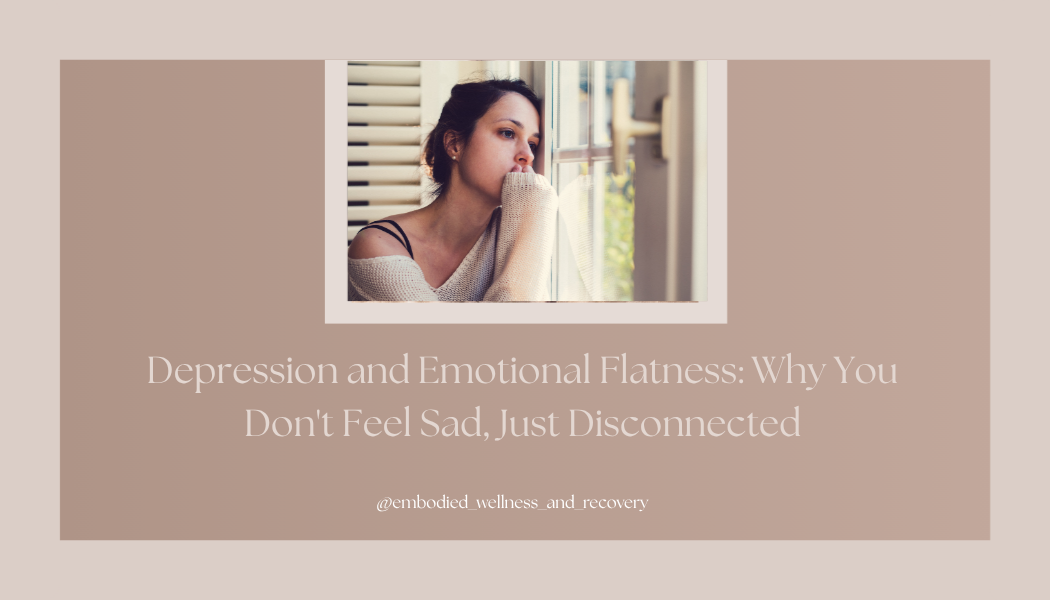
Depression and Emotional Flatness: Why You Don't Feel Sad, Just Disconnected
Depression and Emotional Flatness: Why You Don't Feel Sad, Just Disconnected
Do you feel emotionally numb, disconnected, or unable to experience joy, even if you don't feel sad? Learn the neuroscience behind emotional flatness, depression, anhedonia, trauma, and nervous system dysregulation, and discover pathways toward greater connection with yourself and others.
Have you ever looked at your life and thought:
"Nothing is terribly wrong, so why do I feel nothing?"
Perhaps you're functioning at work, caring for your family, and checking all the boxes of daily life. Yet something feels missing.
You don't feel deeply sad.
You don't necessarily cry.
You may not even identify with the word "depressed."
Instead, you feel emotionally flat.
Disconnected.
Numb.
Detached from yourself, your relationships, and the experiences that once brought meaning and joy. If this sounds familiar, you are experiencing something that many people struggle to recognize: depression does not always look like sadness. In many cases, depression feels like the absence of feeling altogether.
When Depression Doesn't Look Like Depression
Popular culture often portrays depression as overwhelming sadness, frequent crying, or visible despair. While those experiences certainly occur, many individuals experience depression differently.
They describe:
— Emotional numbness
— Feeling disconnected from loved ones
— Difficulty experiencing joy
— Loss of interest in hobbies
— Feeling emotionally "shut down"
— Reduced motivation
— Feeling empty or detached
— Going through the motions of life
Many people begin asking themselves:
— Why do I feel emotionally numb?
— Why don't I enjoy things anymore?
— Why do I feel disconnected from everyone?
— Why can't I access my emotions?
— Am I depressed if I don't feel sad?
These questions often point toward a phenomenon known as anhedonia, one of the hallmark symptoms of depression.
What Is Anhedonia?
Anhedonia refers to a diminished ability to experience pleasure, interest, motivation, or reward. Research suggests that anhedonia is a core feature of many depressive disorders and may involve disruptions in the brain's reward systems (Treadway & Zald, 2011).
In practical terms, anhedonia can feel like:
— Spending time with people you love but feeling emotionally absent
— Accomplishing goals without satisfaction
— Losing interest in activities that once mattered
— Feeling disconnected from your passions
— Experiencing life in grayscale rather than color
Many clients describe it as:
"I know I should care. I just can't feel it."
The Neuroscience of Emotional Flatness
Emotions are not simply psychological experiences. They are biological processes that involve complex communication among multiple brain regions.
Several neural systems play important roles in emotional engagement:
The Reward System
The brain's reward circuitry, including structures such as the nucleus accumbens and ventral striatum, helps generate feelings of pleasure, motivation, anticipation, and engagement. Research suggests that depression may alter activity within these networks, making rewarding experiences feel less rewarding than they once did (Russo & Nestler, 2013).
The Prefrontal Cortex
The prefrontal cortex helps regulate emotions, evaluate experiences, and direct attention. When depression is present, patterns of activity within this region can shift, affecting emotional processing and motivation.
The Nervous System
Many individuals experiencing emotional flatness are not simply dealing with depression. They may also be experiencing chronic nervous system dysregulation. When the nervous system remains overwhelmed for extended periods, emotional shutdown can emerge as a protective adaptation.
Emotional Flatness and Trauma
This is where many people become confused. Not all emotional numbness originates from depression alone. Trauma can produce remarkably similar experiences. When overwhelming stress exceeds the nervous system's capacity to cope, the body may move into protective states designed to reduce emotional pain.
From a survival perspective, emotional numbing can be adaptive. If emotional pain feels too intense, the nervous system may reduce access not only to painful emotions but also to positive emotions.
Unfortunately, this protective mechanism often creates an unintended consequence; when we disconnect from painful feelings, we frequently disconnect from joy, connection, curiosity, and pleasure as well.
Many trauma survivors report:
— Feeling emotionally detached
— Struggling with intimacy
— Difficulty accessing desire
— Feeling disconnected during relationships
— A sense of "living behind glass"
These experiences often reflect nervous system adaptations rather than personal weakness.
Why Relationships Feel Different
One of the most painful aspects of emotional flatness is its impact on relationships.
Many individuals describe feeling disconnected from:
— Friends
— Their children
— Themselves
You may love someone deeply yet struggle to feel emotionally present. You may know intellectually that you care while simultaneously feeling emotionally distant. This disconnect often creates guilt, confusion, and shame. The reality is that emotional availability depends heavily on nervous system capacity. When the brain is focused on survival, connection often becomes more difficult.
Emotional Flatness and Sexuality
Emotional numbness frequently affects sexual desire and intimacy as well.
Many individuals seek therapy because they notice:
— Difficulty experiencing pleasure
— Feeling disconnected during intimacy
— Lack of desire despite loving their partner
The nervous system plays a significant role in sexual functioning. When emotional shutdown is present, desire, arousal, and pleasure may become more difficult to access. This does not necessarily indicate a relationship problem. It may indicate a nervous system problem.
The Hidden Cost of Functioning While Disconnected
One reason emotional flatness often goes unnoticed is that many individuals continue functioning at a high level. They go to work. They care for their families. They meet responsibilities. They remain productive.
Yet internally, they feel disconnected from the very experiences they are working so hard to maintain. Because emotional numbness lacks the dramatic appearance of sadness, it is frequently overlooked by both individuals and their loved ones.
But functioning is not the same thing as thriving.
Why Emotional Flatness Persists
Many people attempt to solve emotional numbness through willpower.
They tell themselves:
"I should be grateful."
"I should feel happier."
"I need to try harder."
Unfortunately, emotional flatness is rarely resolved through self-criticism. The issue is not a lack of effort. The issue is often a nervous system and brain that have become stuck in protective patterns.
Research on neuroplasticity demonstrates that the brain remains capable of change throughout life. New emotional experiences, healthy relationships, therapeutic interventions, and nervous system regulation practices can gradually create new pathways for connection and engagement.
What Helps Restore Emotional Connection?
Recovery often involves addressing both the mind and the body.
Helpful approaches may include:
Nervous System Regulation
Practices that support regulation may include:
— Mindfulness
— Breathwork
— Somatic therapy
— Trauma-sensitive yoga
— Movement-based interventions
Trauma-Informed Therapy
For individuals with unresolved trauma, therapies such as:
— EMDR
— Trauma-informed psychotherapy
can help address the underlying drivers of emotional disconnection.
Rebuilding Reward Pathways
Engaging in meaningful experiences, relationships, creativity, movement, and purpose-driven activities can gradually support the brain's reward systems.
Connection Before Perfection
Many people wait until they "feel better" before reconnecting with others. Ironically, a healthy connection is often part of what helps emotional engagement return.
How Embodied Wellness and Recovery Can Help
At Embodied Wellness and Recovery, we understand that emotional flatness is often more complex than depression alone.
It may involve:
— Trauma
— Chronic stress
— Nervous system dysregulation
— Unresolved grief
— Burnout
Our neuroscience-informed approach integrates trauma therapy, somatic therapies, EMDR, attachment work, nervous system regulation, relationship therapy, and sex therapy to help clients reconnect with themselves and the people they care about most. The goal is not simply symptom reduction. The goal is to help individuals regain access to the emotional experiences that make life meaningful: connection, curiosity, pleasure, intimacy, purpose, and engagement.
Emotional flatness is not always the absence of feeling. Sometimes it is a signal that the mind and body have been working hard to protect you for a very long time. Understanding that distinction can become the beginning of a very different relationship with yourself.
Reach out to schedule a complimentary 20-minute consultation with our team of therapists, trauma specialists, somatic practitioners, or relationship experts, and start working towards integrative, embodied healing today.
📞 Call us at (310) 651-8458
📱 Text us at (310) 210-7934
📩 Email us at admin@embodiedwellnessandrecovery.com
🔗 Visit us at www.embodiedwellnessandrecovery.com
👉 Check us out on Instagram @embodied_wellness_and_recovery
🌍 Explore our offerings at Linktr.ee: https://linktr.ee/laurendummit
References
Russo, S. J., & Nestler, E. J. (2013). The brain reward circuitry in mood disorders. Nature Reviews Neuroscience, 14(9), 609-625.
Treadway, M. T., & Zald, D. H. (2011). Reconsidering anhedonia in depression: Lessons from translational neuroscience. Neuroscience & Biobehavioral Reviews, 35(3), 537-555.
American Psychiatric Association. (2022). Diagnostic and statistical manual of mental disorders (5th ed., text rev.; DSM-5-TR). American Psychiatric Publishing.
Porges, S. W. (2021). Polyvagal safety: Attachment, communication, self-regulation. W. W. Norton & Company.