
Why Is Nothing Ever Enough? The Psychology of Wanting More and How Gratitude, Acceptance, and Letting Go Create Lasting Fulfillment
Why Is Nothing Ever Enough? The Psychology of Wanting More and How Gratitude, Acceptance, and Letting Go Create Lasting Fulfillment
Why is nothing ever enough? Explore the psychology and neuroscience of wanting more, hedonic adaptation, scarcity, gratitude, acceptance, and letting go to create greater contentment and lasting fulfillment.
Have you ever reached a goal you were certain would make you happy, only to discover that the satisfaction faded surprisingly quickly?
You get the promotion, and soon begin thinking about the next one. You buy the house, then notice someone else's kitchen. You lose the weight, but the number you once dreamed of seeing no longer feels good enough. You find a loving relationship, yet your mind starts evaluating what might be missing.
Ambition, growth, and wanting more from life aren't inherently wrong. But when nothing ever feels like enough, striving can become exhausting. The question becomes, “Are you pursuing something because you genuinely want it, or because your brain has convinced you that you cannot feel fulfilled until you have it?” Understanding the psychology of wanting more may help explain why happiness can remain frustratingly out of reach, even when life is objectively going well.
Why Is Nothing Ever Enough? Understanding the Hedonic Treadmill
Psychologists use the term “hedonic adaptation,” sometimes called the “hedonic treadmill,” to describe our tendency to adapt to changes in our circumstances. Something wonderful happens and initially feels extraordinary. Over time, however, extraordinary becomes normal.
The new house becomes the house. The exciting relationship becomes your relationship. The promotion becomes your job. The body you worked so hard for becomes the body you scrutinize in the mirror. Research suggests that people often adapt to positive changes, while rising aspirations can gradually erode some of the happiness those changes initially provide (Lyubomirsky, 2012).
The brain is remarkably good at updating what it considers normal. This capacity helps us adapt and survive, but it can also create a moving target for happiness. Yesterday's dream can quietly become today's baseline.
When “More” Is Really an Attempt to Feel Safe
Sometimes wanting more has surprisingly little to do with the thing we are pursuing.
The deeper longing may be:
If I become successful enough, I'll finally feel worthy.
If I earn enough money, I'll finally feel safe.
If my body looks a certain way, I'll finally feel desirable.
If my partner loves me enough, I'll stop worrying about being abandoned.
If everyone approves of me, I can finally relax.
For people with histories of trauma, attachment wounds, chronic stress, rejection, betrayal, or unpredictable relationships, striving can become intertwined with nervous system protection.
A nervous system organized around threat may continually scan for what is missing, uncertain, or potentially dangerous. Achievement, control, perfectionism, money, attractiveness, relationships, or external validation can then become attempts to create an internal experience of safety.
But there is a problem. If the underlying question is “Am I safe, lovable, worthy, or secure yet?”, external accomplishments may provide reassurance without resolving the deeper fear. The nervous system eventually asks again.
The Neuroscience of Wanting More
The brain's reward systems are designed partly to motivate behavior. Dopamine plays an important role in learning, motivation, reward prediction, and pursuing potentially valuable experiences. This means our brains aren't designed simply to arrive at satisfaction and remain there indefinitely.
We anticipate. We pursue. We achieve. We adapt. Then something else captures our attention.
Modern life provides nearly endless opportunities for this cycle. Social media allows us to compare our bodies, careers, relationships, vacations, homes, parenting, and lifestyles with thousands of other people. Someone always seems to have more. Eventually, “What would I enjoy?” can quietly become “What am I missing?”
Gratitude Is Not Pretending Everything Is Wonderful
Gratitude is sometimes presented as though we should simply appreciate what we have and stop complaining. That misses its psychological value. Gratitude does not require denying pain, injustice, disappointment, grief, or unmet needs. It asks us to notice what is present alongside what is absent.
Research suggests the effects are real, though modest. A 2025 meta-analysis involving 145 papers, 163 samples, and 24,804 participants across 28 countries found that gratitude interventions produced small overall improvements in well-being (Choi et al., 2025). Earlier research examining randomized controlled trials similarly found improvements in happiness, life satisfaction, and positive affect associated with expressed gratitude practices (Kirca et al., 2023). Gratitude doesn't eliminate wanting, but it can help prevent wanting from eclipsing having.
Acceptance and Letting Go: What Can You Actually Control?
Another path toward greater fulfillment involves examining our relationship with control.
How much emotional energy do you spend wishing another person would behave differently?
How often do you replay something that has already happened?
Are you postponing peace until someone apologizes, changes, understands, chooses you, or finally gives you what you believe you need?
Acceptance is not approval. Letting go is not giving up. Acceptance means recognizing reality as it currently exists so that you can decide how you want to respond to it. There is tremendous psychological energy tied up in arguing internally with what has already happened or trying to control what belongs to someone else.
Sometimes peace begins with asking:
What is mine to change, and what is mine to release?
How to Practice “Enough” Without Giving Up Your Ambition
Contentment and ambition are not opposites. You can want a different career and appreciate today's life. You can work toward financial security without allowing money to determine your worth. You can desire deeper intimacy while appreciating the connection that already exists.
Try asking yourself three questions when you notice the familiar feeling of not enough:
What do I believe the next thing will make me feel?
If the answer is safe, worthy, lovable, important, attractive, successful, or enough, become curious about the deeper need.
What is already here that I have stopped noticing?
This interrupts hedonic adaptation by deliberately returning attention to what has become familiar.
What am I trying to control that isn't actually mine to control?
Sometimes fulfillment requires pursuing something new. Sometimes it requires finally releasing something we have been fighting to change.
Finding Fulfillment Through Nervous System Repair
At Embodied Wellness and Recovery, we understand that intellectual insight alone does not always change deeply established patterns.
Our work integrates neuroscience-informed, trauma-informed, top-down and bottom-up approaches to help people understand how trauma, attachment, nervous system dysregulation, relationships, sexuality, intimacy, shame, anxiety, and self-worth influence the ways they experience themselves and others.
The goal isn't to stop wanting things. It is to develop enough internal safety that your worth no longer depends upon acquiring the next thing. Perhaps “enough” isn't a destination you finally reach after accumulating enough success, love, money, beauty, certainty, or approval.
Perhaps enough is something you learn to recognize. You can continue growing while appreciating where you are. You can have dreams without making today's life a waiting room for tomorrow's happiness.
Enough is not the point at which you stop wanting, growing, or dreaming. It is the point at which you stop requiring the next thing to prove that the life you have now is worthy of being lived.
When you're ready to reconnect with a deeper sense of meaning, we're here to walk alongside you. Contact us today to schedule a free 20-minute consultation and begin your journey toward embodied connection, clarity, and confidence.
📞 Call us at (310) 651-8458
📱 Text us at (310) 210-7934
📩 Email us at admin@embodiedwellnessandrecovery.com
🔗 Visit us at www.embodiedwellnessandrecovery.com
👉 Check us out on Instagram @embodied_wellness_and_recovery
🌍 Explore our offerings at Linktree: https://linktr.ee/laurendummit
References
Choi, H., Cha, Y., McCullough, M. E., et al. (2025). A meta-analysis of the effectiveness of gratitude interventions on well-being across cultures. Proceedings of the National Academy of Sciences, 122(28), e2425193122. https://doi.org/10.1073/pnas.2425193122 DOI
Kirca, A., Malouff, J. M., & Meynadier, J. (2023). The effect of expressed gratitude interventions on psychological wellbeing: A meta-analysis of randomised controlled studies. International Journal of Applied Positive Psychology, 8, 63–86. https://doi.org/10.1007/s41042-023-00086-6 Springer
Lyubomirsky, S. (2012). Hedonic adaptation to positive and negative experiences. In S. David, I. Boniwell, & A. Conley Ayers (Eds.), The Oxford handbook of happiness. Oxford University Press. https://doi.org/10.1093/oxfordhb/9780195375343.013.0011 eScholarship
Souza, A. C. C., et al. (2023). The effects of gratitude interventions: A systematic review and meta-analysis. Einstein (São Paulo), 21, eRW0371. pmc.ncbi.nlm.nih.gov
When the Economy Feels Uncertain, Everything Can Feel Uncertain: How to Protect Your Mental Health During Economic Change
When the Economy Feels Uncertain, Everything Can Feel Uncertain: How to Protect Your Mental Health During Economic Change
Constant economic change can leave your nervous system feeling as uncertain as your finances. Learn how financial anxiety, job insecurity, inflation, and fear of the future affect mental health, relationships, and the brain, plus strategies for building resilience during uncertain times.
How do you create a sense of safety when the world keeps changing faster than you can adapt to it? Perhaps you have a job, money in the bank, and enough to pay your bills, yet you still don't feel financially safe. You watch prices rise. Companies announce layoffs. Artificial intelligence transforms entire industries. Housing costs fluctuate. Retirement projections change. Economic headlines warn of what might happen next. And somewhere along the way, staying informed turns into staying on alert.
If you find yourself constantly checking your finances, worrying about job security, second-guessing purchases, or trying to anticipate the next economic disruption, you are experiencing something increasingly common. In 2026, 71% of American adults reported feeling somewhat or very anxious about the economy, while 62% reported feeling somewhat or very anxious about paying bills and expenses (American Psychiatric Association, 2026).
. The challenge is that economic uncertainty doesn't remain confined to the economy. It enters the nervous system.
Why Financial Uncertainty Can Feel Like a Threat to Safety
Money represents much more than numbers in an account. It represents housing, healthcare, independence, retirement, opportunity, the ability to care for people you love, and the future you imagined for yourself. This is why financial stress can feel so personal.
A systematic review of 40 studies found substantial evidence of an association between financial stress and depression, particularly when financial circumstances involve debt or difficulty meeting basic needs (Guan et al., 2022). Another systematic review examining financial crises found evidence that periods of significant economic disruption can adversely affect population mental health and well-being (Talamonti et al., 2024).
So if economic change is affecting your mental health, the solution isn't simply to tell yourself to stop worrying. Your brain may be responding to something it interprets as a threat to future safety.
The Neuroscience of Economic Anxiety
The human brain is a prediction machine.
It continually asks:
What happens next?
Am I prepared?
Is there something I should be doing?
Uncertainty is especially relevant to anxiety. Neuroscience research describes anxiety as a future-oriented state involving anticipation of potential threats, with uncertainty influencing cognitive, emotional, and behavioral responses (Grupe & Nitschke, 2013). When uncertainty persists, your nervous system may attempt to create a sense of safety by gathering more information.
Check the retirement account.
Read another economic forecast.
Look at Zillow again.
Research interest rates.
Check job postings.
Recalculate the budget.
Each action may provide temporary relief.
But another headline inevitably arrives.
The problem is no longer simply “What is happening with the economy?”
It becomes:
“How much certainty do I need before I give myself permission to feel safe?”
Financial Responsibility and Financial Anxiety Can Look Surprisingly Similar
Both can involve budgeting, planning, saving, researching, and thinking about the future, but internally, they are very different.
Financial responsibility says:
“I have considered the information available, made a reasonable plan, and I will adjust if circumstances change.”
Financial anxiety says:
“Keep looking. Keep checking. There must be something else you can do to guarantee that nothing goes wrong.” That distinction matters.
Do I check my finances even when nothing has changed?
Does spending money on something enjoyable make me anxious or guilty?
Do economic headlines immediately make me wonder what I should do differently?
Am I postponing important experiences until I feel more financially secure?
Do I struggle to distinguish prudent preparation from catastrophizing?
And perhaps most importantly:
Am I gathering information because I need it, or because checking temporarily makes me feel safer?
Job Insecurity Can Affect Your Identity, Not Just Your Income
A job provides more than a paycheck. Work can provide structure, competence, identity, social connection, health insurance, purpose, and predictability. In the American Psychological Association's 2025 Work in America survey, 54% of workers reported that job insecurity significantly affected their stress, while 44% worried that an economic downturn could cause them to lose their job within the following year. Workers concerned about job loss were also more likely to report problems with sleep and relationships.
That helps explain why economic anxiety may begin showing up as insomnia, irritability, difficulty concentrating, relationship conflict, decreased sexual desire, emotional withdrawal, or chronic exhaustion. Financial stress rarely remains purely financial.
Trauma Can Make Economic Uncertainty Feel Even More Dangerous
Economic instability can be particularly activating for someone with a history of trauma, childhood scarcity, sudden job loss, divorce, financial betrayal, unpredictable caregiving, or other experiences involving instability. If unpredictability once preceded pain, your nervous system may have learned:
Anticipate everything.
Prepare for everything.
Never get too comfortable.
Those adaptations may once have protected you. But when vigilance continues long after the immediate threat has passed, the body can begin responding to possibility as though it were probability.
This is where nervous system regulation becomes important. Regulation isn't pretending financial concerns don't exist. It is increasing your capacity to respond to real problems without living physiologically inside every hypothetical one.
Stop Waiting for Everything to Feel Secure
Economic anxiety often makes a seductive promise:
I'll relax when I have more saved.
I'll take the vacation when the economy settles down.
I'll enjoy what I have once my job feels completely secure.
I'll stop worrying when I know what happens next.
But complete certainty never arrives. Protecting your mental health means learning to distinguish between what requires action and what requires tolerance.
Ask yourself:
“Is there something useful I can do about this today?”
If there is, do it.
Make the appointment. Adjust the budget. Speak with a financial professional. Update your résumé. Create an emergency fund. If there isn't, additional thinking may not increase safety. It may simply produce more anxiety.
Protecting Your Nervous System During Economic Change
Consider limiting how often you consume financial and economic news, rather than letting unpredictable headlines flood your nervous system throughout the day. Maintain the parts of life that communicate safety to the brain and body: sleep, movement, relationships, intimacy, time outdoors, community, creativity, pleasure, and rest. Resist putting your entire life on hold until circumstances become predictable.
At Embodied Wellness and Recovery, we understand anxiety through the interconnected lenses of trauma, nervous system repair, attachment, relationships, sexuality, intimacy, and neuroscience.
Therapy cannot guarantee what the economy will do next, but trauma-informed, somatic, and relational therapy can help you recognize when realistic concern has become hypervigilance, increase your tolerance for uncertainty, and develop greater confidence in your ability to respond to change.
The goal isn't convincing yourself:
“Nothing bad will happen.”
It is developing something far more resilient:
“I don't know exactly what will happen, but I trust my capacity to respond when it does.”
You cannot create psychological safety by successfully predicting every possible future. Sometimes safety comes from realizing you don't have to.
Reach out to schedule a complimentary 20-minute consultation with our team of therapists, trauma specialists, somatic practitioners, or relationship experts and start working towards integrative, embodied healing today.
📞 Call us at (310) 651-8458
📱 Text us at (310) 210-7934
📩 Email us at admin@embodiedwellnessandrecovery.com
🔗 Visit us at www.embodiedwellnessandrecovery.com
👉 Check us out on Instagram @embodied_wellness_and_recovery
🌍 Explore our offerings at Linktr.ee: https://linktr.ee/laurendummit
References
American Psychological Association. (2025). Majority of U.S. workers say job security has significant impact on their stress: Highlights from the 2025 Work in America survey.
American Psychiatric Association. (2026, May 12). Annual mental health poll finds Americans anxious about current events, personal finances, and emerging technology.
Grupe, D. W., & Nitschke, J. B. (2013). Uncertainty and anticipation in anxiety: An integrated neurobiological and psychological perspective. Nature Reviews Neuroscience, 14(7), 488–501.
Guan, N., Guariglia, A., Moore, P., Xu, F., & Al-Janabi, H. (2022). Financial stress and depression in adults: A systematic review. PLOS ONE, 17(2), e0264041.
Talamonti, D., Schneider, J., Gibson, B., & Forshaw, M. (2024). The impact of national and international financial crises on mental health and well-being: A systematic review. Journal of Mental Health, 33(4).
How to Be Happier: A Happiness Expert's Best Tips for Finding Joy, Awe, and Meaning Even During Difficult Times
How to Be Happier: A Happiness Expert's Best Tips for Finding Joy, Awe, and Meaning Even During Difficult Times
Looking for lasting happiness? Discover the neuroscience of happiness, the surprising power of awe, and practical ways to navigate suffering, increase emotional resilience, and cultivate greater meaning in everyday life.
Have you ever caught yourself wondering:
"Is this all there is?"
Maybe life feels repetitive. You move from one obligation to the next, checking items off your to-do list while feeling increasingly disconnected from yourself. Or perhaps you're carrying grief, betrayal, anxiety, depression, burnout, or trauma, making joy feel frustratingly out of reach. You may even feel guilty for wanting more. After all, your life might look good from the outside.
So why does it feel so flat on the inside? If you've searched "how to be happier," "how to find meaning in life," or "how to enjoy life again," you are asking questions that psychologists and neuroscientists have been exploring for decades.
Surprisingly, many happiness researchers agree on one important point: Happiness is not simply the absence of suffering. It is the presence of meaning, connection, curiosity, and the capacity to remain open to life's moments of beauty, even when life is difficult.
The Biggest Myth About Happiness
Many of us unconsciously believe:
"I'll finally be happy when..."
...I find the right relationship.
...I earn more money.
...My anxiety disappears.
...The children are older.
...I heal from trauma.
...Everything feels easier.
This belief places happiness perpetually in the future.
Research in positive psychology suggests that while external circumstances certainly matter, they explain far less of our long-term well-being than many people expect. Factors such as relationships, gratitude, purpose, psychological flexibility, and daily habits contribute significantly to subjective well-being (Lyubomirsky, Sheldon, & Schkade, 2005).
In other words: Happiness is often less about eliminating every hardship and more about how we experience our lives while living them.
The Neuroscience of Awe
One of the most fascinating discoveries in recent years is the growing body of research on awe. Awe is the emotional experience of encountering something vast, beautiful, meaningful, or unexpected that momentarily shifts your perspective beyond yourself.
Research by psychologist Dacher Keltner and colleagues suggests that experiences of awe are associated with:
— Greater life satisfaction
— Increased generosity
— Reduced stress
— Improved emotional well-being
— Stronger feelings of connection
— Lower self-focused rumination
From a neuroscience perspective, awe appears to quiet excessive self-referential thinking while expanding our awareness of the larger world around us.
Instead of asking:
"What's wrong with me?"
our attention shifts toward:
"Look at this incredible sunset."
"Listen to that music."
"I can't believe how beautiful these mountains are."
"Look at the way my child is laughing."
Even brief moments of awe can interrupt cycles of chronic worry.
Finding Awe Every Day
Many people assume awe requires extraordinary experiences, such as traveling to Iceland, standing at the Grand Canyon, seeing the Northern Lights, but research suggests awe can be cultivated through remarkably ordinary moments (Keltner, 2023).
You might find awe in:
— Watching sunlight move across your living room floor
— Listening to a symphony
— Walking beneath towering trees
— Observing ocean waves
— Looking through a telescope
— Watching your dog greet you with unrestrained joy
— Holding a newborn's hand
— Reading poetry that leaves you speechless
— Witnessing remarkable human kindness
The nervous system is continually scanning for danger. Practicing awe gently expands its capacity to notice beauty as well.
Happiness Is Not the Absence of Pain
One of the greatest misconceptions about emotional well-being is that emotionally healthy people do not suffer. They do. The difference is often found in how they relate to suffering. Psychological flexibility, a central concept within Acceptance and Commitment Therapy (ACT), refers to our ability to remain open to difficult internal experiences while continuing to move toward personally meaningful values (Hayes, Strosahl, & Wilson, 2012).
Instead of asking, "How do I stop feeling pain?", the question becomes, "How do I continue living meaningfully while pain is present?" That shift changes everything.
How to Navigate Suffering Without Becoming Consumed by It
Suffering deserves compassion. It deserves attention. It deserves support, but it does not always deserve exclusive control over your attention. One practice happiness researchers frequently emphasize is both/and thinking.
Both "I am grieving." and "I noticed the smell of fresh coffee this morning." Both "My relationship is struggling." and "My friend made me laugh." Both "I am carrying trauma." and "I felt peaceful watching birds outside my window." This is not toxic positivity. It is emotional integration. The brain becomes healthier when it develops the capacity to hold multiple truths simultaneously.
Relationships Matter More Than We Realize
One of the longest-running studies on happiness, the Harvard Study of Adult Development, has consistently found that the quality of our close relationships is one of the strongest predictors of long-term health and happiness (Fuchsman, 2023). Meaningful connection regulates the nervous system.
Feeling emotionally safe with another person reduces physiological stress and promotes resilience. This is one reason loneliness is associated with increased risk for depression, anxiety, cardiovascular disease, and even earlier mortality. Our nervous systems evolved in connection. We heal in connection, too.
Small Daily Practices That Increase Happiness
Lasting happiness rarely arrives through one dramatic event. Instead, it often grows from repeated moments of intentional living.
Consider incorporating:
— Noticing one moment of awe each day
— Expressing gratitude to someone directly
— Spending time outdoors
— Moving your body
— Limiting chronic comparison on social media
— Engaging in meaningful conversation
— Serving someone else
— Laughing often
— Protecting time for rest and play
Small practices, repeated consistently, reshape both habits and neural pathways.
What If Life Feels Meaningless Right Now?
Perhaps the most painful question is not, "Why am I unhappy?" It is: "Will I ever care about life the way I used to?" Periods of emotional numbness often accompany depression, trauma, chronic stress, burnout, grief, and prolonged adversity. During these seasons, pursuing happiness directly can feel impossible.
Instead, begin with curiosity. Can you notice one interesting thing today? One beautiful thing? One meaningful conversation? One tiny moment of wonder? Meaning often returns before happiness fully does, and meaning creates fertile ground from which happiness can gradually grow.
Happiness Is Something We Practice
At Embodied Wellness and Recovery, we understand that cultivating happiness is not about pretending life is easy. It is about helping the nervous system become flexible enough to experience the full range of human emotion without becoming trapped in fear, shame, trauma, or disconnection.
Our integrative approach combines neuroscience, somatic therapies, attachment theory, trauma treatment, relationship therapy, and evidence-based psychological interventions to help clients strengthen resilience, deepen connection, and rediscover meaning. Perhaps happiness is not a destination waiting somewhere in the future.
Perhaps it is built through thousands of ordinary moments, such as looking up at the sky, receiving a friend's smile, listening to music that stirs your soul, allowing yourself to laugh, or finding awe in something unexpectedly beautiful. Sometimes the most extraordinary transformation begins when we teach our brains to notice that beauty has been quietly present all along.
Reach out to schedule a complimentary 20-minute consultation with our team of therapists, trauma specialists, somatic practitioners, or relationship experts and start working towards integrative, embodied healing today.
📞 Call us at (310) 651-8458
📱 Text us at (310) 210-7934
📩 Email us at admin@embodiedwellnessandrecovery.com
🔗 Visit us at www.embodiedwellnessandrecovery.com
👉 Check us out on Instagram @embodied_wellness_and_recovery
🌍 Explore our offerings at Linktr.ee: https://linktr.ee/laurendummit
References
Fuchsman, K. E. N. (2023). Harvard Grant Study of Adult Development: 1938–2022. Journal of Psychohistory, 51(1), 27.
Hayes, S. C., Strosahl, K. D., & Wilson, K. G. (2012). Acceptance and Commitment Therapy: The process and practice of mindful change (2nd ed.). Guilford Press.
Keltner, D. (2023). Awe: The new science of everyday wonder and how it can transform your life. Penguin Press.
Lyubomirsky, S., Sheldon, K. M., & Schkade, D. (2005). Pursuing happiness: The architecture of sustainable change. Review of General Psychology, 9(2), 111-131.
Waldinger, R. J., & Schulz, M. S. (2023). The Good Life: Lessons from the world's longest scientific study of happiness. Simon & Schuster.
Natural Mood Boosters: 8 Simple Ways to Feel Better Naturally
Natural Mood Boosters: 8 Simple Ways to Feel Better Naturally
Looking for natural ways to improve your mood? Discover 8 science-backed mood boosters that support anxiety, depression, stress reduction, and nervous system regulation. Learn how small daily habits can improve emotional well-being, energy, and resilience through neuroscience-informed strategies.
Have you been feeling emotionally flat, exhausted, or unlike yourself lately?
Do you wake up already feeling overwhelmed by the day ahead?
Have you noticed that even the things you used to enjoy no longer bring the same sense of satisfaction?
Maybe your anxiety has been running in the background for so long that you've forgotten what calm feels like. Perhaps you've been carrying chronic stress, struggling with low energy, feeling disconnected from your partner, or wondering why your motivation has disappeared.
If you've asked yourself, "Why can't I just snap out of this?" or "Why do I feel so emotionally drained?" you're asking questions many people quietly carry every day.
The encouraging news is that your emotional well-being is influenced by far more than willpower. Modern neuroscience shows that your brain and nervous system are constantly adapting to your experiences, habits, relationships, sleep, movement, and environment. While anxiety and depression often require professional treatment, small daily choices can meaningfully support mood, resilience, and emotional regulation.
At Embodied Wellness and Recovery, we believe lasting emotional wellness happens when we care for both the brain and the body. Here are eight research-supported ways to naturally support your mood and help your nervous system move toward greater balance.
1. Move Your Body Even When You Don't Feel Like It
One of the most effective natural mood boosters is also one of the most overlooked.
Regular physical activity increases endorphins, supports dopamine production, enhances serotonin signaling, and stimulates brain-derived neurotrophic factor (BDNF), a protein that helps create new neural connections.
You do not need to complete an intense workout to benefit.
A brisk 20-minute walk.
Strength training.
Dancing in your kitchen.
Every movement sends your brain the message that your body is capable, adaptable, and alive. Research has consistently shown that exercise can significantly reduce symptoms of anxiety and depression while improving overall psychological well-being (Fox, 1999).
2. Regulate Your Nervous System Before Trying to Change Your Thoughts
When anxiety or depression take hold, many people believe they simply need to "think more positively." But your nervous system often needs support before your thoughts can shift.
Practices such as diaphragmatic breathing, mindfulness meditation, grounding exercises, humming, gentle stretching, and somatic awareness help calm the autonomic nervous system and increase activity in the parasympathetic branch, which is responsible for rest and restoration. When your body feels safer, your brain becomes more capable of flexible thinking, problem solving, and emotional regulation.
3. Spend Time Outside
Nature changes the brain in measurable ways. Studies have found that spending time in green spaces lowers cortisol, reduces activity in brain regions associated with rumination, improves attention, and enhances mood (Jacob et al., 2025). Even fifteen to twenty minutes outdoors can make a difference.
Try:
— Walking through a local park.
— Sitting beneath a tree during lunch.
— Gardening.
— Watching the sunrise or sunset.
— Taking your dog for an unhurried walk.
Your nervous system evolved in nature, not in constant digital stimulation.
4. Prioritize Restorative Sleep
Sleep and emotional health have a bidirectional relationship. Poor sleep increases emotional reactivity, reduces frustration tolerance, and heightens anxiety, while depression frequently disrupts normal sleep architecture. Improving sleep hygiene supports healthier emotional regulation by allowing the brain to consolidate memories, regulate stress hormones, and restore cognitive functioning.
Helpful strategies include:
— Going to bed at the same time each night.
— Limiting screens before bedtime.
— Reducing caffeine later in the day.
— Keeping your bedroom cool and dark.
— Developing a calming evening routine.
Better sleep often creates better emotional resilience.
5. Nourish Your Brain Along With Your Body
Food affects far more than physical health. The gut and brain communicate constantly through what scientists call the gut-brain axis. Nutrients influence neurotransmitter production, inflammation, and overall brain functioning.
While no single food cures depression, diets rich in vegetables, fruit, omega-3 fatty acids, legumes, whole grains, nuts, seeds, and lean proteins have been associated with lower rates of depression and improved mental health.
Rather than focusing on restriction, ask yourself:
"What small choice today could nourish both my brain and my body?"
6. Seek Safe Human Connection
One of the most powerful regulators of the nervous system is another regulated human being. Meaningful relationships help lower stress hormones, increase oxytocin, and improve emotional resilience. Unfortunately, anxiety and depression often convince us to withdraw precisely when connection is most needed.
Could you:
— Call a trusted friend?
— Schedule coffee with someone who feels emotionally safe?
— Attend a support group?
— Share honestly with your partner?
Healing relationships are not simply emotionally comforting. They are biologically regulating. At Embodied Wellness and Recovery, we recognize that relationships are often both the source of emotional wounds and one of the most powerful avenues for repair.
7. Practice Self-Compassion Instead of Self-Criticism
If your inner dialogue sounds harsher than anything you would ever say to someone you love, your nervous system remains under constant stress. Research by Dr. Kristin Neff has shown that self-compassion is associated with lower anxiety, reduced depression, greater resilience, and healthier emotional regulation.
Instead of asking:
"What's wrong with me?"
Try asking:
"What would I say to someone I deeply cared about who was struggling this way?"
The brain responds differently to compassion than criticism. Over time, practicing kindness toward yourself literally helps reshape neural pathways associated with emotional regulation.
8. Know When to Seek Professional Support
Natural mood boosters are valuable tools, but they are not a substitute for comprehensive mental health treatment when symptoms become persistent or severe. If sadness, anxiety, hopelessness, relationship difficulties, trauma symptoms, panic attacks, or emotional numbness are interfering with your daily life, working with a qualified mental health professional can provide the support your brain and nervous system need.
At Embodied Wellness and Recovery, we integrate neuroscience-informed psychotherapy with EMDR, somatic therapies, attachment-focused treatment, and evidence-based approaches to help clients address not only symptoms, but also the underlying experiences shaping them.
Whether someone is struggling with trauma, anxiety, depression, relationship challenges, intimacy concerns, or nervous system dysregulation, treatment is tailored to the whole person rather than a diagnosis alone.
Small Changes Create Meaningful Change
One of the greatest misconceptions about emotional wellness is that transformation requires dramatic change. In reality, the brain changes through repetition.
One walk.
One nourishing meal.
One good night's sleep.
One compassionate conversation.
One moment of slowing down to notice your breath.
These seemingly ordinary moments become extraordinary because they repeatedly teach your brain and nervous system that safety, regulation, and well-being are possible.
You do not have to change everything at once. You simply need to give your brain enough positive experiences that it begins expecting them. That is how resilience grows. That is how emotional health becomes more sustainable, and that is how small daily choices can gradually reshape the way you feel, think, connect, and live.
Reach out to schedule a complimentary 20-minute consultation with our team of therapists, trauma specialists, somatic practitioners, or relationship experts and start working towards integrative, embodied healing today.
📞 Call us at (310) 651-8458
📱 Text us at (310) 210-7934
📩 Email us at admin@embodiedwellnessandrecovery.com
🔗 Visit us at www.embodiedwellnessandrecovery.com
👉 Check us out on Instagram @embodied_wellness_and_recovery
🌍 Explore our offerings at Linktr.ee: https://linktr.ee/laurendummit
References
Fox, K. R. (1999). The influence of physical activity on mental well-being. Public Health Nutrition, 2(3a), 411-418.
Jacka, F. N., O'Neil, A., Opie, R., Itsiopoulos, C., Cotton, S., Mohebbi, M., Castle, D., Dash, S., Mihalopoulos, C., Chatterton, M. L., Brazionis, L., Dean, O. M., Hodge, A. M., & Berk, M. (2017). A randomized controlled trial of dietary improvement for adults with major depression (the SMILES trial). BMC Medicine, 15(23).
Jacob, D. E., Ekpe, E. E., Jacob, I. D., Daniel, K. S., & Daniel, E. K. (2025). Neurobiological and clinical benefits of nature exposure: Integrating active and passive restorative mechanisms. Advances in Medicine and Health Sciences Journal, 2, 005. Accepted: date: Accepted, 2
Neff, K. D. (2023). Self-compassion: The proven power of being kind to yourself (Updated ed.). William Morrow.
Porges, S. W. (2011). The polyvagal theory: Neurophysiological foundations of emotions, attachment, communication, and self-regulation. W. W. Norton & Company.
Schuch, F. B., Vancampfort, D., Richards, J., Rosenbaum, S., Ward, P. B., & Stubbs, B. (2016). Exercise as a treatment for depression: A meta-analysis adjusting for publication bias. Journal of Psychiatric Research, 77, 42-51.
Twohig Bennett, C., & Jones, A. (2018). The health benefits of the great outdoors: A systematic review and meta-analysis of greenspace exposure and health outcomes. Environmental Research, 166, 628-637.
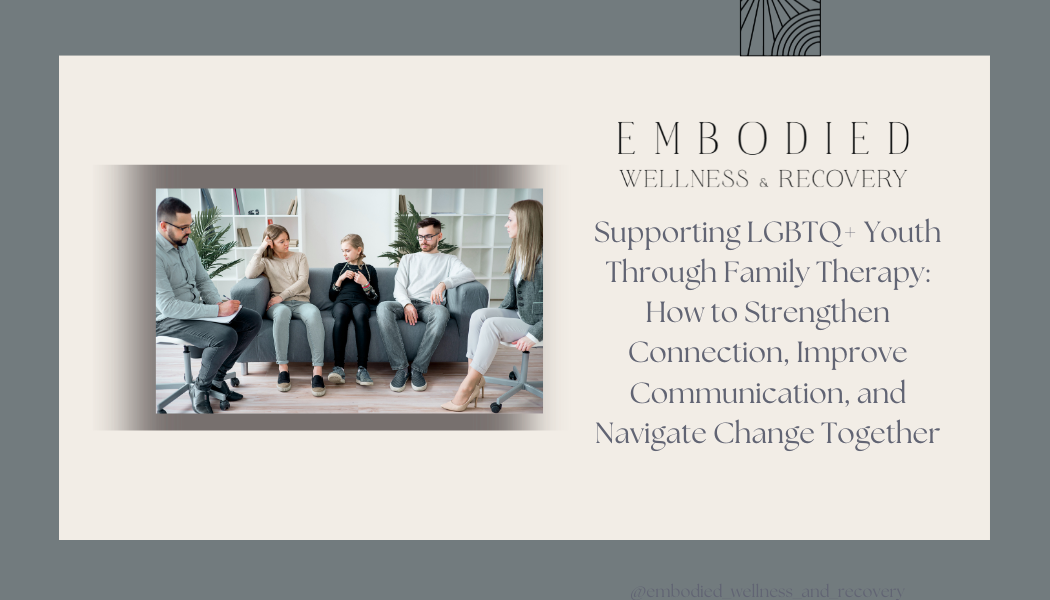
Supporting LGBTQ+ Youth Through Family Therapy: How to Strengthen Connection, Improve Communication, and Navigate Change Together
Supporting LGBTQ+ Youth Through Family Therapy: How to Strengthen Connection, Improve Communication, and Navigate Change Together
Supporting an LGBTQ+ child can bring questions, uncertainty, and emotional challenges for the entire family. Discover how family therapy, attachment science, and neuroscience can strengthen communication, rebuild trust, and preserve connection during times of change.
Learning that your child identifies as LGBTQ+ can bring a wide range of emotions. For many families, the first response is love. Soon after, however, other feelings may begin to surface.
Fear.
Confusion.
Grief over expectations that may be changing.
Worry about your child's future.
Uncertainty about what to say.
Concern that every conversation might make things worse.
Perhaps you have found yourself asking:
— How do I support my child without saying the wrong thing?
— Why do our conversations end in conflict?
— How do I stay connected when we seem to be growing apart?
— What if I accidentally push my child away?
— How can our family move through this together?
These questions are more common than many families realize. While much of the public conversation centers on identity, one of the most significant challenges families face is preserving emotional connection as they navigate change. Family therapy can provide a safe space to strengthen communication, rebuild trust, and help every family member feel heard without losing sight of what matters most: your relationship.
The Challenge Is Often About Connection, Not Love
Many parents deeply love their child while simultaneously feeling overwhelmed by unfamiliar emotions and questions. Likewise, many LGBTQ+ youth long for acceptance while fearing misunderstanding, disappointment, or rejection.
The result can be a painful cycle:
Parents become anxious. Children become guarded. Communication deteriorates. Both sides begin to protect themselves rather than connect with one another. The problem is rarely a lack of love. More often, it is a lack of emotional safety during difficult conversations.
Why Conversations Become So Difficult
From a neuroscience perspective, emotionally charged conversations activate the brain's threat detection system. When people perceive criticism, rejection, shame, or emotional danger, the amygdala becomes more active while the parts of the brain responsible for curiosity, empathy, flexible thinking, and problem-solving become less accessible (Siegel, 2020).
This happens to parents. It happens to children. Suddenly, everyone is reacting rather than listening. One person may withdraw. Another may become defensive. Someone else may attempt to fix, persuade, or avoid the conversation altogether.
Without realizing it, every member of the family is trying to protect themselves. Understanding this changes how we view conflict.
Rather than asking, "Who's right?"
We begin asking:
"What does each person's nervous system need in order to feel safe enough to connect?"
Family Therapy Helps Restore Emotional Safety
Family therapy is not about deciding who is correct. It is about strengthening the relationships that allow difficult conversations to occur with greater understanding and compassion.
Research consistently demonstrates that family acceptance is associated with better mental health outcomes, lower rates of depression, reduced suicide risk, and greater overall well-being among LGBTQ+ youth (Ryan et al., 2010).
Family therapy creates opportunities to:
— Improve communication
— Increase emotional safety
— Repair misunderstandings
— Strengthen attachment
— Reduce conflict
— Foster empathy
— Develop healthier patterns of interaction
The goal is not perfection. The goal is connection.
Understanding Attachment During Times of Change
Attachment theory reminds us that secure relationships are built when people consistently experience safety, responsiveness, and emotional availability. Periods of transition naturally place strain on attachment systems.
Parents may fear:
"Will my child still trust me?"
Children may fear:
"Will my family still accept me?"
These fears often remain unspoken. Instead, they appear as arguments, withdrawal, silence, or emotional distance. Family therapy helps bring these deeper concerns into the open where they can be explored with compassion rather than criticism.
Common Family Experiences
Many families entering therapy describe situations such as:
"We used to talk about everything."
"Now every conversation feels tense."
"I'm afraid of saying the wrong thing."
"My child doesn't tell me anything anymore."
"We're walking on eggshells."
"My spouse and I disagree about how to respond."
These experiences are understandable. They also represent opportunities for growth.
What Neuroscience Teaches About Emotional Safety
The nervous system constantly asks one question:
Am I safe?
When family members experience emotional safety, the brain becomes more capable of:
— Listening
— Reflecting
— Regulating emotions
— Showing empathy
— Solving problems
— Remaining curious
When emotional safety decreases, the nervous system shifts toward self-protection.
People become more likely to:
— Defend
— Criticize
— Withdraw
— Shut down
— Escalate conflict
Family therapy helps slow these interactions long enough for new patterns to develop.
Practical Ways Families Can Strengthen Connection
1. Lead With Curiosity
Replace assumptions with questions.
Instead of:
"Why would you do this?"
Try:
"Help me understand what this experience has been like for you."
Curiosity communicates respect.
2. Listen Before Solving
Many parents immediately search for solutions.
Children often need understanding first.
Feeling heard reduces defensiveness and creates space for meaningful dialogue.
3. Separate Intent From Impact
Families sometimes become stuck because everyone focuses on intentions.
Parents may say:
"I didn't mean to hurt you."
Children may respond:
"But it still hurt."
Both statements can be true. Repair begins when we acknowledge impact without assuming harmful intent.
4. Allow Room for Growth
Parents are learning. Children are learning. Families are learning together. Mistakes will happen. Repair matters more than perfection.
5. Protect the Relationship
Even during disagreement, remind one another:
"We're on the same team."
Shared humanity strengthens attachment.
When Trauma Is Part of the Story
For some families, conversations about identity occur alongside previous experiences of trauma, family conflict, rejection, or emotional wounds. These experiences can heighten sensitivity to misunderstanding and make conversations feel especially intense. Trauma-informed family therapy recognizes that current interactions are often influenced by past experiences. Rather than viewing emotional reactions as character flaws, therapy helps families understand them as nervous system responses that can become more flexible through safety, connection, and repair.
Family Therapy Is About More Than Identity
Although families may initially seek therapy because of LGBTQ+ concerns, many discover that therapy strengthens areas far beyond those conversations.
They develop:
— Better communication
— Greater empathy
— Stronger boundaries
— Healthier conflict resolution
— Increased emotional regulation
— More secure attachment
— Deepertrust
These skills benefit every relationship within the family.
How Embodied Wellness and Recovery Can Help
At Embodied Wellness and Recovery, we believe meaningful healing occurs within the context of safe relationships. Our clinicians specialize in trauma-informed, neuroscience-based care that integrates attachment theory, nervous system regulation, family systems, and evidence-based therapeutic approaches. Whether your family is navigating communication challenges, anxiety, trauma, parenting concerns, or supporting an LGBTQ+ loved one, we create a compassionate environment where every family member has the opportunity to feel seen, heard, and respected.
Our goal is not simply to reduce conflict. It is to help families cultivate deeper trust, stronger emotional bonds, and healthier patterns of connection that endure long after therapy ends.
Creating Safe, Supportive Relationships
Families do not grow stronger because they avoid difficult conversations. They grow stronger because they learn how to have them with honesty, curiosity, compassion, and respect. Supporting an LGBTQ+ child is not about having every answer. It is about creating a relationship where questions can be asked, emotions can be expressed, mistakes can be repaired, and love remains present through every season of change. The most enduring message a family can communicate is this: "Our relationship is strong enough to grow alongside us."
Reach out to schedule a complimentary 20-minute consultation with our team of therapists, trauma specialists, somatic practitioners, or relationship experts and start working towards integrative, embodied healing today.
📞 Call us at (310) 651-8458
📱 Text us at (310) 210-7934
📩 Email us at admin@embodiedwellnessandrecovery.com
🔗 Visit us at www.embodiedwellnessandrecovery.com
👉 Check us out on Instagram @embodied_wellness_and_recovery
🌍 Explore our offerings at Linktr.ee: https://linktr.ee/laurendummit
References
American Psychological Association. (2024). Guidelines for psychological practice with sexual minority persons and gender diverse people.
Diamond, G. M., Diamond, G. S., & Levy, S. (2014). Attachment-based family therapy for depressed adolescents. American Psychological Association.
Porges, S. W. (2021). Polyvagal safety: Attachment, communication, self-regulation. W. W. Norton & Company.
Ryan, C., Russell, S. T., Huebner, D., Diaz, R., & Sanchez, J. (2010). Family acceptance in adolescence and the health of LGBTQ young adults. Journal of Child and Adolescent Psychiatric Nursing, 23(4), 205-213.
Siegel, D. J. (2020). The developing mind: How relationships and the brain interact to shape who we are (3rd ed.). Guilford Press.
Summer Burnout Is Real: The Neuroscience Behind Social Overload, Anxiety, and Why Too Much Fun Can Leave You Emotionally Exhausted
Summer Burnout Is Real: The Neuroscience Behind Social Overload, Anxiety, and Why Too Much Fun Can Leave You Emotionally Exhausted
Feeling exhausted by summer parties, vacations, weddings, and endless social plans? Discover the neuroscience behind summer social burnout, why your nervous system feels overwhelmed, and how to protect your mental health while staying connected.
Summer is often portrayed as the happiest season of the year.
Long evenings.
Family vacations.
Barbecues.
Pool parties.
Weekend trips.
Neighborhood gatherings.
Children's activities.
Weddings.
Reunions.
Celebrations.
From the outside, it can seem like everyone else is enjoying every moment, yet many people quietly experience something very different.
Exhaustion.
Overwhelm.
Guilt.
A growing desire to cancel plans and simply stay home.
Have you ever found yourself wondering:
Why do I feel stressed when I'm supposed to be having fun?
Why does my social battery seem completely drained?
Why do I secretly hope plans get canceled?
Why do I feel guilty saying no to invitations?
Why do I need so much time alone after spending time with people I genuinely love?
If these questions resonate, you are experiencing something many people rarely talk about: summer social burnout. The problem isn't that you dislike people. The problem may be that your nervous system has reached its capacity.
Why Summer Can Feel Emotionally Exhausting
Unlike the structured routines of much of the year, summer often brings an explosion of social obligations.
Birthday parties.
Graduation celebrations.
Holiday weekends.
Travel.
Hosting guests.
Neighborhood events.
Family reunions.
Children home from school.
The calendar fills quickly, often leaving very little time for rest or recovery. Although these experiences can be meaningful, they also require energy.
Every conversation.
Every decision.
Every crowded gathering.
Every change in routine asks something of your brain.
Without enough recovery time, emotional fatigue begins to accumulate.
Your Brain Was Never Designed for Constant Social Stimulation
From a neuroscience perspective, every social interaction requires significant cognitive and emotional resources. Your brain is continuously interpreting facial expressions, tone of voice, body language, social expectations, and emotional cues. At the same time, it is regulating your own emotions, monitoring conversations, making decisions, and adapting to constantly changing environments.
Large gatherings, travel, noise, disrupted sleep, and unpredictable schedules further increase the brain's workload. Eventually, your nervous system begins signaling that it needs rest. Unfortunately, many people interpret these signals as laziness, selfishness, or social failure. In reality, they are often signs of nervous system fatigue.
When Your Nervous System Never Gets a Chance to Recover
Stress itself is not necessarily harmful. The nervous system is designed to move into activation when life requires extra energy. The challenge arises when activation never has a chance to settle.
Imagine spending every weekend at social events.
Every evening meeting friends.
Every holiday traveling.
Every free afternoon running errands or attending children's activities. Even enjoyable experiences can become physiologically demanding when they occur without adequate restoration. Research suggests that chronic stress and insufficient recovery contribute to emotional exhaustion, reduced concentration, irritability, sleep disruption, and burnout (Khammissa et al., 2022). Sometimes the problem isn't doing difficult things. It's doing too many things without enough space in between.
Why Saying "No" Feels So Difficult
Many people recognize they are overwhelmed. Yet they continue saying yes.
Why?
For some, declining an invitation creates anxiety. They worry about disappointing others, being perceived as selfish, missing out, damaging relationships. appearing antisocial. For individuals with histories of trauma, people pleasing, or insecure attachment, saying no may activate fears of rejection, abandonment, or conflict.
The nervous system quietly concludes:
"If I disappoint someone, the relationship may no longer feel safe."
As a result, people continue accepting invitations despite feeling emotionally depleted. Over time, resentment often replaces enjoyment.
Summer Burnout Can Affect Relationships
Ironically, excessive socializing can begin reducing the very connection we hope to create. When the nervous system becomes overwhelmed, we often become:
Less patient.
More irritable.
Emotionally unavailable.
Easily overstimulated.
Less interested in physical intimacy.
More likely to withdraw.
Partners may mistakenly assume these changes reflect problems within the relationship. Often they reflect a nervous system that simply needs recovery. Emotional connection thrives when both individuals have enough internal resources to be fully present.
Social Exhaustion Does Not Mean You're an Introvert
Social burnout affects both introverts and extroverts. The difference often lies in how each person restores energy. Some recover through quiet solitude. Others do so through exercise, time outdoors. reading, creative hobbies, mindfulness, or meaningful one-on-one conversations. The goal is not to eliminate social connection; it’s to balance connection with restoration. Your nervous system needs both.
What Neuroscience Suggests Helps
Protecting your mental health during busy seasons does not require withdrawing from life. It requires becoming more intentional.
Ask yourself:
"Do I actually want to attend this event?"
"Am I saying yes because I feel obligated?"
"Have I scheduled any recovery time this week?"
"What helps my nervous system feel calm?"
Small changes can make a remarkable difference. Consider scheduling quiet mornings after busy evenings or leaving some weekends completely unscheduled. Take walks without your phone. Spend time in nature. Practice slow breathing. Allow yourself permission to decline invitations that exceed your emotional capacity. Boundaries are not barriers to connection. They are often what make genuine connection sustainable.
Therapy Can Help You Understand Why Rest Feels So Hard
For many individuals, burnout is not simply about having too many commitments. It reflects deeper patterns.
Perfectionism.
Fear of disappointing others.
Difficulty identifying personal needs.
Chronic hypervigilance.
Therapy provides an opportunity to understand how these patterns developed and to help the nervous system discover healthier ways of responding.
At Embodied Wellness and Recovery, we integrate neuroscience, trauma-informed care, attachment theory, and nervous system regulation to help individuals create lives that include both meaningful relationships and meaningful rest. When people begin to understand the biology behind burnout, they often replace self-criticism with curiosity. That shift creates space for healthier boundaries, greater emotional resilience, and deeper connection with themselves and the people they love.
Final Thoughts
Summer offers beautiful opportunities for connection, celebration, and joy. It also asks a great deal of our brains and nervous systems. Feeling emotionally exhausted does not necessarily mean you're doing something wrong. It may simply mean your nervous system is asking for the same care and attention you so generously offer everyone else.
Sometimes the healthiest decision is not accepting one more invitation. Sometimes it is creating enough space for your mind, body, and relationships to recover. Ironically, those moments of rest often make it possible to enjoy the next gathering with greater presence, energy, and genuine connection.
At Embodied Wellness and Recovery, we believe wellness is not measured by how full your calendar becomes. It is reflected in your ability to remain emotionally present, physically regulated, and authentically connected to yourself and the people who matter most.
Recovery Is Not a Luxury. It Is a Biological Need
Many people believe they simply need to become "better" at managing a busy social calendar. In reality, your brain and nervous system were never designed for constant stimulation without periods of recovery. Just as your muscles need rest after exercise, your nervous system needs opportunities to downshift after sustained activation.
Recovery is where the brain processes experiences, regulates emotions, restores attention, and recalibrates the stress response. Without it, emotional fatigue accumulates, making even enjoyable activities begin to feel draining. Ironically, protecting your energy often allows you to become more present for the people and experiences you value most.
The Difference Between Solitude and Isolation
When people begin feeling socially burned out, they sometimes worry that wanting time alone means something is wrong. It does not. There is an important difference between healthy solitude and emotional isolation. Healthy solitude restores your nervous system. Isolation disconnects you from meaningful relationships.
Restorative solitude may include:
— Reading a book.
— Walking in nature.
— Practicing yoga or mindfulness.
— Gardening.
— Listening to music.
— Spending quiet time with your pet.
— Journaling.
— Sitting outside without an agenda.
These moments allow the brain to shift away from constant social processing and return to a more regulated state.
Protect Your "Social Battery"
Think of your emotional energy as a rechargeable battery. Every interaction requires some amount of energy. Large parties may require more. Travel may require even more. Hosting guests may require the most. If you continue giving without intentionally recharging, your battery eventually reaches empty.
Instead of waiting until you feel completely exhausted, ask yourself throughout the week:
How full is my social battery today?
What would help me recharge before my next commitment?
Checking in with yourself before automatically saying yes can prevent burnout before it begins.
Boundaries Protect Relationships
Many people fear that setting boundaries will disappoint others. In reality, healthy boundaries often strengthen relationships because they allow us to show up with greater patience, authenticity, and presence.
Consider replacing:
"I have to go."
With:
"I'd love to join you for a couple of hours."
Or:
"Thank you for thinking of me. I'm going to stay home and recharge tonight."
Boundaries communicated with warmth and honesty often deepen trust rather than diminish it. They teach others what helps you remain emotionally healthy.
Reducing the Pressure to Do It All
Social media often creates the illusion that everyone else is saying yes to every opportunity.
The vacations.
The concerts.
The festivals.
The weekend trips.
The neighborhood gatherings.
What we rarely see are the moments afterward.
The exhaustion.
The overstimulation.
The need for recovery.
Remember that your life does not have to resemble someone else's highlight reel. Choosing fewer experiences that you genuinely enjoy is often far more nourishing than trying to attend everything.
Small Daily Practices That Calm the Nervous System
The nervous system responds best to consistency rather than intensity. Simple daily practices can make a meaningful difference.
Try incorporating:
— Five minutes of slow diaphragmatic breathing.
— Morning sunlight exposure.
— Gentle movement or stretching.
— Walking outdoors.
— Consistent sleep routines.
— Limiting digital stimulation before bed.
— Brief moments of intentional stillness throughout the day.
These practices help shift the nervous system out of chronic activation and create greater resilience during busy seasons.
When Burnout Reflects Something Deeper
Sometimes social exhaustion is not solely about an overbooked calendar. It may reflect longstanding patterns that deserve compassionate attention. Perhaps you've spent years believing your worth depends on being available to everyone. Perhaps you've learned to prioritize other people's comfort over your own needs. Perhaps slowing down feels unfamiliar because your nervous system has become accustomed to constant activity. Perhaps rest feels uncomfortable because silence leaves space for emotions you've been avoiding.
Therapy offers an opportunity to gently explore these patterns while developing healthier ways of caring for yourself. Understanding why boundaries feel difficult often makes them easier to practice.
How Therapy Can Help
At Embodied Wellness and Recovery, we recognize that burnout is rarely just about time management. It is often about the relationship between the brain, the nervous system, trauma history, attachment experiences, and emotional safety.
Our approach integrates neuroscience, trauma-informed therapy, attachment theory, and nervous system regulation to help individuals:
— Recognize the early signs of burnout.
— Understand their unique stress responses.
— Reduce people-pleasing and perfectionistic patterns.
— Develop healthier boundaries.
— Strengthen emotional regulation.
— Improve communication in relationships.
— Create sustainable rhythms of connection and restoration.
Rather than simply helping people become more productive, we help them build lives that support emotional well-being, meaningful relationships, and lasting resilience.
Investing in Yourself
Summer offers countless opportunities to celebrate, reconnect, and create lasting memories. It can also become one of the busiest and most emotionally demanding seasons of the year. If your calendar feels full but your emotional reserves feel empty, your nervous system may be asking for something profoundly important.
Rest.
Recovery.
Space to breathe.
Choosing to slow down is not selfish.
It is an investment in your mental health, your relationships, and your ability to remain fully present for the experiences that matter most. When your nervous system feels supported, connection becomes less exhausting and more fulfilling. The goal of summer is not to attend every gathering; it’s to create a life that allows you to enjoy the moments you choose with genuine presence, energy, and joy.
Reach out to schedule a complimentary 20-minute consultation with our team of therapists, trauma specialists, somatic practitioners, or relationship experts and start working towards integrative, embodied healing today.
📞 Call us at (310) 651-8458
📱 Text us at (310) 210-7934
📩 Email us at admin@embodiedwellnessandrecovery.com
🔗 Visit us at www.embodiedwellnessandrecovery.com
👉 Check us out on Instagram @embodied_wellness_and_recovery
🌍 Explore our offerings at Linktr.ee: https://linktr.ee/laurendummit
References
American Psychological Association. (2023). Stress in America™ 2023: A nation recovering from collective trauma.
Maslach, C., & Leiter, M. P. (2000). The truth about burnout: How organizations cause personal stress and what to do about it. John Wiley & Sons.
Porges, S. W. (2022). Polyvagal theory: A science of safety. Frontiers in Integrative Neuroscience, 16, 871227.
Siegel, D. J. (2020). The developing mind: How relationships and the brain interact to shape who we are (3rd ed.). Guilford Press.
van der Kolk, B. A. (2014). The body keeps the score: Brain, mind, and body in the healing of trauma. Viking.
World Health Organization. (2019). Burn-out an "occupational phenomenon": International Classification of Diseases.
AI Anxiety Is Real: How Automation-Driven Job Uncertainty Is Affecting Workplace Anxiety, Burnout, and Mental Health
AI Anxiety Is Real: How Automation-Driven Job Uncertainty Is Affecting Workplace Anxiety, Burnout, and Mental Health
Is artificial intelligence making you anxious about your career? Discover how automation-driven job uncertainty affects the brain, workplace anxiety, burnout, and mental health, and learn neuroscience-informed strategies for building resilience in a rapidly changing world.
What if the biggest source of stress at work isn't your workload?
What if it's the growing fear that your job may not exist in the same way a few years from now?
Artificial intelligence and automation are transforming nearly every industry. While these technological advances offer remarkable opportunities, they have also introduced a new form of chronic psychological stress. Millions of employees are quietly asking themselves questions they never expected to consider.
Will AI replace my job?
Am I becoming obsolete?
Will my experience still matter five years from now?
How can I possibly keep up with technology that changes every month?
What happens if my career disappears?
How will I support myself or my family?
Am I doing enough to stay relevant?
These concerns are becoming increasingly common across healthcare, education, finance, law, technology, marketing, customer service, manufacturing, and countless other professions. For many people, automation-driven job uncertainty is no longer simply an economic issue. It has become a mental health issue. Understanding why this uncertainty feels so overwhelming begins with understanding the remarkable way your brain responds to unpredictability.
Why Uncertainty Feels So Emotionally Exhausting
Human beings are prediction machines. One of the brain's primary responsibilities is anticipating what comes next. When tomorrow looks relatively predictable, the nervous system can relax. When the future becomes increasingly uncertain, however, the brain often shifts into a heightened state of vigilance.
Artificial intelligence has accelerated this uncertainty. Employees are no longer adapting to gradual workplace changes over decades. They are adapting to dramatic technological shifts occurring within months. This constant uncertainty can activate the brain's threat detection systems, increasing anxiety even when no immediate danger exists.
Your brain is not simply responding to today's workload. It is trying to prepare for an unknown future.
Does Any of This Feel Familiar?
Perhaps you've noticed yourself wondering:
— Am I falling behind everyone else?
— Should I be learning new AI tools every weekend?
— What if younger employees adapt faster than I do?
— Will my profession still exist in ten years?
— Am I valuable enough to keep my job?
— Why can't I stop thinking about work, even when I'm home?
— Why do I feel guilty whenever I'm not being productive?
— Why am I constantly checking industry news about artificial intelligence?
— Why can't I relax, even though nothing bad has happened?
These questions often reflect something deeper than ordinary workplace stress. They reflect uncertainty. Research consistently shows that uncertainty itself can be one of the most psychologically stressful experiences humans encounter (De Luca Picione & Lozzi, 2021).
The Neuroscience of Workplace Anxiety
From a neuroscience perspective, uncertainty is particularly challenging because the brain prefers prediction over ambiguity. When outcomes become difficult to predict, several important brain systems become more active. The amygdala increases vigilance toward potential threats. Stress hormones such as cortisol remain elevated. Attention increasingly focuses on identifying potential dangers. The prefrontal cortex, responsible for thoughtful decision making and emotional regulation, often becomes less efficient under prolonged stress.
Over time, this state of chronic anticipation can contribute to:
— Persistent anxiety
— Decision fatigue
— Sleep disruption
— Emotional exhaustion
— Irritability
— Burnout
— Reduced creativity
Ironically, the very brain systems needed to adapt to change often function less effectively when chronic stress remains activated.
Why Automation Feels Personal
Many people assume they fear losing their income. Financial security certainly matters. Yet workplace automation often threatens something much deeper.
Identity.
For many individuals, work represents far more than a paycheck.
It provides:
— Purpose
— Competence
— Achievement
— Social connection
— Status
— Meaning
When artificial intelligence appears capable of performing tasks that once required years of education and expertise, people may begin to question their own value.
The internal dialogue often sounds like this:
"If AI can do what I do...what makes me valuable?"
This question can quietly erode confidence, even among highly successful professionals.
The Rise of Hypervigilance at Work
One common response to uncertainty is hypervigilance. The nervous system begins scanning constantly for signs of possible danger.
At work, this may look like:
Checking email obsessively. Constantly monitoring organizational announcements. Watching for subtle changes in leadership. Reading every article about artificial intelligence.
Comparing yourself to coworkers.
Working longer hours to demonstrate your worth.
Feeling unable to disconnect during evenings or weekends.
Although these behaviors feel productive, they often reinforce anxiety rather than reduce it. The nervous system begins believing that constant vigilance is necessary for survival.
Overworking as a Survival Strategy
Many professionals respond to automation anxiety by becoming increasingly productive.
They volunteer for additional projects.
Answer emails late into the evening.
Skip vacations.
Avoid taking breaks.
Pursue endless certifications.
Become afraid of saying no.
From the outside, these individuals often appear highly motivated. Internally, however, they may be operating from fear rather than passion.
The nervous system quietly whispers:
"If I become indispensable, I'll be safe."
Unfortunately, chronic overworking rarely eliminates uncertainty. Instead, it often accelerates emotional exhaustion.
Burnout Is Not Simply About Working Too Much
Burnout is frequently misunderstood. Many people assume it results solely from excessive workloads. Research suggests that burnout is also closely connected to chronic uncertainty, lack of control, and prolonged stress (Maslach & Leiter, 2000). When employees feel they cannot predict the future or influence important outcomes, emotional resources gradually become depleted.
Even highly resilient individuals may begin experiencing:
— Mental fatigue.
— Reduced motivation.
— Emotional numbness.
— Difficulty making decisions.
— Loss of enjoyment.
— Cynicism.
— Reduced confidence.
Burnout is not necessarily evidence that someone is weak. It often reflects a nervous system that has remained activated for far too long.
Imposter Syndrome in the Age of Artificial Intelligence
Automation has also intensified imposter syndrome. Employees increasingly compare themselves not only with colleagues, but with rapidly advancing technology.
Many begin asking:
"Will I always be one update behind?"
"What if everyone else understands these new tools except me?"
"Maybe I don't deserve this position anymore."
The result is often perfectionism.
Constant self-criticism.
Fear of making mistakes.
Reluctance to ask questions.
Difficulty recognizing personal strengths.
Ironically, these thought patterns often emerge in highly capable professionals. The issue is rarely competence. It is uncertainty.
Why This Can Feel Especially Difficult After Trauma
Individuals with histories of trauma may experience automation-driven uncertainty even more intensely. Trauma often teaches the nervous system that unpredictability can signal danger. As artificial intelligence rapidly reshapes the workplace, previous experiences involving instability, financial hardship, criticism, or loss may quietly resurface.
The brain begins responding not only to present circumstances but also to old emotional memories. For these individuals, workplace uncertainty may activate survival responses that feel disproportionately intense compared to the current situation. This does not mean they are overreacting. It means their nervous system is drawing on past experiences to predict future safety.
The Brain Can Adapt Even When the Future Feels Uncertain
Although uncertainty activates the brain's threat response, neuroscience also offers encouraging news. The human brain possesses remarkable neuroplasticity, meaning it can continually adapt, learn, and develop throughout life. While we cannot eliminate uncertainty, we can strengthen our capacity to respond to it with greater flexibility rather than remaining trapped in chronic survival mode.
Resilience is not the absence of stress. It is the ability to recover, regulate, and continue adapting despite uncertainty. This distinction matters because many people mistakenly believe they must eliminate anxiety before moving forward. In reality, the goal is not to eliminate every uncomfortable feeling. The goal is to help the nervous system recognize that uncertainty does not automatically equal danger.
Why Therapy Can Help
Many people assume workplace anxiety should be solved through better productivity or additional career training alone. Professional development certainly has value. However, when anxiety becomes chronic, the problem often extends beyond the workplace. Therapy helps individuals understand not only what they are thinking, but why their brains and nervous systems are responding the way they are.
At Embodied Wellness and Recovery, we recognize that workplace anxiety is often influenced by far more than current job demands.
Previous experiences with instability.
Family expectations.
Financial insecurity.
Childhood environments characterized by unpredictability.
Attachment patterns.
All of these experiences can shape how the nervous system interprets uncertainty. Rather than viewing anxiety as a personal weakness,therapy invites us to understand it as an adaptive response that may no longer be serving us.
Regulating the Nervous System During Times of Change
When the nervous system remains activated for extended periods, the brain becomes increasingly focused on detecting possible threats. One of the most effective ways to interrupt this cycle is by intentionally creating experiences of safety. Research suggests that nervous system regulation can improve emotional flexibility, decision making, and resilience (Tabibnia & Radecki, 2018).
Helpful practices may include:
Limit Information Overload
Constant exposure to headlines about artificial intelligence, layoffs, and economic uncertainty can keep the brain in a heightened state of vigilance. Remaining informed is valuable. Remaining immersed in alarming information throughout the day often increases anxiety without improving preparedness. Consider creating intentional boundaries around news consumption.
Focus on What You Can Influence
One of anxiety's defining characteristics is excessive focus on circumstances outside our control.
Instead of asking:
"Will my profession disappear?"
Consider asking:
"What skills can I continue developing today?"
This subtle shift helps restore a greater sense of agency.
Strengthen Psychological Flexibility
Research consistently demonstrates that psychological flexibility is associated with improved mental health and greater resilience (Jo et al., 2024). Psychological flexibility involves remaining open to difficult emotions while continuing to act in accordance with personal values. Rather than waiting until uncertainty disappears, individuals learn to move forward even when uncertainty remains.
Separate Your Identity From Your Occupation
One of the most important protective factors against workplace anxiety is recognizing that your worth extends far beyond your professional role.
You are more than your job title.
More than your productivity.
More than your income.
More than your resume.
When identity becomes exclusively tied to work, any threat to employment may feel like a threat to the self. Therapy can help individuals reconnect with broader sources of meaning, relationships, creativity, purpose, and personal values.
Build a Nervous System That Can Recover
Stress itself is not necessarily harmful. Remaining stuck in stress is. The nervous system benefits from regular opportunities to return to a state of regulation.
Practices such as:
— Mindfulness
— Breathwork
— Physical movement
— Time in nature
— Meaningful social connection
— Adequate sleep
— Restorative hobbies
…can help reduce chronic activation while increasing emotional resilience. These activities are not luxuries. They are biological necessities that support healthy brain function.
Relationships Matter More Than We Often Realize
Periods of uncertainty often lead people to isolate themselves. Ironically, social connection is one of the nervous system's most powerful regulators.
Talking with trusted friends.
Seeking support from family.
Connecting with supportive colleagues.
Working with a therapist.
These experiences remind the brain that uncertainty does not have to be faced alone. Healthy relationships increase emotional resilience while reducing physiological stress responses.
The Future of Work Will Also Require Emotional Skills
Although conversations about automation often focus on technical abilities, many experts believe that uniquely human capacities will become increasingly valuable.
These include:
— Emotional intelligence
— Empathy
— Creativity
— Ethical reasoning
— Adaptability
— Collaboration
— Critical thinking
— Leadership
— Psychological insight
These are not qualities artificial intelligence simply replaces. They are qualities that strengthen relationships, leadership, innovation, and overall well-being. Investing in these skills benefits both professional success and personal fulfillment.
A Different Way to Think About Career Security
Many people seek certainty because certainty feels safe, yet absolute certainty has never truly existed. Careers have always evolved. Industries have always changed. Technology has always transformed society. What may provide greater security is not believing that nothing will ever change. It is developing confidence in your ability to adapt. Confidence grows through repeated experiences of successfully navigating challenges.
The brain gradually learns:
"I have handled uncertainty before."
"I can learn."
"I can adapt."
"My value extends beyond any single role."
These beliefs foster resilience because they shift attention from external certainty toward internal capability.
How Embodied Wellness and Recovery Can Help
At Embodied Wellness and Recovery, we understand that workplace anxiety is not simply about work. It often reflects the interaction between the brain, the nervous system, attachment history, trauma, and chronic stress.
Our clinicians integrate neuroscience, trauma-informed therapy, somatic approaches, and evidence-based psychological treatments to help clients:
— Reduce chronic anxiety.
— Regulate the nervous system.
— Increase resilience during periods of uncertainty.
— Strengthen emotional flexibility.
— Address perfectionism and imposter syndrome.
— Rebuild confidence.
— Improve work-life balance.
— Develop healthier relationships with achievement and self-worth.
Whether your anxiety stems from workplace uncertainty, career transitions, trauma, or burnout, therapy can provide practical tools while helping you better understand how your brain and body respond to stress.
Final Thoughts
Artificial intelligence will continue changing the workplace. Some jobs will evolve. Others will disappear. Entirely new professions will emerge. While none of us can predict exactly what the future holds, we can influence how we respond to uncertainty.
The brain naturally seeks certainty. Life rarely offers it. Fortunately, psychological well-being depends less on knowing exactly what comes next and more on developing the capacity to remain flexible, connected, and grounded when the future feels unclear.
Perhaps the most important question is no longer:
"Will artificial intelligence change my career?"
It almost certainly will.
A more empowering question may be:
"How can I strengthen my nervous system, my resilience, and my confidence so that I am prepared to adapt, regardless of what the future brings?"
That question shifts us away from fear and toward growth. It reminds us that while technology continues evolving, the uniquely human capacities for connection, creativity, compassion, wisdom, and resilience remain among our greatest strengths.
Reach out to schedule a complimentary 20-minute consultation with our team of therapists, trauma specialists, somatic practitioners, or relationship experts and start working towards integrative, embodied healing today.
📞 Call us at (310) 651-8458
📱 Text us at (310) 210-7934
📩 Email us at admin@embodiedwellnessandrecovery.com
🔗 Visit us at www.embodiedwellnessandrecovery.com
👉 Check us out on Instagram @embodied_wellness_and_recovery
🌍 Explore our offerings at Linktr.ee: https://linktr.ee/laurendummit
References
1) American Psychological Association. (2023). Work in America survey: Workplaces as engines of psychological health and well-being.
2) Bawden, D., & Robinson, L. (2020). Information overload: An overview. In Oxford Encyclopedia of Political Decision Making. Oxford University Press.
3) Buabang, E. K., Donegan, K. R., Rafei, P., & Gillan, C. M. (2025). Leveraging cognitive neuroscience for making and breaking real-world habits. Nature Reviews Psychology.
4) Carleton, R. N. (2016). Into the unknown: A review and synthesis of contemporary models involving uncertainty. Journal of Anxiety Disorders, 39, 30-43.
5) Hayes, S. C., Strosahl, K. D., & Wilson, K. G. (2016). Acceptance and commitment therapy: The process and practice of mindful change (2nd ed.). Guilford Press.
6) Hirsh, J. B., Mar, R. A., & Peterson, J. B. (2012). Psychological entropy: A framework for understanding uncertainty-related anxiety. Psychological Review, 119(2), 304-320.
7) Jo, D., Pyo, S., Hwang, Y., Seung, Y., & Yang, E. (2024). What makes us strong: Conceptual and functional comparisons of psychological flexibility and resilience. Journal of Contextual Behavioral Science, 33, 100798.
8) Kahneman, D. (2011). Thinking, fast and slow. Farrar, Straus and Giroux.
9) Maslach, C., & Leiter, M. P. (2000). The truth about burnout: How organizations cause personal stress and what to do about it. John Wiley & Sons.McEwen, B. S. (2017). Neurobiological and systemic effects of chronic stress. Chronic Stress, 1, 1-11.
10) Picione, R. D. L., & Lozzi, U. (2021). Uncertainty as a constitutive condition of human experience: Paradoxes and complexity of sensemaking in the face of the crisis and uncertainty. International Journal of Psychoanalysis and Education: Subject, Action & Society, 1(2), 14-53.
11) Porges, S. W. (2022). Polyvagal theory: A science of safety. Frontiers in Integrative Neuroscience, 16, 871227.
12) Rock, D. (2009). Your brain at work: Strategies for overcoming distraction, regaining focus, and working smarter all day long. Harper Business.
13) Sapolsky, R. M. (2017). Behave: The biology of humans at our best and worst. Penguin Press.
14) Schneider, D., & Harknett, K. (2019). Consequences of instability in routine work schedules for workers' health and well-being. American Sociological Review, 84(1), 82-114.
15) Siegel, D. J. (2020). The developing mind: How relationships and the brain interact to shape who we are (3rd ed.). Guilford Press.
16) Tabibnia, G., & Radecki, D. (2018). Resilience training that can change the brain. Consulting Psychology Journal: Practice and Research, 70(1), 59.
17) World Health Organization. (2019). Burn out an occupational phenomenon: International Classification of Diseases (ICD 11).
Workplace Microaggressions and Mental Health: How Therapy Can Help You Navigate Chronic Stress, Self-Doubt, and Emotional Exhaustion
Workplace Microaggressions and Mental Health: How Therapy Can Help You Navigate Chronic Stress, Self-Doubt, and Emotional Exhaustion
Learn how therapy can help you navigate workplace microaggressions, chronic stress, emotional exhaustion, and self-doubt. Discover the neuroscience behind subtle workplace bias, nervous system regulation, and trauma-informed strategies for protecting your mental health while maintaining your professional well-being.
Have you ever left work feeling emotionally drained, yet struggled toexplain why?
Has someone made a commentthat didn't feel quite right, but you questioned whether you were overreacting?
Do you replay conversations in your mind long after they've ended, wondering if you misunderstood what happened?
Have you hesitated to speak up because you feared being labeled "too sensitive," damaging your reputation, or jeopardizing your career?
If so, you are not simply dealing with a difficult conversation. You may be carrying the cumulative weight of repeated subtle interactions that leave you feeling emotionally exhausted, isolated, and chronically on guard.
While workplace microaggressions are often described as "small," their impact on mental health can be anything but small. Over time, repeated experiences of subtle exclusion, invalidation, or dismissiveness can contribute to chronic stress, anxiety, self-doubt, and emotional fatigue.
Therapy can provide more than a place to vent. It can help you understand how these experiences affect your brain and nervous system and equip you with practical strategies to protect your emotional well-being without losing sight of your professional goals.
What Are Workplace Microaggressions?
The term microaggressions refers to subtle verbal, behavioral, or environmental interactions that communicate exclusion, dismissal, stereotyping, or invalidation. While individual incidents may appear minor or even unintentional, their cumulative impact can be psychologically significant.
Examples may include:
— Frequently being interrupted during meetings.
— Having your expertise repeatedly questioned despite your qualifications.
— Being excluded from informal networking opportunities.
— Receiving comments that minimize your experiences.
— Feeling consistently overlooked, dismissed, or underestimated.
Because these interactions are often ambiguous, they can leave individuals questioning their own perceptions.
When You Start Questioning Yourself
One of the most emotionally difficult aspects of workplace microaggressions is the uncertainty they create.
Many people ask themselves:
— Did that really happen?
— Am I being too sensitive?
— Was that intentional?
— Should I say something?
— What if speaking up makes things worse?
— Will people think I'm difficult?
— Is protecting my mental health worth risking my career?
This internal dialogue often becomes just as exhausting as the interactions themselves. Research by psychologist Derald Wing Sue and colleagues has demonstrated that repeated microaggressions can contribute to chronic stress, emotional distress, and feelings of invisibility or invalidation, even when individual incidents appear subtle (Sue, 2010).
Why Small Experiences Can Have a Big Impact
The brain does not simply respond to major traumatic events. It also respondsto repeated patterns of uncertainty, unpredictability, and interpersonal threat. From a neuroscience perspective, chronic exposure to subtle social stressors may activate the body's stress response repeatedly throughout the day.
Over time, this can contribute to:
— Anxiety
— Emotional exhaustion
— Sleep disturbances
— Increased irritability
— Burnout
The nervous system begins scanning for the next potentially uncomfortable interaction. Eventually, work itself may begin to feel emotionally unsafe.
The Neuroscience of Social Safety
Human beings are biologically wired for connection. According to Polyvagal Theory,developed by Stephen W. Porges, our nervous systems are constantly evaluating cues of safety and danger within our environment.
These cues often come through everyday interactions:
— Tone of voice
— Facial expressions
— Eye contact
— Inclusion
— Respect
When people consistently experience interactions that feel dismissive or invalidating, the nervous system may interpret the workplace as unpredictable or unsafe. As stress accumulates, emotional regulation becomes increasingly difficult.
Why Repeated Ambiguity Is So Exhausting
One of the defining characteristics of workplace microaggressions is ambiguity. Unlike overt harassment, subtle interactions often leave room for multiple interpretations. This uncertainty can create persistent mental rumination. Individuals may replay conversations repeatedly, searching for clarity.
Research suggests that uncertainty itself can increase anxiety because the brain naturally seeks predictability and resolution. Instead of processing a single event, the brain continues to search for answers that may never fully be found (Hirsh et al., 2012).
When Past Experiences Make Present Stress Feel Bigger
Current workplace experiences do not occur in isolation. For many individuals, subtle invalidation resonates with earlier life experiences. Perhaps you grew up feeling unseen. Perhapscriticism was common. Perhaps your opinions were frequently dismissed. Perhaps previous environments taught you that speaking up was unsafe.
When present experiences resemble earlier emotional wounds, the nervous system may respond with greater intensity. This does not mean your reaction is irrational. It means your brain is recognizing familiar patterns.
The Emotional Cost of Staying Silent
Many professionals face an impossible dilemma. If they say nothing, they continue carrying the emotional burden. If they speak up, they worry about damaging relationships, limiting career opportunities, or being perceived negatively.
This ongoing balancing act often produces:
— Chronic self-monitoring
— Decision fatigue
— Emotional suppression
— Reduced workplace satisfaction
— Increased anxiety
— Feelings of isolation
Eventually, many people begin to question themselves rather than the environment.
How Therapy Can Help
Therapy is not simply about deciding whether an interaction qualifies as a microaggression. Instead, therapy focuses on understanding your emotional experience and strengthening your capacity to respond in ways that align with your values. A trauma-informed, neuroscience-based approach can help you:
Rebuild Trust in Your Own Perceptions
Repeated self-doubt can erode confidence. Therapy helps individuals distinguish between thoughtful self-reflection and chronic self-questioning.
Regulate the Nervous System
When the body remains in a prolonged state of vigilance, emotional and physical exhaustion often follow. Therapeutic approaches that incorporate nervous system regulation can reduce chronic activation and restore greater emotional flexibility.
Develop Healthy Boundaries
Not every situation requires the same response. Therapycan help clarify when to address concerns directly, when to seek support, and when preserving your emotional energy may be the healthiest choice.
Strengthen Assertive Communication
Assertiveness differs from aggression. Learning to communicateclearly, respectfully, and confidently can reduce anxiety while increasing self-respect.
Reduce Rumination
Many individuals replay workplace interactions repeatedly. Therapyhelps interrupt these cycles while building greater confidence in decision-making.
Caring for Yourself Outside of Work
Recovery from chronic workplace stress extends beyond office hours.
Research consistently supports practices that help regulate the nervous system, including:
— Regular physical movement
— Consistent sleep routines
— Healthy social support
— Time in nature
— Activities that restore joy and connection
These practices do not eliminate workplace challenges. They increase your capacity to navigate them.
How Embodied Wellness and Recovery Can Help
At Embodied Wellness and Recovery, we understand that chronic workplace stress often extends far beyond the office. Repeated experiences of subtle invalidation, exclusion, or emotional uncertainty can influence self-esteem, relationships, intimacy, physical health, and overall quality of life.
Our trauma-informed, neuroscience-based approach integrates nervous system regulation with evidence-based psychotherapy to help individuals process difficult experiences, strengthen resilience, improve communication, and reconnect with their authentic sense of self. Whether your concerns involve workplace stress, trauma, anxiety, relationships, sexuality, or emotional well-being, therapy provides an opportunity to understand not only what happened but also how your mind and body have adapted in response.
The Goal of Therapy
Microaggressions may be subtle. Their cumulative impact often is not. Repeated experiences of exclusion, ambiguity, or invalidation can gradually reshape how we think, feel, and move through our professional lives.
The goal of therapy is not simply to help you tolerate difficult environments. It is to strengthen your ability to recognize your own experience, regulate your nervous system, communicate with confidence, and make choices that support both your career and your emotional well-being. Over time, these skills can transform chronic workplace stress into greater clarity, resilience, and self-trust.
Reach out to schedule a complimentary 20-minute consultation with our team of therapists, trauma specialists, somatic practitioners, or relationship experts and start working towards integrative, embodied healing today.
📞 Call us at (310) 651-8458
📱 Text us at (310) 210-7934
📩 Email us at admin@embodiedwellnessandrecovery.com
🔗 Visit us at www.embodiedwellnessandrecovery.com
👉 Check us out on Instagram @embodied_wellness_and_recovery
🌍 Explore our offerings at Linktr.ee: https://linktr.ee/laurendummit
References
Hirsh, J. B., Mar, R. A., & Peterson, J. B. (2012). Psychological entropy: a framework for understanding uncertainty-related anxiety. Psychological review, 119(2), 304.
Lewis, J. A., Mendenhall, R., Harwood, S. A., & Browne Huntt, M. (2016). "Ain't I a woman?": Perceived gendered racial microaggressions experienced by Black women. The Counseling Psychologist, 44(5), 758-780.
Porges, S. W. (2011). The polyvagal theory: Neurophysiological foundations of emotions, attachment, communication, and self-regulation. W. W. Norton & Company.
Sue, D. W., Capodilupo, C. M., Torino, G. C., Bucceri, J. M., Holder, A. M. B., Nadal, K. L., & Esquilin, M. (2007). Racial microaggressions in everyday life: Implications for clinical practice. American Psychologist, 62(4), 271-286.
Sue, D. W. (Ed.). (2010). Microaggressions and marginality: Manifestation, dynamics, and impact. John Wiley & Sons.
Williams, M. T., Printz, D., & DeLapp, R. C. T. (2018). Assessing racial trauma within a DSM-5 framework: The UConn Racial/Ethnic Stress & Trauma Survey. Practice Innovations, 3(4), 242-260.
Why Do I Feel Like I Don't Belong Anywhere? The Neuroscience of Loneliness, Community, and the Human Need for Connection
Why Do I Feel Like I Don't Belong Anywhere? The Neuroscience of Loneliness, Community, and the Human Need for Connection
Do you feel like you don't fully belong anywhere? Discover the psychology and neuroscience of belonging, loneliness, social connection, and community. Learn how feeling disconnected affects mental health, relationships, trauma recovery, and nervous system regulation, and explore practical ways to cultivate meaningful connection.
Have you ever sat in a room full of people and still felt alone?
Do you have friends, family, coworkers, or even a partner, yet find yourself carrying a quiet sense that you don't fully belong anywhere?
Perhaps you feel caught between communities. Not quite fitting in with one group, but not entirely identifying with another. Maybe you've moved frequently, experienced significant life changes, recovered from addiction, left a religious community, changed careers, survived trauma, or simply never found a place where you feel fully understood.
Many people describe it this way:
"I have people in my life, but I don't feel connected."
"I never feel like I completely fit in."
"Everyone else seems to have their tribe. I don't."
"I feel lonely even when I'm surrounded by people."
If these thoughts resonate, you are touching on one of the most fundamental human needs: the need to belong. When that need goes unmet, the effects can be far more profound than many people realize.
The Human Brain Is Wired for Belonging
Belonging is not merely a social preference. It is a biological necessity. Researchers Roy Baumeister and Mark Leary proposed that humans possess a fundamental need to belong and form meaningful social bonds (Baumeister & Leary, 1995).
From an evolutionary perspective, belonging increased survival. For most of human history, exclusion from the group could mean vulnerability, isolation, and danger. As a result, our brains evolved to monitor social connection very closely. This means that feeling disconnected from community is not simply emotionally painful. It is something the brain often interprets as a threat.
Why Loneliness Hurts So Much
Have you ever wondered why loneliness can feel physically painful? Neuroscience offers a fascinating answer. Research conducted by Eisenberger and colleagues found that social rejection activates some of the same brain regions involved in processing physical pain (Eisenberger et al., 2003). In other words, the distress associated with social disconnection is not "all in your head." The brain treats social pain as highly significant.
This helps explain why feeling excluded, misunderstood, or disconnected can affect:
— Mental health
— Stress levels
— Physical health
— Overall quality of life
The pain is real because connection matters.
The Hidden Experience of Not Fully Belonging
Many discussions about loneliness focus on having no relationships. But another form of loneliness often receives less attention. The loneliness of partial belonging. This occurs when you have social connections but still feel fundamentally disconnected.
You may:
— Participate in groups but feel different from everyone else
— Feel misunderstood by friends or family
— Struggle to find people who share your values
— Feel disconnected from your cultural background
— Experience imposter syndrome
— Feel like you are always adapting yourself to fit in
This type of loneliness can be particularly confusing because, from the outside, your life may appear socially connected, yet internally something feels missing.
Trauma and the Sense of Not Belonging
For many individuals, feelings of not belonging are closely linked to earlier life experiences. Trauma, attachment wounds, bullying, neglect, rejection, family dysfunction, or chronic criticism can shape how we relate to groups and relationships later in life.
When belonging feels unsafe, the nervous system often develops protective strategies.
You may:
— Stay emotionally guarded
— Avoid vulnerability
— Keep parts of yourself hidden
— Assume others won't understand you
— Fear rejection or abandonment
— Struggle to trust connection
Over time, these adaptations can create a painful cycle. The desire for connection remains strong. The fear of connection remains strong as well.
The Neuroscience of Social Safety
According to research on attachment and nervous system regulation, humans do not merely seek connection; we seek safe connection (Cacioppo & Patrick, 2008). The nervous system is constantly evaluating whether relationships feel emotionally secure. When people feel accepted, understood, and valued, the nervous system tends to move toward regulation.
When people feel excluded, judged, or unseen, stress responses often increase. This is one reason community can have such a powerful effect on well-being. Healthy relationships help regulate the nervous system. They create experiences of co-regulation, where safety is reinforced through connection with others.
Why Modern Life Can Intensify Disconnection
Ironically, many people report feeling more disconnected than ever despite unprecedented technological connectivity. Social media allows us to observe countless communities while simultaneously feeling excluded from them. We can see everyone else's friendships, celebrations, milestones, and gatherings.
What we often do not see are their struggles, insecurities, and moments of loneliness. Research consistently demonstrates that perceived social connection is often more important than the sheer number of social interactions (Segrin & Passalacqua, 2010). Quality matters more than quantity. A thousand online connections cannot replace feeling deeply known by a few trusted people.
Signs You May Be Struggling With a Lack of Belonging
Sometimes the impact of disconnection appears in subtle ways.
You may notice:
— Chronic loneliness
— Anxiety in social situations
— Depression or emotional numbness
— Feeling like an outsider
— Persistent self-doubt
— Relationship dissatisfaction
— Difficulty asking for support
Many individuals mistakenly interpret these experiences as personal flaws. Often they are responses to unmet relational needs.
How Lack of Community Affects Mental Health
Research consistently links loneliness and social isolation with increased risk for:
— Depression
— Anxiety
— Substance misuse
— Chronic stress
— Sleep disturbances
— Physical health problems
Holt-Lunstad and colleagues found that social isolation and loneliness are associated with significant health risks, comparable to many well-established medical risk factors (Holt-Lunstad et al., 2015). Humans are relational beings. When meaningful connection is absent, both the brain and body are affected.
What Creates a Genuine Sense of Belonging?
Many people spend years trying to fit in. Belonging is something different. Fitting in often requires changing ourselves to gain acceptance. Belonging allows us to bring our authentic selves into relationships.
True belonging often includes:
— Being seen accurately
— Feeling emotionally safe
— Sharing values with others
— Experiencing mutual support
— Being accepted despite imperfections
— Having opportunities for meaningful contribution
Belonging is less about popularity and more about authenticity.
Rebuilding Connection and Community
If you have spent years feeling disconnected, it can be tempting to assume that community simply isn't available to you.
Yet belonging often develops gradually.
Consider asking yourself:
— Where do I feel most like myself?
— Which relationships leave me feeling energized rather than depleted?
— What communities align with my values?
— Where am I hiding parts of myself to gain acceptance?
— What would authentic connection look like for me?
Small steps matter. Community is often built through repeated experiences of genuine connection rather than dramatic transformations.
How Embodied Wellness and Recovery Can Help
At Embodied Wellness and Recovery, we understand that loneliness and disconnection are often far more complex than simply "needing more friends."
They may involve:
— Trauma
— Attachment wounds
— Nervous system dysregulation
— Shame
— Identity transitions
— Grief and loss
Our approach integrates neuroscience, attachment theory, trauma-informed therapy, EMDR, somatic therapies, relationship counseling, and nervous system regulation to help individuals cultivate deeper connection with themselves and others. Belonging begins long before we find the right community. It begins with creating enough internal safety to allow ourselves to be known. The goal is not to fit into every room. The goal is to discover the places, relationships, and communities where you can bring your full self and feel welcomed there.
Reach out to schedule a complimentary 20-minute consultation with our team of therapists, trauma specialists, somatic practitioners, or relationship experts and start working towards integrative, embodied healing today.
📞 Call us at (310) 651-8458
📱 Text us at (310) 210-7934
📩 Email us at admin@embodiedwellnessandrecovery.com
🔗 Visit us at www.embodiedwellnessandrecovery.com
👉 Check us out on Instagram @embodied_wellness_and_recovery
🌍 Explore our offerings at Linktr.ee: https://linktr.ee/laurendummit
References
Baumeister, R. F., & Leary, M. R. (1995). The need to belong: Desire for interpersonal attachments as a fundamental human motivation. Psychological Bulletin, 117(3), 497-529.
Cacioppo, J. T., & Patrick, W. (2008). Loneliness: Human nature and the need for social connection. WW Norton & Company.
Eisenberger, N. I., Lieberman, M. D., & Williams, K. D. (2003). Does rejection hurt? An fMRI study of social exclusion. Science, 302(5643), 290-292.
Holt-Lunstad, J., Smith, T. B., Baker, M., Harris, T., & Stephenson, D. (2015). Loneliness and social isolation as risk factors for mortality: A meta-analytic review. Perspectives on Psychological Science, 10(2), 227-237.
Porges, S. W. (2021). Polyvagal safety: Attachment, communication, self-regulation. W. W. Norton & Company.
Segrin, C., & Passalacqua, S. A. (2010). Functions of loneliness, social support, health behaviors, and stress in association with poor health. Health communication, 25(4), 312-322.